Software
Houzz Logo Print
garden_lover_garden_lover

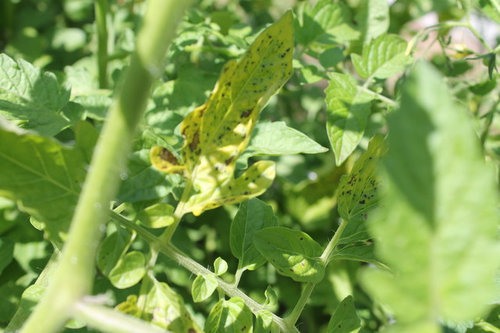
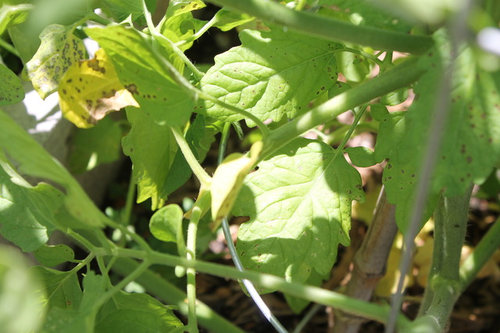
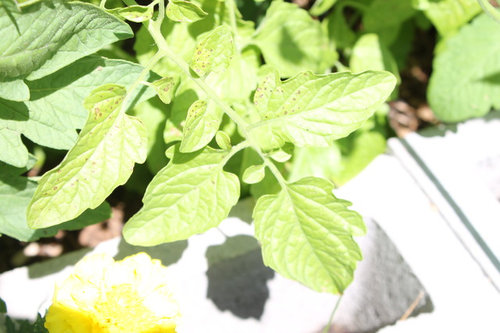
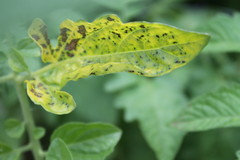
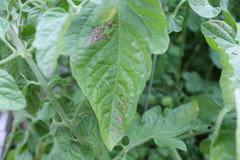
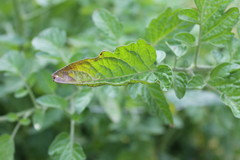
What disease am I dealing with here?

10 years ago
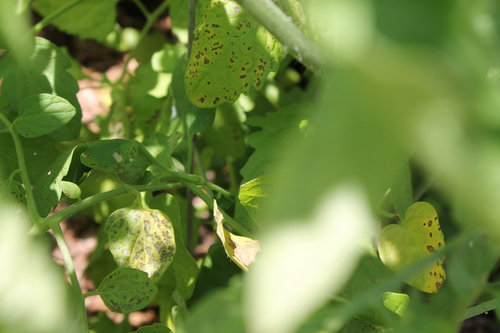
Planted these out early/mid-may...growing like weeds, however, now they are starting to look slightly diseased.

What is it? Can I save the plants? Should I pull them?

TIA for any advice/input! :)

Half of my plants are showing signs of this disease....what to do? What to do?!?! :(

Comments (37)

  • 10 years ago

    At least 3 that it could be but would need to see the leaf spots up much closer to tell. Have you looked through any of the many tomato disease web sites and pics to compare to your plants? Check out Early Blight, Septoria and Bacterial Speck/Spot.

    In most cases the treatment is the same basically - remove all the infected foliage. Then if it is one of the fungal diseases spray with fungicides to try to slow it down. If it is bacterial then use one of the copper-based sprays to try to slow it down. They can't be cured once infected. All you can do is slow it down until the fruit can be harvested.

    Dave

    Garden Lover thanked digdirt2
  • 10 years ago

    Thanks Dave,

    No, I have not looked yet, as I have been busy today. I noticed this last week on one of the plants and it has now moved along to others.

    Agh, this is a pain. I planted them too close together and now this is the price that I pay.

    Will I least be able to get a harvest out of the plants?

    Thanks for your help/input...i'll do better research later when I have time.

    :)

  • 10 years ago

    Ok, i'm thinking it's either septoria or bacterial speck.

    From what my neighbors said, there doesn't seem to be much in the way of the blights around here (but who knows?).

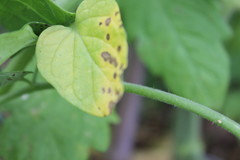
    Ok, so these are the better pictures.

    Hopefully someone will be able to identify what my plants have going on with them.

    Thanks for the advice! :)


  • 10 years ago
    last modified: 10 years ago

    Septoria or Bacterial Speck, the organic treatment is the same: remove affected foliage, spray with copper.

    You should get a harvest, barring extreme rainfall. If it is bacterial it can ruin some fruit, moreso late in the season.

    Garden Lover thanked Peter (6b SE NY)
  • 10 years ago

    Also, if you haven't....mulch them to keep the soil from splashing up and make sure you trim the lowest leaves as well as the affected ones.

    Garden Lover thanked ladyrambler z8 NC
  • 10 years ago

    I have it every year. I remove infected leaves below 1 foot from the ground and let the plant deal with the rest of it. I am okay with the yield.

    Garden Lover thanked najanajaking
  • 10 years ago

    Given the diverse shape and number of lesions I'll say bacterial. The spots are not classic appearance of Septoria (although it may still be present) but I'd treat it as a bacterial-based infection with copper if for no other reason than plants will not tolerate bacterial infections as well as fungal so getting a handle on them - putting on the brakes so to speak - is important if only to protect the existing fruit.

    As Peter said, unlike the common fungal diseases, the bacterial diseases can also affect the fruit so you want to make sure the fruit get sprayed as well as the leaves. But stripping off every bit of infected foliage is the most important first step. If you can get a step ahead of it healthy new growth will develop and see you through to the end of the season.

    No home-made mixes here. Get a good commercially prepared copper-based fungicide and follow the application instructions to the letter. If you have no objections to synthetics then alternate spraying with the copper fungicide and Daconil, a synthetic fungicide for best results.

    Mulching of the plants is ideal however even with good mulching practices the most common tomato diseases are also air borne.

    Good luck.

    Dave

    Garden Lover thanked digdirt2
  • 10 years ago

    Thanks all!

    Well, at least I know what I am dealing with here, now. :)

    Unfortunately, tomorrow calls for serious rainfall, so my pruning shall have to wait until the next day.

    Just my luck figuring out what is ailing the plants, only to be sideswiped by mother nature. :(

    So, what causes this? Was it splash up? Airborne? During gestation of seedlings?

    The plants affected were my homegrown seedlings.

    A mistake I made along the way?

    TIA for all the support and advice!

    Hope everyone else's plants are faring better!

  • 10 years ago

    Going to prune and spray ASAP! Please no rain wammies!!!

  • 10 years ago

    Well, went out this afternoon to prune/spray. The plants are pretty covered through and through. I did what pruning I could, but will let nature take its course.

    Lesson learned.

    Don't overcrowd tomato plants!

    Also; pick a disease resistant variety next time!

    Thanks for the help and advice!


  • 10 years ago

    I vote for "Bacterial Spec".

    Sey

    Garden Lover thanked Seysonn_ 8a-NC/HZ-7
  • 10 years ago
    last modified: 10 years ago

    Thanks for your support and advice Dave. Truly is appreciated! :)

    Last year I had a wonderfully neglected tomato 'jungle' with virtually no disease and an abundance of tomatoes.

    This year, I have been more diligent and careful about watering, and now THIS problem. :(

    We decided to just let them be and cross our fingers and hope for the best.

    We'll at least have a harvest (or 2) and next year will be wiser about our spacing and mulching.

    Thanks again, all!

    Hope you all get great harvests!! :)

  • 10 years ago

    Tomatoes can be a real pain. At least the late blight map is currently clear.

    Garden Lover thanked Peter (6b SE NY)
  • 10 years ago

    Peter; tomatoes are THE reason I decided to start gardening! :D

    Even if they are a PITA! LOL.

    So, I did a little more googling and came across another possibility (based on the pictures that I googled) and saw TSWV.

    So, is it possible that I may have that?

    Some of the pics look similar to how my plants look, while others not so much.

    There have been people smoking in the general vacinity of my plants lately.

    Could that be a cause?

    This experience (and my early seedlings) has me so deterred from future gardening endeavors...

    Maybe next year i'll just grow out of containers.

    Thanks everyone!

  • 10 years ago
    last modified: 10 years ago

    I think you're thinking of TMV (tobacco mosaic virus), which is spread on hands by people who have been handling tobacco. TSWV is tomato spotted wilt virus, which is spread by thrips. Have you seen thrips on your plants?

    It's more likely to be fungal or bacterial if older leaves are affected first. If the newest growth still looks healthy and is not deformed/discolored, it's probably not a virus.

    Garden Lover thanked gorbelly
  • 10 years ago

    Is it possible to have both speck and spot?

    This fungus/bacterial business is crazy!!!

  • 10 years ago

    Thnx gorbelly!

    Yes, I was thinking TMV. Sorry! No one has been touching the plants (that has been smoking in proximity) so, perhaps that's off the list. :)

    I haven't seen any thrips either.:)

    I'm narrowing it down to either bacterial speck/spot.

    If it is spot does that mean my fruit is doomed?

    There are a LOT of green tomatoes forming on the plants already.

    I just hope to surpass the disease and get a least a small harvest.

    Fingers crossed!!!


  • 10 years ago

    It's certainly possible to get multiple diseases. If you want a diagnosis, your county extension may have a program for you to bring in samples to the local office.

    Some years are worse than others for disease, and some geographic locations have more disease pressure than others (you should enter your location in your profile so that it shows up next to your name--it will help people get an idea of your conditions and give you better advice).

    Tomatoes are high-maintenance divas that can break your heart, but nothing else is as fun to grow, IMO.

    Garden Lover thanked gorbelly
  • 10 years ago
    last modified: 10 years ago

    Thnx gorbelly!

    Yeah, I was overjoyed last year with my prolific tomato jungle that I assumed that 'I got this' and went ahead with stuffing my garden with a ton of plants, in hopes of an even greater yield than last.

    So, it's safe to assume that i'll be 'lucky' to get a good harvest or two before this disease really takes a hold of my plants?

    What's the timeline for plants once a disease sets in?

    How badly affected are the fruits (with bacterial infections)?

    This is unnerving and frustrating, and I want my money back (lol)! ;)

    Also; I'm in your zone (6b/7a).

  • 10 years ago

    As I explained above, getting a crop or not all depends on if you are going to treat it or not and how aggressively you treat it. But it sounds as if you have decided to just let nature takes its course. The bacterial diseases infect, distort, damage the fruit as well as the plants. The fungus diseases don't for the most part. So bacterial diseases need aggressive intervention.

    There is no set timeline, too many variables. And no way to know if you will get a crop or not.

    Want to get aggressive then pull the worst of the plants and thin the patch out, remove all the damaged foliage and aggressively spray with copper based fungicides. Want to let nature take its course then don't worry about it and see what happens.

    Dave

    Garden Lover thanked digdirt2
  • 10 years ago

    Garden Lover: "If it is spot does that mean my fruit is doomed?"

    Are you seeing any lesions on the developing fruit yet?

    IIRC, bacterial spot carries more risk of flowers and fruit dropping than speck. Septoria affects leaves only and not fruit and does all of its damage through the effects of defoliation.

    Note that, with bacterial spot and speck, the fruit is "ruined", as Peter says, but is still edible. It's just that, if you're a commercial grower, you can't sell infected fruit because it looks diseased. It won't hurt anyone who eats it.

    Garden Lover thanked gorbelly
  • 10 years ago

    Dave, Garden Lover has already pruned and sprayed, so action is being taken.

    Garden Lover, the spraying has to be a regular thing now to try to slow down the disease. I believe the recommendation is weekly or after enough rain to wash off the previous treatment. And checking in with your plants frequently and keeping on top of removing infected foliage is key.

    Yeah, it's a PITA. And even if you do everything right, nature can still throw conditions at you that provide such great conditions for disease that it overcomes all your diligence.

    Garden Lover thanked gorbelly
  • 10 years ago
    last modified: 10 years ago

    Thank you both for timely responses.

    I've pruned and sprayed, but now, based on what Dave mentioned, I am considering to just pull the plants out (if the fruit will be damaged, after all).

    This is not what I was hoping for!

    The plants are already 5 ft tall and sprawling out with vines and fruit!

    Such a horrible waste and effort on my part!

    I'll take another gander in the AM and check out the damage to a more detailed extent.

    I should have nipped this in the bud when I first noticed the spots last week!

    (kicking myself in the arse!) :(

    Thanks all!

    Will update as it develops (or hopefully doesn't..lol) ;)

    Also; wanted to ask...

    If I am to pull these plants but save some suckers from them and reroot them, will the newly rooted plants be 'healthy' or should I just start over again and buy new seedlings?

    TIA for any help/ideas! :)

  • 10 years ago

    I smoke my pipe in the garden all the time for years and never had to worry about that. Even if there were virus in raw tobacco, it will be killed when burned/smoked , me thinks.

    Sey

    Garden Lover thanked Seysonn_ 8a-NC/HZ-7
  • 10 years ago

    Thanks Sey!

    That's a neat visual you created for my imagination! :)

    I'm ruling out TMV (just because it does seem kind of ludicrous/far-fetched), but i'm definitely dealing with some type of bacterial/fungal problem, so I've got to think fast about how I'm going to go about resolving it.

    I asked about saving suckers/rerooting them and making new plants (from these plants)

    Is it possible? Or would the 'new' plants be doomed as well?


  • 10 years ago

    You don't even know what the disease is yet, correct? It could be septoria or early blight. Septoria doesn't affect fruit at all. Early blight can affect fruit but has to get pretty advanced to do so, generally. If your plants are 5 feet tall and loaded with fruit, it's a pretty drastic move to pull them without any confirmation of which disease you have.

    Depending on where you are located (zone is only about winter low temps and doesn't always provide info on season length), it's getting very late to start with new plants. And you have a very good chance those plants will get diseased, because post-pulling hygiene is never perfect, and if they do, it will be at a much earlier stage of their development, which means you run the risk of getting no fruit at all this year instead of a reduced harvest from your current plants.

    Bacterial speck lesions are only skin deep, BTW. If you're not a market grower, there's no reason why you should trash everything based on that kind of cosmetic damage. Just don't share seeds from this year's tomatoes, as it can be seedborne.

    Very few people make it through the season without dealing with disease except for people who have never grown tomatoes on that particular piece of land before--and even those people can get windborne diseases. Accepting that your plants aren't perfect and learning to managing diseased plants to get a harvest out of them is part of tomato growing these days, unless you have a catastrophic disease or one that is highly contagious to other plants--something like late blight or one of the easily spread viruses, for example. If you don't get over the urge to pull your plants because they are not pristine, you will almost never successfully harvest tomatoes--certainly not heirloom tomatoes--unless they are cherries or early varieties. Tomato diseases are just too prevalent these days due to how and widely far plants, seeds, and produce travel in today's global economy.

    I urge you to contact your county extension office and see what resources they have for getting a diagnosis.

    Garden Lover thanked gorbelly
  • 10 years ago

    If you root suckers from diseased plants, the chances are very high that they will be diseased.

    Garden Lover thanked gorbelly
  • 10 years ago

    It would be one thing if this happened a month ago. But remember that larger tomatoes can take a month and a half to two months from flower to ripe fruit. How long is your growing season? Remember that it's not just about temps but also about sun. Where I am, I get plenty of warm weather through September--sometimes into October. But the sun angle changes, so I simply don't get enough sun after mid-August for something like tomatoes, and the fruit starts taking forever to grow and ripen and just doesn't have that same intensity of flavor anymore.

    Garden Lover thanked gorbelly
  • 10 years ago
    last modified: 10 years ago

    Thanks so much gorbelly!

    What a wealth of information and insight you have provided! :)

    I really appreciate it!

    Well, I am going to scope out the depth of damage tomorrow morning.

    I'm very reluctant to pull the plants because they are already so big, and the odds of me having 'new' blooming/harvesting plant(s) are much lower.

    I'd say that last year we had warm weather until mid-October (unseasonably) but my plants were still producing until about then.

    I had some accidental seedlings pop up and plant themselves around July, which went on to bloom, then had fruit, by the end of August.

    I think it would be doable, but risky to start all over again.

    Might poke around to see if I have any little seedlings hiding somewhere and put them in pots and hope for the best.

    I will continue to prune and spray and see what happens...def do not want to pull my 5 ft plants out! :(

    Will update more as I know more. :)

    Thanks so much again! I love this site because everyone is so helpful!

    Hope your plants are growin' and groovy!

  • 10 years ago
    last modified: 10 years ago

    Also wanted to add; just so everyone knows.

    I'm not a market grower.

    Only been gardening a few years now.

    Love gardening...even with the hassles...WORTH it! :D

    I'm just learning as much as I can, trial and error. I always share what I know with others, as well as my harvest.

    In future years, i'd love to do more/expand my garden, and share more with others.

    Thanks all for your help!!!

  • 10 years ago

    You have to give the fungicide some time and do it again in 5 to 7 days. Make sure the plants are drenched, top and bottom, over and under.

    If I were you , i would not pull them if I don't know for sure what the disease is.

    Sey

    Garden Lover thanked Seysonn_ 8a-NC/HZ-7
  • 10 years ago

    Lots and lots of advise given but you have no idea as to the problem which very well could be a nutritional, weather or metabolic issue. I see these pictures of segregated leaf damage, something I see all the time with heat stressed plants on high nutritient levels. Don't get overly excited about jumping to drastic measures without confirmation.

    Garden Lover thanked Barrie, (Central PA, zone 6a)
  • 10 years ago

    I don't think anyone has suggested any "drastic" measures. Removing the worst of the infected foliage and spraying with fungicides are common standard practices.

    The only reason I mentioned pulling some plants as a possibility is to thin out the patch as a whole. You indicated you planted them way too close together. So that can contribute to the problems. Don't know how many plants you have or how close they are to each other, but if there are a few who are severely infected then they could be pulled in order to increase air circulation in the patch as a whole and so help the lesser infected plants. Your choice but hardly a drastic measure.

    But diffuse black spots that are yellow banded such as displayed in the photos do not result from nutritional or metabolic disorders. They are disease symptoms. The only issue is which disease. But since the treatment for most tomato diseases is basically the same, in the long run it makes little difference which it is.

    Dave

    Garden Lover thanked digdirt2
  • 10 years ago

    Thanks all!

    Not sure exactly what the problem is, but I decided that i'll continue pruning and spraying and crossing fingers (lol).

    For me, it doesn't matter what the issue is at this point. I've been given a lot of great advice and insight so i'll just treat them as 'infected', and hope for the best! :D

    Also decided not to pull out the plants and just keep a watchful eye on what happens.

    Next year I will NOT overcrowd and plant so many!

    Thanks all for the advice and help! It's wonderful to get so many varying opinions and ideas!

    Hope everyone's plants are growin' and groovy!

    Have a nice 4th of July weekend!

  • 10 years ago

    Dave, I think the "drastic" was in response to Garden Lover saying she was thinking about pulling all of her tomato plants and starting over.

  • 10 years ago

    The bottom line, as Dave said, is that it is most likely a foliage fungal/bacterial disease and the treatment for all of them is the same : Daconil , Copper Fungicide or similar.

    By effective spraying and pruning/ lightening up ... there stands a chance to keep the situation at check.

    Sey

Sponsored
Kuhns Contracting, Inc.
Average rating: 5 out of 5 stars26 Reviews
Central Ohio's Trusted Home Remodeler Specializing in Kitchens & Baths