Software
Houzz Logo Print
fertilepress

Can I replace Perlite with this?

10 years ago
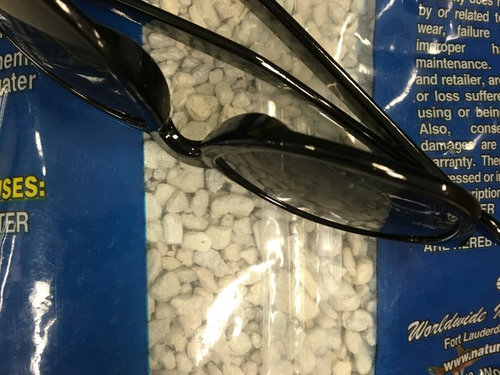
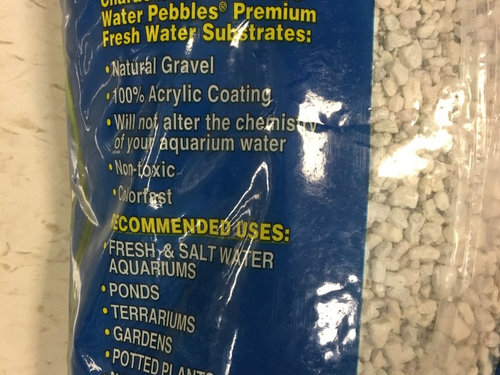
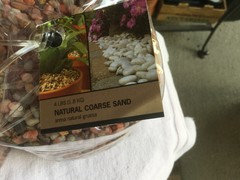
My succulents are currently in a mix of 60/40 Perlite and C&S soil. I've had a problem finding chicken grit, but the pet store across the street has this aquarium gravel. I don't like the way Perlite puffs up and rises to the top. Can I replace it with this? It's a bit pricey at $17 for a 10 pound bag.

Thanks for the advice!

Comments (42)

  • 10 years ago

    the chicken grit is about 8 dollars for a 40 pound bag. i could ship you a USPS box of the stuff, but the shipping is about 12 bucks. I mix a handful of napa floor dry … part 8822 with my stuff. it absorbs water, and then releases as it dries out. have had wonderful 'luck' with just that and chix grit. Also, lechuza has a product called pon. it is about $20 a bag (includes shipping) for the small (1.4 dry gallons) bag. Occasionally it goes on sale and I stock up ...

    I have NO stock/stake in the company


    www.lechuza.us

    Renee thanked bragu_DSM 5
  • 10 years ago
    last modified: 10 years ago

    Wow! $8 for 40 pounds. Unfortunately, I don't have anywhere to store a bag that large. The lechuza pon looks very interesting. Thanks for the tip!

    The bag in the pic above is actually 15 lbs., not 10.

  • 10 years ago
    last modified: 10 years ago

    I have recommended aquarium gravel to people who have no access to perlite. I think you could use that product - in fact it says you can on the bag! LOL You might try it with one plant and see how it goes.

    I would not add NAPA to the C&S soil. I'm afraid it would hold too much moisture in our humid south. That's not the same as using it in your gritty mix or mixing with chicken grit like bragu said.

    Just an FYI - I used to like the NAPA product, but I don't like the new bags I have gotten (in the past couple of years). It doesn't hold up and it gets a clay residue on everything - even the roots of the plants.

    I often used lava rock as a top dressing to hold the perlite down. Rocks will also work, but if too small they may hold in moisture, which you don't want.

    Renee thanked Crenda 10A SW FL
  • 10 years ago
    last modified: 10 years ago

    Thanks, Crenda!

    "in fact it says you can on the bag!" When it comes to potting media, I've learned not to believe product packaging anymore. LOL

    They actually sell a smaller 4 lb. bag. I will give it a try and post if I have any problems with it. Worst case it will make an interesting top dressing. :)

  • 10 years ago

    you can use it, but it is covered in acrylic. That means it is going to be very smooth and not have all the crevices like perlite will.

    Renee thanked Nil13 usda:10a sunset:21 LA,CA (Mount Wash.)
  • 10 years ago
    1. Thanks, Nil. How will that affect my plants potted with it instead if perlite?
  • 10 years ago

    Good catch, Nil. I hadn't noticed that and thought it looked like raw stone.

    I had a bag of coarse stand that seemed to be polished. It was supposed to be top dressing, but it kept my mix too wet. Water couldn't evaporate very well.

    So eventually I used it in my gritty mix for a big pot of assorted sedums and graptosedums. All seems to be fine, but this was a mix of leftover perlite, coarse sand, turface and some small orchid bark. I've never tried to use it with c&s soil because that soil does not work in my wet summers, even with perlite added.

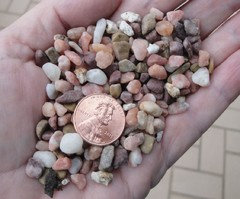
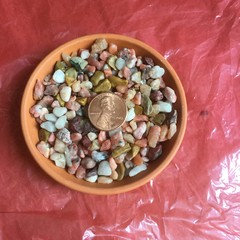
    Here's what the coarse sand looks like. You can see some pieces of perlite at the top. I think this is about the size of the gravel you have pictured, but it is not coated with acrylic.

    Renee thanked Crenda 10A SW FL
  • 10 years ago

    Since it is coated in acrylic, it will hold less nutrients and water than perlite. Which is not necessarily a bad thing. You will just have to water more frequently and fertilize a little more often.

    Renee thanked ewwmayo
  • 10 years ago
    last modified: 10 years ago

    I don't understand. Granite and other non-porous material are not substitutes for perlite, turface or pumice. It is in the mix to weigh it down since the only moisture it holds is however much water molecule attaches to the surface. So if you do not want perlite (I agree with you! I hate the stuff!), your options for a porous, water-retaining material, are pumice, calcined clay, scoria (too pretty to be in a potting mix, I think; better used as top dressing) and the like.

    Pagan

    Renee thanked User
  • 10 years ago

    Pagan - My own testing confirms pumice and perlite and bark (interestingly enough) hold approximately the same amount of water. Just pumice can hold more nutrients and bark takes forever to absorb water (mild exaggeration).

    Renee thanked ewwmayo
  • 10 years ago

    I agree on both counts---I've had to soak bark for weeks (seriously, weeks!) before using it. In keeping with my KISS principles, I ditched the whole bark process and just use pumice and granite grit to tweak the moisture retention in my substrate. But one is not a substitute for the other. If the OP does not like perlite (who does!) and does not have pumice, they can not use granite as a substitute. Two different things with two different purpose.

    P

    Renee thanked User
  • 10 years ago

    Hmmm... I missed that acrylic thing too. I think I'll pass on this option.

    Pagan, I like the KISS principle. What is your substrate made of?

  • 10 years ago

    Pumice and granite grit. For certain plants ( Euphorbia globosa and Sarcocaulon herrei are two examples), even pure pumice is too water-retentive. So I mix more granite grit. The other end of this spectrum are haworthias and gasterias which I grow in pure sifted pumice. Everything in between is growing in varying proportions of the two ingredients. The dust that I get from sifting pumice is dumped in my semp bed outside.

    Only my adeniums, dorstenia and potted trees have bark--this was before I got tired of the whole soaking thing. I do not repot every year and I have no feeding regimen (I fertilize whenever).

    Pagan

    Renee thanked User
  • 10 years ago

    Sounds like my kind of simple. Thanks!

  • 10 years ago

    I have used expanded shale. It is absorbent like pumice. No one ever mentions it for gritty mix but I use it, It is $8 for 40lbs here in Austin. Pumice is 26 for 40 , but it is a bit lighter so the 40lbs is a larger mass.

    Renee thanked wantonamara Z8 CenTex
  • 10 years ago

    Thanks, Mara. I'll have to look into that.

  • 10 years ago
    last modified: 10 years ago

    My suspicion is that it is not QUITE as absorbent as pumice since it is a bit heavier. People use it to break up clay around here. It might be a tad large for very small cactus but I use it with mine. Mostly I grow aloes,some barrel cactus and agaves.

    Renee thanked wantonamara Z8 CenTex
  • 10 years ago

    Crenda, I have that sand too! Got it from Lowe's. I've been using it for top dressing. I can now try a small batch of this sand plus (sifted) Perlite to test a move to a gritty mix, right? Maybe on one or two plants.

    Now, why would I need the third ingredient in the 1:1:1 mix? That would be bark or Turface, right? I've read Al's water retention post but still trying to wrap my brain around it.

  • 10 years ago
    last modified: 10 years ago

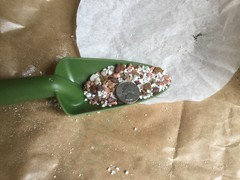
    A scoop from my fresh mix. 1:1 coarse sand and sifted Perlite.

    I know my original aim was to replace Perlite. But since I have so much of it, as well as the coarse sand, what the hay! I may be closer than I thought to a gritty mix.

    Please correct me if I'm wrong!

  • 10 years ago
    last modified: 10 years ago

    Me either! That's just a "guesstimate." :)

  • 10 years ago

    If you want to know qualitatively, you can calculate/test for the water holding capacity and porosity of your sand/new mix.

    All you need is a pot, some duct tape, and a scale. This weekend I'm obtaining lava rock and other component samples for just this reason.

    Renee thanked ewwmayo
  • 10 years ago

    Good idea! I filled a tiny pot with the mix and watered to the top. I'll see how long that takes to fully dry out. An unscientific little measurement. :)

  • 10 years ago
    last modified: 10 years ago

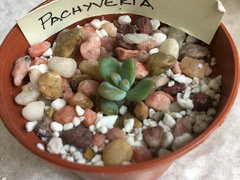
    Well, here's the first baby to try out the new mix. It's a leaf sprout that's about a month old. Has very fragile tiny roots and just lost the mother leaf, so it's on its own. I'm so nervous!

    Haven't worked up the courage to pot my new Topsy Turvy in it yet. Don't know why, really. The alternative is C&S + Perlite, what I've been using.

  • 10 years ago

    Where do you guys find that coarse sand? I think I might like it better than perlite for the non-floating (and for me, non-blowing away) factor.

  • 10 years ago

    Leslie, I think I got mine at Home Depot.

    Looks good, Renee! Let us know how it works out.

    Renee thanked Crenda 10A SW FL
  • 10 years ago
    last modified: 10 years ago

    Thanks, Crenda! I will.

    Leslie, I got mine at Lowe's. The shelving label called it "Kalahari Sand." There's a photo of the product tag above. Here's a link:

    http://www.lowes.com/pd/AKASHA-4-lb-Kalahari-Decorative-Sand/50190965

    I've learned that the coarse sand doesn't replace Perlite, though. Different function altogether. So now I'm using it as "grit" and mixing it with Perlite. It's not very cost effective, but I'm using it for now to try a gritty kind of mix.

  • 10 years ago

    Renee, I know what you mean. I had information overload for weeks while reading that Tapla thread.

    But after about three seasons experimenting with it, you get to know it really well. To summarize: the three main ingredients for gritty mix or 1:1:1 are turface, bark and granite grit.

    • turface
      or any other porous inert material such as pumice (my personal favorite) coarse perlite,
      akadama, or--as I just learned (thanks, Mara! I've never heard of
      this before you mentioned it)--expanded shale. Because it has lots of
      pores, it holds lots of water.

    • bark: it holds the same amount of water (thanks, Kevin!) as turface, pumice, perlite etc, but holds it longer. So it stays wet longer.

    • granite:
      adds weight to the mix, especially if using the substrate for big
      plants like trees in training. It also holds some water but only as much
      as would stick to its surface. So you can use granite grit to decrease the amount of retained moisture even further. Granite can be replaced with other non-porous
      materials as long as they are rougly the same size of your other materials. You
      can use such things as coarse sand, glass beads, plastic beads or
      half-carat diamonds.

    Depending on what plant you are putting in
    the mix, the proportions of these three ingredients should vary. You
    just need to intimately know your plant.
    Pagan


    Renee thanked User
  • 10 years ago

    Nicely summarized, Pagan. For me, the tweaking never seems to end! LOL

  • 10 years ago

    I know, right! I even have a pot with gritty mix AND soil---something purists will consider sacrilegious. But it's a mesemb. Enough said.


    Pagan


  • 10 years ago

    Pagan, that's a great summary. I'm totally bookmarking it. Thank you for the explanation.

  • 10 years ago

    Yes, thanks very much Pagan! I have bookmarked and read Al's thread but I'm still in the info overload phase.

    We have very low humidity here, so I wanted more water retention ... But I had toooooo many retentive ingredients in the wrong proportions. Also my particle sizes were all over the map.

    I am going to look for that coarse sand today, but I still think it's far too pretty to be in the mix :P

  • 10 years ago

    bunkfree

    How low is RH where you live? Lower is better for succulents...

  • 10 years ago
    last modified: 10 years ago

    Just looked it up - Average RH about 50% spring/summer, 70-ish thru winter. I guess that's not "very" low.

    In my house the gauge reads 0% in the winter lol. We've had a lot of rain in July, the house gauge is actually reading over 50% right now. Huh.

  • 10 years ago

    Before everyone gets all excited and runs out to buy some coarse sand . . .

    It is sold as a top dressing. And it's a little pricey to use in mixing up a lot of gritty mix. As a top dressing, I think it is quite pretty. BUT in my humid and wet summers, the potting mix never dried out because this top dressing was smaller pieces that stayed a little more compact. I am sure this is not a problem for many other folks.

    So I had a lot of this on hand and really couldn't use it. So when mixing up a lot of mix for a bowl/pot, I used about everything I had on hand. A some turface, some perlite, some grit, some bark and whatever coarse sand I had left. No soil, tho.

    It has worked, but frankly it was a mishmash of ingredients with no real plan. I had planned on simply rooting leaves in it, but they grew into some nice plants so I left them to do their thing.

    So I just wanted to be sure y'all understand that I am not 'recommending' coarse sand, but I have used it in my mix with no problems.

    Hope that makes some sense! LOL

    Renee thanked Crenda 10A SW FL
  • 10 years ago
    last modified: 10 years ago

    I personally planned on buying it as top dressing actually :D I've located a few feed stores within 1/2 hr drive of me, going out to buy grit today. I'd like the cherry stone grit but will settle for gran-I-grit, since it doesn't look like cherry stone is available in Canada.

  • 10 years ago
    last modified: 10 years ago

    Crenda

    I am glad you said what you did - I agree on every point you made. And you speak from first hand experience in hot and really humid climate.

    I would not consider HR bunkfree mentioned as high (or is it?) I also wonder about 0% humidity in the house regardless the season - how do you manage that? I am not sure if that is even good for ppl? Just cooking and/or taking bath or shower would create some humidity...Maybe your gauge is not working properly?

    I prefer using larger sized chicken grit since it has jagged edges and leaves more space for air. I have used pea gravel few times - it is also bigger while much smoother. I prefer 'rough' kind. It may not be as showy as above gravel, but in case that it could cause some problem or at least make things bit more difficult, I choose what is better for a plant. But that is just my choice and opinion...

  • 10 years ago

    I dont think my gauge is all that sensitive, but yes in the winter it registers 0 most of the time, and right now it's saying just over 50%. With furnace and/or fireplace going constantly it gets super dry (and my furnace humidifier is broken). Also I said we have very low humidity, not high. Then I corrected myself guessing that an average 50% probably wouldn't be considered *very* low.

  • 10 years ago

    I don't recommend top dressing with stones. That stuff does not breathe.


    P

  • 10 years ago

    Pagan, what do you use for top dressing?

  • 10 years ago
    last modified: 10 years ago

    Crenda, thanks for the further explanation of how you used the coarse sand. I, too, would not buy it specifically for making a gritty mix. I happened to have it on hand and saw an opportunity to try something (mixed with Perlite) that would resemble a gritty substrate without spending any more money.

    When I started this thread I was using Perlite with C&S mix and trying to replace the Perlite with aquarium gravel. Then I learned that Perlite and "grit" have different purposes in the mix. In a light bulb moment (thanks to Crenda) I realized that I already had the ingredients to create a simple two-part gritty mix (coarse sand and perlite), allowing me to ditch the C&S altogether. So, I turned my attention away from replacing Perlite and towards using what I already have to try moving to a gritty substrate.

    Thanks to all of you who have contributed to this discussion, I have learned so much!

    I can continue to record my experiences here as I see how this works and welcome the feedback and sharing. However, since the subject of the thread doesn't really match the content, do you guys think I should start a new discussion?

  • 9 years ago

    Great discussion, have heard many saying stay the heck away from coarse sand. Thanks for clarifying some of its uses

Sponsored
Whisler Home Improvement
Average rating: 5 out of 5 stars9 Reviews
Franklin County's Committed Home Improvement Professionals