Software
Houzz Logo Print
weedyacres

Shade trees for a swale

10 years ago

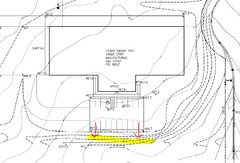
We're building an industrial building and have a parking lot on the west side. I'd like to plant some trees that will eventually provide some shade to the parked cars. The twist is that just to the west of the parking area is a swale that will be the drainage for that side of the lot. So I need trees that will do well in/on the side of a swale that will be nice for shade. Fast growing would be a plus, for obvious reasons. Zone 6, midwest.

Comments (21)

  • 10 years ago

    Acr rubrum or nyssa sylvatica? Nyssa will be slower.

    Metaseqoia is Taxodium like but not as drought tolerant. It grows faster here and is more interesting plus rare. Both are wind tolerant.

    weedyacres thanked Toronado3800 Zone 6 St Louis
  • 10 years ago

    do you anticipate actual standing water??? ... seasonal, otherwise draining water is usually not a problem ... a bog or swamp is ....


    is there any reason you cant plant of the slope..


    trees can put their roots where they should be ... its usually the transplanting.. and standing water.. that is the issue... if you can plant high.. to give a transplant time to put its roots where they want them.. you should have long run success ...


    give us a more specific idea where you are ...


    you dont really want any FAST GROWING TREE.. near a building it can eventually fall on.. i cant easily tell from the drawing.. how far away this is ....


    ken

    weedyacres thanked ken_adrian Adrian MI cold Z5
  • 10 years ago

    You guys made me run for google to look up species names. I should have said I prefer something deciduous, and nice to look at (spring blossoms, fall color) is a plus. So of the suggestions so far, I think I like the Acer Rubrum (red maple). A coworker suggested weeping willow.

    We typically have rain throughout the year, with very wet springs, so the swale could be pretty marshy for periods of time. Not bog/swamp/flooded, but marshy. Summer can be drought-y on occasion.

    We can plant anywhere we want (e.g., off the slope), I just figured that the closer to the parking lot we get, the better the shade quotient.

    The trees will be ~100 feet from the building, so no fall risk.

    I prefer not to get more specific about my location (internet anonymity) but we're on the border of 6a/6b if that helps further.


  • 10 years ago

    no it doesnt... name a big near city.. it really matters ...


    i thought the parking lot was part of the building ...


    which direction is north on the drawing ... ken

  • 10 years ago
    last modified: 10 years ago

    Baldcypress? One of the few fast growing deciduous trees that is strong wooded and it's very swamp tolerant...decent fall color.

    Tulip tree has late spring flowers and Fall color...option for the dryer spots farther from the building.

    Nyssa has has great fall color and swamp tolerance but grows a bit slowly.

    A bit sow growing, but swamp white oak?


    Hint:. Plant a mix of fast growing trees and shade tolerant longer loved ones,. The fast growing ones tend to die sooner, but give you quicker results.live fast, die young holds true for most de idiots trees. The slow growing ones may be ready to provide shade when the fast growing ones die of old age, get taken down by a storm, or just outgrow the location and have to be removed. Lots of developers don't think of this and the result is they plant all the same tree...and they all die at once.

    weedyacres thanked edlincoln
  • 10 years ago
    last modified: 10 years ago

    ken: call it St. Louis

    North is left. Trees will be west of building.

    ed: love your "de idiots" voice-to-text. :-)

  • 10 years ago
    last modified: 10 years ago

    It might pay to have your soil tested, some of the suggested like acid soil, and if you have alkaline soil it can be problematic in species that demand acid soil.

    I'm not aware of any flowering trees that are wet soil tolerant, at least none that give a blast of color like crabs, dogwoods, etc.

    Willows are great for wet soils, but they are relatively short lived, weak-wooded insect and disease magnets.

    If you can plant between the parking and the swale, that will increase your choices greatly, especially flowering stuff. But if you primarily want shade, that will probably eliminate flowering trees, most want full sun to bloom best.

    Edited to reflect location.

    weedyacres thanked kentrees12
  • PRO
    weedyacres thanked Caldwell Home & Garden
  • 10 years ago
    last modified: 10 years ago

    As far as flowering trees tolerant of wet soil...sweetbay magnolia are somewhat wet soil tolerant, as is fringe tree...but both might be a bit small for this application.

  • PRO
    10 years ago

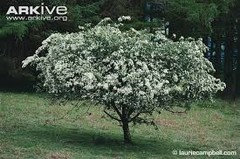
    What about hawthorns? These are a great alternative to the widely used callery pear.

  • 10 years ago

    Oh, I should say Baldcypress is Taxodium distichum and (despite the fact it looks like a pine) is deciduous.

    Where is the boggiest area on that map?

    I'd do a mix of trees with different life expediencies...Some combination of Baldcypress, American Syxamore and/or tulip tree for the fast tree, Nyssa sylvatica or swamp white oak for the slower tree.

    Either baldcypress, sycamore or red maple for the wettest areas. Possibly tulp tree for drier ones?

  • 10 years ago

    A swale draining a small area prb'ly won't make the soil perpetually wet. So I think most trees will be fine there, unless it's a bristle pine. :)

  • 10 years ago

    The drainage for the entire 25K sf building roof is actually going to empty into this swale. The arrows on the drawing below show where the drainage pipes will exit.

  • 10 years ago

    Nyssa sylvatica has outstanding fall color and is gorgeously glossy-green in summer. There are weeping cultivars. It can take the boggy soil.

  • 10 years ago

    I can test the soil. It's converting from farmland (corn and soybeans) to industrial, so I'd expect it to be on the acidic side.

    I've researched into the suggestions above (photos, size, care instructions), and here are my initial thoughts on my favorites:

    Sycamore: good for shade and wet, but they litter and can break up pavement.
    Thornless Honeylocust: I think we've got a large one in our back yard (I've been wondering what it was), and it's pretty well-behaved. Good shade, fast growing, good windbreak (storms come from S/W). I'm ok with the seed pods, as they won't be near gutters.
    Red Maple: Love the color, shade, ok in wet
    River Birch: Love the color, shade, good for wet areas
    Black Gum: Nice color, great in wet & drought, good shade, low maintenance

    So how many kinds of trees can I combine in this area? And how many total? Would I put the fast growers closer to the parking lot (also uphill) and the slow growers farther away (downhill)? Or vice versa?

    The parking lot is 100' wide and it's 70' to the property line. I can also go further north (left), as that's designated for future expansion. I don't have to fill the whole area, but I can. :-)

  • 10 years ago

    weedyacres, IMO I wouldn't limit myself to "wet" trees. I have tuliptree, black walnut, Sib elm, sugar maple and chestnut oak stream-side that occasionally get inundated & have no problems. There's plenty of periods for the soil to drain sufficiently.

  • 10 years ago

    Definitely get at least a pH test done. The biggest factor is what kind of rock the mineral parts of the soil come from. Whether it is sand, clay, farmland, swamp - none of that matters. The only issue I can think of with it being farmland is if the pH was being routinely adjusted for a particular crop.

  • 10 years ago
    last modified: 10 years ago

    River Birch: Might have some trouble with the heat radiating off the parking lot in the summer if you plant any close to the pavement. Nice exfoliating bark provides winter interest.

    Honey Locust locust are particularly tolerant of that. (So good for near parking lot on North side). Lots of the new cultivars are seedless.

    Sycamore: Also have nice exfoliating bark.

    I'd just alternate shade tolerant slow growing trees and fast growing trees the same distance from the parking lot. (eg. Sycamore and Nyssa). The extra trees will fill in the gaps until the trees grow and nyssa will survive in the shade of the faster growing ones, then replace them when they die. Or you could put sycamore a bit behind the hill on the theory it will tolerate the swampy area and grow taller then the hill...and it would be extra insurance against roots damaging the pavement.

    You have a lot more space for trees then most...this is a real opportunity. Lots of people try to squeeze trees into tiny spaces and are limited to the same handful of species that tolerate this.

    Are you putting islands in the parking lot?

  • 10 years ago

    Metasequoia is deciduous and bald cypress like. Our local Botanical garden has some great big ones and Tower Grove Park has more also, not to mention my yard.

    Give it and its cultivar "Ogon" a google.

    If the area is mostly compacted construction debris it might not be thrilled.

  • 10 years ago
    last modified: 10 years ago

    Huge number of options here. Do not limit yourself to only wetland tree species, although many of these are all-around great choices for any tree planting anywhere. You do lend just a bit of confusion in that initially, it was shade trees you sought, but then this morphed into "something pretty", as in ornamental trees. Most of the latter are relatively poor shade producers in that they are simply not very large-growing species. There are-of course-exceptions. I would also note that drainage swales are usually dry. Just as is the case with rain gardens and bioswales, one needs to select plants that can withstand inundation but which can also withstand drying down of soil. There are numerous options.

    ps.........land that has been in such ag crops as corn and beans is typicality near-neutral in pH, and as such, should support a huge range or options. I saw mention of "slightly acidic" and this too could be true, but the main ag crops are not typically grown in very acidic soils.

Sponsored
Peabody Landscape Group
Average rating: 3.5 out of 5 stars8 Reviews
Columbus' Reliable Landscape Design & Contracting