

Raised Organic Veggie Garden Help
Hello all. First time posting but been a lurker for a while. I apologize if this is in the wrong area, If it is let me know, I'll be happy to move it.
Also, sorry for the wall of text, I wanted to cover the questions I see asked the most.
First I'd like to say that the family and I are having a great time learning organic gardening. And absolutely none of the issues below are deterring us at all, if anything these issues make it more interesting.
So the family and I have been working on learning organic gardening for couple of years and this year we decided to build a number of raised gardens to plant in, figured it would be easier than kneeling and bending when it came time to weed and harvest.
We've been having a few issues with some of the plants just not really growing. They seem healthy, but they're like stunted or something.
I've read a ton on the forum, but I think I've read so many different things that just aren't applicable to our situation. Basically I've read so much and over analyzed myself into confusion.
I think a lot of this confusion comes from the fact that our garden grew so well before we tried the raised beds. Before the raised beds we had sooo many veggies. We were able to give away A LOT and still had plenty to freeze and can up for ourselves. So now we are trying to figure out which of these problems are coming from being in a raised bed, which are coming from the new soil itself, and which are just plain new gardener errors.
We're totally willing to admit that -- since we're just learning -- we will end up making dumb mistakes.
So, we've decided to get your advice before we move forward just to make sure we don't make things more difficult for ourselves in the long run.
Here are the facts:
Zone 8b (Portland Oregon/Vancouver Washington area)
We built some of the beds at 6 feet by 4 feet and 3 feet deep.
Others are 2 feet by 8 feet and 2 feet deep.
We used redwood for the building material.
We filled them all the way up with an organic soil mix from a local garden center. (We did toss in about 6 inches of sticks and logs from the yard throughout the bottom of each bed.)
The mix was made from compost, soil, and sand. Around 4 truck loads total.
One of the loads was different, it seemed to still be hot when we put it in the beds. Also just seemed like a different soil altogether.
In the larger beds we have put tomatoes (various heirloom and some early girls?), a few types of carrots, various lettuces, various onions, broccoli, various peppers, kale, and some others I can't remember.
In the shorter beds we've planted a couple types of beans.
We harvested one bed of carrots already, though they were all curly and hairy.
We have not done a soil test. We convinced ourselves we wouldn't need one since we were using new soil from a local garden center. We will be doing one before next season for sure.
The plant situation:
Some of the beds seem to grow better than the others. Most of our lettuces have been performing well. The early girl tomato plants seem to be doing ok (They're starting to produce some green blobs that we hope will taste amazing) and most of the heirloom tomato plants seem short and wide rather than tall like the early girls.
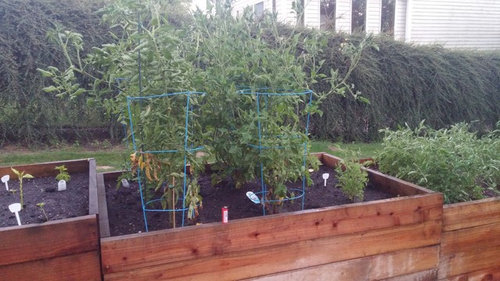
The carrots that we harvested were curly and hairy. We suspect the curly aspect is due to transferring them into the beds as seedlings rather than just growing them directly from seed in the bed itself. The hairy aspect we're not sure. I have read in various places that it means the soil is too fertile?
None of the beans have really taken off at all. They will not seem to grow bigger than a few inches tall. They are starting to sprout a few beans, but they're just not growing upwards much.
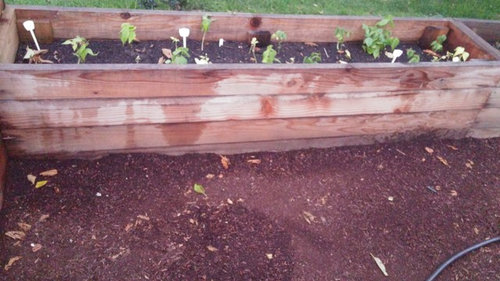
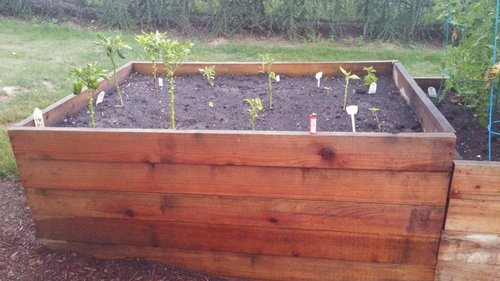
The pepper plants are also stunted. They look healthy and they're sprouting a few little peppers, but the plants are really short, maybe a foot tall?
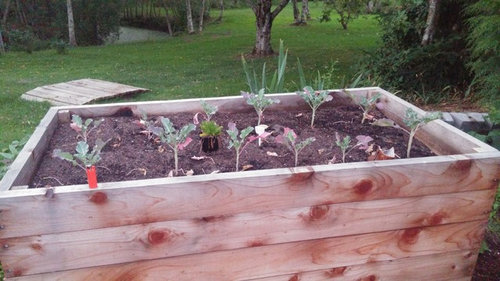
We're not sure on the broccoli yet, its probably a bit early to tell. Though we're worried they are a bit stunted as well.
The confusions and related questions:
We haven't fertilized at all. Should we be fertilizing regularly? Prior to the raised gardens, we didn't really need to fertilize much. I read all the time on here that fertilizing can throw things out of wack more than it can help?
We don't seem to have much life going on in the soil. When we dig into the soil, there are no worms and it doesn't seem like any buggers or anything. Is this because it is new soil and we still need build the lil micro-herd thingers? Should we dig up some worms from the ground and plop them into the raised beds, will this help?
We bought a couple of large bags of Dr. Earth veggie fertilizer. The guy at a garden store said we'd likely need to put it down every couple of weeks indefinitely. We're hesitant to do this since part of the reason we wanted to try organic was so we could move away from constantly buying stuff and to learn to garden in a more self sufficient way and constantly buying stuff is kinda the opposite direction. If we should be putting this fertilizer down, should we make the tea or just use the fertilizer at is?
I keep reading that tilling is bad? Is this true?
I also read that after harvesting we should leave the plants in the garden to decompose, and I also read that we should remove the plants? So confusing! ;)
What should we do to prepare the soil for next year?
Should we bother putting down this Dr. Earth fertilizer or just start working on prepping the soil for next year?
Like I said earlier, we're really trying to figure out which of these problems are coming from being in a raised bed, which are coming from the new soil itself, and which are just plain new gardener errors.
Thanks so much for any advice!!
T
Comments (18)
 10 years ago
Sand and soil are one and the same thing. Soil is made up of the mineral components, sand, silt, and clay, and organic matter.
What is the percent of organic matter to soil in your mix? Optimal is about 6 to 8 percent organic matter to soil.
What is the pH of that soil?
Was a good reliable soil test done to determine what nutrients are present and in what quantities?
How well does that soil mix retain moisture? How well does that soil mix drain?
Whether a "fertilizer" might be needed can only be determined by what a good reliable soil test tells you. Excess amounts of plant nutrients can create as many problems as it may solve because excess nutrients can interfere with a plants ability to utilize another, ie. high levels of Phosphorus can interfere with a plants ability to use Zinc, Iron, and Cobalt. Too much, or too little Magnesium can keep a plant from properly utilizing Calcium.
Mostly it sounds as if those plants are just not getting the nutrients they need.
kimmq is kimmsr
Tony thanked kimmqRelated Professionals
Huntsville Landscape Architects & Landscape Designers · Daytona Beach Landscape Architects & Landscape Designers · Lafayette Landscape Architects & Landscape Designers · Tuscaloosa Landscape Contractors · Gaithersburg Landscape Contractors · Myrtle Beach Landscape Contractors · Anniston Landscape Contractors · Rockford Landscape Contractors · Portsmouth Landscape Contractors · Meridian Architects & Building Designers · Kenosha Architects & Building Designers · Oshkosh Architects & Building Designers · Wausau Architects & Building Designers · Longview Architects & Building Designers · Montréal Architects & Building DesignersTony
Original Author10 years agolast modified: 10 years agoThanks so much for the feedback!
@ kimmq we haven't had any soil tests done this year. We're going to ride the rest of this year out and start learning how to prep the soil for next year first. We figure we'll get a test done prior to planting anything next spring.
@jerry111165 This is exactly the kind of information we're looking for. Thanks so much for taking the time to explain this stuff. Your garden is beautiful and its exactly the direction we wan't to go for growing - no/minimal fertilizer. We have a few acres with plenty of plant life we can get organic matter from, trees (Ieaves), grass (clippings), fruit trees (fallen and bruised fruits), and then substitute in whatever else we need as we learn.
Yes, the soil drains really well, in fact we're a bit worried that it may drain too well.
At your advice we're gonna start looking around to see if we can find a good provider of some high quality compost to mix in for next season.
A couple more questions for ya,
In terms of Organic Matter as mulch, am I correct that we shouldn't be putting green plants such as fresh cut grass, fresh trimmed plants, branches, etc... because they tie up nitrogen while decomposing?
Do ya think we'd be OK to put this Dr. Earth fertilizer on this year still? Or just start prepping the soil up for next year? We really don't want to throw anything out of wack.
Thanks so much!
Tony
- 10 years ago
Have a soil test done yet this year. Since it can take some time for organic soil amendments to be converted into nutrients plants can use waiting until a couple of weeks before planting is not a good thing to do. Find out what needs to be done this year and make any necessary corrections this year so the garden is ready to go in the spring.
Reference your question about mulch. fresh green material used as mulch does not tie up nitrogen while decomposing. Nothing you would put down as a mulch will tie up nitrogen as numerous studies have shown.
Along with a good reliable soil test to determine soil pH and major nutrient levels perhaps these simple soil tests may be3 of some help.
1) Soil test for organic
material. From that soil sample put enough of the rest to make a 4 inch level in
a clear 1 quart jar, with a tight fitting lid. Fill that jar with water and
replace the lid, tightly. Shake the jar vigorously and then let it stand for 24
hours. Your soil will settle out according to soil particle size and weight.
For example, a good loam will have about 1-3/4 inch (about 45%) of sand on the
bottom. about 1 inch (about 25%) of silt next, about 1 inch (25%) of clay above
that, and about 1/4 inch (about 5%) of organic matter on the top.2) Drainage. Dig a hole
1 foot square and 1 foot deep and fill that with water. After that water drains
away refill the hole with more water and time how long it takes that to drain
away. Anything less than 2 hours and your soil drains’ too quickly and needs
more organic matter to slow that drainage down. Anything over 6 hours and the
soil drains too slowly and needs lots of organic matter to speed it up.3) Tilth. Take a handful
of your slightly damp soil and squeeze it tightly. When the pressure is
released the soil should hold together in that clump, but when poked with a
finger that clump should fall apart.4) Smell. What does your
soil smell like? A pleasant, rich earthy odor? Putrid, offensive, repugnant
odor? The more organic matter in your soil the more active the soil bacteria
will be and the nicer your soil will smell, to a point. Too much organic matter
can be bad as well.5) Life. How many
earthworms per shovel full were there? 5 or more indicates a pretty healthy soil. Fewer than 5,
according to the Natural Resources Conservation Service, indicates a soil that
is not healthy.kimmq is kimmsr
Tony thanked kimmq  10 years ago
Quality compost is going to be your gardens best friend. While I'm against tilling I realize it is necessary in the beginning to both ensure plenty of organic matter in your soil and to establish high amounts of soil life - from bacteria and fungus to worms and other larger life forms. So turn in the compost once you're done with this summers veggies.
By quality compost I mean viable, living & active compost. Find someone that uses quality inputs when they make their compost - not wood chips etc. Craigslist is often a good place to start and to be honest, I'd really look into making your own. No one can make it better than you can at home. Stagger heaps so that you always have time to make sure your compost is mature and that there's another heap going for "next time.
Yep, you can scratch in your soil amendments any time. Just remember - successful organic gardening is always and forever about quality compost, vermicompost - ie: decomposing variety of OM. The amendments are added to feed the microbes.
A buddy (my mentor) said it best - "You can not amend your way to quality organic soil. Get the compost/vermicompost figured out and everything will fall into place." Words to garden by.
Once you've got your (quality) compost turned in, you've perhaps mixed in a mess of amendments (your Dr Earth fertilizer) then it's time to mulch mulch mulch Tony. Stagger alternating layers such as old leaves, hay, your lawn clippings. Make it thick and deep. Your lawn clippings won't "steal" N unless it's actually mixed into the soil and once it wilts and isn't green anymore it's fine too. Thick, thick mulch is your friend. It will break down slowly, adding nutrition and OM to the soil. It will keep your soil moist on the hottest of days - watering will become a thing of the past. Fertilizing will become a thing of the past. When you peel it back you'll find worms massing and eating on the decomposing OM. It creates a perfect environment for soil life to thrive.
:)
jTony thanked jerry111165- 10 years ago
Successful organic gardening is about knowing what you soil is and what that soil may need and that means testing and lo0oking at the soil.
Adding compost to a soil that already has too much organic matter is not going to help much and may hinder plant growth.
kimmq is kimmsr
- 10 years agolast modified: 10 years ago
"Successful organic gardening is about knowing what you soil is and what that soil may need and that means testing and lo0oking at the soil.
Adding compost to a soil that already has too much organic matter is not going to help much and may hinder plant growth."
Do you have firsthand experience with having negative results from adding "too much compost"? Because I've been doing this a long time and I've never seen it.
"That means testing" - So, you're telling me that I'm not successful since I've never done a single soil test in my garden? Organic gardeners need to have their soil tested? Really?
Please - tell me how a soil that drains well and has sufficient aeration is going to have negative results by adding mulch or compost? I can't wait to hear this.
My suggestion to Tony was to add some (6" to 8") of quality viable compost yet you come in and say that this could potentially be negative? C'mon.
Organic gardening is not NPK gardening.
J
- 10 years agolast modified: 10 years ago
Tony, when you get a chance take a look here at a great article on Mother Earth News on the "Ruth Stout System". This method of organic gardening does not require the addition of any outside store bought fertilizers - or soil testing.
http://www.motherearthnews.com/organic-gardening/ruth-stouts-system-zmaz04fmzsel.aspx
Layer after layer of "mulch" is added - leaves, hay, weeds, old vegetables, household produce scraps (yep, organic matter) until it is super thick. As it breaks down it creates rich and fertile soil, it retains moisture ( i rarely need to water anything), it draws worms which feed on the decomposing organic matter and which leave worm castings, create pathways through your soil in which water, oxygen and nutrition can flow. Everything your plants will need will be provided by the decomposing OM, although I do occasionally add a few handfuls of chicken manure pellets to a planting hole. I probably don't even need to though.
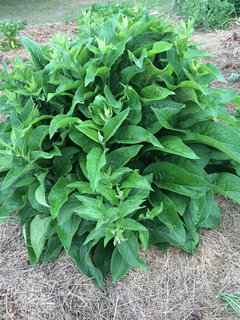
This is my comfrey which is growing in almost pure compost and which only receives layer after layer pf added OM around them. I cut them down to the ground 3 weeks prior to this picture -
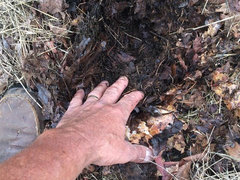
This is some examples of the massive amounts of organic matter I continuously add -
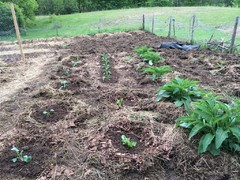
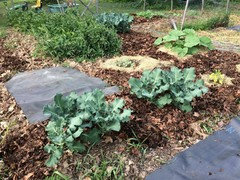
and results.
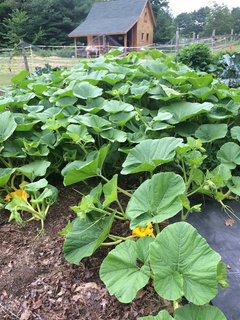
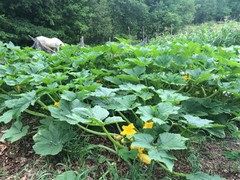
At the end of this summers veggie season I will be adding alot more organic matter - at least a foot or more of autumn leaves layered with even more old rotten hay plus all the old veggies and plants and I'll get next seasons planting holes prepped by loading up with more compost which will sit all winter. Come spring the snow will have flattened all the mulch out and I'll simply pull the mulch aside, plant and put the mulch back into place.
Easy peasy.
j
Tony thanked jerry111165 - 10 years ago
And more -
Tony, if you really, really want to get into this deeper I'm also going to suggest that you read up on utilising "Dynamic Accumulator" plants in the garden.
All plants store certain nutrients (elements) in their leaves, but some do this much better than others, and these plants are called accumulator plants. These plants often send out deep tap roots which "mine" different elements from the earth and then store these elements in their leaves (and stalks). If you noticed (picture) above, I plant and use (sterile) Comfrey as a source of nutrition in my own garden. It contains mucho nutrition - not only high amounts of NPK but also many trace elements. It can be used as a compost activator (see picture below), it can be simply laid on the ground around your veggies, it makes an excellent liquid fertilizer (look up Comfrey syrup/fertilizer) and worms just love it. Comfrey is only one of many, many accumulator plants. We also use it for its bone healing qualities for my wifes Paint mare who has a degenerative bone disease.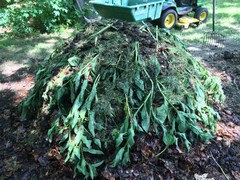
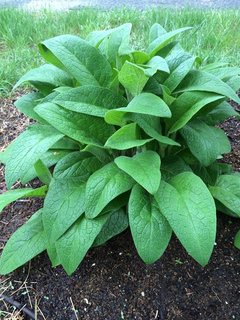
Stinging Nettles, Yarrow, Valerian, Alfalfa, Borage, Dandelion, Horsetail are others - a quick Google search will take you deeper down the rabbit hole that is Organic gardening.
jTony thanked jerry111165 - 10 years agolast modified: 10 years ago
Jerry, I have had and I have seen the results of too much organic matter in soils. They retain too much moisture which excludes air which makes it difficult for plants to uptake the nutrients they need to grow. Bogs, fens, swamps have soils with a lot of organic material and organic matter but they have plants growing there that have evolved in that environment.
To clarify, you will be adding organic material that will eventually become organic matter which is the residue of the organic material added to soils. Many people, myself included, have used the terms organic matter and organic material interchangeably for years, to the point that many people do not know the difference.
I am not telling you that you are a failure because you have not had your soil tested, many people stumble along blindly for years and seem to do okay although insect pest and plant disease issues seem more prevalent in those gardens. Soil testing is a tool to use so you know what is happening in the soil better. Believe it or not but I would suspect that you do most of those simple soil test without realizing it. Many people I have talked with that claim to never, ever, test the soil will pick up a handful and look at it, smell, feel it, and look for life in that soil. That is testing. Plants in many of those gardens show signs of Chlorosis, possibly indicating the soil pH is not right, but they don't know that. Maybe there is too much Potassium which can interfere with a plants ability to utilize Iron. Maybe they have problems with Blossom End Rot because the ratio of Calcium to Magnesium is not right. Maybe there is too much, or not enough Zinc which affects a plants ability to properly utilize Iron and Magnesium.
Everything is interrelated and blindly wandering over the face of the earth is not a good thing to do.
kimmq is kimmsr
- 10 years ago
Kimmq, please answer me this - do you believe that Masanobu Fukuoka was sending his soil out for testing? Or was he "stumbling along blindly"?
Tony, this is a fantastic book that I'm sure you'll enjoy. It's called "The One Straw Revolution - A Guide to Natural Farming" by Masanobu Fukuoka. Here is a link to the PDF - http://www.appropedia.org/images/d/d3/Onestraw.pdf
Kimmq, who would be stupid enough to garden in a bog, fen or swamp? Lolive already stressed the importance for sufficient drainage & aeration. There is no such thing as too much moisture in a properly aerated and draining soil - So besides that, what have you got for problems that can arise by using too much OM? I'd like an answer to this question also.
"Show signs of chlorosis, possibly indicating the soil pH is not right"
It has been proven time and time again that humic acids & soil microbes in compost and decaying organic matter buffer & stabilize soil pH. An organic soil based on large amounts of compost/OM is dynamic - it is ever and constantly changing as different items/materials break down. It could be completely different 6" away from the spot you took a test - and it doesn't even matter. It is controlled and buffered as needed by the soil environment.
I suspect that you and I are very different gardeners in our methods. I am NOT an NPK gardener not do I even believe in the NPK philosophy. The variety of organic matter I supply my gardens with contains absolutely everything my plants (and soil) need to not only survive but to thrive. It simply isn't even a "thing" for my gardens to contain too much of a certain element - I simply make sure that everything necessary to support plant growth is there and both plants and microbes use what they need, when they need it depending on the stage of life they are in at the time. This (too much of a certain element) could be an issue for chemical fertilizer gardeners but is not for natural organic farming.
Do you see evidence of pest damage or disease (Powdery Mildew would be a good one on my squash or pumpkins) in my photos?
jTony thanked jerry111165 - 10 years ago
"Kimmq, who would be stupid enough to garden in a bog, fen or swamp?"
There are people that do that because they have no choice. That is what they have to live with.
" This (too much of a certain element) could be an issue for chemical fertilizer gardeners but is not for natural organic farming."
That is not true. One major source of excess Phosphorus in our rivers and lakes is animal manures spread on fields and then washed off into the rivers and lakes which creates those toxic algae blooms. The City of Des Moines, Iowa is suing counties up the Raccoon River for the cost of removing excess Nitrates due to manure run off from the farms in those counties. Excess nutrients from organic sources are just as much a problem as from synthetic sources. By the way, and for your information, the nutrients in organic materials are just as much chemicals as those from synthetic sources.
Not seeing signs of insect pests or plant diseases in pictures means little since the can be subtle or th3e person taking the pictures chooses not to so any that do exist.
kimmq is kimmsr
- 10 years ago
Well, I guess there's no winning here lol - we're talking about small organic gardens and raised beds in this particular thread, not thousand acre farms.
Didnt want to answer my two questions about soil testing (stumbling along blindly lol) and the (ahem) issues that arise from the addition of "too much" (Ha!) organic matter?
You keep gardening your way and I'll garden my way which has proven results year after year (over many years - and only continues to get better), is simple, inexpensive and easy.
No outside store bought amendments are needed, pH becomes a moot point - no checking and attempting to adjust is necessary, all soil nutrition is added with the addition of varieties of OM and compost (although items like Kelp and neem cake can be invaluable).
Tony, let me know if you're interested in further discussion on natural organic gardening.
Peace!
jTony thanked jerry111165 - 10 years ago
I could not speculate about whether Fukuoka ever had any soil tests done or not since nothing I have read about him tells me that. I could also not state, with any certainty that he did not because nothing I have read says that either. He did experiment (test) with different methods and he observed how nature did things, which leads to balance. Of course Ma Nature does not have the soil tested, but what does grow in nature is somewhat limited, and is often plagued by disease and insect pests indicating a nutrient problem.
"Scientia potentia est"
kimmq is kiommsr
- 10 years ago
Tony: I hate to say this, but I would never consider importing soil, because you might easily be importing somebody else's problems, so I would always plan to grow my own. Now that doesn't help you whatsoever, so I would plan to grow soil-building crops for ,say, three years, rather than vegetables. A whole variety of them, way beyond conventional annual rye and hairy vetch, such as comfrey and alfalfa which will bring up nutrients from well below the raised beds. Compost half of the growth and incorporate the rest. And: keep adding compost, ant test once in a while to see how you're doing. A useful (but not much used test in horticulture) test that you might want to explore is the BRIX of the sap in the leaf tissues. Regards, Peter.
Tony thanked peter_6 - 10 years agolast modified: 10 years ago
Tony, When you mention your bed depth, do you mean that you have bottoms under the beds, so that they're essentially very large containers, or just that you've put frames on the ground and filled them with soil?
If your beds have bottoms under them, so that the roots can only dive two or three feet, that would IMO cause many problems...oh. I see the "sticks and logs". OK. I suspect that that layer has cut off your plants' world at the two or three foot mark, whether you have a bottom on the bed or not. You're effectively container gardening.
When you're container gardening, your plants are dependent on you for everything. When you're gardening in the ground, they are much less dependent. In the ground, plants can dive WAY deeper than two or three feet. And they can benefit from the bank of moisture and nutrients down there. Edited to add: Oh, and roots can often go a lot more than two feet wide, too.
Lettuces are very shallow-rooted, and their need for nutrients isn't that high. So it's not too much of a surprise that they're doing OK. I'm not at all surprised that your other plants are doing badly. I'm not saying that it was inevitable, but I also don't find it surprising.
I would suggest that you fertilize, at the recommended levels, and see what happens. If that works, then that's pretty decent evidence that the soil that you purchased has low fertility.
You say that you're going to buy more compost next season. But you succeeded, in the past, on the soil that you already have, right? And you want to avoid outside inputs, right? So why are you getting essentially ALL of your soil as an outside input, instead of using the local soil that was successful for you?
If I could wave a magic wand, I would create a three-part experiment on your property:
- I'd dig out one of the raised beds, remove that layer of branches and logs, remove the bottom of the bed if it has a bottom, dig a spade depth into the soil below the bed, and re-fill the bed with the purchased soil you've been using.
- I'd dig out and clear out and dig below another raised bed in a similar way, but fill it with your own soil, mixed in with a modest amount of certified organic compost, of a brand other than the brand that you've used--or with compost of your own making.
- I'd dig a third bed in the ground, digging at least one spade depth and ideally two, mixing in the same modest amount of the compost that you used in the second bed, but not raising it at all.
Then next year I'd garden and see which one does better. I suspect that the first bed will do somewhat better than it did this year, the second bed will do fairly well, and the third bed will do fairly well.
This year: Fertilize! I know that you hope to avoid fertilizing in the future, but fertilizing is IMO the best way to find out whether your issue is low fertility.
Another possibility is water. What is your watering scheme for those beds? Have you tried digging down to see if they're getting wet all the way down? You have no capillary connection with the soil below, because of those logs, so those beds will likely dry out much, MUCH faster than your garden did when you were just gardening in the ground.
Tony thanked M. Wilson Tony
Original Author10 years agoWow, all of this information is so helpful. Thank you so much everyone for taking the time to help on this. We're hoping that next year we'll have amazing pictures to share with you!
OK, we're gonna have a soil test done next week. May as well just do it and figure out now. Thanks for the advice :D
We're on the hunt now for a good source of compost to mix in. We're gonna start prepping everything in a few weeks once we pull the tomatoes off. Get good compost mixed in, and try to find a good source for OM as well. We've started saving all of our lawn clippings and leaves that are beginning to fall into a pile, gonna start researching how to make compost :D
Seriously, your garden is amazing and exactly what we're hoping to eventually reach.
Also, thanks for these links. I'll be through them starting tomorrow after work.
I have a feeling I will have a ton more questions on stuff as we start prepping the soil and as we go along. Is there a message system on this site?
Yeah, in hindsight I think you're probably right, we really should have just built our own soil up, but we really had no idea. We're so new at all of this that we fully believed "Well we'll get this soil from the garden center and we'll have glorious plants!"
I also think you would be right that we should spend a couple of years building the soil up, but if I'm being totally honest, I'm not sure we have the patience to wait... Is that terrible?
We built frames on the ground and filled them up, but we did put about maybe 8 inches of small logs and sticks in the bottom of each... No bottom other than the logs.
The concerns that you list about the plants being cutoff from the ground is one of the things I've been wondering about. I'm really hoping that the sticks were small enough and spread out enough that after this year it wont be an issue anymore.
The main reason we bought the soil from a local garden center is because we needed so much of it to fill them. It was a LOT of soil.
I think you have a GREAT idea about digging all the way down to see how much 'connection' we have with the soil below. I'm gonna do that on the beds that we're finished with and see how it goes. The only thing still growing is a few onions and the tomatoe plants (which are doing pretty good).
I'm glad to hear you bring up the points about the raised beds, it's been one of the things I've been concerned about.
Again, Thanks everyone for all of your help! This community is pretty damn amazing...- 10 years ago
The only way we learn is by asking questions, so continue asking them. You may find this tutorial on composting some help.
kimmq is kimmsr
Tony thanked kimmq




jerry111165