Software
Houzz Logo Print
kpittsle

Kate's Rain Garden

10 years ago
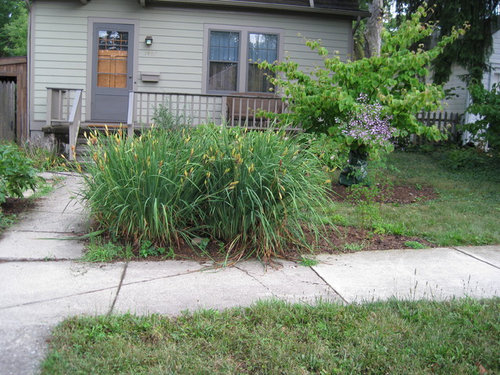
Our property is very small, there are three possible sites for a small rain garden--all of them tricky.

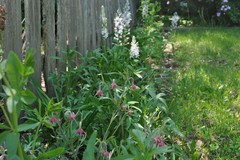
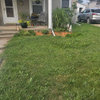
1.) I have a "half rain garden." When I worked with Abbott's Nursery to put in a new front garden, I asked for a rain garden. The designer said that the left corner of the yard where there is a big patch of extremely hardy iris and some meadow rue works as a rain garden. The front yard slopes to that corner so it catches rain from a downspout on the right front of our house as well as rain from a downspout on the left side of the neighbor's garage. The sidewalk also slants slightly towards the iris garden. This could perhaps be improved. It's possibly tricky however, because there are geothermal coils in a 225 foot deep well under this spot. I'm also very find of the iris and rue, so a bit hesitant to change this. (This isn't a good year for the rue--sometimes it makes a large "cloud" of lavender blooms.)

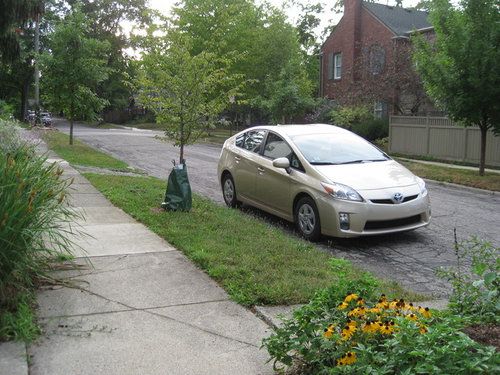
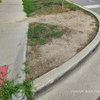
2.) The extension. Our street runs downhill for many blocks and we are only a few houses from the end of this downhill run. When it rains, you can see water flowing down the sidewalk. Would it be possible to create a rain garden in the extension to capture this flow? The only thing currently in the extension is an American Hornbeam, just planted by the city. I read that the American Hornbeam likes water and grows near riverbanks.

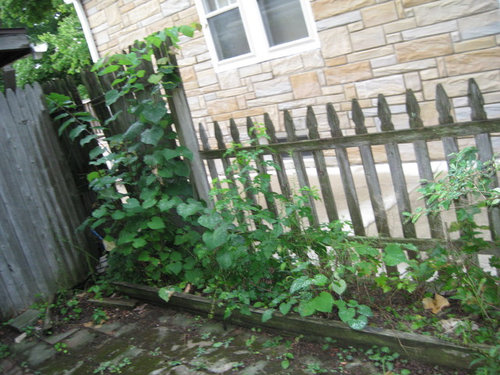
3.) Small narrow rain garden to capture water from a shed roof (8' x 12'). This might be the most beneficial, but also the trickiest. Currently the gutter on this shed sends most of the water down the neighbors' driveway. This probably isn't great for their driveway and we really like these neighbors :) It's tricky, since it is pretty close to our house--not 10 feet away. We don't get water in our basement and wouldn't want to risk the possibility. This also might be a good spot for a rain barrel.

Comments (17)

  • 10 years ago

    Hi Kate,

    Your second option is a slam dunk. But you could do #3 too. I wouldn't do #1, since it sounds like it is already functioning. Plus, you are fond of those plantings and wouldn't want to mess them up. You could always do some small modifications, as you "follow that raindrop" to make sure the water really gets there, but I wouldn't start there.

    If you are considering #3, here are things to think about:

    How far away from your basement is this area, exactly?

    What is your soil? clay? sand?

    Is there a safe overflow (it might be the neighbor's driveway, where it flows now)

    You were exactly right to think about whether you have ever had water in your basement.

    Ultimately, the choice comes down to: Which option makes your heart sing?

  • 10 years ago

    I have a rain garden in the area between the sidewalk and the street at my house, and I love watching the sidewalk torrent of water that flows down it go right into my rain garden. It is such a dry spot to garden in, that the rain runoff water is really what makes it flourish.

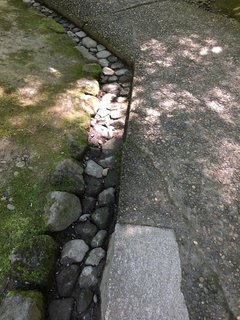
    The challenge I find is that every year I have to clean out the trench that leads the water from the sidewalk into the garden. So I can't really grow plants there. (I thought it would just flow over them, but that isn't what happens.)

    Just recently I was in Portland and saw this in the Japanese garden there - a rock-lined trench. So pretty! And it would be easy to rake/shovel out any debris.

  • 10 years ago

    Thanks Susan.

    For number 3 (the shed rain garden) - It would be 6.8 feet from the foundation. The small spot for the rain garden is 124 inches by 21 - 24 inches (a little wider at the shed side then it gradually narrows) -- so about 18 square feet. That is only 18.75 % the size of the 8x12 shed roof.

    I don't know enough to say what type of soil. It doesn't seem like sand to me, but it also isn't like the clay I remember from art classes. The guys from Abbott's did say it was "really good" soil--so maybe loam? It's rather dark and I have earthworms--does that mean something? During the dry spell I tried to dig out some iris for someone, and I really couldn't dig easily--does that mean clay? The soil seems to absorb water fairly well, since I've never seen a puddle on the lawn or garden. I see a test on the web where you put some soil in a jar of water to see what type it is -- I'll try that.

    If it's feasible, I might like to do number 3, since I feel bad about dumping so much water in the neighbor's driveway (also in a couple weeks we'll be repairing/replacing shed walls--so this makes an overall project.) But overflow from the rain garden wouldn't have anywhere else to go but neighbors driveway. Would that create a mess on their driveway?

    Perhaps we could redo the shed gutter, so it has a downspout on two sides, on one side it could go to a rain barrel and the other to the rain garden--then the rain garden gets only some of the water.

  • PRO
    10 years ago

    Hi! I work with Susan in the Rain Garden Assistance program. I would be hesitant to do #3 since you are not 10 feet away from your foundation. I wouldn't want you to create water problems! In terms of your soil, you could dig an 18"' hole, fill it with water and see how long it takes to drain down. If it takes over 24 hours you have clay! Anything less than that is not clay. When it was so dry earlier, lots of soil felt really difficult to dig in- not just clay. Earthworms are in all kinds of soil as well, but I like that you are looking for clues! It is a good sign that water drains quickly in your yard. For your purposes, it may not matter since the space is so close to your foundation. I would recommend a rain barrel for #3 and put a rain garden in #2!

  • 10 years ago

    Thanks, I was coming to the same conclusion and already have a rain barrel picked out. Am exploring the extension as possible site. Unfortunately, I think that sidewalk tips the other direction. Will take a level out there today.

  • PRO
    10 years ago

    Great! If the sidewalk tips the other way, does it then dump water on your property? Maybe that would be a good place for a rain garden!

  • 10 years ago

    Old west side sidewalks can be wonky, half the sidewalk tips towards the extension till one pavement square levels out then the rest tip toward the iris garden, which already functions much like a rain garden.

    The extension area crosses the property line and the best spot to let water in is on the neighbor's end. Luckily, she's a wonderful person. Now that she's back from a long trip, I have permission to extend the rain garden across both properties and she's interested in helping decide on plants.

  • 10 years ago
    last modified: 10 years ago
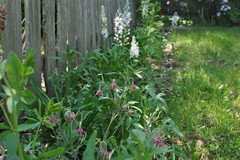
    Two plants I want to combine in my rain garden:
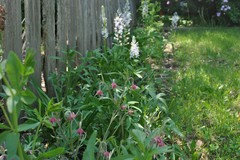
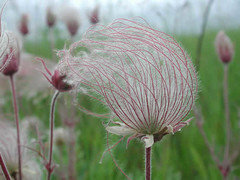
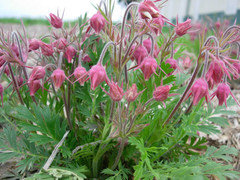
    Prairie Smoke and Wild Hyacinth (Camassia scilloides).

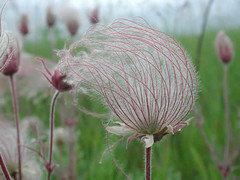
    I think Prairie smoke is really interesting looking, both the funky looking pink flowers and especially the wispy pink seed heads. Also, is it short. Since my rain garden will be in the extension, I want to use mostly short plants. I saw on the web a suggested pairing of Prairie Smoke with Wild Hyacinth. Wild Hyacinth is leggy, so the Prairie Smoke hides the spindly legs. Wild Hyacinth is either white or a very light blue/purple--this will look good with the pink Prairie Smoke. The Wild Hyacinth get's two feet tall -- but the upper part isn't dense, so I think it will be ok for an extension garden. I don't know if it smells like cultivar hyacinths, but that would be nice. One concern is that I haven't been able to grow regular hyacinths, because the squirrels dig up and eat the bulbs, but I'll try it anyway. Wild hyacinth is native to Michigan, but endangered--so I also like the idea of growing some for that reason.

    Photo credits:
    Ramble on Rose blog
    http://rambleonrose-rr.blogspot.com/2011_06_01_archive.html

    Prairie Moon Nursery
    https://www.prairiemoon.com

  • PRO
    10 years ago

    Kate, I'm happy to hear that you and your neighbor worked out a plan to build the rain garden in the extension. I think the pairing of Prairie smoke and Wild hyacinth will look really nice together- the texture and colors will look great. Since they both bloom in the early spring, are you thinking of adding in any other plants that bloom in mid summer or fall? Maybe black eyed susans in the upland parts? Nodding wild onion would also look great! It is a good idea to plant low growing plants in the extension- anything 2' above the grass elevation is at risk of having to be chopped back!

  • 10 years ago

    Thanks. Yes, will also add other plants. Actually I may have too long a list of plants I like right now. Both Nodding Wild Onion and Black-eyed Susan's are on that list. I really like both of those.

    I could use some advice on whether to incorporate the tree in the extension--it's possible to stop the rain garden before the tree or to use the rain garden to water the tree. This is a newly planted American Hornbeam from the city. From what I've read Hornbeam's like water (they grow on stream banks) and this new tree isn't happy about the hot weather this summer (although I've been watering it leaves are getting crispy on the edges). Since the tree is so new, I'm thinking that the roots haven't yet spread far--so we may be able to dig without disrupting the roots and long term the rain garden water might benefit the tree. Does this make sense to you?

    We also need to find a way to work with downhill grade of the extension down to the street level. I'm guessing that it may be at about a 30 degree slant. I'm thinking it might make sense to create some swales from the driveway/sidewalk through the upper part of the extension and create a long rain garden along the street side of the swale, perhaps using rocks to build up the curb edge. Does this sound right?

    Here is the overall site plan. Pencil lines show where the water flows--I've been out in the rain watching. I have new respect for architects, as this messy thing took me hours!

  • 10 years ago
    last modified: 10 years ago
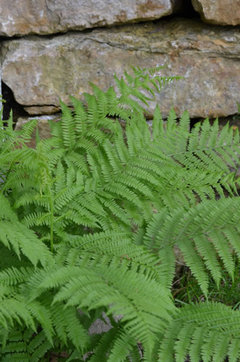
    Kate’s Short Plant List (2 feet maximum height)

    Short Full Sun Plants (probably use these):

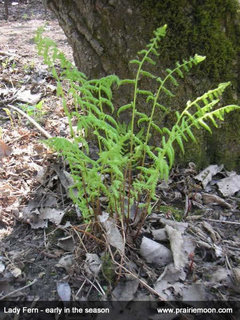
    *Lady fern - 12”, wet, spreads slowly
    *Prairie Smoke, - 8” - blooms April, May, June, (cool seed heads later)
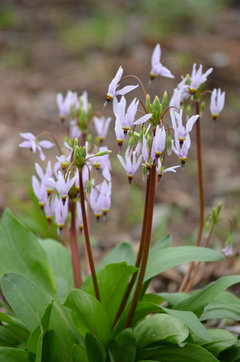
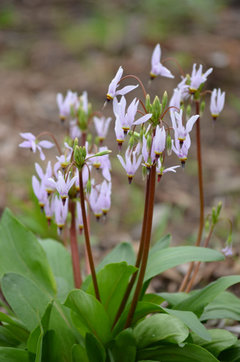
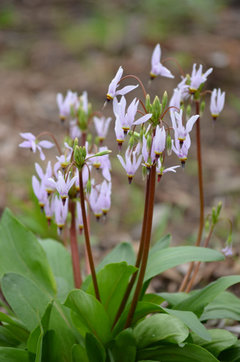
    *Midland Shooting Star - 12” - blooms April, May, June
    *Wild Hyacinth, 2’ - blooms May, june
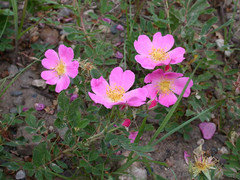
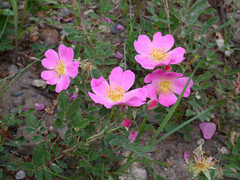
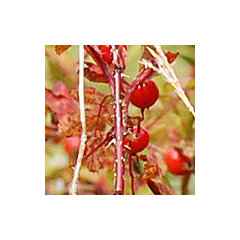
    *Prairie wild rose - 2’ - blooms June July, orange red foliage and red hips in fall
    *Purple Love Grass - 2’ - seed heads bloom July, Aug - dry, spreads
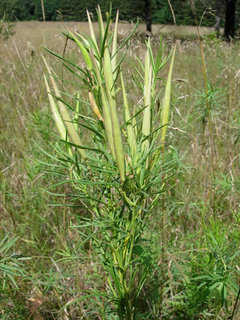
    *Whorled Milkweed - 2’ blooms July, Aug, Sept
    *Black Eyed Susan - 2’ blooms June July Aug Sept Oct
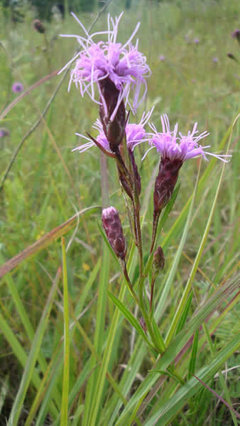
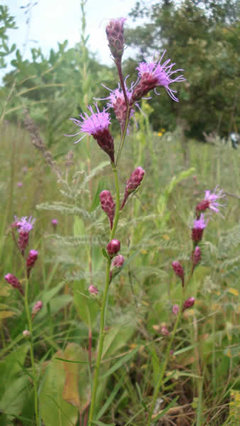
    Dwarf Blazing Star - 12” - blooms July, Aug, Sept, Oct
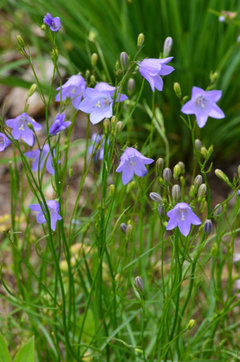
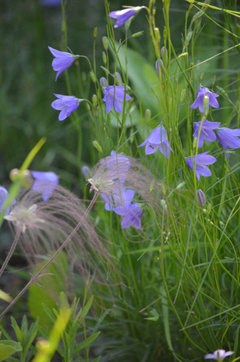
    Harebell - 12” - blooms June-Sept (might fail, but it’s my favorite wild flower) - dry, plant in rocks?

    Other Short Full Sun Plants (maybe use some of these):

    Wild Geranium - 12” - blooms April May June July
    Nodding wild onion - 18” - blooms July, Aug
    Columbine - 2’blooms April, May June (I like the leaves too)
    Dwarf Larkspur - 12” - blooms April, May June
    Hairy Beardtongue - 18” - blooms May June
    Prairie Blue Eyed Grass - 6” - blooms May June - Dry-Mesic Dry
    Tephrosia Virginiana (Goat's Rue) - 12" - blooms June July - Dry - nice pea leaves & fuzzy grey seedpods
    Bottle Gentian - 2' - blooms Aug Sept Oct - wet
    Spotted Bee Balm, Horsemint - 2' - dry - blooms July, Aug, Sept
    Ratibida columnifera (long-headed Coneflower) - 3' but sparse top - blooms jun,july, aug - medium to dry

    Short shade plants (may not have much or any shade):

    Doll’s Eyes - 1-2’, blooms may, june, berries Aug Sept (shade)
    Jack in the Pulpit - shade

  • 10 years ago
    last modified: 10 years ago
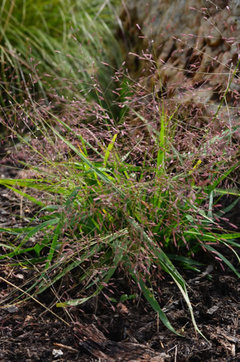
    April blooms:
    photos from Prairie Moon Nursery

  • 10 years ago

    May booms:

  • 10 years ago

    June blooms:

  • 10 years ago
    last modified: 10 years ago
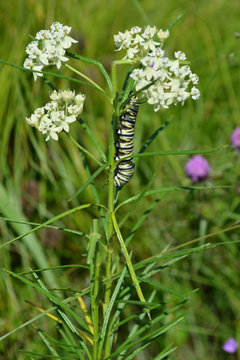
    July & August

    blooms:

  • 10 years ago
    last modified: 10 years ago

    September and October:

Sponsored
Buckeye Basements, Inc.
Average rating: 5 out of 5 stars40 Reviews
Central Ohio's Basement Finishing ExpertsBest Of Houzz '13-'21