Software
Houzz Logo Print

What is the correct way to remove potting soil from a shrub and repot it in gritty mix?

Comments (11)

  • 10 years ago

    Hi Gary,

    This is how I usually bare root plants:

    Prepare all the equipment in advance, you'll need a chopstick or skewer, a bucket of water, (tepid is preferable), the new pot, and the gritty mix.

    Remove the shrub and try to gently remove as much of the old mix as possible by hand. Its really important not to let the roots dry out, so it's best to work in the shade, and fast ;) Whilst removing the old mix, dunk the roots in the bucket of water frequently to help remove some of the mix and to keep the roots moist. Use the chopstick to help remove clumps of mix which wont easily come loose.

    When the plant is bare rooted with as much as the old mix removed as possible, put some gritty mix in the new pot and set the plant in. Put some more gritty mix over the exposed roots bit by bit, and use the chopsticks to ensure that the mix gets into all the little spaces amongst the roots. Ensure that the top of the root ball is just beneath the surface of the mix, when you've filled the pot.

    Leave the plant in shade and don't fertilize for two weeks, this is to allow the plant to focus on producing new roots to re-establish itself in the new mix. When it pushes out new foliar growth, it's time to put it back in the sun and resume fertilization.


    Lewis


  • 10 years ago

    Gary, you say "When it pushes out new foliar growth, it's time to put it back in the sun and resume fertilization." Doesn't that depend on the plant? For example, if you are dealing with a sun loving plant that only pushes out new growth every month or so, keeping it in the shade for that long risks it becoming acclimated to shade and getting sun burned when put back out in the sun again. No?

  • 10 years ago

    Very good point, Vladimir,

    I've just realised that I didnt ask what the plant actually was, so just gave a generic repotting method.

    Gary,

    I agree with Vladimir, it really does depend on the plant


    Lewis

  • 10 years ago

    I filled a 5-gallon bucket with water.

    I then removed the plant from the nursery pot, submerged its roots in the water and gently "sloshed" the roots in the water, using my fingers to loosen the potting soil and to separate the roots.

    Then I spread the roots over a cone of gritty mix in a container and slowly poured more gritty mix over the roots, using a bamboo stick to work the gritty mix among the roots. I finished by filling the container almost to the top with gritty mix.

    I'll keep the plant in filtered shade and water it daily until new growth appears then move the plant to its final location.

  • 10 years ago

    Gary, which plant is it?

    Like Vlad says, depending on its light preferences, keeping in shade may not be a good idea, and I apologise for not considering that before giving advice. It sounds like the repotting went smoothly though :)


    Lewis

  • 10 years ago

    Yes, I trimmed the roots.

    My biggest confusion with gritty mix is knowing when to water the plants. The water flows so quickly through the mix I don't know if enough is been absorbed by the Turface. The surface of the mix always looks bone dry. Digging down into the mix to determine if it's moist seems to be a pain and it would disrupt the roots.

  • 10 years ago

    When you first repot, keep a mental image of where the roots are located in the soil and make sure you water often enough to ensure the soil stays moist in that area - even if it means watering daily. If you screened the ingredients, you shouldn't be in any danger of over-watering. Very often, the grower is unable to find ingredients of a favorable size and decides to use larger than ideal materials - like large bark chunks or grit that is larger than 3/16. The larger particle fraction, especially if it's 2 ingredients that are overly large, can have a significant impact on water retention.

    Turface absorbs water immediately. If you're covering the entire soil surface and using something like a water break, the entire soil volume is getting wet as water passes through the medium. A splash of water a minute or two after you initially water will help any dry bark pick up even more moisture.

    Al

  • 10 years ago
    last modified: 10 years ago

    A resin container measures 10" tall and 10" in diameter with a resin saucer.

    There's about 1" between the rim and the surface of the gritty mix.

    I water when the gritty mix looks bone dry -- every 2 or 3 days(!) -- by adding water until it spills over the rim. Almost immediately, water starts flowing through the container's drainage holes and out of the saucer..

    If Turface absorbs water immediately, does that mean I'm watering enough, too much or not enough? Note: Moss is growing in the saucer.

  • 10 years ago

    If you manage to over-water anything in the gritty mix, it's because you watered too frequently and likely because the ingredients weren't screened so the mix supports no (or very little) perched water. You can't water too much at any one time. Even if you poured 10 gallons of water through a 1 gallon pot, you can't apply too much water at one time. This SHOULD be true of any soil you choose to use, but unfortunately there are many soils that force the grower to water in small sips to avoid intervals between waterings measured in weeks instead of days. Growers that complain about 2 day watering intervals as opposed to 2 week intervals don't realize or have ordered their priorities such that they don't care about what they're giving up in terms of their plants' potential.

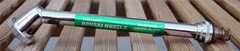
    I generally water so no water spills over the rim. I use a high quality Masakuni water break

    and wet the entire soil surface. When water first starts to pour out the bottom of more conventionally shaped containers, I stop watering. For bonsai pots, I spray the soil surface, go to the next pot and spray that soil surface, then go back a pot and quickly hit it again to be sure the entire volume of soil is moistened. Larger volume pots get watered once & small volume pots get watered twice - usually.

    Al

  • 10 years ago
    last modified: 10 years ago

    I have 50 conventionally-shaped containers with gritty mix. (40 cu. ft.!)

    I fill the first container to the rim (and the water flows out of the drainage holes) then I go on to the next container. When I've watered all 50 containers, I re-fill each container to the rim.

Sponsored
CHC & Family Developments
Average rating: 5 out of 5 stars6 Reviews
Industry Leading General Contractors in Franklin County, Ohio