Software
Houzz Logo Print
patrick_gabriel2062163

Heating plants during winter?

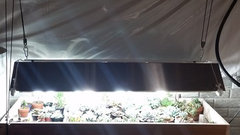
I am curious to know if anybody uses a heat source for their plants. I have all of mine in the basement under grow lights for the winter, where they stay pretty happy, however, I have been toying with the idea of applying some mild heat to keep them actively growing. Ambient air temps are 60 to 62°F and soil temperatures are around 58° F. I was thinking they would benefit from being 10 to 15 degrees warmer. I browsed around on some of the other forums on the sight and many people use heat mats. They can be pretty costly (and have short lifespans) and I think they would be ineffective because the bottoms of the pots are raised up off of the table to allow for drainage and air circulation. Maybe a small space heater would do the trick, or a heat lamp, like the ones used in reptile tanks? Will the plants suffer from not having a dormant period? I would love to hear some opinions on the matter.

Comments (37)

  • 9 years ago
    last modified: 9 years ago

    I think they should grow very well with temperatures around 60F ambient. Under lights, the plants would be much warmer during the day (if your lights are pretty bright).

    My grow area ambient temperature is typically around 77F in the winter and I would actually prefer it to be cooler for better growth! Right now it's around 60F, which is great for the plants but the rest of my home feels like an ice box.

    All my winter growers are very actively growing right now. My opportunistic succulents are also growing quite well too. Only a couple have gone dormant and I am watering them sparingly. The rest are watered fully and regularly, just not quite as often as in the spring/summer/fall.

  • 9 years ago

    I use a radiant space heater, the kind that looks like an old fashioned heated water system. This one is filled with oil. I keep it at a low setting, and my grow room stays closer to 70 rather than 65. One heater, 120sf room. Maybe an option for less expensive/longer lasting.

    ez

  • 9 years ago

    My lights are pretty strong and I don't get any etoliation. In fact I think they are doing better than with the direct sunlight they were getting from being outside where they soaked up some rays from dawn until noon. I am happy with the growth of most of them. I water about every two weeks or so, but only when they need a drink. I'm not ashamed to admit that I'm a helicopter gardener and I would really like it if my plants needed me more :) I should probably just switch to plants that need more attention but I'm only interested in succulents. I also think adding heat would reduce humidity somewhat, my basement is damp like I think most are.

    So let's get a little bit more specific. My favorites by far are echeverias so whatever i decide, the rest will just have to go along for the ride. I have a couple of agave pups that have really stalled out that I would like to grow more though. Are echeverias winter growers? What are winter temperatures in their natural habitat like? I know it's hard to generalize with so many varieties, but could we say most spend their winters around x°? If someone could put together a bell curve with growth rate on one axis and temperature on the other that would be awesome! Just kidding.

  • 9 years ago
    last modified: 9 years ago

    I think succulents certainly require plenty of attention. =)

    A friend of mine is taking care of my plants and I can tell that they aren't in as nice condition as how I left them. For the most part many are just fine, but there are a few that need attention and care.

    In my experience, Echeveria are pretty opportunistic growers. Are you able to increase your basement temperatures temporarily?

  • 9 years ago

    Not really, it's a pretty wide open space so I would probably have to build a box around the table in order to get any amount of efficiency from whatever form of heat. I'm thinking my cfls might provide enough heat if I enclose it. Just trying to get some opinions on whether or not it would be worth the trouble. After seeing how well they are doing I may not even take them out for the summer.

  • 9 years ago
    last modified: 9 years ago

    I can't imagine indoors being better than out for 99+% of plants. I will be curious to see how this works out for you. Mine can't wait to come charging out into the backyard in spring.

    ez

  • 9 years ago
    last modified: 9 years ago

    Agree with ez - outside is much better for he plants...As soon as night temps stay consistently close to 50°F, they are going outside! :)

    IMO, you don't need to build a box. How about suspending sheet of 6mil plastic around the area you have plants in? I would staple plastic to a piece of strapping, mount it on ceiling, and also staple lower edge so it doesn't blow around.

  • 9 years ago
    last modified: 9 years ago

    I find outdoors is just so much easier for plants. Care is faster and more convenient. Cheaper too! Can't wait to put my plants out again in the spring.

    Around 100 of my Haworthia are kept indoors all year long. They display excellent progress throughout the year. I find it is easier to provide the optimal amount of light inside rather than outside. Particularly in the fall and winter, I can provide much more light than what is available outside.

  • 9 years ago

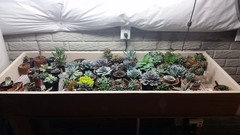
    It's still early on in the winter so I guess I will just have to see how things go. Truthfully I haven't really grown many succulents outdoors yet. This past summer I did some experimentation with putting out a few of the ones that I wouldn't mind getting abused. I feel like caring for them was way more difficult. I had to protect them from the rains in the spring, it rains pretty much every day for a couple months, not to mention the fact that it's overcast about half of the year, and then it goes to 95% humidity for a couple months and then very hot and bone dry for a while. The range of conditions is very wide and the weather in Ohio can change in a heartbeat. Temperatures often fluctuate by 30 degrees or more from day to night. To me it just isn't really worth all of the trouble for a couple of hours of sunlight. I don't have a place where I can give them full sun. Then you factor in pests, wild animals, wind, the dog, the kids etc. My basement temperatures and humidity rarely fluctuate at all, I can control the lighting, and by this weekend my flood/drain table should be finished so I can water the entire collection with the flip of a switch :) What are the downsides of indoor growing? The electric bill, which isn't all that bad with the 8 cfl's that I'm running now, and slightly lower temps than I would prefer in the winter time. I collect water through a rain barrel so that's free. I'll post some photos so you all can see how well they are doing now.

  • 9 years ago

    What are your plans for a flood and drain system? Will you be growing your succulents hydroponic style?

  • 9 years ago

    hmm good question...i currently have mine in another room that is probably the warmest room in the house..but will eventually move back into their original location...which is quite cool..about 60' maybe a few degrees above..and was worried about them not being happy about this cooler environment...the light i have doesnt really give off any heat either which has been a plus

  • 9 years ago

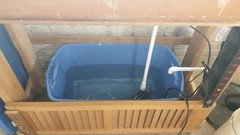
    Hmmm...I guess so, well...kind of? All of my succulents are planted in a mixture of turface, #9 aggregate (stones a little smaller than pea gravel), and pine bark fines mixed 1:1:1 so it's very fast draining. When the table is done it will allow me to water all of them without having move them, or even touch them and without getting water on the leaves. The table will fill with water from a reservoir below via an old aquarium pump. When I feel like they have soaked enough, I can open the drain and the water will return to the reservoir. Hydroponics typically involves a complex setup with all sorts of bells and whistles attached. My setup will be more like a bunch of plants sitting in a bathtub. I can post pics this weekend if your interested.

  • 9 years ago

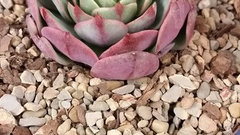
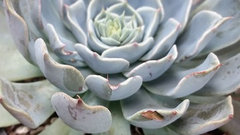
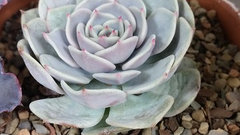
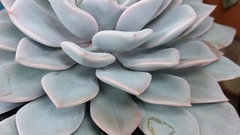
    E. 'Ramilette'

    E. 'Azulita'

    E. 'Fleur Blanc'

    E. 'Neon Breakers'

    E. peacockii

    E. 'Mexican Snowball'

    Graptoveria 'Debbi'

  • 9 years ago

    Definitely post photos of your setup!

    I wanted to create my own sort of flood/drain system for a while now, however I wanted to still keep my plants in their pots and not reuse the water. The main reason I haven't done it yet is because a stainless steel tray large enough for parts of my collection would be extremely expensive. Using acrylic may be cheaper, but that stuff is pretty pricey too.

    If the volume of your soil area is large/significant, I recommend tweaking your mix to have a much lower water retention. Even in smaller pots under lights I find that 1:1:1 holds far too much water. However, Echeveria are fairly forgiving plants and it might work just fine. If your plants start to split the leaves then you will need to address the soil ASAP!

    Recommend getting a pH and EC meter if you don't have them already. Would be quite important to keep track of your water quality since you plan on reusing it.

    Each time you water by soaking the dissolved salts will increase. After 5-6 uses I expect your salt levels will be too high for further water reuse. This is based on my own experience and measurements with reusing water. Note that I do fertilize my plants so that has some impact on my readings.

  • 9 years ago

    I have definitely been considering changing my soil mix. The pine bark fines float so if I accidentally overfill the table it will all float out of the pots and make a mess. I haven't had any issues yet with it retaining too much water but since I am new to gritty mix and "hydroponics" I will be keeping a close eye on them. As of right now it takes about 4 or 5 days to thoroughly dry and I usually water at about 10 days or when they start to look stressed. The E. 'Ramilette that I posted above is a good indicator for me because the leaves turn that vibrant red and start to fold up towards the center. It has been about 10 days now since I watered, I'm trying to hold out until my project is done so that I can give it a good test run right away.

    My box is made from some wood that I had laying around from some old furniture, which I am sealing with waterproof rubberized spray paint. I originally planned to use a plastic liner but my budget would not allow for the the good thick stuff and the thinner plastics tear too easily.

    I had considered the accumulating salts from my fertilizer. I wonder how many uses I would be able to get out of the water before I would have to change it out. I was really trying to keep this as simple as possible so I would rather not go out and buy a bunch of meters. I do have a sump pump right next to the table so it would be very easy to drain the water into the sump which will pump it out to the sewer. I usually fertilize at 1/4 strength with every watering so maybe on every 4th watering I dump the reservoir and use fresh clean water to flush out the soil?

  • 9 years ago

    Lots of bark will end up floating, which I find annoying and one reason I don't really use bark much anymore.

    At around 65% grit under lights I typically water every 6 days in winter. By 8 days my plants are looking quite stressed even if my thermostat is set to 16C.

    Interesting original idea of using a plastic liner. I actually have extra 7mil greenhouse poly (very tough) which I could use for future projects.

    Meters are very cheap. I made a post a while back about which ones I got and tested. Don't think you need to spend more than $30 on eBay.

    I fertilize at 600uS/cm every third watering (realistically). I try to do every other watering, but often I just skip the extra work.

    Definitely consider getting meters because otherwise you are just guessing.

  • 9 years ago

    Well there you have it, it took a couple of days longer than expected but it's finally finished. Plans for the near future to upgrade it include plumbing in fresh water to help offset water needs when we're low on rainfall, and a drain to the sewer for dumping old water.

    I had to water the plants before it was finished so I won't be able to give it a full test run until next week unfortunately.

  • 9 years ago

    How full will the grow tray get with water when you fill it? With the light I guess there is little worry about water sitting around and not drying out.

    Not sure how far your pump intake is from the bottom, but I would make sure it's raised a bit so it won't suck up any fine sediment that flows out of the pots.

    Thanks for the photos!

  • 9 years ago
    last modified: 9 years ago

    Kevin, I think I see a drain pipe (on right side, in 1st photo) - so I would think that it can be emptied anytime (at least that's what I would do).

    Patrick, is there a drain valve to be open manually?

    I like the idea, was considering to make something similar, but really wonder about idea of all plants being together and re-using the water - if any plant has bugs or disease that I didn't see yet, it may spread to other. I would use something similar rather as a drain tray - but maybe I am over reacting? Kevin, you dunk the plants for a while, what's your opinion?

  • 9 years ago

    I have a couple of 5 shelf stands with t5ho fixtures mounted on the under side of the shelves, the heat from the fixtures heat the pots above them. Great growth but I have to water very often. Biggest problem is low humidity at times, I try and keep it around 50%.

  • 9 years ago

    I like this idea too, but like Rina, I am worried about spreading soil pests, particularly root mealies..Curious to see how this works long-term!

  • 9 years ago

    In a tightly packed collection, I think pests can just as easily spread from pot to pot regardless of watering technique. If a plant is affected by some issue, the other plants will be in exactly the same environment and essentially just as susceptible.

    There is some potential that watering together may spread pests faster, especially if the water goes above the pot rims and touched the leaves.

    Absolute vigilance is important with large collections. Catching early vs late makes a big difference. Knowing the signs and symptoms is key.

    I never had root mealies before, but I read they can crawl out of drain holes and can disperse out the bottom when an affected plant is watered. So any plants in the same grow or drain tray could be affected even with new water always.

    Probably for personal health and long term cleanliness, special care should be taken to avoid biofilm or mold buildup on any components that stay wet or very humid.

  • 9 years ago

    Kevin - the tray will be filled to about 3.5 inches deep max, my deepest pots are 3.5 inches but are sitting on top of white plastic light diffuser grates. When it is tested for the first time I'll know for sure how much it can take. The idea is to avoid getting water above the rims at all so that I don't get the leaves/stems wet and keep the bark from floating away (until I can change my mix).

    I have a piece of window screen covering the pump intake to hopefully avoid sucking up debris.

    There is also a small pump in the reservoir to keep the water moving to prevent biofilm in there. I think the rest of the system will dry out enough to prevent mold and such. Time will tell I guess.

    Rina - There is a valve in the drain pipe to open and close it manually. Kevin had previously brought up the point of reusing water and issues that would cause with fertilizer concentrations (which i dont have a solution to yet, besides using fresh water every time) but I had not considered pests so that's good food for thought. I have a Bayer product I used when I had fungus gnats and it worked really well. It would be very easy to mix it with the water before pumping it into the tray.

    About six inches to the right I have a drain to the sewer so that at any point I can divert the water out instead of back to the reservoir.

    Another issue is that not all of my plants will appreciate the same watering frequency so some plants moving in and out will be necessary.

    Thanks for the feedback everyone, this is such a fun project for me. I'll try and post updates to let everyone know how its going.

  • 9 years ago

    Just a though, I've seen people design tables like this for growing carnivorous plants ( which like to be watered very frequently), online discussions about that might be helpful to you...

  • 9 years ago

    One more thing to consider IMO: how long is the water+fertilizer solution 'potent' for? I have no idea, maybe it doesn't matter? But if you were to keep plants quite warm, they would need to be watered more frequently and that would perhaps solve that (in case it is a shorter time).

    I am sure that adding products like Bayer will help in case there is possibility of some bug/disease contamination, I stay away from the 'big guns', and so far used rubbing alcohol if needed...and I don't think it is easy to buy in Canada anyway :)?

  • 9 years ago

    I do think the wood box is going to keep more heat in than the stainless steel table they were on before, do fertilizers lose potency over time? If so this fertilizing thing is almost more trouble than its worth. More research is going to be needed. Now I'm definitely leaning towards fresh water each time, no recycling.

    I've been very fortunate so far in the pest department (having said that I've cursed myself with a plague of locusts) and my only problem has been fungus gnats and the Bayer knocked them all out in two treatments.

  • 9 years ago

    Patrick, I believe some do but I do not know if all, and after how long. What ferts are you using?

    If I may ask - why did you use Bayer on fungus gnats? Was infestation so bad? Fungus gnats love moist & organic environment, so first thing should be to check on that. Very organic soil, any pant debris left around, standing water (like in saucers), stagnant air - these should be looked after first.

  • 9 years ago

    Fertilizers are quite stable, the real worry is getting algae, moulds, and biofilms growing the longer it sits around. The cooler and darker the reservoir, I believe the less habitable it will be for those kinds of things.

    I'm not a hydroponics expert, but have some interest in it along with other areas of water quality/biology/etc. =)

    Like many things growing you often won't know until you try it yourself.

  • 9 years ago

    Galvanized steel rabbit droppings trays are about $30 for a 4X4 foot, less for smaller and come in all sizes. I like them because it makes it easier for me to move many small containers at once. They are not waterproof, but can be easily made so with a bead of caulk or other similar along the inner bottom corner. I flood mine in the dry house and they drain super slow so plants get water anyway.

  • 9 years ago

    Rina, the infestation was pretty bad. Not so long ago I had all of my plants in traditional potting mix. I was pretty successful at growing my plants in it but the fungus gnats loved it. I tried many different ways to get rid of them, and they worked to some extent, but I could never get rid of them completely. Most methods will not kill the adult, the larva, and the eggs, but the bayer did, I could treat the whole plant from leaf to root. I still have it laying around since the bottle makes 50 gallons or something ridiculous.

    lmcdbj, that's a good tip, I will keep that in mind for future projects.

  • 9 years ago

    Patrick

    I know lots of ppl use Bayer for just about any bugs. I only use rubbing alcohol & hydrogen peroxide. I have used a cinnamon spray for a fungus couple of times (on aloe, and also on orchid).

    IIRC, it is larvae that is killed by sprays, not so much flies or eggs - but I could be wrong. Flies live oly about a week.

    I used to see some around plants before I started using gritty mix, all I did was making a vinegar bath (flies will get in and drown). I have used mosquito dunks once. Adding some hydrogen peroxide when watering will kill larvae too. I have to look around very hard to find any now (I have other plants beside succulents).

  • 9 years ago

    Rina, Can you give detail on using the H2O2? I use alcohol frequently, constantly it seems, as aphids, mealies, scale, and of course ants seem to love our climate. Even in winter (zone9a) they are omnipresent, especially on my better planst which I move into a dry house, and I also have about 40 under lights in the garage. I worry about how frequently I have the alcohol out, but feeled doomed if I don't use it. Thanks for your thoughts.

  • 9 years ago

    Imc

    I use rubbing alcohol if needed for scale or mealy (luckily, I seldom get mealy bugs on plants - at least so far! Hope I didn't jinx I :) I have used it even full strength (70%), but most often diluted approx. 50/50.

    I use 3% H202, that is very easy to buy at any store. Make solution of approx. 1.5teaspoon to 1cup of water (or 0.5cup to 1 gal). I would water plants with this solution. I have used it when I had plants potted in mostly soil. I believe it is used often in hydroponic growing. IIRC, higher than 10% H202 could cause 'burns'/tissue destruction.

    If using, make sure not to make strong solution. In high concentration it is a powerful oxidant. Too much of good thing is no good either. It may be best to start with somewhat weaker solution.

  • 9 years ago

    Rina, thank you. I'm doing about the same with the alcohol, though I start with the 99% industrial grade from the hydro store or paint department at hardware store. I ad about 1 part of it to 3 parts water. I'm in the SF Bay Area and we have horrid ants and the scale, mealy and aphid that comes with that. It's a constant battle. We also have very wet winters, and I lose a few every year to rot, even the one I bring inside and keep really dry. I have added a high amount of pumice to my mix and lurking on this board for awhile.


    What do you use the H202 for? For pests? I've read all kinds of claims about it, as fertilizer, anti-fungus and on and on. I have mostly fancy echeveria, and a little of everything else, I love sempervivums which are almost always harboring mealies....


    Do you fell that DE helps with mealies? I just mixed DE with cinnamon and turmeric and blew it all over my green/dry house, not sure if it helped...thanks.

  • 9 years ago
    last modified: 9 years ago

    I do not have personal experience with DE, but have read a lot about it being helpful (food grade). I have used cinnamon, few times to dust big cuts on plants (natural antifungal), and also made a spray to use on some rot. It did save one aloe that I used it for - at least that's what I think, plant is alive & well almost 3yrs after the treatment. Maybe not enough result, but if I had fungal problem I would use it again. I also believe that little of it added to mix (and together with DE), may help to destroy crawlies or even eggs in the soil.

    I used to use H202 to water the soil, when I had some fungus gnats. As I mentioned, I don't get them anymore, since my plants are in gritty mix (all succulents, and even some tropical). I use considerably less 'soil' in my mixes, and that helps a lot. There is lot of controversy about H202 helping or not. It is very mild antiseptic, but the stronger (over 10%), undiluted, will do some damage. Undiluted, it apparently would kill plants - I have read that it could be used as a weed killer. (I never tried that, and it may be too expensive?).H202 is used in hydroponics, there is probably lots to read about it on some hydro sites.

    Plant sitting in overwatered soil (mucky) could be watered with solution, and old, stale/stagnant water will be flushed out & replaced with well oxygenated water. The released oxygen atom destroys organic material - so I would imagine it will destroy the bug eggs too.

  • 9 years ago

    Thanks much!