Software
Houzz Logo Print
fran_shepherd96

Need to prepare large area for grass

9 years ago
last modified: 9 years ago
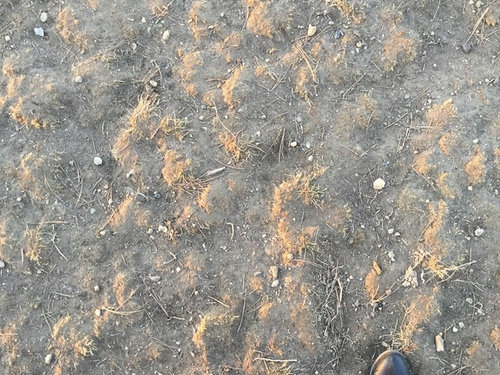
We have a very large area that was formerly a horse property. Multiple types of weeds, natural grass clumps and Alfalfa grow in our clay based soil.

We have been told to till down 4" kill off everything with round up and do this a few times before adding good dirt to prepare for grass.

Looking for advise on is this what we should do as it sounds very costly and caustic? What is the best time to start this process?

I have attached a picture. Right now you can't see the weeds too much since it is winter but they are there trust me!!

Comments (10)

  • 9 years ago

    (NEED THIS for advice on what grass to grow)

    Where do you live? (city state)

    How large is "large"? In acres or square feet.

    What equipment do you have or are you willing to buy?

    What water sources do you or will you have? Rainfall only?

    What style "lawn" do you want? Putting green? Fairway? Golf course rough? Just something green and flat?

    How much maintenance do you want to do?

    The advice is wrong ... First kill, then till. If you try to use an herbicide to "finish the job" you never get the roots killed.

    When it warms up and the grass starts to green up, water it well and get it growing vigorously to 4-6 inches high. THEN use the glyphosate (generic brand is cheaper than Roundup and just as effective, buy it from WALMART in the BIG concentrate bottles) according to package directions.

    Give it a few days, then mow it as short as possible.

    Repeat the watering and killing and mowing until you have killed off all the grasses. Unless you have Bermuda Grass out there, two applications

    ***************

    The area looks badly "poached" (trampled while wet), but if you have some weeds and grasses it's probably not too bad.

    Hire someone to lightly disk it, then use a "pasture drag" to smooth it out and break up the clumps.

    Plant a climate-appropriate grass.

    For a large property, use the golf course method - divide the area into "Greens" close to the house where you keep it short and posh, and the "rough" farther from the house where you mow occasionally but have a naturally short grass and maybe wild flowers.

    ***************

    If you can grow a short-grass native like Buffalo grass (it likes clay) you can seed with little preparation. Unlike the posher lawn grasses, it prefers unimproved soil.

    I grew it from plugs, and doing a different lawn (buffalo and blue grama) from seed
    http://lazygardens.blogspot.com/search/label/buffalo%20grass 

    http://aggie-horticulture.tamu.edu/archives/parsons/turf/publications/buffalo.html 

  • 9 years ago

    Large spaces require large tools, I'd get a tow behind aerator or disc for your lawn tractor/zero turn & get started. Just grow weeds for the first year & repair that soil. A towable spray rig would also be a good idea. Beyond that, need the answers to the questions above

  • 9 years ago

    We live in Colorado, north Denver area. We are part of a community well system so water is not abundant. Need/want tough drought resistant grass. The stamp led look comes from the horses that were there before and the clumps are actually natural grass clumps that will green up (in clumps) and we just mow. It is probably about .50 acre that we are trying to work with for grass. Good portion facing west lots of intense sun.

  • 9 years ago

    Ok so you have a fairly small area at least compared to what I was thinking. You had me scared there thinking 5 acres.

    Tough, drought resistant grass means prairie grasses, not turf grasses. Those include grasses you have probably heard of like wheatgrass, blue grama, and strawberry clover. I believe these should be seeded in the fall, but check with your ag extension agent to know for sure. Ask him/her what the best varieties of wheatgrass are for YOUR area. I'm thinking western and canary will work. In a real prairie these grasses grow in tufts. In a lawnish situation you are seeding them much closer together. When they grow clustered up like that, they become a lawn. Mow it about once a month. Start watering in June or July and water it deeply about once a month.

    Were horses allowed on this area when it was saturated with rain? If so then you might need to till to loosen the compaction. If the horses were moved to a different pasture when it rained, then this soil is perrrrrfect for grass immediately without further preparation. Horses, even stampeding horses, don't compact dry soil at all. I would still level the very surface with a drag or a tractor and box blade (if you have access to one). Get the drainage set right and leave it alone. It should drain away from all buildings. Buildings should be 6 inches higher than the yard at 10 feet away from the buildings. Then the water needs to drain to a curb or a ditch away from this grassy area. For half an acre you can hand drag it to level. I see roper boots in the pic, so you're probably familiar with the drag used for dressing an arena. That should work for you, but in the end you want it to be perfectly smooth.

    No need for more soil unless you have low spots you need to fill to get the drainage right. This soil has been well tended by the horses. I would kill to have soil like that. It will be very weedy with years of alfalfa seed and anything else coming in. The way you prep that for grass is to water it lightly every day for a week. This will sprout all the weed seeds. Then spray with Round Up. Continue watering daily to get the slow germinating weeds and hit it again with Round Up. Then when you put the grass seed in it should come up without weed pressure. If fall is the time to seed these grasses, then mow the weeds from now until late July as if it was a lawn. Then start prepping for the Round Up applications.

    Here's a picture of bpgreen's wheatgrass, blue grama, and strawberry clover lawn in Salt Lake City.

    bp occasionally comes back here to visit, but he spends most of his forum time elsewhere.

  • 9 years ago

    I would kill for grass like that!! I am familiar with the pull behind :-) the horses were allowed to romp and roam and feed on all of it everywhere. It is a very hard ground, the very top is a bit loose and has lots of small rock pebbles and such but underneath it is solid clay, it is very hard to dig holes ect...we also have open space/undeveloped land across the road and wind will blow all kinds of interesting things in. With that being said, the tough part comes into play not only for lack of water and clay soil but seedlings and such replant themselves. Oh, did I mention we have dogs too. Haha.

    I will check into the grass varieties, a grass farm near us has been experiementing with Bermuda grass even though we are somewhat desert like they say it's been doing well. I feel the cost on that would be way too much and really just want less mud and more green so our family including our dogs can enjoy it. I like the wheatgrass or buffalo grass concept better.

    We are getting some growth now, our winter has been super mild but Denver Colorado usually gets most of their snow in March and April. Just so I am straight....let it grow 4 inches or so then hit it with weed killer wait a few days then mow super short and repeat, then till/drag behind before planting, if planting seed is recommended in fall then wait to start this process until July. Does that sound correct?

    One other mention is our community well is treated with sodium to soften the water for all the homes, it has been a problem for some of our plants, will the grasses also be less tolerant? The weeds and alfalfa don't seem to mind being dry as a cracker while waiting for rain.

  • 9 years ago

    Watering to sprout the weed seeds prior to seeding grass is critically important to your success. Don't just let it grow and then kill it. The weed seeds should sprout with the daily watering. These are very light watering, 3x per day, for about 5 minutes each time. The idea is to keep the weed seeds continually moist. That's how they will sprout. You'll be doing the exact same thing with your real grass seed.

    If you can buy flat pieces of hybrid bermuda (Tif 419 or something TIF), let us know. There is a much less expensive way to plant large areas rather than sodding the whole place. The technique is called sprigging. It is used by golf courses and is very expensive to do it the way they do it. The method for home owners was pioneered by a guy in Australia a couple years ago. His lawn went from sand to a putting green in a few weeks. Well, at least it was growing in a few weeks. Now it's a putting green. Basically you buy a few pieces of excellent bermuda sod, chop it up, wash the soil off, and scatter the chopped up sprigs around the yard. There's slightly more detail, but not much. I would think you could to 1/2 acre for under $10 worth of grass. Maybe $20. That's still much less than $50 per pallet times a lot of pallets plus installation. Weed killing prep would be the same. For bermuda you would want to really perfect the surface first. This means NO TILLING, because that leads immediately to uneven settling which continues for the next 3 years.

    Before you go off and blame your pessimism on clay soil, try this. Put 1 cup of soil into a pint jar (pickle jar is great). Fill it with water and 2 drops of any liquid soap. Set it down carefully and take a picture with a ruler next to the jar. Shake the jar violently to stir all the soil into the water. Put it down and wait 2 minutes. Take another picture with the ruler. After 2 hours take another picture with the ruler. After 2 days take another picture with the ruler. The 2 minute picture will tell you the percentage of sand. Sand and gravel settles immediately in water. The 2 hour pic will tell you the percentage of silt (it settles on top of the sand, so subtract the sand from the total. The 2 day pic will tell you whether you have any clay at all. If the total from the 2 hour pic is the same as the original picture before you shook it, then you have no clay. If after 2 days you cannot see through the water on top, then you have some bit of clay. Clay will remain suspended for days and cloud up the water. In my 15 years on this forum, 99% of the people who believe they have clay do not have any clay. They have issues, but clay is not one of them. Specifically if you have the wrong mix of salts in the soil (potassium, sodium, calcium, and magnesium) the soil will act just like clay under some circumstances. The salt issue can be fixed once you know what you really have. Do the jar test and when you find you don't have any clay, then consider getting the $25 soil test from Logan Labs in Ohio. Your local soil university test will not give you all the salts and organic like the LL test will. Post your results here for analysis and recommendations.

    Getting the grass started is the first huge step to breaking up whatever is under the surface. The soil needs deep roots and deep watering. Alfalfa roots are incredible for breaking up the soil. I've heard they found alfalfa roots in the ceiling of coal mines 100 feet deep. The problem with alfalfa as a cover crop is it's hard to kill.

    Rototilling destroys the soil structure. Horses really are not bad for the soil...unless they were on it when it was soggy. That's a bad thing.

  • 9 years ago

    The horses trampled it while soggy DC. How do you break up that damage?

  • 9 years ago

  • 9 years ago

    Colorado ... I'd use a pasture drag or light harrowing, have a soil test to see if you need some micro-minerals and seed it with a locally reliable batch of buffalo or other high plains native grass.
    Western Native Seed of Coaldale Colorado has a high plains grass mix. And the season for sowing is coming up.

    http://www.westernnativeseed.com/mixesintro.html 

  • PRO
    4 years ago
    last modified: 4 years ago

    Start when you think it's necessary. The faster you remove the collections from the territory, the faster you will have to plant new grass. So do not hesitate with this, and given the size of your territory, it will take you a lot of time, so be patient, and I wish you good luck. I also spent about 5 days preparing the area to plant tiftuf bermuda. My yard is very beautiful, and sometimes I even like to water my lawn. So I hope my post will be useful and remember that it will be very difficult for you at first, but when you see the result, you will understand that it was worth it.