Software
Houzz Logo Print
addmclean

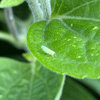
Pest under Mulch in vegetable garden

9 years ago

I need help with my garden! Four years ago when we first started gardening we purchased straw and put it down Hoping to have a no till garden. The first year it was beautiful and so productive. We even purchased a truckload of organic compost and put that down in hopes of having the best start we could. The second year, However, was terrible. We live in the south where the winters are not so rough on the bugs. The bugs not only wintered over in the ground over but it also gave them a great place to hide all summer. I should mention that we are surrounded by commercial farmland (cotton, soy, peanuts and corn). That year and the following year I tried every organic means I could find to rid our garden of pests, but it was a total fail. I took out the straw and mulched leaves, but then The weeds and grasses took over during a very wet summer. I want healthy soil and I would like an organic garden, but I'm about to think it's impossible in the south! This year, we are considering putting down commercial landscape fabric. I would appreciate any advice from experienced southern gardeners. Thank you!

Comments (18)

  • 9 years ago

    " I want healthy soil and I would like an organic garden, but I'm about to think it's impossible in the south!"

    Not at all impossible. However, one aspect of organic gardening that many fail to understand is its high tolerance level for garden bugs. Since 90+% of the bugs in a garden are beneficials that provide pest control and pollination benefits and another 5% are garden-neutrals that do no harm an organic gardener encourages bugs rather than trying to eradicate them.

    Sure there are some pests that do actual crop damage and sometimes targeted pest controls must be used to control their levels when things like hand picking and basic organic sprays aren't enough. But it is targeted to the specific pest and the goal is control, not eradication because eradication usually leads to killing off beneficials too.

    So what specific pests and type of damage are we talking about?

    I think it is also important understand that 1) using mulches does not automatically mean no-till, and 2) the benefits of using mulches far outweighs any disadvantages - especially in the heat of the south.

    First year gardens are often bug-free simply because they are new. They haven't been 'found' yet. ;-) Second year gardens have hopefully begun to develop a crop of beneficial insects and your "terrible second year" could have been caused by many things besides pests. For example how did the weather compare? If it was a "very wet year" I doubt it. Did you amend the soil with more compost late in the first year and again in the spring of the second year? If you didn't want to till did you at least turn in the decomposed mulches from year 1? Did you add fresh mulch in year 2?

    "That year and the following year I tried every organic means I could find to rid our garden of pests, but it was a total fail."

    Can you provide details on what organic means you tried and for what pest? What did you do for weed control? Active weed control is a part of gardening.

    We really need more info if possible but as a long time organic gardener in the south I certainly can't recommend landscape mulch do to the cooked soil and root problems it often results in in hot climates.

    Dave


  • 9 years ago

    Thank you so much for your response. Our most destructive pests were squash bugs and stink bugs. The first two years I used tape to remove the eggs off the leaves and that worked in the beginning. However, our garden is rather large and as the season progressed, I lost control of them. I also put on gloves and walk through and remove them by hand. The stink bugs come later in the season and they are especially bad on my tomatoes. I haven't found an effective way to remove them other than removing them by hand. I have tried organic spray, neem oil, but I couldn't tell it did anything to the stink bugs.

    As for weed control, after removing the straw and mulched leaves, we weeded by hand and tool. We are both around 60, so that was hard on our backs. I have ruptured a disk this year and have bulging disks as well, so my days of stooping and pulling are probably over. My hope was that the straw mulch would help us to garden into our later years. It was an effective weed deterrent. Last year, in our wet summer, the weeds were very hard to control. Usually, our summers are hot and rather dry and we irrigate with drip irrigation running down each row.

    i hope this information helps to explain our situation better, and I thank you for your help.

  • 9 years ago

    "Our most destructive pests were squash bugs and stink bugs. "

    At 70 yrs + I understand the aged body limits. ;-)

    Both of those are common pests for most all of us and have little to do with mulch or no mulch. They show up either way. So your use mulch to get all of its benefits - soil moisture control, soil improvement, weed suppression, etc. - and you treat those pests specifically. I find soapy water spray for nymphs and Surround (kaolin clay dust) to be the most effective for stink bugs on tomato plants and insect barrier row covers most effective for squash bugs. But there are many discussions here about various forms of control for both. Keep in mind that you can always temporarily rake the mulch away from around the base of the plant and then replace it as needed.

    IMO Neem is probably the most over-rated organic pesticide there is out there. Plain old soapy water spray is more effective IMO and you can cover large garden areas by using it in a hose-end sprayer.

    See IPM guidelines for both pests:


    IPM Stink Bugs


    IPM Squash Bugs

    Dave


    addmclean thanked digdirt2
  • 9 years ago

    Thank you for these suggestions. I guess I listened to my well meaning neighbors too much who assured me I was dooming my garden with mulch (To harbor insects) and by using natural pesticide control. The way around here is To plant in rows, till for weed control and use pesticides heavily. In our past, small backyard garden we used square foot gardening in raised beds and these things were not such issues/ small space-easy control. The size of our garden now makes me feel overwhelmed most of the time ( except at harvest time!). Do you plant in rows? I will try your suggestions this year and use diatomaceous earth, row covers, the vacuum , and kaolin clay. Thank you, again, for your advice.

  • 9 years ago

    Another question, if you plant in rows, how do you manage grasses and weeds between rows? In our limited experience, tilling regularly between the rows caused more problems than solutions. Would the weed barrier between the rows, taken up annually, be such a bad thing?

  • 9 years ago

    Never heard of "harboring insects" as a reason for not using mulch. FWIW, managing grasses and weeds between rows is one thing that mulch does exceptionally well. You don't say where you are (that's always helpful), but moisture retention is often another important benefit of mulch.


  • 9 years ago

    One problem that you are up against is that surrounded by farmland that I assume is primarily if not exclusively chemically farmed. Not much balance going on with good bugs and bad bugs. The bad bugs are probably also gaining resistance to the chemicals.

    Encourage the good bugs to call your garden home by having plants that will make the good bugs hang around. Herbs that flower or native flowers should be all around your garden.

    addmclean thanked gjcore
  • 9 years ago

    if you go the restoring balancing route, there are some wasps that prey on the eggs. You can build them a house like this

    https://www.youtube.com/watch?v=5-7UhxaXgSc

    lacewing overwintering houses are even simpler to build (find them on youtube), but I am not sure lacewing preys on them.

    addmclean thanked glib
  • 9 years ago

    For ease of (non)weeding between rows, I use a heavy layer of cedar chip mulch which lasts a few years. In the planted area I weed using a scuffle hoe which is basically a razor stirrup on a long pole you move back and forth on the top layer of soil from a standing position.


    If you till, you are bringing up weed seeds from below. Scuffle hoeing shallowly gets the weeds but doesn't disturb the soil too much. Trick is to get the weeds before they flower and go to seed.


    My dream is to have a garden up on cinderblocks so I can garden standing up . I saw one in Ireland. Really nice idea.

    addmclean thanked susanzone5 (NY)
  • 9 years ago

    "Another question, if you plant in rows, how do you manage grasses and weeds between rows? In our limited experience, tilling regularly between the rows caused more problems than solutions. Would the weed barrier between the rows, taken up annually, be such a bad thing?"

    I grow many things in rows, both narrow and wide, and the aisles between the rows is where the majority of my hay mulch goes down. My goal to to eliminate the need for weeding/tilling between the rows so that is where the mulch is the thickest. I mean the base of the plants are mulched too but not nearly as thickly as the space between the rows.

    Decomposing poly-carbonate issues aside, weed barrier/landscape fabric is deceptive IMO. First because the build up of heat under it can kill off the beneficial soil bacteria I need unless i lay down thick mulch on top of it - which doubles the work and defeats the purpose. But also because many weeds grow right through it and rhizomes just crawl along underneath it. Plus it can be difficult to keep in place with the wind unless covered and killer-slick to walk on when it is wet. I don't need my feet flying out from under me. ;-)

    So a suggestion since you have the garden space to do some comparative studies - try the weed barrier down a couple of your aisles and really thick cushiony layers of organic mulch like your straw and shredded leaves down a couple of other aisles and see which works best over-all for you.

    Dave


    addmclean thanked digdirt2
  • 9 years ago

    Actually, if you are near farmland that is chemically farmed, I suspect there aren't a lot of bad (or good) bugs around. What works for the farmer will work for you. Now, that's not to say that this is the best way to manage insects, but I wouldn't dismiss it.

  • 9 years ago

    I had the same problem until I got guinea fowl. They are bug eating machines. They can be noisy and have their own problems (predators) but if you are surrounded by farmland it may be worth a try.

    addmclean thanked Happy Hill Farm
  • 9 years ago

    There is no easy way to answer this type problem. The Brown Marmorrated Stink Bug and now a newer one are likely causing the greatest damage and these pests have few natural predators yet. I doubt that guinea fowl would even intentionally eat these disgusting insects. I'd be surprised if they aren't overwintering in your house.

    When I first read the post I thought about slugs. They thrive in organic mulch. There are numerous other newer and old pests that prefer the natural mulch for laying eggs or for overwintering at some stage of their life cycle.

    So what are you to do? I would change-up your methods. Switch to landscape fabric or plastic mulch at least for a few years. Do your best to repell these critters with dusts of diatomaceous earth. But realize that there are few organic options to control them. Even non-organic growers are struggling to know what to do.

    addmclean thanked Barrie, (Central PA, zone 6a)
  • 9 years ago

    Barrie, I have read a little about the brown marmorrated stink bug and think that may be our problem. I haven't seen them in the house, thank goodness. The commercial farmers around us had a difficult time with bugs this year and had to add an additional spraying to their crops. I wondered if it just drove the bugs over here! They are constantly on the tomatoes and ruin them. I plan to try the diatomaceous earth dust this year and I think I will put down commercial landscape fabric in the rows just to see if that helps with the grass weeds. Literally thousands of small blades pop up weekly and they are so hard to control. Maybe a couple of years of the fabric will help control it in future years without the fabric? This winter I have put the chickens on the garden almost daily hoping they would eat lots of bugs and larvae, but I do not know how the stink bugs survive the winter. More research is in order! Thank you!

  • 9 years ago

    As to diatomaceous earth (and kaolin as well) dusting, be sure to do it well. I've found an excellent strategy is to take a vacuum (shop vacs worth great), and hook up the hose to the output, so they BLOW. Mist your plants, then take a handful of the dust and aim the vacuum hose at your hand, thereby blowing the stuff all over your bed. That coats far more uniformly than if you were to just sprinkle stuff, and does the job very quickly. It'll be good until it rains. Then do it again.

    The advantage of organic mulch is that at the end of the season, you just dig it in, improving the soil. Assuming it doesn't blow away, I can't imagine landscape fabric will do a much better job preventing weeds than organic mulch.

  • 9 years ago

    After years of planting summer squash (a favorite) and fighting a losing battle with squash bugs:rotating the crop, hand picking, tape for removing eggs, spraying mature bugs with soapy water, row covers, which last year actually prevented borers but not squash bugs, I vowed NEVER AGAIN! Yeah, right. so this year I planted one. ONE! And every time I look at it, it is with a look of disdain. Hows that for a fun garden??? I fully expect to have the bugs overtake the plant, but am prepared to pull it up before it gets to the point where the whole plants looks like it is moving due to the many bugs. I have never tried the DE but have some and will certainly add that to my armory of weapons! Gee, I hope it works for me!

  • 5 years ago

    I have to say lol… i use IPM be ready and deter using multiple attacks and pre counter strikes but in combos … but organic lol very easy … even com, indust industrial, small, farms indoor and out.