

Preventitves
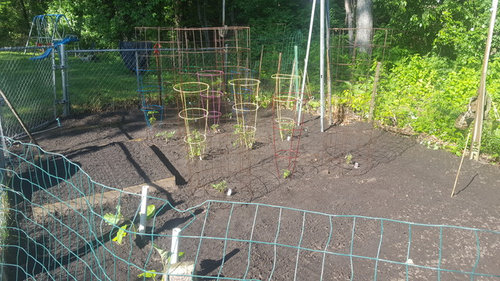
The new garden is planted.Soaker hoses going in. I've got an arsenal of bonide product. From fungonil, to neemq nee ma, to insecticide. Thoughts on preventitive spraying? Planted tomato, cuke, eggplant, pepper and Zucchini from starts.
Comments (27)

regaldozer
Original Author9 years agoBrand new topsoil compost mix and freshly watered. Thanks for the comments
Related Professionals
Rome Landscape Architects & Landscape Designers · Alexandria Landscape Architects & Landscape Designers · Syracuse Landscape Architects & Landscape Designers · Sioux Falls Landscape Architects & Landscape Designers · Medford Landscape Architects & Landscape Designers · Alexandria Landscape Contractors · Grand Forks Landscape Contractors · Santa Barbara Landscape Contractors · Bozeman Landscape Contractors · Salem Landscape Contractors · Toronto Landscape Contractors · Port Saint Lucie Accessory Dwelling Units · Hackettstown Accessory Dwelling Units · Flagstaff Accessory Dwelling Units · Wenatchee Accessory Dwelling Units- 9 years ago
Yikes! You're kidding, right? I am kind of interested in what your arsenal contains, though.
 9 years agolast modified: 9 years ago
If the pic above is your entire garden space you shouldn't have too much trouble controlling pests (insects) by daily observation and hand picking the pests. I don't like to dust or spray but when it's required I'll spot kill rather than carpet bomb.
 9 years agolast modified: 9 years ago
The only preventative pest spraying I do is Bt on brassicas -- a must for me -- and on cucurbit stems 2-3x week for SVB prevention. Bt is cheap, safe, organic, effective, and does not harm beneficial insects. I am also using copper on my heirloom tomatoes for fungal/bacterial disease prevention.
regaldozer
Original Author9 years agothank you all. I realize after reading I am more interested in the fungus prevention on the tomatos and cuked. I have the Bonide fung-onil. Is BT that much better?
- 9 years agolast modified: 9 years ago
Well, that's why one identifies the problem before applying an appropriate solution to it. BT specifically kills caterpillars. For brassicas, cabbage moth is a serious pest, and BT targets the caterpillars the breed them. Nothing to do with fungi. I think Fung-onil is chlorothalonil, which is a systemic fungicide. I've never used it, as copper and sulfur based fungicides are a lot cheaper and work well. Depends on what your fungal problem is. FWIW, chlorothalonil is classified as a "probable" human carcinogen, though I'm pretty sure that's where you'd eat a lot of it. Some say it is toxic to bees. Highly toxic to fish, but it isn't water-soluble. It breaks down in a few months.
 9 years ago
Interesting thought process going on here :-) I have never ever used any sort of pesticide (insecticide or fungicide) on my vegetable gardens. I do bait for slugs (iron phosphate), apply deer repellent (scent deterrent only) and use row covers but that's it. In addition to them not being very effective on a preventative level, there is also the issue that these plants are intended to be eaten, at least in part, and personally, I am not wild about consuming what are considered toxic (or they wouldn't be 'cides) substances.
But I hand water and check for weeds and pests daily.
- 9 years ago
Around here, over-winter brassica foliage will be full of holes come March, without BT. Been there, done that.
Pesticides and fungicides are toxic to pests and fungi. They may or may not be toxic to humans. Fortunately, their toxicity is largely very well researched, and that research should be taken seriously. There are, I suppose, humanicides. Best to stay away from those!
- 9 years agolast modified: 9 years ago
Like gardengal, I fall in the no 'cides camp. I've considered using Bt, and I may someday, but so far I haven't.
I get a few caterpillars on my brassicas, but I tolerate them. A good soaking after harvesting helps remove them. If I were to try to grow a bed of somewhat pristine broccoli or cauliflower, I might consider it, but I'd try row cover first.
I might even decide to use Bt to prevent SVB damage, but again... not yet.
Every year I get early blight on my tomatoes... it's just a fact of life here in E. Tn. Just yesterday I spent the morning removing the first infected batch of lower leaves. It came on early this year, and I got too busy with other things to do preventative pruning of the lower leaves to create air flow prior to the first symptoms. I do not use fungicides to treat, so infections are expected. This first infection wasn't too bad though.
The tomatoes also have aphids, but many of them have been parasitized by beneficials, and I saw a Pennsylvania Leatherwing hunting on the plants 2 days ago. Interestingly, while the cilantro and the strawberries had a good number of ladybugs, they aren't on the tomatoes very often. However, I also saw a lacewing on the tomatoes a few weeks ago - a very welcomed sight.
I too inspect the plants daily, and do everything I can to attract beneficial insects.
I also saw my first wheel bug guarding the potato patch the other day. They are great beneficial bugs to have around, but they are indiscriminate hunters. Like spiders, they eat whatever comes within their reach, regardless of good/bad bug. On a good note though, they are one of the few beneficial insects to eat the brown marmorated stink bug, an invasive scourge around here.
After last year's success trying it out, I use row cover on my eggplant bed combined with a trap crop to draw flea beetles away. This year, the flea beetles first went to the potatoes. Potatoes though, are vigorous enough to outgrow any flea beetle damage. But soon after their numbers were getting out of hand, it was time to plant out my eggplants. I filled the eggplant bed with the strongest transplants, and laid out the row cover. I left the weaker eggplants in the uncovered flats about 15' away from the covered bed. The flea beetles all left the potatoes (on the other side of the garden this year,) and attacked the extra eggplants, pretty much destroying them. The eggplants under cover are now getting good-sized, and I'll uncover them when they flower and are strong enough to withstand the flea beetles. In the meantime, the potato foliage is looking great.
So, I do take many preventative measures, but so far, none of them by way of 'cides.
- 9 years agolast modified: 9 years ago
"Fortunately, their toxicity is largely very well researched, and that research should be taken seriously.'
But very few bother to even read the labels and apply properly, let alone research the toxicology!! But even a listing such as ' slightly toxic to mammals" (as per the chlorothanonil) would put me off their usage. A) I am a mammal and b) one of the primary reasons to grow your own fruits and veggies is to produce them free of the pesticides that most commercially grown produce is laden with! And fungicides on average tend to be some of the more toxic of any pesticidal substances.
Even after researching, the levels of toxicity may not be well understood. Biomedical research has proven that a good number of pesticides are far more toxic that just the analysis of the primary active ingredient would indicate, largely due to adjuvants and other additives. Which are NOT tested or even typically disclosed. And what you don't know CAN hurt you :-))
 9 years agolast modified: 9 years ago
Excellent point gardengal. Many new gardeners don't even read the label enough to know what the product is used for, how to mix it, how often to apply ti, much less how toxic it may be or not.
Sadly many new gardeners just assume that if they start a garden then they will need pesticides, fungicides, herbicides, and all the other "cides" to be applied if they want a successful garden. Indiscriminate advertising convinces them that indiscriminate use of their product is the only possible way.
Dave
PS: I'm still having difficulty with the asphalt appearance of that soil in the photo. Never seen anything like it. I hope that doesn't turn out to be the primary problem in the garden.
- 9 years ago
Very true that the toxicology is largely ignored by users. From an environmental perspective, at least, some stuff is pretty scary. Certainly, an approach where you go in with all guns a'blazin in all directions is not a smart strategy. Also very true that indiscriminate advertising is rampant. As in, don't pay any attention to these dangers! It'll be OK! Trust us! Of course, the dangers are all in microscopic print on the package. That satisfies the feds.
That being said, protective strategies can involve a lot of work. Re BT, I could just throw a giant row cover over all of my brassicas. But that's just not going to happen. I don't have time to furl and unfurl a giant row cover, or burrow down underneath it. I don't have time to hand-pick pests off of vegetables, when I have a lot of vegetables. So I try to keep the risks low, by being smart about them, but what risks remain, I tolerate, as a price I pay for my time. People can make their own value judgements about that, and how much their time is worth. It's not helpful to preach about value judgements, but it's highly valuable to preach about facts, and the facts are out there to read if you're smart enough to do so.
- 9 years ago
I would not row cover brassicas, they are sensitive to heat and it is often difficult to keep them from bolting in my climate where it goes fast from cold to hot, and the caterpillars like it hot.
I don't think Bt is harmful to the environment. It breaks down rapidly. Only to butterflies but they are not on my brassicas.
regaldozer
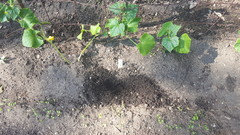
Original Author9 years agolast modified: 9 years agoThank you all so much. This is one of the best discussions of any sort, on any board, I have been apart of. I have decided no pesticides, and for fungal, be vigilant. I just went out and although my tomatoes are small, took off any low leaves that may touch the ground and any yellows. I has some yellow on the cukes and trimmed them too.
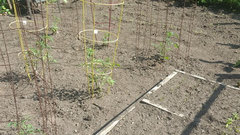
Dave- I love it. I'll go out tomorrow and mix it up a litt and take a close up. It's goooooood soil.
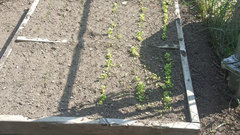
Thank you one and all. I'll update.....my arrugula, cuke, carrot, kale, sunflower, and mescullun seeds have all sprouted. so far so good!
- 9 years ago
Peter - insect barrier weight row cover doesn't trap heat. Works great on brassicas even in mid-summer. I too use Bt dust as needed - no objections to it - but the floating insect barrier is easy to work with on even a 50' roow one plant at a time. plant.
Regaldozer - good luck with your new garden. Enjoy it.
Dave
- 9 years ago
dan, Chlorothalonil is not a systemic and is labeled for use on edible crops, but its safety is still highly questionable. I didn't even think that it was still available on the retain market!
I don't like to see any pesticidal products, including dish soap and Bt., in the hands of people who have no knowledge of their target pest, no knowledge of the product, and no knowledge of the wealth of beneficial critters in their gardens....creatures with zero, two, four, six, eight, and a zillion legs.
- 9 years ago
Well, you know, tomatoes themselves are pretty bad stuff. You know, they've got that horrible glycoalkaloid tomatine, which can make people violently ill. Why, I'll bet if someone put out an MSDS for tomatoes, they'd look pretty scary.
But, as we know, it all comes down to dosage, and many of the chemicals that we fear are fearsome only for unrealistic dosages. I'm not defending chlorothalonil, but rather suggesting that substances with LD50s of kilograms of substance per kilogram of body weight are probably not worth a lot of worry.
- 9 years ago
regaldozer, glad you are asking questions and reading answers. I have a medium size home garden and prefer to do regular inspections, hand pick, and try to avoid using insecticides, etc. In the past couple of potato growing years, I've spent a lot of time hand picking Colorado potato beetles. Then a gardening neighbor said he never plants potatoes before June 1 and that way they miss his potatoes. Sure enough, I saw the first beetle on June 2 and quite a few since then on some potatoes that I missed harvesting. I'm looking forward to some early potatoes from these few plants. I haven't planted this year's potatoes yet (weather has not been cooperating). Two years ago I put row cover over winter squash plants to protect them from striped cucumber beetles. Last year I didn't put the cover on and saw young plants devoured. But, they only went after certain varieties of squash like spaghetti squash. Kabocha and Delicata were pretty much ignored. We spent some money for a permanent high tunnel, wood framed covered with greenhouse plastic built by my husband. Because the tomato plants under the high tunnel don't get rained on, they are much healthier than the plants outside but last year I did do a better job trimming lower leaves and mulching the outside plants. The high tunnel was meant for fall and winter harvests but I stuck some tomato plants in when I ran out of room (sides are rolled up in summer). I'm pretty sure I saw evidence of tomato hornworms but never found any worms. I can only guess that some birds took care of them.
As you get garden experience, you will learn what works best for you. Best wishes.
regaldozer
Original Author9 years agoYou suggest mulching the Tomatoes. Interesting do you mulch everything outdoors. And with what? Would love to use lawn clippings...but I think thats a no-no. The town gives away free mulch but not too sure about that either...
- 9 years ago
Mulch everything. Lawn clippings are fine as a mulch. Just don't dig them in when fresh. Why are you unsure about municipal mulch?
- 9 years ago
The problems with municipal mulches, especially in recent years, is herbicide residues. Not to mention all the other strange things many report finding in it like plastic pieces and other trash. I know it is a chronic problem in this area because of all the spraying that gets done.
Of course you can have the same issue with your own grass clipping if you use and herbicides on the lawn.
The search here will pull up many discussions on mulch for you to browse through. The most popular ones are straw, old hay, pine straw, dried grass clippings (fresh can burn plant stems if too close and tend to turn gloppy unless dried first), shredded newspaper, wet cardboard, etc. and similar organic materials that will break down over time and improve the soil.
Dave
- 9 years ago
First off, I originally built my beds using the lasagna method which is composting in place and then planting the following year so I got a lot of organic matter into the soil. I like to use straw to mulch potatoes. Hill them first time with soil and then with straw. A $10 bale goes far and can be re-used the following year. Grass clippings are from our yard only. I will put fresh down on top of wet newspapers to border some beds. This mostly helps prevent weeds getting into the beds, or rather, slows them down. My husband and I had to work out a system so he could mow the grass paths. I hate using a string trimmer for the edges close to a bed that he can't mow. He also mows maple leaves and leaves in a pile so the following year they are great to mulch around plants. I don't mulch everything. I plant things close together so rows of beets and carrots do a pretty good job of shading out weeds. The bad thing about our grass clippings is that there are weed pieces in it although this doesn't seem to be a big problem. I was tempted to ask the tree trimmers to leave a load of wood chips but we have Japanese knotweed/ bamboo growing along road sides and I've seen them mow through a huge stand of bamboo. We have a little bit of knotweed growing along the road which my husband spot treats with brush killer. I think it came from the town mower dropping bits from up the road. We only have a problem along the road edge where the town mows. Old lawn clippings get left in a pile and, yes, they do mat down but the top layer is fine once it has dried out a bit. The riding lawn mower has a bagger attachment.
- 9 years ago
Fair point about herbicide residues in commercial mulch. I haven't seen that around here, but it may be locale-dependent. Most of our commercial mulch is ground up trees and brush, and people usually don't spread herbicide on those. Yep, there may be trash, but that's a neutral.
That's good advice about not piling green grass trimmings up against plants. I don't think drying the grass clippings first is going to render them unable to nitrogen burn, though. The nitrogen is still there. So when the dry grass is moistened, it will be active again.

digdirt2