Software
Houzz Logo Print
stephanie_cordova

Dying evergreen shrubs??

9 years ago
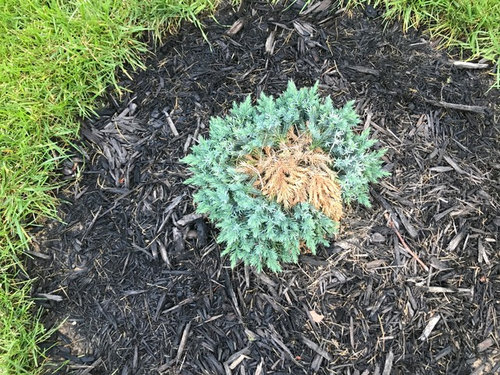
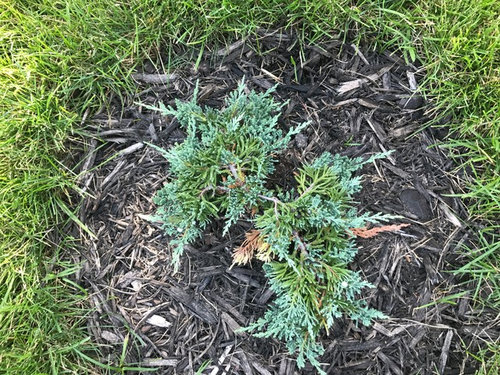
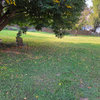
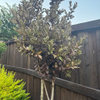
I'm new to planting and gardening as a new homeowner. I planted this evergreen shrub and groundcover plant in the spring. I'm not sure why they're turning brown. Could someone tell me if it's because it's maybe diseased or due to lack of watering or something? And is it too far gone to save and revive? I live in the upper Midwest and have another evergreen shrub in the front of my house that appears to be dying (planted by the previous homeowner) so it would be nice to know what might be done to save it as well.


Comments (12)

  • 9 years ago

    just FYI ... they are conifers ... and there is a forum for those ...


    and conifers are trees .. and there is that forum ...


    anyway.. well cover it here.. that was jsut some learning ...


    what do you mean upper midwest ... might be important .. big city name ...


    ignore the second.. minor transport damage.. not uncommon to appear. in tree time.. in the heat of summer ... but the injury occurred months ago ... next spring.. just snip out any of the dead brown parts ...


    first ... either some injury between the grower.. seller.. or you ... same as above about next spring ...


    but i am concerned with this one.. about drought.. or improper watering ... dig a small hole with a hand trowel or tablespoon or something... and FIND OUT ... if there is moisture.. down 3 or 4 inches.. if not.. water the darn thing ...


    link below to planting guide.. for future reference ...


    ken

    https://sites.google.com/site/tnarboretum/Home/planting-a-tree-or-shrub

  • 9 years ago

    ken, you cannot possibly still be rambling on about how conifers are trees and not shrubs. I can't tell what the first one is, but it looks like a shrub, to me. The second one appears to be a Parsoni Juniper or similar, certainly correctly referred to as a shrub.....or even a ground cover.

    Stephanie, please ignore ken.....you are in an appropriate forum, though you could post in the conifer forum, too.

    Do you know the names of your junipers? That first one could be a Blue Star....does that ring a bell?

    Regardless, young junipers can sometimes be affected by one of the fungal tip blights. I'm more familiar with the sprawling type like the Parsonii and it occurs pretty frequently with that species. It's best to simply prune and dispose of the little flags and wait for the plant to outgrow the problem.

    I'm hesitant to guess what's going on with the other shrub.

  • 9 years ago

    Can I ask what your soil is like? Does it drain well and quickly? And how do you water? The die out in the center of the first looks like a root rot, which are quite common on many groundcover junipers with poor drainage or excess water. And the first photo IS a Blue Star juniper.

    btw, a groundcover conifer is obviously not a "tree" so don't be confused by that statement :-))

  • 9 years ago

    In my experience, Juniperus squamata always dies in the center and becomes unattractive. 'Blue Star' is a J. Squamata and I've taken almost all of mine out. The remainder look pretty much like that first photo.

  • 9 years ago

    First thing to do is look for mechanical damage on that juniper. Check for cracked or broken limbs and if intact, then perhaps fungal. If it was fine when planted, however, that would be pretty quick for a fungal issue. That is usually a bit slower browning out.

    tj

  • 9 years ago
    last modified: 9 years ago

    I wonder why nobody around here has much success (and Edwin Smits even once remarked on the issues with J. Squamata)? With the other junipers, the easiest way to kill them is too much water, but that wouldn't be the issue between down here and the PNW - the reverse!

  • 9 years ago

    they are both conifers ... and being trees.. they should be watered like trees ... which would mean a good deep drink.. and then.. with proper drainage.. no watering again.. until near dry.. insert finger and FIND OUT.. when your trees need water ..


    and that can be problematic ... if the plants are involved with lawn irrigation .. which is designed for brief daily superficial watering ... which may or may not get down to the trees roots ... or in the alternative.. keep them too wet ... conifers are not the type of plant.. that like their leaves saturated daily ...


    using the common term 'shrubs' leads you know where.. in your search for guidance on how to deal with them.. hence my brief tutorial about what they actually are ...


    BTW rhiz.. i didnt mention the term shrub in my original answer.. if you care to read it closely enough before you opine that my entire answer was worthless and need be ignored ...


    ken


  • 9 years ago

    KEN THESE ARE GROUNDCOVERS. ;-)

    When you say trees, I think that you mean 'woody plants', which can exist in tree, shrub, ground cover, or vine form. Woody plants are distinguished from herbaceous plants, or even from those termed 'shrublets' (lavender and the like) which may get tough and woody with age but in no way have the characteristics of woody plants (bark, for example).

    'Shrub' is not itself a botanical term, but we use it for ease of communication and no one, for example, would call a Spirea a tree, which is analogous to calling Juniperous squamata a tree. When we get to large shrubs/small trees, we alternately refer to them as both or either, depending on the shape into which they have been pruned (or not). You can go back and view previous discussions on these pages where people have gone to the mat over whether something is a shrub or a tree. Feh.

    Sorry for the rant. I just finished my coffee and obviously I should go outside and hack at something!


  • 9 years ago

    The first one does resemble 'Blue Star'. IMO it is more of a low mounding SHRUB than a ground cover. I would snip out the brown in the middle, and make sure to water immediately after the soil dries out. The other is one of the groundcovers, an ugly plant in my opinion, which should have never been brought into cultivation. Every one that I've seen looks almost like that, Lol. But, seriously, if you want to grow it, remove the brown branches and keep it watered.

    And now, for some clarification on the difference between a tree and a shrub.

    A tree has one stem, or trunk, if you will, that comes up from the ground. It may split into several "trunks" after it comes out of the ground, but they all have the same roots, they have ONE definite root flare. A shrub has multiple stems, each coming from the same roots. It does not have a definite root flare. It may also send up new stems from the roots (a good example is crepe myrtle). This is why planting depth is more important with trees, than it is shrubs. Hopefully, that will clear some things up, and not just confuse you more.


  • 9 years ago

    Um...lots of shrubs have one stem that branches into multiple branches above ground. This is semantics. Some trees have little to no root flare, some shrubs have a noticeable flare. You can kill some woody shrubs just as fast as you can kill a tree by planting them too deep. And there is nothing ugly about that second plant once it gets a bit of age on it. Looks like a wiltonii or the like and they can be gorgeous. Beautiful bonsais can be made from them, too. And don't overwater juniper. Logan, you scored a trifecta on this one.

  • 9 years ago
    last modified: 9 years ago

    Ken,

    '...using the common term 'shrubs' leads you know where....'

    I don't even understand what this means. It could mean 'leads me 'you-know-where' as in, I know where it leads me and that's not good!

    Or if it's a typo, could actually mean 'leads me nowhere' which means 'not any place.'

    I do not understand the insistence on calling conifers trees. Some trees tolerate, even require, lots of water and others would die if given too much water. So you can't always make blanket statements like that.

    OK, going to join Sara in hacking at something.