Software
Houzz Logo Print
urticoides

Test beans damaged by compost?

9 years ago
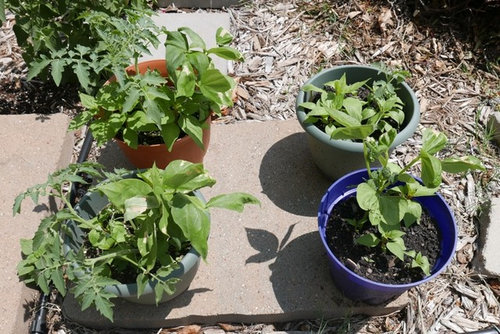
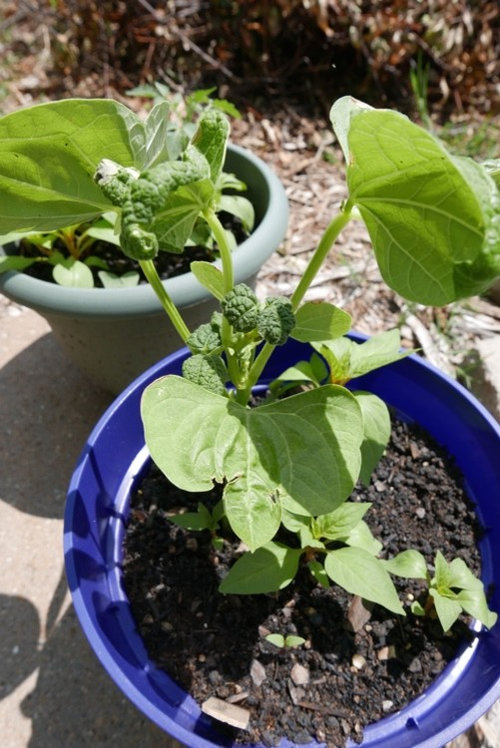
I bought a couple of bags of composted cow manure (a national brand) and then decided to test it out first in small containers with some seeds of cherry tomatoes and bush beans before adding it to the fall garden. The two on the left are normal potting mix, two on the right are half potting mix and the composted cow manure.


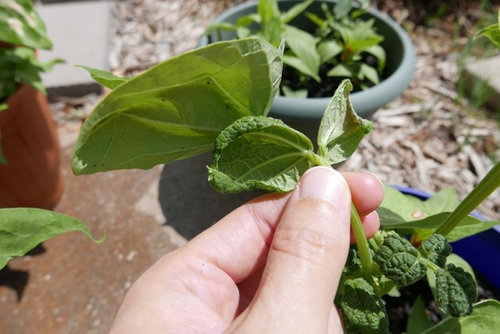
For the first couple of weeks I didn't really see much of a difference, other than one group growing more robust than the other. This week I did notice a difference. In the manure mix, all the new leaves on the beans are very small and cupped. However, the tomatoes in the same container look normal although smaller. The beans in the other manure mix didn't germinate, but the tomato that did still looks normal.

Please ignore the wildflowers in each pot, they pop up everywhere.


I don't see any aphids or thrips, I don't spray herbicides, and it's not like everything else in the containers is also affected, so what would you do? I realize the test is a little iffy because cow manure probably isn't meant for container culture, and it's also rocket hot right now, but everything else in my garden looks normal (besides heat stressed). Toss out the bags for peace of mind?

Comments (14)

  • 9 years ago
    last modified: 9 years ago

    This is bothering me a bit. I doubt it's herbicide carryover because seedlings that sprout in contaminated soil can be deformed from the get go.

    See images of bean seedlings from a university trial here: https://s3.wp.wsu.edu/uploads/sites/411/2014/12/PDF_Clopyralid_BeanDamage.pdf

    Also see this re a contaminated garden - https://s3.wp.wsu.edu/uploads/sites/411/2014/12/Paper_Clopryalid_Garden.pdf

  • 9 years ago

    I'm wondering if what you're seeing is some kind of nitrogen burn, from poorly composted manure. Uncomposted manure is very powerful nitrogen fertilizer. Yes, lots of nitrogen will promote foliage growth, but too much nitrogen can cause stunting and leaf edge browning. I would expect this to happen quickly, however, as the stuff will leach out very efficiently.

  • 9 years ago

    Did you use the composted manure neat?

  • 9 years ago

    My test containers were 50/50 by volume compost and potting soil, mixed and fluffed together. Looking at the links provided makes me think it's probably more like unfinished compost because the tomato seedlings in the same containers are unaffected, unlike the beans that are showing odd growth. I e-mailed the company and asked some questions, and they replied that they have various tests they conduct on their compost just for this reason. Daninthedirt's comment is probably correct; the bags were very smelly and wet when first opened, but I just let them air out in storage for a week before using.

  • 9 years ago

    Keeping the stuff wet and well aerated will naturally decompose the urea, and outgas the ammonia. What you're left with is uncomposted organics with relatively little nitrogen. But if it started out being fresh manure, that urea is a heavy-hitter, nitrogen-wise.

    Perylene thanked daninthedirt (USDA 9a, HZ9, CentTX, Sunset z30, Cfa)
  • 9 years ago

    I'm not sure what you thought you were going to "prove" with this "experiment", but using 50% manure, composted or not, as a potting mix is not going to
    work well and it's not the fault of the manure. It is not meant to be a
    potting soil, it's meant to be an amendment for garden soil in far less
    than 50% proportions.


  • 9 years ago

    That seems a bit harsh, but that's the internet. I don't normally use composted manure, and it was simply a basic compost test to start seeds in it and see how they grow. I read some posts and watched some videos that suggested 50/50 in small containers, so that's why I used that ratio. I see weird leaf growth and wonder what causes it. I didn't think about nitrogen burn, and I didn't consider compost being unfinished, so I that's why I ask what happened. It's not proving anything, it's asking questions and hoping to learn from it.

  • 9 years ago
    last modified: 9 years ago

    lazy_gardens,

    I suspect he was concerned about potential herbicide carryover in the manure.

    See this info how to do a bioassay with potentially contaminated organic sources -- https://s3.wp.wsu.edu/uploads/sites/411/2014/12/PDF_Clopyralid_Bioassay.pdf

  • 9 years ago

    Fully composted manure isn't recommended as a potting mix ingredient but really, it's just organic stuff, and while the water retention and permeability may be a bit weird, you should be able to grow stuff in it. Nutrient-wise, it'll be fine. There is something else going on here, and the OP is right to be concerned.

  • 9 years ago

    It was a test! Please read the supplied links.


  • 9 years ago
    last modified: 9 years ago

    A germination test like this is often recommended. But I assumed it was a germination test only and that you didn't have to grow the plants for very long. Very possible the manure was not very well composted, and on top of the fact that manure isn't a very good potting mix texture-wise, maybe it's not to surprising. Jean's link above recommends germinating and growing for 14-21 days only.

  • 9 years ago

    It was not a germination test. It was a bio-assay --- a test to determine if certain pesticides were in the manure, composted or not. Some pass thru the animals intact, and persist in the manure unless actively hot composted for a year

  • 9 years ago

    Sorry, perhaps I used the wrong term. Quite familiar with the 'toxic compost' issue. I was only trying to point out that the OP grew the test plants for a pretty long time.

Sponsored
Schlabach Woodworks
Average rating: 5 out of 5 stars21 Reviews
Franklin County's Reclaimed Wood Professionals