Software
Houzz Logo Print
hzdeleted_20575877

What's this stuff on my mom's Lilac?

8 years ago
last modified: 8 years ago
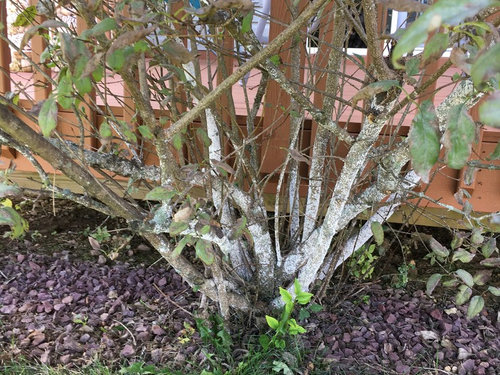
My mom sent me these pics the other day asking what this white stuff on her bush was, but I have no idea. The kinda look like eggs? They're too "rice shaped" to be any kind of lichen I've ever seen, and I've never seen powdery mildew look like this. Any ideas?

[Edit] OH and she lives in Pennsylvania if that helps.

Comments (12)

  • 8 years ago

    It's an infestation white prunicola scale insect, quite common on lilacs and other woody ornamentals.

    User thanked rhizo_1 (North AL) zone 7
  • 8 years ago

    Ah, looked it up and that makes sense. Looks like it can be hard to treat? Is it deadly to the lilac?

  • 8 years ago

    is it all the white in the first pic???


    look into bayer tree care product ... a systemic ... it might be a great time of year to do it..


    read the label.. see if appropriate.. use according to directions ... and most likely.. one application should be enough ... forever.. at least it was the few times i used it ... [i wasted a lot of money using this stuff on ash ... it became cheaper to cut the tree down ... the year before i would have had to pay to have it done]


    ken

    http://www.homedepot.com/p/Bayer-Advanced-32-oz-Concentrate-Tree-and-Shrub-Protect-with-Feed-701810A/202616493

    User thanked ken_adrian Adrian MI cold Z5
  • 8 years ago

    if its legal.. its an option.. subject to your own choices..and i respect babs ....


    anyway ... its a cut to the ground shrub ... an easy way to treat it ... though you would lose next years bloom depending on timing .. would be to cut it to about 3 inches .. and then it would be easy to treat the little that was left ... much easier than trying to effectively treat a monster plant ...


    but again.. you would lose a bloom cycle ...


    as to timing of that.. im not sure ... in PA ... which is kinda diverse zone wise.. what big city is she near???


    btw .. removal might be an option.. since its basically planted way to close to that wood deck ... replacement with a new clean plant planted 3 to 4 feet out from the structure would be another option ... [mostly because... once you cut it down.. it PROBLY will start suckering like many Ls do [specific type might matter] ].. and that takes up ground space ... which means .. it POSSIBLY might start suckering under the deck]


    ken

    User thanked ken_adrian Adrian MI cold Z5
  • 8 years ago

    She lives near Philly. So the south eastern portion of the state. And yes, it seems to be entirely white on the lower portion of the plant but not on the thinner branches. Unfortunately, I'm not there to look at it as I live in Missouri.

    She lives in a development with a very strict home owners association, so she's only allowed to plant trees/shrubs/plants a foot from the deck. That placement was literally the furthest from the deck we could go. Is the mention of it being too close to the deck a matter of it being unhealthy for the plant, or a matter of it potentially being difficult to manage if we cut it back?

    I'm hesitant to cut it back or remove it entirely. I've gone to some extreme measures like that with my own plants and it was never worth it. I'd rather have her try some of the topical things first and then trim it back if needed.

  • 8 years ago

    For best response lilacs shouldn't be cut below about 18 in. when undertaking renewal pruning. So in this case the infestation wouldn't be cleared away by doing this anyway.

    User thanked Embothrium
  • 8 years ago

    Dormant oil spray, or horticultural oil. It's about as safe as you can get...for those that care, It's certified organic.

    User thanked waynedanielson
  • 8 years ago

    Can the oil be used now, in the fall? What would be the best time to use it considering how much scale is on the lilac?

  • 8 years ago

    you'll need to get ahold of the specific product and read the label...but yeah, it should be fine. It's generally called dormant oil, because it's more effective in the dormant season. It's easier to get proper coverage without the leaves in the way.

    Dormant oil works by suffocating the pest. Dormant oil is highly effective in dealing with it. There are some specific life cycle factors, so working with a local person, if your mom is unable to do this herself, would have some benefits. Application is not hard and does not require an abundance of highly specialized equipment...a twenty dollar sprayer will do the job, if you take the time to ensure complete coverage

    Don't overlook sanitation. All it takes is a couple of these guys to overwinter on branch that broke off and didn't get sprayed, or an egg cluster to hide in some leaves that don't get cleaned up.

  • 8 years ago
    last modified: 8 years ago
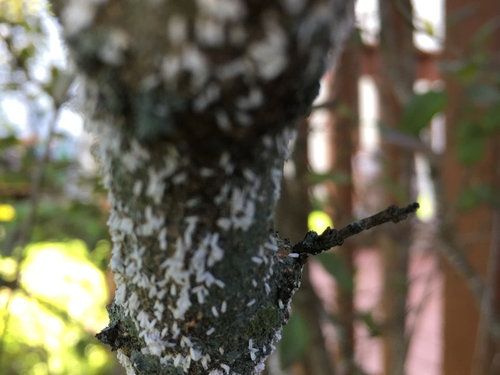
    You may find if you look into it that the spray is to be used to kill the next generation when the "crawlers" are present, moving about and vulnerable. And not expected to kill fully developed adults, with their protective coverings.

  • 8 years ago

    Hey, sorry for the late reply. I've been SOOO incredibly busy the past week.


    So it sounds like what my mom should do is wait until winter is over and spray the dormant oil on it once the adults are present? Or do it now and then again in the spring?

Sponsored
Peabody Landscape Group
Average rating: 3.5 out of 5 stars8 Reviews
Columbus' Reliable Landscape Design & Contracting