Software
Houzz Logo Print
paola_valentin2006

Is my pom pom dying?

8 years ago
Bought this tree more about 5 months ago. I watered it everyday for a week after planting and once a week after. When the weather stated to changed I doing doing it so often. It has been acreage 30-40 degrees where I live so I stopped watering. Fearing damage to the roots. I called the nursery where we bought it. They said it's normal for this time of year and to do a treatment of Holly Tone. I'm worried he's is not going to make it. help!

Comments (18)

  • 8 years ago
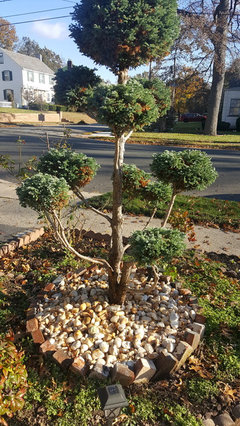
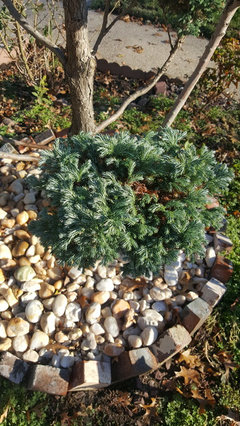
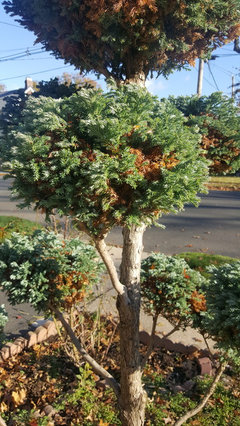
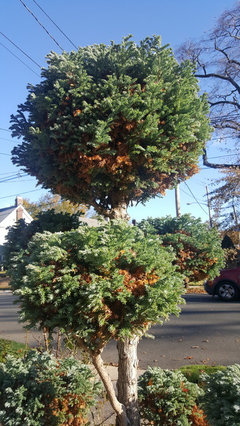
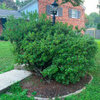
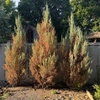
    here are pics
  • 8 years ago

    How you should care for it depends a lot on where you live and local soil and weather conditions but that is a Boulevard cypress pruned into that format and this cultivar is notorious for producing a lot of brown interior foliage. It is just a lot more obvious with that sort of pruning technique.

    Based on the photos I see, it looks rather normal but if you have additional questions, post on the Conifers forum. This is not the right place for plant-specific questions ;-))

  • 8 years ago
    the thing is I bought it green. It turned brown lately
  • 8 years ago

    Did you read what I wrote? Browning on this cultivar is expected and normal. They may have just cleaned it up at the nursery for a better presentation but the browning will happen.

  • 8 years ago

    yes I did read...and did cross post in the conifers...the brown was green a week or so ago....it was push green. Should I prune the brown and water more?? It's been 30-40 degrees here in jersey. The nursery said to treat it with Holly tone. My concern is that I want to go back to green so if I prune the brown will it grow back??? At what temps do I need to stop watering??

  • 8 years ago
    last modified: 8 years ago

    Watering every day may have been excessive. Always poke around in the soil at the base of the tree to see what the moisture conditions are, whenever there might be any uncertainty. If the browning continues to progress across the balls, to a degree beyond what would appear to be normal seasonal dying off of the oldest, innermost foliage then the plant may have been kept too wet. Or gotten dried out on the inside of the ball, despite the watering (see at link below).

    Assuming the specimen has not in fact been lost(!) you will have to shear it every year in early summer to maintain the balls. And clear the "dead brown junk" out of them every summer or fall, because as mentioned the poodling makes this all the more visible - every time this cultivar lacks a solid outer shell of foliage an ugly brown interior is presented. Whether it opens up on its own or is thinned by pruning (such as in this example).

    (Click on Establishment of Container Grown Plants in the right hand column for the benefit of 50 years of professional experience in the subject)

    https://rootmaker.com/knowledge-center

    Paola thanked Embothrium
  • 8 years ago

    I only watered for the first week per Nursery then once a week after that. I am hoping to have new grown in the spring to fill them in...

  • 8 years ago
    last modified: 8 years ago

    There would be no specific reason to follow that watering schedule - unless it had been very hot for a week and then showery for all the subsequent weeks. Certainly the nursery should not be making a blanket recommendation to water daily for a week, and then once per week afterward - when to water is when a particular plant needs it, on a particular planting site. And no conventionally grown plant is going to be fully established after only one week - see discussion at above link.

    Unfortunately no new foliage is going to appear next year where you see brown all the way to the outside now. The only way the balls are going to recover themselves is by remaining live portions growing over the parts that have gone brown and dead, from the sides. The extent of the browning suggests to me that there is a cultural issue, such as a failed approach to watering or a foliage disease problem. If you are in the US you might try clipping off samples, as well as taking photos to the nearest USDA Cooperative Extension Service branch office for help with problem identification. You will have to be able to get there when they are open during weekdays.

  • 8 years ago

    One common mistake which I have made myself is to water a new plant but not actually water the existing rootball where all of the roots still are. This can create a situation where you think you have watered but the actual roots are drying out.

  • 8 years ago
    last modified: 8 years ago

    Yes, the problem of migration of water out of root-balls into surrounding soil on the planting site is described at the page I pointed out above.

    Paola thanked Embothrium
  • 8 years ago
    This is NOT normal browning. Take the photos to your extension center and see what they have to say. It looks like (1) a fungal or (2) some sort of drought die back or over watering die back - meaning its die back from the roots. I don't know how this spot was prepared, but it should have been dug down twice as far as the root ball and twice as wide as the root ball. The root ball then should have been slightly higher than the rest of the lawn. This is why it is always preferable to have the nursery plant expensive specimens because they usually give a better warranty. And plants like this are best planted IN THE FALL!
  • 8 years ago
    One other thought, nematodes - hopefully you didn't have an evergreen in this spot before.
  • 8 years ago

    ok all, Spring is approaching. i was told to wait til the winter freeze is over. it is not over here in NJ. We are maintaining a 30-40 degree daily still. I want to revisit this post because I want to see if I can start to help this Conifer get back on its feet or start to. i still have the Hollytone...any advise as to when i should apply.

  • 8 years ago

    Interior and/or patchy browning is entirely normal on Boulevard cypress and pretty much expected. Many folks decline to grow this cultivar (or its close relatives) for just that reason. It is not pathogenic or even cultural.....it is just what this plant does.

    Just clean out the brown, dead foliage and see what happens. You may get some regrowth in that area to fill in gaps. Or not :-)) At ant rate, it is not a situation that will be addressed by fertilizing.

  • 8 years ago

    i would wait until it buds out ... and then clip out the dead brown ...


    i would also wait until the interior brown stuff dries completely ... and then stick a gloved hand in there.. and knock it off ...


    you need to think in tree time.. rather than being so proactive ... in tree time.. this can live 50 or 75 years ... in tree time .... it needs a year or two to get over the transplant stress ..


    fert is NOT a reaction to stress .. just forget about such .. its a tree .. not a child.. it doesnt need to be fed ...


    is there a proper mulch under the rock ??? .. at a min.. i would pull the rock back an inch or two.. from the trunk ...


    see link about proper watering ...


    ken

    https://sites.google.com/site/tnarboretum/Home/planting-a-tree-or-shrub


  • 5 years ago

    You need to trim your pom pom every growing season to expose the inner foliage to sunlight. Also trimming puts vigor into interior branching and may prevent dieback.

  • last year

    Pomnpoms 2 but one dying