Software
Houzz Logo Print
yan_gao_2001

mold (and maybe half-rot stud) during framing

8 years ago
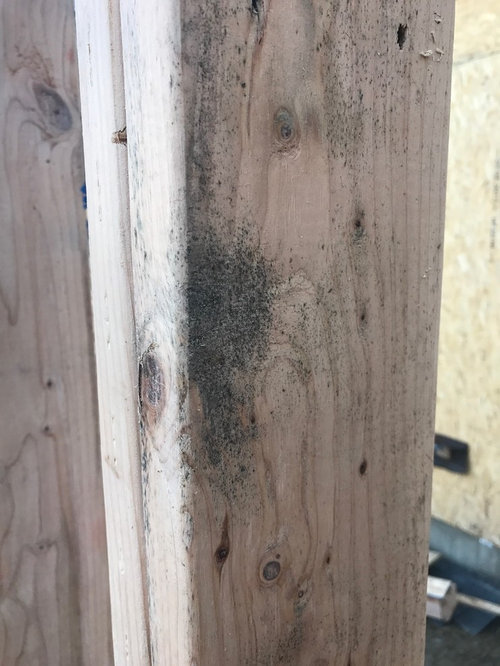

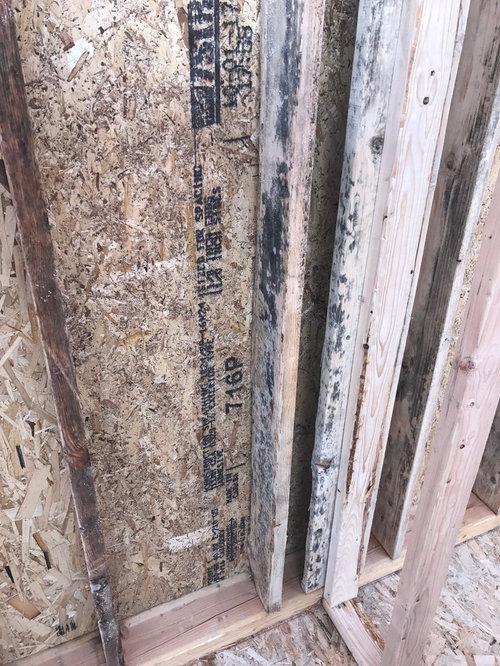
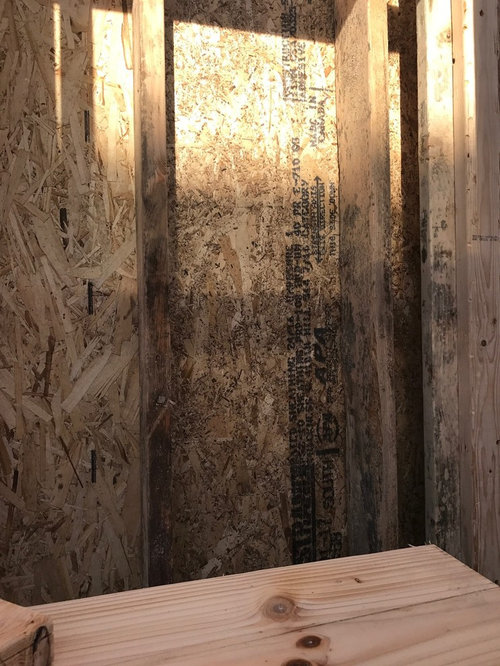
We just bought a new house that will complete construction in a few months. The builder delayed the framing work for two weeks and the wood materials were placed in open for our raining season. We complained and now the builder started the framing work. But today we saw lots molds in the wood stud, and several studs looks half-rot (am I right?); see the photos I attached. What should I do? The upper level is not framed yet, should we ask the construction manager to replace the rotten ones? (I feel replacing is cheaper than treating.) We are concerned as our daughter had long coughing issues with mold in a appartment we lived before. The seller said once that the city inspector will make sure the construction comply to the code; is mold typically included in the city construction code? If yes where to find it. Its our first home so any information will help.


If the builder refuse to replace the rotten stud what should we do? I saw online that drying the stud right after sheet wall helps, and/or clean the mold with peroxide. This city is a strong seller market and we have to sign a looks un-fair contract (I copied the portion regarding mold below), but I still hope to replace the bad studs.


Thank you in advance and happy new year!


-----------------------------------------------

Mold section in our contract.

Mold and Mildew. Buyer acknowledges and agrees that Seller will not be liable for any actual, special,

incidental or consequential damages based on any legal theory whatsoever, including, but not limited to, strict liability,

breach of express or implied warranty, negligence or any other legal theory with respect to the presence and/or existence

of molds, mildew and/or microscopic spores unless caused by the sole negligence or willful misconduct of Seller. Buyer,

on behalf of itself and its family members, tenants, invitees and licensees, hereby releases Seller and Seller’s officer’s,

directors, partners, members, successors and assigns from and against any and all claims, actions, damages, causes of

action, liabilities and expenses (including without limitation, attorneys’ fees and costs of enforcing this indemnity) for

property damage, injury or death resulting from the exposure to microscopic spores, mold and/or mildew and from any

loss of resale value due to the presence and/or existence of mold, mildew and/or microscopic spores, provided, however,

that in no event is Buyer releasing Seller from property damage which results from the presence and/or existence of mold,

mildew and/or microscopic spores which is caused by the sole negligence or willful misconduct of Seller.


Comments (10)

  • 8 years ago
    last modified: 8 years ago

    If you do a forum search, you'll find that the mold is common in framing and inconsequential after built. Mold needs moisture and a food source to grow. Once everything is closed up (properly) the moisture goes away.

    Mold (mildew) if a fact of life for everyone/thing. And, not all black colored mold/mildew is "black mold".

    Do some research. Your build is likely fine (I see no rotten boards in your pics on my screen).

  • 8 years ago

    simple surface mold, nothing to fret over or worry about.

  • 8 years ago
    last modified: 8 years ago

    Nothing wrong with any of that. Most homes aren’t built in a warehouse. Weather happens. A bit of mold and mildew happens in every single build that exists. It’s normal. Stop freaking out. And do not listen to $1.98 armchair experts who’ve never even built a dog house themselves. Otherwise, you won’t own any home.

  • PRO
    8 years ago
    Like many said above common surface mildew/mold seen on almost all framing material causes staining. If you want a house without it you will need to use KD (kiln dried) framing lumber which will add a cost and is not common practice and will crack more with typical fasteners.
    If you want to be overly cautious have the builder run a dehumidifier once the structure is drywalled to reduce the moisture content of your home usually only necessary in humid environments.
  • 8 years ago
    last modified: 8 years ago

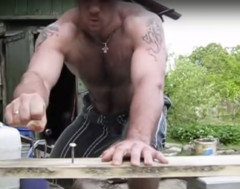
    Unless the house is being immediately insulated and drywalled, that bit of mould should be no problem at all. You can easily detect rotted wood by pushing a 16 penny nail into the wood with your bare hand. It should go in no more than 1/4".

    Unless you're this guy....

  • 8 years ago

    That’s really nothing to worry about, very common when framing in damp weather and not an issue once the house is framed in, unless there’s an ongoing leak or vapor barrier issue as the source. But if you’re concerned spraying with a squirt bottle with 1 part bleach to 4 parts water will solve it all very quickly :)

  • 8 years ago

    In an abundance of caution, bring these pictures to the attention of the builder. Tell him why you are concerned. Ask him to spray with a bleach and water solution before insulating. It's a simple process that any right minder professional would be happy to perform. Especially when you tell him why.

  • 8 years ago

    Bleach and water is not an appropriate mildewcide. Hydrogen peroxide and vinegar mixed is. But not until it’s dried in.

  • 8 years ago

    Bleach is great for killing mold on the surface of an object, so it works for something like a tile surface. But bleach will not penetrate into wood deep enough to kill the spores of mold. The recommendation is usually to use oxygen bleach, which aside from going deeper into the wood is also much less toxic than bleach. Some interesting background reading is here.