Software
Houzz Logo Print
daimeun

How Should I Kill and Re-Seed?

8 years ago
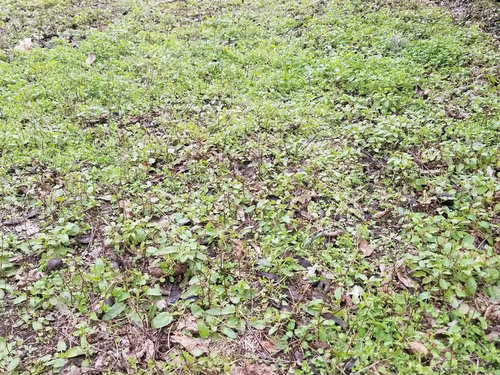
I have recently purchased a new home and would like to fix my super weedy yard. I am trying to figure out what the best way to "restart" my lawn is. I have seen people use post emergent pesticides to kill the lawn then wait 2-3 weeks to reseed after amending the soil but I don't know if this is the best thing to do as I have a dog and am getting another puppy in a couple months. (I am not sure how much it will linger). I have also seen the whole yard being tilled but I am not sure if pulling the weeds that re grow will be manageable. Here is a photo, since this the henbit has flowered.


Comments (7)

  • 8 years ago

    The best way is to start this project in late summer. Where do you live?

    How much sunlight does the area get?

    Tilling the yard is not the answer. Leaving as natural as possible for now is the best until you decide how to approach, but tilling won't be in the plan. Work only at the surface to make sure it is level. Kill the weeds, seed or sod, and water. But we need to know where you live and the shade situation before recommending an approach.

  • 8 years ago

    I live in north Florida, there isn't a lot of shade.

  • 8 years ago

    Good. By far the dominant grass in your area is St Augustine. There are many varieties but your local area may only have a few. If you have Floratam, and you have no shade, it will do very well. St Augustine does not go to seed even though it forms seed heads. The seed is not viable. It must go down as sod. If money is no object you can sod the entire area at one time. If cost is a concern, then sod the shady parts with a couple pieces of sod and let them spread out into the sunny areas. When temps are in the 70s, St Aug will send out runners several inches per week. I usually get 15 feet per year. The next year those runners send out runners to fill in the area and make a very dense turf.

    St Augustine will march right over grassy weeds like bermuda. If dallisgrass or orchard grass sneaks in, you must hand pull that stuff. It's easy because it grows in clumps. Broadleaf weeds are a problem for St Augustine. Henbit and a few other broadleaf weeds must be eradicated before the sod and periodically in the future. The only herbicide that works on Floratam is atrazine. It is a powerful weed killer, so you can only use it once a year (twice max). Other weed killers in other lawns can be used once a month, but not this stuff. Read the directions entirely 3 times before applying it.

    Once you get the lawn established, you should only have to water it once a week in the hottest heat of summer. Water 1 inch all at one time every time you water. Put several cat food or tuna cans in the yard, turn on your sprinkler, and time how long it takes to fill all the cans. That will be your watering time every time you water.

  • 8 years ago

    Thank you very much! My main issue right now is the weeds. As you can see from the picture there is very very little grass (my thought is the soil is low in nitrogen, but I am getting that tested.) Would I be better off killing everything with a non selective herbicide and then amending and re seeding in 2-3 weeks?

  • 8 years ago

    You could spray with RoundUp to get rid of all the weeds at one time. Careful not to spray on plants you want to keep and watch the overspray.

    Your soil test will tell you the soil is low in nitrogen. You could fertilize today, soil test tomorrow, and get the same result. Soil tests are not really good for nitrogen and it really doesn't matter. Grass will always need nitrogen. Unless you are getting a really good soil test that tells you which minerals your soil is deficient in, then just fertilize with something like alfalfa pellets (rabbit chow) at 20 pounds per 1,000 square feet. Wet that after applying. The next day the pellets will have swollen up. Drag a hose over the area to break up the green alfalfa worms and it will fall down into the soil. The alfalfa will feed the soil microbes with real food (nitrogen is present in the protein) and create plant food for your lawn.

    There are some seeded varieties of grass that will work in NFL, but I would much rather see you go with something popular and appropriate like St Augustine. If you've never had a lawn before, seed is not usually the approach in the South. St Augustine is dead simple. Are you married to the idea of using seed?

  • 8 years ago

    Hey, sorry for taking so long to reply. Im starting to doubt my ability to complete this project due to sod/plug cost. I am also worried to a lesser extent about the level of the soil as it is extremely bumpy throughout the whole backyard. The backyard is roughly 7500 square feet and from what I can tell this will cost around $2000 for just the plugs (might be do-able but Im not sure how much the amendments/irrigation system will cost on top of that.) To be honest I had not even thought about needing to use plugs or sod. How should I level the soil? It won't be completely level as there are large waves in the yard but I would like to get the bumps to a minimum.

  • 8 years ago

    If you have more patience than money, St Augustine can be very inexpensive. I'll get back to that.

    We usually talk about leveling, but what we're really talking about is profiling the yard. It could have big hills in it and we would still talk about leveling it. Getting the bumps and holes out - that's what we want. You have a perfect opportunity for that since your lawn is in such poor shape. The tool for doing that is called a drag. You see them at baseball games or rodeos. They pull the drag behind a tractor to smooth out the surface and "level" it. You can buy one or make one out of a 2x4 and some chain link fencing. For an area your size you could pull it around by hand or pull it behind a riding mower. Is your soil mostly sandy? If so then the drag should be enough. If you have a more firm soil than straight up sand, then you could bring in bags of sand to fill the low spots. The drag will take the tops off the hills and fill the holes. There are many videos on YouTube about dragging to level the soil. I've listened to a lot of them. Mostly the commentary is inane and sometimes dead wrong, so turn the sound off and just watch. I've done it. It is not hard to do. Here's the basic drill: fill (if necessary) with sand, level, water it down to see if new low spots develop, fill again to fill the new low spots, level, water it down again. If you still get low spots, which is not uncommon, then continue filling, leveling, and watering until you are happy. People who do this once often do it again because it works so well. They get the bug and really want perfection.

    As for the inexpensive way to grow St Aug: find the 10 shadiest spots in the yard and drop a flat of St Aug down. Cost is $10 or so. Water them daily very lightly until the roots knit down into the underlying soil. When that happens start backing off on the frequency of watering. The new flats will eventually start to send out runners across the yard. They will go several inches per week in all directions. Starting them in the shade helps keep them cool in the heat of the sun. They spread faster when at temps around 70. I have been doing this since 2014 with my new yard of weeds. As for the weeds, I would leave them for now because they are green. I do things to encourage the St Aug to spread like fertilize only the real grass and the runners, and I try to water only the real grass, not the weeds. If you spray with atrazine, spray only the areas where the St Aug is established. That will keep the weeds in the wild areas, give the green appearance, and keep the mud out of the house. Plus it doesn't make sense to turn the yard brown when the target grass is not ready to move in there yet.

    Water the established grass with an oscillator (turbo type) sprinkler. When the entire lawn is established, then you can worry about an in-ground system.

Sponsored
Miller Woodworks
Average rating: 5 out of 5 stars23 Reviews
Franklin County's Trusted Custom Cabinetry Solutions