Software
Houzz Logo Print
creekweb

oak tree damage

8 years ago
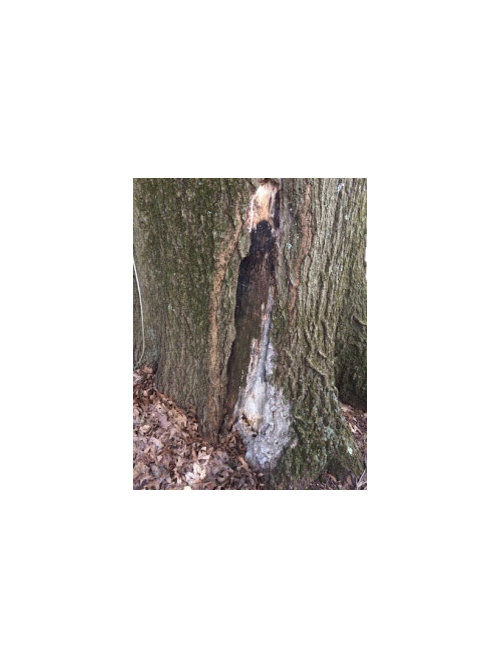
This red oak was damaged by lightning several years ago The lightning blew off a section of bark at the base of the tree. The edges of the wound have shown healing but some of the exposed wood has been rotting with the white discoloration apparent in the photo. The wood in the white rotted areas can easily crumble with manipulation. What is recommended at this point? Should the rotten wood be removed and the resulting hole be filled? Should the remaining exposed wood be treated chemically and protected topically?


Comments (11)

  • 8 years ago

    If its out onbthe back 40 or someplace it won' fall on your house or classic Oldsmobile I'd leave it.

    If its over my kid's bedroom here comes the chainsaw!

    More to the point and less dramatic, listen to Bill, get that arborist over there. In the theological sense when almost every yard tree is planted and the clock starts ticking. From one pic on my phone I can't tell accurately how long you have until it becomes a safety issue. The arborist should be able to say "I don't feel safe standing here now" or "this fall would be fine", "start putting away $,$$$ for next fall" or whatever.

  • 8 years ago

    Creek, it needs to be emphasized that the worst thing to do is to excavate the visible rot and fill the hole. And topical treatment is useless for the internal damage caused by a lightning strike several years ago.

    As was said by Bill, these outward signs are symptoms of established internal disease. A proper evaluation by an International Society of Arboriculture (ISA) arborist may be able to determine the extent of the disease and how it may affect the health, safety, and longevity of this tree.

    IF this tree is important to you in terms of shade, beauty, and property value, do not scrimp on the ISA arborist. Also as was said earlier, a tree can go on to live for many long years.....or the arborist will urge removal.

  • 8 years ago

    I don't think that the rot is a result of internal damage as it progresses from the outside in. Just like untreated lumber exposed to the elements (especially if in contact with the ground) will rot after a few years, so will exposed tree wood. The constant presence of moisture plays a big role in the rotting process. So my rationale for the idea of removing the rotted wood would be to remove that source of moisture, as rotted wood acts like a sponge to retain moisture and keep it in contact with the "front" of unrotted wood. And sealing would be to protect the exposed structurally viable wood from the elements. Kinda like treating your deck. I want to avoid as possible the situation where the tree closes over an actively rotting process which continues inward and results in the eventual hollowing of the tree. Filling would be mostly for cosmetic purposes.

  • 8 years ago

    The problem with putting too much stock in the recommendations of an arborist is this:

    Put yourself in their shoes. They're not there to continually monitor the situation. Say if in your mind, you as an arborist conclude there's a 1% chance or less this tree could fall in the foreseeable future. If you knew you would be there to monitor the tree as its condition progressed you may be more conservative in your recommendations taking a watch, wait and reassess approach, but as you know you may never see this tree again and who knows how things will go, it will feel a lot more comfortable personally to say take it down. You would have very little to lose with that approach and a lot of peace of mind to gain. When a lot's at stake and follow-up is questionable, calls will go that way, and so for me makes their value quite limited. That's what's nice about a forum like this, where ideas can be bounced off knowledgeable folks who can answer without overriding concerns about the impact of their opinions.

  • 8 years ago
    last modified: 8 years ago

    "I don't think that the rot is a result of internal damage as it progresses from the outside in. Just like untreated lumber exposed to the elements (especially if in contact with the ground) will rot after a few years, so will exposed tree wood. The constant presence of moisture plays a big role in the rotting process. So my rationale for the idea of removing the rotted wood would be to remove that source of moisture, as rotted wood acts like a sponge to retain moisture and keep it in contact with the "front" of unrotted wood. And sealing would be to protect the exposed structurally viable wood from the elements. Kinda like treating your deck. I want to avoid as possible the situation where the tree closes over an actively rotting process which continues inward and results in the eventual hollowing of the tree. Filling would be mostly for cosmetic purposes."

    cw, I feel your pain, it is a very nice durable type of tree that can live for centuries and I would personally hate to loose it. And I like your thinking but it's not the same as preserving a wooden structure like a deck. This is a living tree. Continually drawing moisture from the soil and sending it up the inside layers of the bark, keeping the insides of the tree continually hydrated.

    Molds and bacteria present in the environment are everywhere and impossible to block with a coat of paint/sealer or anything for that matter. After this long, those pathogens are visibly inside the tree already. It will be impossible clean out all the dead wood and pathogens. The tree will continue to decline over time. It will simply have an ugly coat sealer slathered all over it.

    The part about the arborist isn't silly at all. They know their stuff and durable trees like Red Oak aren't as likely to break apart when the trunk is compromised from inner rot like many other trees. So you could enjoy the tree for a decade or two, again it would have to have an on site inspection. And I'm talking arborist, not the part time help down at the local nursery. No one can do this from their computer screen no matter how many pictures you provide and making good judgements about these things over the internet are extremely risky. :-)

    In the end it's your choice, the tree is doomed, no doubt about that, it just a matter of how long before it becomes dangerous to it's surroundings, if any. A big enough storm with take down even a healthy tree so you need to consider that too. Maybe it's just not a good place for a large tree in the first place. If it bothers you, it should go. If you're not that crazy about the tree and/or if it's in a location where it could cause damage upon failure, I would just have it removed. Or do it myself. It will be a much larger tree in 20 years and cost more to have it disposed of by then. I'd be too old by then to lumberjack anymore but you may be younger. lol!

    ps: If the tree is by buildings and you remove it maybe get a lightning rod on the roof to replace the function that the tree was performing. ;)

  • 8 years ago

    I bet the bark being blasted off up high is letting water in. I've seen that when slicing old trees.

    Is that water making it to the bottom and causing that rot? I dunno. Moisture sure is rotting it though.

    Let's look at the future. That tree is probably going to encapsulate the hole and live on fornsome time as a hollow fellow. In the middle of the back 40 that's acceptable. Over my Mustang, my MarkVIII or even my Aurora that's unacceptable.

  • 8 years ago

    And with lightning, there's more damage inside then what's showing on the outside. Lightning enters high on the tree and travels to the ground. That creates a long path of super heated sap through the outer vascular system where the tree retains a higher level of moisture.

    So while you can see a place at the bottom where the bark was blown off the tree, there is most likely a strip, just under the bark that extends the entire length of the main trunk and up into one of the main branches, that has been 'cooked'.

    Since most of the damage is just under the outside bark, mold and pathogens can easily enter along the entire length of the wound. Sometimes the bark is split in places or even the entire length of the wound, which make it even easier for that to happen. A closer inspection would make things like that apparent.

    Again, a mighty oak will many times just shrug it off and keep on growing. So as toronado_3800(6) mentioned, location of the tree would be a huge factor on the final decision.

    On a final note, I think red oak deteriorates more quickly than say white oak so not as many years will have to pass before any weakness will become apparent.

  • 8 years ago

    "sealing would be to protect the exposed structurally viable wood from the elements"

    Sealant seals moisture in as well as out which is why it's a bad idea. Realistically you can't seal the moisture out.

  • 8 years ago

    Thanks, those are good comments. It appears to come down to monitoring the situation. I did happen to notice without prejudice regarding the lightning strike that the crown of the tree appeared slightly less full this past year, so there is some evidence to support the idea that some root damage was involved. Crown fullness is easy to monitor. The extent of decay at the site of the wound is less so. Now I understand that it is recommended not to remove the decayed wood so as not to inadvertently damage a compartment barrier. I'm thinking of probing the decay with small increments using a narrow diameter drill bit, stopping when I feel a change in resistance and examining the wood, or maybe using an increment borer . If the decay proved to be deep I would then call in the experts with their sophisticated equipment to have a more comprehensive look.

  • 8 years ago

    The thing about the interior wood is, what was damaged from the lightning is now 'detached' from the living part of the tree. So at first, it will be strong as oak wood can be. Over time, 'wet rot' and/or 'dry rot' will weaken this dead wood causing it to be less of a factor helping support the whole tree/branch. Again, this can take time and depends a lot on how the storms travel through that area. Some years are worse than others.

    Good Luck! :-)