Software
Houzz Logo Print
all_green_up

Recover or start over?

8 years ago
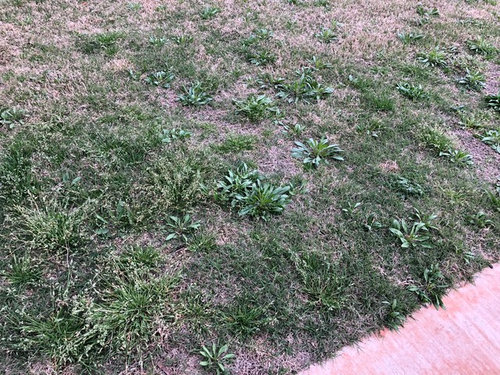
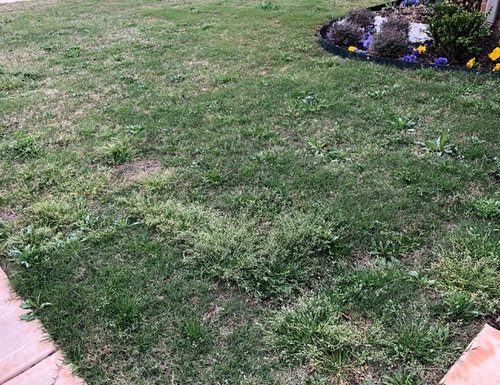
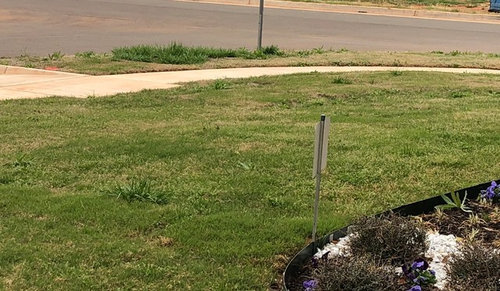
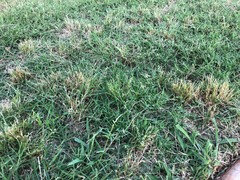
Hello everyone. First time poster and first time home owner. We just closed late 2017 in Oklahoma. New home so new grass at the time. I’ll attach some photos but it looks like weeds have taken over the front yard! I was trying to stay positive and hope to grow the good stuff to overcome the weeds. I’m not sure if I should stay headstrong or if I should use something like a weed and grass killer. As far as I know it’s bermuda grass. Thanks In advance!

Comments (27)

  • 8 years ago

    I guess it really depends on where you want to go with it. Do you want a lawn that the neighborhood will envy or just one that is green and you mow it once a week?

    From the pictures it looks like you have a combo of tall fescue, possibly common bermuda, and a variety of weeds. Now is not the time of year to seed so don't waste your money there. The seed will germinate only to die when the summer heat comes. I would start with a soil test to determine what needs to be done over the next 5 to 6 months in preparation to seed. This test will tell you what the pH is along with the basic nutrient required. Once you have that info you can begin amending the soil so it will grow nice grass.

    Next, I would start working on the weed situation. Ortho clover, chickweed and oxalis killer will take care of the broadleaf weeds without harming the grass. Buy the concentrate and a pump up sprayer and spot spray. Otherwise those weeds will spend the summer producing seeds for next years crop. That light green grass with all the seeds on it is POA. It will die once the summer heat kicks in.

    Mow what grass you have high. Right now I'm mowing at 3.75" and as temps start rising I will slowly move up to 4.5" in the heat of summer. This will help shade out the weeds.

    By the end of summer you will need to make a decision based on where you're at. You can seed what you have or kill the whole thing and start over. Until then, read, research, ask questions and learn as much as you can. A lot of folks here will be happy to help you out.

    All_green_up thanked forsheems
  • 8 years ago

    This is Bermuda grass in Oklahoma folks! Shave it down as low as your mower will go, zap the weeds with a SELECTIVE herbicide like sulfentrazone or the above mentioned weed be gone & get on a good pre emergent schedule. Other than that, just keep it mowed & fertilized, Bermuda is almost indestructible. Do not buy a bottle of round up or other grass killer until you know how to use it properly, you'll ruin your yard

    All_green_up thanked reeljake
  • 8 years ago
    last modified: 8 years ago

    Thanks everyone for the feedback. Yep good ole Oklahoma Bermuda! So combining everyone’s advice I’ve come up with this... cut the grass as low as I can. Spray for weeds, spot spray remaining or hand pick. Preemeegent, fertilize, start mowing at a higher height. Fertilize. Research. Ask questions.

    Does that sound like a good round up? pun intended.

  • 8 years ago

    Mowing height manipulation is a difficult explanation, so for now cut as short as possible. When your mower can't push through it, then bump up a notch. Otherwise, you got the idea perfectly! Hand pulling is of course the best, but who has time for that?

    All_green_up thanked reeljake
  • 8 years ago
    last modified: 8 years ago

    Agree with reeljake, but maybe spray weeds before you scalp. The more leaf surface you have on weeds, the better the killer works. The Tall fescue clumps will have to be selectively killed with Round up. You can wick Round up on the leaves because fescue grows a lot taller than bermuda, and you can get a kill without harming turf below. I just rub the leaves with my fingers, but people tell me i should wear gloves :-) You can also "paint" the leaves with round up using a foam paint brush. If you spray before scalping ( both Round up and broadleaf) wait a week, so the chemicals can get into the roots before you shave the leaves off.

    All_green_up thanked Tom
  • 8 years ago

    Thanks again everyone. I found a couple products with the active ingredient sulfentrazone. Conveniently, there’s a premixed one called Ortho Nutsedge killer. If that one looks good I’ll run out and pick some up.

    Thanks!

  • 8 years ago

    Ortho nutsedge killer works like a champ, it kills much more than nutsedge

  • 8 years ago

    Oops. I had a lag in comments there. Okay great I’ll pick up some ortho nutsedge today!

  • 8 years ago

    Any chance that spray can/will kill my flower garden? I’d have to join the new-garden-before-the-wife-comes-home forum too.

  • 8 years ago

    On the subject of overseeding, don't. You likely have a hybrid bermuda turf like TIF 419. If you overseeded any other bermuda into it, it's going to look different (weedy). If you ever see thin spots, chances are those are in the shade of something (house, tree, shrub, mailbox, etc.). You cannot improve things by adding more seed. Bermuda does not like shade, so you have to do something different with those areas. Somethings that work include flower beds, different grass type (fescue or St Augustine tolerate shade), and/or mulch bed.

    All_green_up thanked dchall_san_antonio
  • 8 years ago

    Any herbicide you use has the potential to kill garden plants, so spray with great caution around the wife's garden. A red solo cup over the end of the sprayer nozzle can limit overspray pretty well

    All_green_up thanked reeljake
  • 8 years ago
    last modified: 8 years ago

    Hello all. Just checking in and double checking. This past Sunday I was able to spray the yard with weed b gon weed killer. I plan to scalp the yard in the next few days. Should I apply preemergent next? How about the lesco 0-0-7 crabgrass control? After that what’s a generic schedule of fertilizing and any additional weed control? I’m looking at the Bermuda bible too but it’s all getting a little jumbled. Thanks!

  • 8 years ago

    Isn't it to early to scalp in Oklahoma? I guess you can but won't it take WEEKS before it is thick and green? I always wait until the grass in very active and have mowed many times before scalping. After scalping yes to preemergent but check the label and see if crabgrass is listed then you can avoid the lesco. I fertilize Bermuda 1st of every month during the growing season. And then for weed control pull them by hand or spot spay weed b gone at half strength and after sunset.

  • 8 years ago

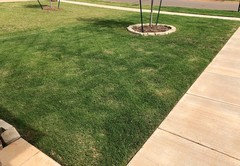
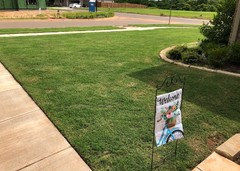
    Here’s a lawn photo update. Seems to have improved a lot but I can’t quite get it to really green up. I was wondering if someone could just reclarify some things.

    1) for soil testing here in Oklahoma should I send it to the Ok county OSU extension?

    2) newer (or any age) Bermuda sod from August/September 2017... some say mow high to block out weeds and help roots establish and some say mow it really short. Which is it?

    3) landscapers just patched a bunch of uneven/bald spots with fresh sod. Should I just hand water those areas and flower garden and continue with deep and infrequent everywhere else?

    Thanks!

  • 8 years ago

    Lawn looks much better. How much of the day is that shade on the lawn? Bermuda likes to have 6 hours of direct sunlight

    1. Check the Logan Labs website for prices and see what you get. There is another lawn forum where you can get a lot of help on Logan Labs test results.

    2. Established bermuda, which you have by now, should be mowed at the mower's lowest setting. It grows most dense when mowed low, so the density is what keeps weeds out.

    3. Yes. If the uneven bald spots are in the shade, consider reconfiguring the garden to eliminate the bermuda in the shade and put in flowers or something else.

    _______________

    The original Bermuda Bible seemed a little jumbled to me, too. See if this doesn't simplify things:

    1. Water deeply and infrequently. You already got that.

    2. Mulch mow bermuda at the mower's lowest setting. If the bermuda is growing fast, then mow 2-3 times per week as needed.

    3. THIS IS FOR BERMUDA ONLY: In the spring after you have mowed real grass for the second time, start fertilizing. Fertilize every 4-6 weeks with a high N fertilizer. If you want to use organics, then at least alfalfa pellets, but soybean meal or corn gluten meal would be better. When the grass stops growing in the fall, give it one more blast of urea fertilizer as a winterizer. This last dose should help it awaken in the spring.

    4. Preem in spring when the forsythia bloom. If you have any thin spots or get a week or rain in the spring, repeat the preem. Preem in the fall when the late summer rainstorm hits. That would be a storm that lasts several days. Apply preem immediately during or right after that storm. This will get the spring annual wild flowers which germinate in the fall, go dormant in the winter, and bolt with the spring rains.

    5. Bermuda should never be bothered by disease with this plan.

    All_green_up thanked dchall_san_antonio
  • 8 years ago
    last modified: 8 years ago

    I disagree about the mulch mowing of bermuda, especially when it's young. I would bag it for at least the first few years. Lawn is looking great!

    All_green_up thanked reeljake
  • 8 years ago
    last modified: 8 years ago

    Thanks dchall and reeljake.

    I went through a couple rounds of the ortho weed be gone and some roundup near that street sign. I’ve been fertilizing with Milorganite just because it seems a little more fool proof. I may switch over to the lesco slow release stuff they have on sale here. I’ll check out Logan Labs and see what all that entails.

    Im not sure how much shade it’s getting but I’m pretty sure it’s getting at least 6 hours of sunlight. Not so sure about the side of the house adjacent to the neighbors though.

    It seems like the rationale for mulching is that the clippings will provide nutrients. Reeljake what’s your reason to suggest bagging it for a couple years first?

  • 8 years ago

    You don't have enough bacteria or worms to break down the massive amounts of clip that young Bermuda produces. Takes at least 5 years for that much mother nature to come back. Add to that the layer of peat & clay that sod farms use to grow this stuff & it's a recipe for thatch city. When the thatch collects, it shades out the bare ground & your Bermuda will have shallow roots with leggy growth, causing color issues. I've been there, it is not fun & dethatcher use is a dirty dusty business!

    All_green_up thanked reeljake
  • 8 years ago

    Plus the clip is all water, there's no nutrients in there & you don't want the dog bringing in all those clippings on your carpet anyway

    All_green_up thanked reeljake
  • 8 years ago


    Thanks. Here’s some random things that popped up. The thing in the first picture along the edge is starting to spread. Not sure if that’s another type of grass or what. Fescue?

    Then what’s the yellow clumps of straw looking thing in the second photo? Thanks again all.

  • 8 years ago

    First pic is crabgrass at the corner. Once you get the bermuda more dense in there that should stop. It is sometimes hard to get enough water at the corners where concrete comes together. The concrete holds heat and dries the soil out even overnight. So consider that area to be 10 degrees warmer and water accordingly.

    Second pic looks like yellow tufts of bermuda. You probably don't know what it looks like when it gets taller.

    Interesting discussion about not mulch mowing when the turf is young. I'm not sure I buy the idea that the soil biology is not adequate, but I don't have experience with a new bermuda lawn to really discuss it. The clip is a lot of water but not all water. Grass has enough nutrition to grow livestock, so not all water. Truth about the dog, though. We have decks and concrete out our back doors so the dogs don't bring anything in. We have been there before.

    Organic fertilizer will build the biological population faster than anything. Spray with molasses (3 ounces per 1,000 square feet) along with deep watering, shampoo (3 per thou), and organics, and the biology should be in tip top shape in a month. You can spray the molasses and shampoo at the same time (mixed in the same bottle). It comes out as a brown foam.

    All_green_up thanked dchall_san_antonio
  • 8 years ago

    Dchall I really appreciate the thorough response. I’ve been reading up and it looks like there’s dried and liquid molasses. Do you have a preference? If liquid do I just get regular molasses like in the link? I’m planning on putting it into one of those end hose sprayers.

    https://www.walmart.com/ip/Grandma-s-Molasses-Original-12-0-FL-OZ/15716722

  • 7 years ago
    last modified: 7 years ago


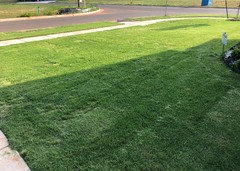
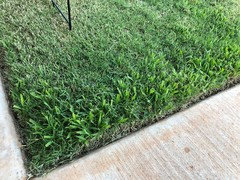
    Hey everyone. Just coming back to say thanks for all the advice. Here’s some photo updates of the yard. Seems to be coming along much better now all thanks to this forum!

  • 7 years ago

    Photos didn't load.

    Dried molasses is where they take 5 pounds of liquid molasses and mix in 35 pounds of rice hulls or other inert organic material. At wholesale prices 5 pounds of molasses costs $.50 and the rice hulls are free. Then they charge you $25 per bag for the product. So that's the difference. If you have a farm and ranch co-op nearby, they often sell molasses in bulk at wholesale prices IF you bring in your own bottle. A gallon of molasses weighs 15 pounds, so the cost would be something like $1.50 like that or whatever it costs at the grocery store. A co-op is not the same as a feed store. Also don't get a gallon of molasses unless you are planning on spraying a LOT of it all the time. My gallon jug is 10 years old and I've used about a quart. It is very thick and unpourable as it is. If you let a bag of dried molasses sit out after opening it, it will absorb humidity and become a solid brick of dried molasses. Another unusable product.

    All_green_up thanked dchall_san_antonio
  • 7 years ago

    It’s weird. It actually won’t let me upload for some reason. Will have to try on the laptop instead.

  • 7 years ago
    last modified: 7 years ago


    looks like i had to resize them.

    does it look like i'm mowing too low? and maybe striped my lawn with the fertilizer?