Software
Houzz Logo Print
jacque7305

Hardwood Oak Floor under probable asbestos

8 years ago
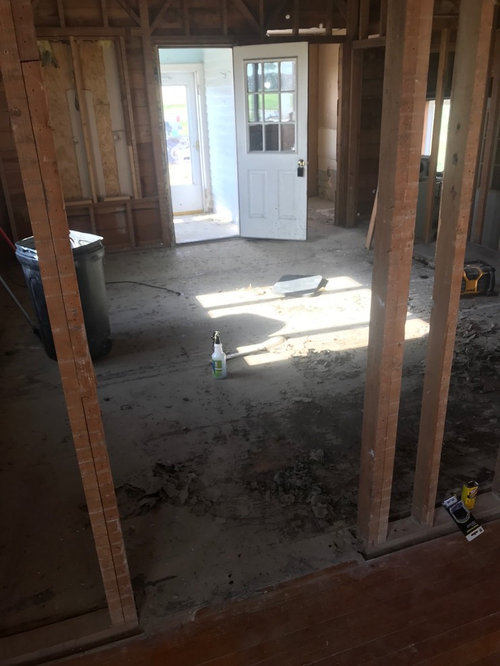
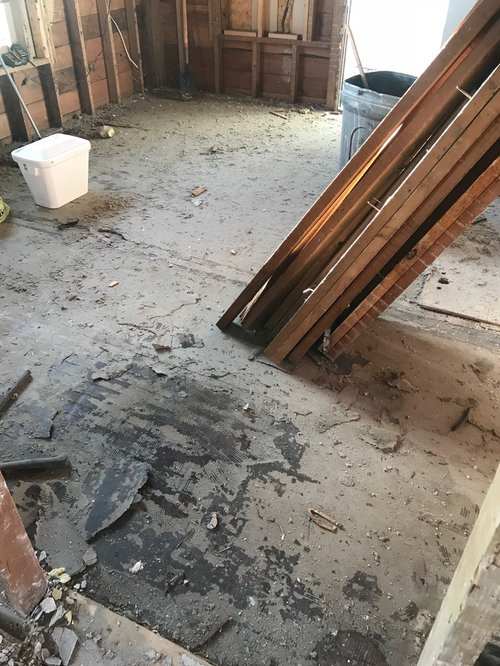
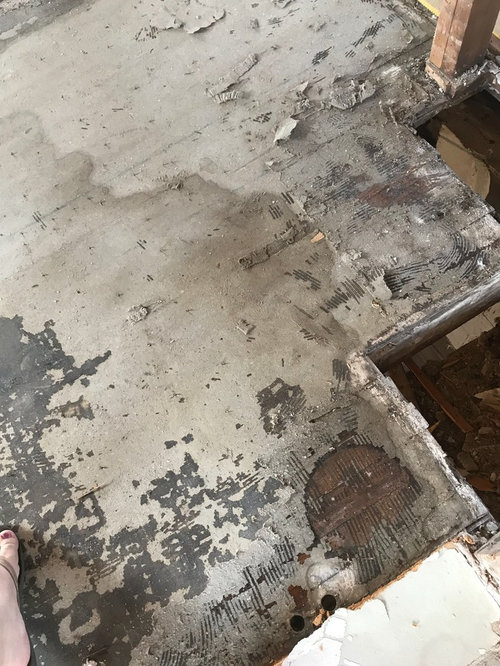
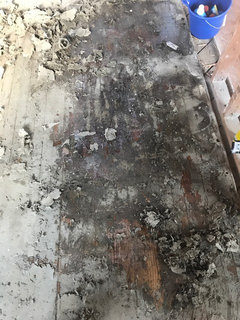
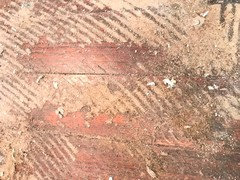
We are rebuilding a 1923 farm house. Under the carpet and linoleum we find really pretty oak floors. We're presuming this felt like paper and mastic contains asbestos as its very old and was commonly used. If this paper is wet sanded off and properly removed by flooring expert is there a continued chance for asbestos exposure over the next 20-30 years? Trying to decide if we should just remove the entire floor and start over our if the floor is worth keeping? We can't go over top because there are some rotten areas were the bathroom once was. These floors will need to be laced into connecting rooms - which is why we need to be level with the other floors in the house.

Comments (12)

  • PRO
    8 years ago

    Call a professional company and have it removed. Its a matter of life or death. you can remove the original wood and reinstall it.

  • 8 years ago
    last modified: 8 years ago

    Limoleum was the finished surface for most farmhouses. What you are likely seeing is the subfloor. Not wood meant for a finished floor. Is it tongue and groove? Or just flat nailed to the joists?

  • 8 years ago
    Hard to see in pictures, it's tongue and groove 3/4" thick. We removed a chimney from this run and it's definitely not subfloor. There is subfloor underneath this oak.
  • PRO
    8 years ago

    Many years ago when we lived in a house in St Louis that was built around 1936-38, the old peel and stick tiles on the floor were coming up. I asked my husband if I could remove them and he agreed. After removing them, I discovered a plywood floor. I called DH at work and said "I thought plywood came into being after WWII?" He said that generally, that was so. Hmmm. Then I realized that the floor in the small walk-in pantry was different than the kitchen - it was red linoleum and it was LOWER than the kitchen floor. So I grabbed a hammer and started pulling up the plywood.

    Under that was red linoleum. It had practically "liquified" over the years - it was a gooey mess. By this time, DH was home from work and took a paint scraper to this mess. Under it, we discovered tongue and goove hardwood floors! It was like finding buried treasure!

    Now, this was in the late 1970's when there was little talk about asbestos and its dangers in removing it. DH spent the next couple of weekends, scraping all the old red linoleum and the goop underneath, off these floors. We then had a flooring company come and sand and polyurethane the floors.

    Did it harm us? Who knows. DH died in 2005 from prostate cancer - it was presumed to have been inherited. I have had respiratory problems since 1970 - they are progressive and have worsened. I don"t think removing this small kitchen floor had anything to do with our health issues, but we'll never know. Today, we would hire someone to do this properly.

    Fast forward to 18 years ago and a pipe break in a 2nd floor bathroom. Water ended up coming all the way to the basement when peel and stick tiles floated up over the floor drains. It was very easy to get them up, but the glue most likely had asbestos in it and that was a BIG problem. It had to be done properly. And it's a BIG basement! We hired an asbestos removal company to do the work and used a commercial orange gel cleaner that loosened the glue so it could be scraped off and removed, then the remains were allowed under local Code to be washed down the floor drain.

    What was key was to NOT sand this stuff off. That would have released the asbestos fibers into the air, they would have gotten into the duct work and the entire house.

    Most likely, you do have some form of hardwood floor. Red oak was typically used as "sub flooring" under linoleum. It was cheap in those days. Call a flooring company and get some advice and bids.

  • 8 years ago

    Go ahead and TEST the stuff you are worried about (roughly $100 per sample sent via snail mail to a lab). Once you KNOW what it is, then you can decide whether or not to engage an asbestos remediation company or not (the price can be quite impressive).

    Once you are aware of the material, you are responsible for keeping all the workers safe (homeowners or contractors it doesn't matter). The amount of remediation needed (based on square footage) will determine how you handle this.

  • 8 years ago
    The guy we've hired is certified in asbestos removal. I just cant find any info about leftover debris in hardwood floors. He believes the asbestos content in this is minimal but will treat either way. I'm worried about years down the road sweeping - would I still be at risk? Or should we just pay to have it all torn out now while the whole house is just an empty shell?
  • 8 years ago

    SJ McCarthy-

    I don't know where you are getting your info, but you are doing a disservice by your cavalier approach to asbestos exposure. People have developed asbesto-related disease with much lesser doses than those you so theatrically describe. It's true that industrial workers typically have had the highest exposures and the highest risk. And their families were at risk simply because the workers brought home fibers on their clothing (asbestos-related illness and death of family members who never set foot in an industrial setting are well-documented). There are also cases of people developing mesothelioma (a fatal disease caused only by asbestos) with no known significant exposure. And people who both smoke and have asbestos exposure have a combined risk of serious illness about 40 times over what one would expect if only one of those factors were present.

    I agree that the risk from a minor asbestos exposure is rather low; however, there is no such thing as a safe exposure to asbestos. I'm not trying to be alarmist, but the best approach when you know something poses a potential health risk is to minimize your exposure, not ignore it.

  • 8 years ago
    The flooring guy said the asbestos content in this type of paper and mastic is so low you could even use it as a kleenex if your really wanted!
  • 8 years ago

    I'm sure the flooring guy has a degree in epidemiology and risk assessment....

  • 8 years ago

    Testing really is the best option. Why speculate? It’s inexpensive to test. And take all precautions if it is asbestos. Why take a risk with your long term health?

  • 8 years ago

    Also, if it contains asbestos it should be properly disposed of at a hazmat site and not just put into the regular trash.

Sponsored
CHC & Family Developments
Average rating: 5 out of 5 stars5 Reviews
Industry Leading General Contractors in Franklin County, Ohio