Software
Houzz Logo Print
uscroy

How important is a CNC machine?

8 years ago

When I ordered my kitchen I planned to use the stone fabricator that my designer trusts and has years of experience with. However, I just found out he does not have a CNC machine which I know is something the high end guys have, brag about and use as a selling point. But I don't know how important this is or how much I should care about it.


My kitchen is full of square mitered edges and there is a seam on my island. Will someone who has a CNC machine necessarily do a better job? Or is someone who doesn't have a CNC unsuitable for this? This fabricator says that the visibility of the seam has more to do with the skill of the installer than how it's cut.


What are the pros and cons of not having CNC?


Thanks!

Comments (54)

  • 8 years ago
    last modified: 8 years ago

    My fabricator didn't have a CNC machine, and my kitchen has a slight trapezoid shape - meaning that it is a square-ish room, but it is not square, as the sides angle out the slightest amount, like a trapezoid, though almost invisibly. Imagine scribing a counter to those walls! Yet he did it perfectly. Of course, he's been in business for 25 years or so. He made old-school templates. And he used those templates to tape onto the slab when I visited his shop for the template layout, which was very helpful. My backsplash meets my counters and there is no gap or visible irregularity.

  • 8 years ago

    My understanding is the CNC will give you a cleaner, smoother seam. A seam setter that electronically pulls the slabs together will give you a tighter seam.

  • 8 years ago
    What is a seam setter? I've never heard of that. Sounds like something that have to bring on site.
  • 8 years ago

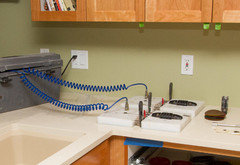
    This little device.

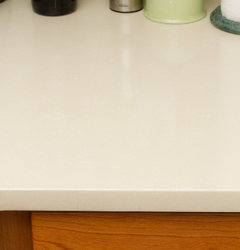
    This is my CNC/seam setter beauty of a seam:


  • 8 years ago
    last modified: 8 years ago

    CNCs are only as good as the guys programming and operating them.

  • 8 years ago
    Mayflowers... what counter material is that!?!
  • 8 years ago

    Pentalquartz 'Botticino'.


  • 8 years ago

    We use a CNC machine because we like precision. We scribe our counters to the walls of the customers home.

  • PRO
    8 years ago

    A skilled fabricator can do nearly anything a production fabricator with a CNC can. I can tell a hand profiled edge from a CNC edge just by looking at it.


    Don't forget that shops with CNC machines shove the jobs they get into the capabilities of the machine. For instance, if the minimum inside corner radius of their tooling is 2 1/2", you're getting a 2 1/2" inside radius if you like it or not. They have based their proposal on production, not customization.

  • 8 years ago
    The only tooling that requires large inside radius corners are sophisticated edges like ogee, the most common edges like standards or pencils can be done as small as 3/8 radius off the cnc which can be made even smaller after by hand. If you have a seam in an island I would strongly suggest a fabricator with a cnc and one who has seam bits installed on his cnc. The longer the seam the the more difficult it is to be inconspicuous. Majority of fabricators with out cnc will use their bridge saw cut to be the seam, this cut can be bowed and full of fine chips at the top. Put these two pieces together and you just doubled the problems of chips and bowed cuts, seam setter or not you can’t bring that seam tight every where and the chips are left to fill with the epoxy. With a cnc the seams are dead on straight and no chips, you could cut your finger on the edge it’s so sharp. Just dry fitting here in the shop the seams are hard to find.
  • 8 years ago
    last modified: 8 years ago

    Majority of fabricators with out cnc will use their bridge saw cut to be
    the seam, this cut can be bowed and full of fine chips at the top.

    Granite guru, there's a mistype in this sentence and I'm interested in learning more.

    The chipped edge seam is what we see here so often when people post about how unhappy they are with their seam. Joseph often corrects me and says I have a good seam because my quartz has fine particles and that's not applicable to quartz and granite with large particles. Is that true?

  • PRO
    8 years ago

    mayflowers:


    Let's be clear about what Joseph has said. I've said that fine particulate engineered stone such as yours, without movement, is the easiest of estone to seam inconspicuously. It's more like seaming solid surface than stone.

  • 8 years ago
    last modified: 8 years ago

    My stone is going to be Silestone Iconic White which is the whitest quartz I could find. The fabricator said that pure white is the hardest to produce and inconspicuous seam on. He doesn't have a CNC.

    But it sounds like what Joseph is saying is that engineered stone should be the easiest.

    I am wondering what granite guru said about edges chipping applies to granite or marble or quartz?

    I have LOTS of mitered corners on my island and I will not be happy if there are chipped edges everywhere. This thread is making me nervous about using someone without a CNC. Mayflower's seam photos are impressive!

  • PRO
    8 years ago

    "But it sounds like what Joseph is saying is that engineered stone should be the easiest."


    No, what Joseph said is that fine particulate non-white surfaces with no movement are the easiest to seam inconspicuously, no matter the material.

  • 8 years ago

    Movement isn't really a quality of the seam. It matters only as far as
    creating an uninterrupted pattern. I believe Joseph is saying you
    shouldn't expect an inconspicuous seam with the larger particles. But
    I've commented on conspicuous seams in a fine particle quartz
    (marble-look colors) and Joseph has differed with me when I say they
    should be able to achieve a seam like mine using a CNC, a seam setter,
    and a skilled fabricator with an eye for color-matching the epoxy. I'm
    referring to when the complaint is about a wide or chippy seam, not a
    seam where the patterns in the slabs weren't matched well.

  • 8 years ago
    last modified: 8 years ago

    Granite Guru,

    We just had a white granite called "White Soul", a granite very similar to Alpinus Super Crystal installed. At the slab yard the granite was very white, now the white areas are yellowed, and there are areas where orange spots are showing. The fabricator mentioned that he put an "ager" on a crack to darken the crack line. I am wondering if he put it on the whole slab and that is what caused the white to yellow (the whole slab is darker, even the quartz sections). What can we do to regain the original white color? Sadly this fabricator is not a decent guy and I have no faith that short of taking him to court he will do anything to make it right.

  • PRO
    8 years ago

    cwallace5thgrade:


    Tenax ager remover.

  • 8 years ago
    Mayflower. If the seam is chippy and wide it’s better to have more movement and large particulate grain to help hide it. The fine grain will look great when done with a CNC and proper tinted adhesive but it will be quite the opposite with chips and gaps. You can’t hide anything on uniform fine particulate quartz all defects jump out at you especially a poor seam. uscpsyco, the same is true for iconic white but even harder due to the brightness of the white. The chipping will be removed when they hand polish the edges it’s just the seam that if they do not address will remain With fine chips. A long seam in an island of iconic white is a tough one, I would hope they use product like integra for the glue instead of the typical polyester adhesive mixed with white coloring. This will not be bright white enough to match your quartz properly. As for the latest question with the ager, the fabricator said he put it on a crack to darken it. Darken it is probably exactly what happen but ended up looking to dark so he slapped it every where. He should have just used a liquid adhesive to penetrate the crack. Still I’m not sure without pictures if this would have made it the yellow tint you speak of. It will make the stone darker and “wet looking”. Ager is difficult to remove off the whole surface it’s like spilling oil on your top without sealer. The longer it sat the deeper it will penetrate. Could the stone look to be a different tint due to lighting difference in your kitchen? Again pictures will help.
    uscpsycho thanked granite guru
  • 8 years ago

    Is the seam setter mentioned above an additional device to a CNC that I should seek out? Or is that something that anyone with a CNC automatically has because it's part of the process/system?

    I am starting to think that pure white quartz on a 13' island is a bad combination. There's really no going back though. I suppose I don't have to use Iconic White but it sounds like seams are problem with any white even if it is not the brightest white. To make things worse I have a lot of mitered corners, I assume these are also a challenge on pure white.

    The design decisions I make perpetually make my life difficult because I don't know how difficult they are to achieve.

  • 8 years ago

    I'm going a little off topic now but I just read about water jet
    cutting technology. Sounds like this creates a super clean cut with CNC.

    Is it hard to find a fabricator with a water jet cutter?

    So maybe for the best seam on my white counter I need to find someone with a CNC, water jet cutter and seam setter.

  • 8 years ago

    If the "usc" part of your handle means you live somewhere between Santa Barbara and San Diego, then no, it won't be hard to find someone with a CNC and water jet cutter. If you live in Podunk, Somewhere or, like me, north of SF, then it might be. Seam setters are pretty common.

    uscpsycho thanked suzanne_sl
  • 8 years ago

    Yes, I'm in Los Angeles. Hope I can find someone who has the gear and is good. As someone noted above, just because you have the equipment doesn't guarantee a good outcome. You still have to be good at your job.

  • 8 years ago
    A water jet is part of the sawing process not the finished product. A cnc is what does the polished edge profiles and seam edges (if equipped ) a seam setter is a installation tool for installers it is called other names depending on the manufacture (ex: gorilla). The main problem with fab shops not producing quality counter tops with a cnc will be the edges. They either try to drag the life of the tooling to long or lack the knowledge of adjusting the tooling as it wears down. The poor quality will be in the polish of the edges every thing else is pretty standard other than programming. When programming goes wrong you usually end up with counter tops smashed to pieces so at worst the install date will be delayed while they reproduce your tops. If your that concerned about the seam in your island take the full length of the slab then finish with butcher block may or may not fit your design but it gives a another option. What do you mean by mitred corners? When I hear miter I think laminated edges or waterfall legs done with 45 degree cuts. I’m not sure how you mean it?
  • 8 years ago

    Thank you for the reply Graniteguru and Joseph Corlett.


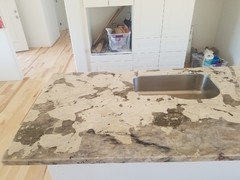
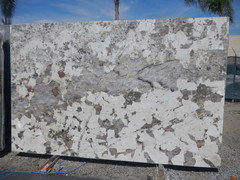
    Here are some pictures. The top picture is the installed granite. Although the time of day and angle of picture do influence to total yellow effect, there is no doubt that the coloring is different. In the picture of the slab at the yard there are some orange marks, but now there are many more and they are darker. Also the white that shimmered, now is the yellow you see in the image.


    The worst part is the the cracks are still noticeable and he never filled them.


    When the installer put on the sealant and left it, it created a sticky haze all over the granite, and the next day he was taking it off with a razor and acetone. I am wondering what happened.

  • PRO
    8 years ago

    "...a sticky haze..." sounds like he tried some kind of two-part epoxy and didn't get enough catalyst which is why he had to scrape it off.

  • 8 years ago

    guru - What exactly is the benefit of the water jet? My understanding is that it gives you cleaner cuts without chipping. Is that not the case?

    When I refer to mitered corners I mean 45-degree cuts like waterfall edges. The design of my island has that type of cut on the waterfall and all the way around the island. If those corners aren't clean and crisp it may ruin the entire kitchen since the island is unique and the star of the show.

  • PRO
    8 years ago

    " What exactly is the benefit of the water jet?"


    Unlike a bridge saw, a water jet can cut any shape. This makes it very efficient. It's all about production.

  • 8 years ago

    Aren’t water jet cutters used for making super fancy marble tile shapes?

  • PRO
    8 years ago
    last modified: 8 years ago

    Zalco:

    You are correct.

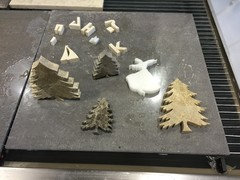
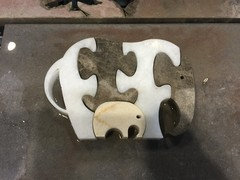
    If you don't have a water jet, you're not cutting these:


  • 8 years ago

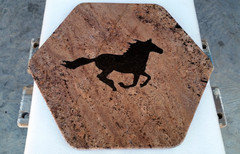
    cwallace5thgrade. The ager could be part of the result of the tint difference but right off the get go before ager there would be a large difference between out doors and indoors. This stone will be full of natural fissures all throughout the big chunky quartz the bigger ones should get sealed up with adhesive but to expect them all to be touched up is unrealistic. The sticky residue is from the sealer being left on too thick to dry, even more simple than a razor blade and acetone is just applying more sealer and rub down till its dry. uscpsycho. laminated pure white quartz is for experienced fabricators, I'm not saying your fabricator isn't experienced but maybe you should see some of his work before production on your tops begin. The benefit of a water jet is yes less chipping (unless the nozzle clogs then you get massive blow outs of your stone) and chipping is irrelevant because if you have a saw with water jet you most likely have a cnc which requires an extra 1/8'" over size all around for shaping and polishing. The main benefits of a water jet are precision cutting like attached photo of an inlay, radius cutting and not having to run your blade cuts into the remnants to cut free the piece you need reducing waste in slabs. I have even used our water jet to cut precise pieces on 1/2" steel, plywood and glass. The water jet simply put is water mixed with garnet abrasive pressurized and pushed through a very small opening at the end of a nozzle.

    uscpsycho thanked granite guru
  • 8 years ago

    Thanks!

  • 8 years ago

    "Aren’t water jet cutters used for making super fancy marble tile shapes?"


    As well as metal like stainless steel, aluminum and others.

  • PRO
    8 years ago

    How important is a CNC machine? I suggest it's kinda like surgery with or without a robot. You can do it accurately with a great degree of precision or you can screw it up with the exactly the same degree of precision. Beautiful, quality and sustainable work has been done for centuries without the benefit of CNC technology. Don't let that be the deciding factor.

  • PRO
    8 years ago

    Beautiful, quality and sustainable work has been done for centuries without the benefit of electricity.

  • 8 years ago
    Obviously there was a time before automated manufacturing where counter tops were produced by hand. The problem today is the true trades men of the granit industry are thinning out and being replaced by what i call inspectors. They basically touch up the work of automated machinery. This goes for countertops all the way to sculpting. My point the whole way through this thread was to know your fabricator, sure there is still guys that manually work the stone but the good ones are few and far. The proof is here all over Houzz with nightmare results. The automated industry is the reason solid surface exists and granit countertops are affordable for most. Don’t get me wrong I am one of those guys that shaped ogee edges with a blades and abrasive stone wheels or detailed fire places with steel shims wedges and mason chisels. But there is no way to be competitive in the present market. Cabinet company’s who buy multiple tops a week won’t even consider you with out a cnc in your set up no matter how talented you are it’s all about $$ and time delays.
  • PRO
    8 years ago

    granite guru:


    You are correct. The marketplace is getting exactly what it has demanded and deserves.

  • 8 years ago

    "The main problem with fab shops not producing quality counter tops with a
    cnc will be the edges. They either try to drag the life of the tooling
    to long or lack the knowledge of adjusting the tooling as it wears down. The poor quality will be in the polish of the edges"

    Doesn't the water jet protect against this? Since there are no parts to wear out won't you get a clean edge every time with CNC + water jet? (assuming competent operator)

    If I've got a seam in a pure white quartz counter it sounds like CNC + water jet eliminates several ways things could go wrong due to human error.

  • PRO
    8 years ago

    A water jet is for cutting, not edge profiling and polishing.

  • 8 years ago

    When you have a seam you are butting two cut edges together. Isn't how clean those cuts are super important when you are working with pure white quartz?

    From comments above, without a water jet the cuts could be jagged or chipped, resulting in an imperfect seam. But with water jet the cut is flawless (or close to it) resulting in a cleaner seam.

    Am I misinterpreting water jet vs non water jet?

  • PRO
    8 years ago

    A water jet is a production cutting machine. I probably wouldn't seam off a water jetted edge; I'd dress it with a CNC or a Seam Phantom.

  • 8 years ago
    last modified: 8 years ago

    I had a fabricator make a sample for me. They used a white quartz but not a pure white quartz like the Iconic White I'm getting

    The seam looks pretty good but I don't know if this would be considered great. I know it will never be invisible so is this as good as I should reasonably expect it to be? Or can a more skilled fabricator do a better job? (Clicking/tapping the photos will enlarge them for a more close up view.)


  • 8 years ago
    last modified: 8 years ago

    As a follow up, I wonder if the prominence of the seam on Iconic White would be the same or if the seam would be more pronounced on something like that.

    I don't know what color was used for the sample, to me it looks very similar to Caesarstone's Pure White.

  • 8 years ago

    Looks good to me

    uscpsycho thanked cpartist
  • PRO
    8 years ago

    Any seem you get that's better than that is a bonus. You'll have to switch to solid surface if you want much better.

    uscpsycho thanked Joseph Corlett, LLC
  • 8 years ago

    Our quartz tops installed last week were rife w/errors (that we've deduced started w/the installing company's measurement process). The design company we used wants to give the installing company a second chance so unfortunately the process begins all over. One of the issues w/the install though was that the CNC machine used to seal one of the two seams left shape marks that did not come out w/the polishing method used by the sales VP. He didn't answer my question re: how common that is; only claimed that over time they would rub out from normal use/cleaning. I really don't know what to believe and have concerns on a repeat of the issue given no one could offer how often this occurs (if at all) or any logic on how/why it happened, and the only potential solution mentioned involves lots of time to pass.

  • PRO
    8 years ago

    "One of the issues w/the install though was that the CNC machine used to seal one of the two seams left shape marks that did not come out w/the polishing method used by the sales VP."


    I don't understand.

  • 8 years ago

    There are "splotch" areas that our contractor, based on the location of them, believes may have been caused from the suction devices used when carrying in the countertops. They look like oily/greasy 8-10"ish areas under the polish and would not rub/polish out (VP of install company attempted this). There are also shape marks matching the CNC machine (and located where it was placed) that would not rub/polish out. Unsure of where the fault lies...w/the polish method from the manufacturer or the install procedures of the install company (suction seems standard). Only conjecture is from my contractor who had nothing to do w/any of this part of the project. Feeling uneasy about a "redo" given no explanation for how this occurred. (How can one prevent a misstep in the second attempt if the cause is unknown from the first attempt?) Does that clarify, Joseph?

  • PRO
    8 years ago

    arcarna:


    Yes. Thanks. Here you go.

  • 8 years ago

    Hmm...interesting. The polish doesn't feel any different where the areas and CNC marks show, and BKF by the VP did nothing to any it. I'm going to dig a little more on Astonish...thanks Joseph!