Software
Houzz Logo Print
churanevalyn

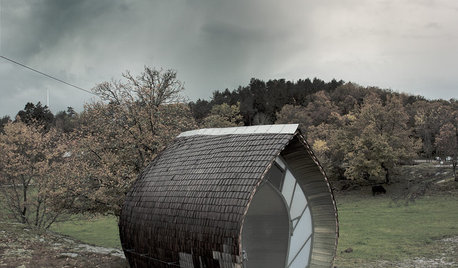
My camper, my home

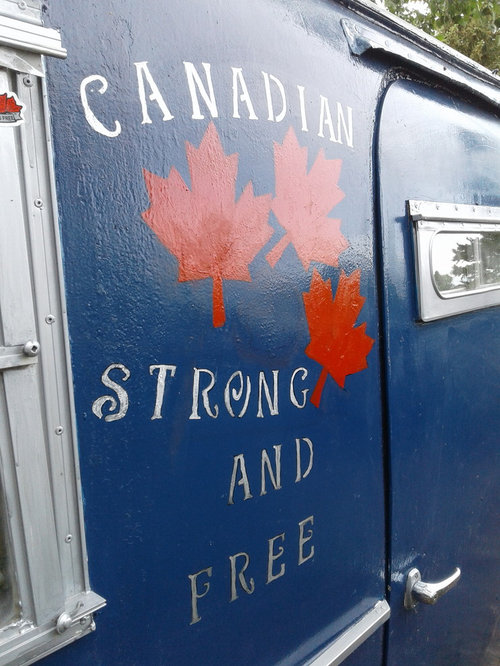
This is my tiny home that I am painting

Comments (92)

  • PRO
    8 years ago

    I have posted pictures of the inside. Its dark but you can see the idea of it

  • PRO
    8 years ago

    This is the inside of my camper/ it's a little cramped, but its ok

  • 8 years ago

    Evalyn, I don’t know why but your pics aren’t coming through.

  • PRO
    8 years ago

    uHM NOT GOOD RECEPTION FOR INTERNET

  • PRO
    8 years ago

    They are all posted on here I see them

  • 8 years ago

    The inital picture you posted in your first post is all that is showing...........................

    Evalyns Home Cooking Canada thanked millworkman
  • 8 years ago

    no, they didn't post :) I couldn't see them on my home computer, and can't see them now in another location.

    Evalyns Home Cooking Canada thanked diyher
  • 8 years ago

    Upload photos to your "my camper"
    https://www.houzz.com/projects/3633151/my-camper   that way next time
    you want to use them in a post, you don't have to upload them again.
    Just click on the "Houzz Photo"

  • PRO
    8 years ago

    Evalyn, my first step would be to try to find and plug all cracks, crevices and holes. Expanding foam "Great Stuff" is a good way to do that. If you can't tell but suspect you have one, take a cigarette or something that's smoking and put it nearby. If there's an air leak, the smoke will be drawn to it. That's about all the advice that I have, except that you might want to post this on an automotive forum. You'll probably find people there who can give you some more/better advice. Good luck and keep on truckin'!

  • 8 years ago

    "Expanding foam "Great Stuff" is a good way to do that."


    Minimal or no expansion would be best or you may destroy the RV.

  • PRO
    8 years ago

    Sometimes you can find it in small canisters instead of having to buy a big can. BTW, for at least two years after WWII, my dad lived in a travel trailer while he went of U of MO in Columbia, Missouri. Winters were difficult, but he made it. You do what you gotta do to survive and thrive.

  • PRO
    8 years ago

    Very cool - more pics!

  • PRO
    8 years ago

    Well, I used an old jewelery cabinet to store spices. I make due with what I have..not with what I do not have

  • PRO
    8 years ago

    I did not come on here to be made fun of/ I came on here because I was invited. I cut cost and I am surviving the best I know how.

  • 8 years ago

    I don't think anyone's trying to make fun of you Evalyn. If you post your pictures, perhaps some of the experts can give you advice about how to improve things. My own comments were more about safety issues than anything else.

  • 8 years ago

    I don't see who's making fun of you. I also have no idea what you're talking about when you say "I came on here because I was invited." But whatever.

    I admire your efforts at self-sufficiency, but I'm rather concerned about how you'll fare in an RV in subzero temperatures.

    I could be wrong, but I get the impression from what I've read that most of the "precariat" folks living that way here in the States, such as the "Amazon Nomads," generally tend to stay in warmer areas.

    But your job ties you to where you are, and presumably you also like it there.

    I will say that, while I'm glad to hear that Carolina Kitchen and Bath has had good results from Great Stuff foam, I've personally used it exactly once. I won't use it or any other foam-in-a-can products again until hell freezes over. Maybe not even then.

    In my experience, it's a challenge to control. It doesn't come out when you push the button, and then keeps on squirting out for what seems like an eternity after you release it. It gets all over everything, especially your skin, where it sticks almost forever. It looks pretty cruddy when first applied, and even worse after a year or so in the sun.

    I recommend that, if you have gaps and cracks in that vehicle that need to be filled and sealed, you use silicone caulking compound. If the gap is very wide and/or deep, stuff in some backer rod before applying the silicone. A couple of times when I didn't have any backer rod on hand, I jammed in some closed-cell foam weatherstripping instead.

    One thing more for weatherizing. It's not fireproof and thus not safe for long term use, but in an emergency situation, large-pillow bubble wrap makes surprisingly good insulation. It works best when you use at least two layers, with the bubbles offset.

    Don't bother with the small bubble type, look for the bubble wrap with the 1" or so bubbles.

    Bubble wrap is often readily available for free in trash containers behind computer stores.

    Don't ask how I know about this.

  • 8 years ago

    Several friends have campers. One lived in theirs half the year. I know they had problems with sweating (not them) but the camper. It was so air-tight that moisture from their breath or cooking caused condensation and the walls and windows would just drip. I think you want some way to let a little fresh air in.

  • 8 years ago

    that is my exact concern leelee. Even houses should not be airtight


  • 8 years ago
    It seems to me there are two issues here: one is making the trailer comfortable and safe when the OP is living in it for that week or so a month in a Canadian winter, and the other is protecting the trailer from freezing temperatures during the several weeks a month that she isn't there.

    So, on the one hand she needs advice about how to retain heat and maximize storage when she's there, and on the other she needs to know how to prevent pipes and watertanks from freezing when she's not there. Two separate sets of issues.

    There are plenty of blogs about how to winterize unoccupied trailers (and in fact there's an online Boler manual that provides thst information.) Making the trailer habitible in winter is a different kettle of fish.
  • 8 years ago
    Incidentally, I once went on a little road trip with my sister, b-i-law and their daughter in a Boler. The four of us managed to cohabit for a week or so eithout killing each other ;) so I do understand the space issues!
  • 8 years ago

    Thank you for showing us your home. I have not read through all the posts because in your original post it didn't appear you were asking for advice, you were just sharing. While I enjoy commiserating with people who share my issues, I often wonder why others jump to the conclusion that everyone needs their advice about things that aren't asked for???

  • 8 years ago
    The OP specifically asks for advice about winterizing her trailer, for part time occupation during the winter.
  • 8 years ago
    The OP works somewhere further north for several weeks a month, then has a week or so in her trailer. So, wintering in Arizona isn't on the cards.

    It is possible to survive in sub zero temperatures, but the OP is going to need to do a lot of research, contact people with experience in this sort of thing, and be very careful.
  • 8 years ago
    last modified: 8 years ago

    I'm not sure it's practical to winterize (close) your RV while you go off to work, open it to stay a week, close it again while you work again, open it again, and keep doing this cycle all winter.

    So I think you need to consider keeping the vehicle at least minimally heated all winter, maybe at around 40 deg F while you're away. That means getting a safe, properly vented automatic heating system (furnace) designed for RVs, if you don't already have one. It also probably means propane tanks, and lots of them, to be sure you don't run out while you're away.

    The problem is, heating the place while you're gone is going to be something of a budget-buster. Also, what happens if something goes wrong with the heat while you're away?

    Is there a possibility that you could arrange to have someone else live there, paying for the heat and maybe even a little bit of rent, while you're off working? Or at least check up on it a couple of times each week?

    Here are some tips I found on winter RV living. Unfortunately most of them
    involve buying stuff. :( And I would avoid the ventless fueled heaters that page recommends at all costs. Oxygen depletion is a hazard with ventless when you're living there, and moisture from the unvented combustion is a big problem all the time.

    I'm sure you can find more ideas with your favorite internet search engine.

  • 8 years ago

    If you aren't familiar with Bob Wells's site, you need to be. The forums there are probably the best single resource for information about the practicalities of van-dwelling and there are a number of Canadians who deal with the same problems of winterizing that you are facing:

    https://www.cheaprvliving.com/forums/

  • PRO
    7 years ago

    Bubble wrap and a large propane tank


  • 7 years ago

    "Bubble wrap and a large propane tank"


    How will you deal with the carbon monoxide?

  • PRO
    7 years ago

    Who cares, It's all I can afford.


  • 7 years ago
    Have you thought about a Go Fund me account to start your dream catering/cooking business? I am sure many would like to chip in to see your dreams come true.
    Evalyns Home Cooking Canada thanked hawkmdn
  • 7 years ago

    "Who cares, It's all I can afford."

    I get that but is it worth potentially dying over? Carbon Monoxide will kill you.

    Evalyns Home Cooking Canada thanked millworkman
  • 7 years ago

    It doesn't have to be an unvented heater. There's no reason that propane can't fuel a properly vented gas RV furnace.

    Evalyns Home Cooking Canada thanked DavidR
  • 7 years ago

    I get that David. The "bubble wrap" is what concerned me and how it would be applied.

    Evalyns Home Cooking Canada thanked millworkman
  • PRO
    7 years ago

    Staple gun and it reatains the heat, but I turn on the gas to heat it up for a few moments and I'm good for the night.


  • 7 years ago

    There are safety issues with bubble wrap. It's not flameproof. In normal circumstances you'd never use it for insulation. But it's a quick and dirty temporary fix for when you're cold and broke, in danger of hypothermia, to be replaced with something safer as soon as you can afford it.

    Keep flames and heat well away. No candles or open flames. No smoking. No incandescent light bulbs. No hot plates. You get the idea.

    BTW, dumpster-dived closed cell styrofoam from packing crates works even better, looks even dorkier, isn't any safer.

    Evalyns Home Cooking Canada thanked DavidR
  • PRO
    7 years ago

    I'll never be able to afford my own home..but thank you for the advice. I just bought 3 new propane tanks for heat and cooking.

  • PRO
    7 years ago

    I am so impressed.

    Evalyns Home Cooking Canada thanked Headwaters Architecture PC
  • 7 years ago

    Evalyn, Do you understand that people are trying to help you and keep you from possibly harming yourself?

  • 7 years ago

    Some people on this site makes me wonder how they get through the day..


    Within 25 miles of me are at least 75 to 100 RV's of all types parked in a single lot. All of them occupied by Union Pipeline workers. Few of them are single men or women but most have their wives and children with them.. These guys take home a paycheck of $3500 to $6000 every two weeks.


    How in the world are they going to survive when Winter hits hard here??


    May want to go ask them for most have been living out of RV's for 20 to 30 years going where they are needed for work..


  • PRO
    7 years ago

    Thank you for somebody hearing me, they put ours down to a quarter of what the pipefitters are making, 1900, every 2 weeks to start and 2200 to end 825 hours is all I got in this turnaround..YES its damn cold out there..


  • PRO
    7 years ago

    Oh and I am not trying to harm myself??? I am trying to live within the amount of money we get paid..With all due respect alot of US CANADIANS are HOMELESS and bankrupt.


  • 7 years ago
    Personally, given your financial limitations, I’d focus on personal cold weather survival solutions like the hardcore bush backpackers use. Thermal sleeping bags, face masks, silk liners that add 10 degrees, etc. Instant food that requires no heat. It might not be practical to 100% winterize your camper but you can winterize yourself to survive the cold weather in a pinch and prevent a dire situation.
    Evalyns Home Cooking Canada thanked Storybook Home
  • 7 years ago

    Ashley has a good point. I know people who go camping for fun (well, they think it's fun) in Quebec winters. They manage with sleeping bags rated to extreme conditions, thermal underwear, heated socks and gloves, etc. As you well know, the key is keeping the extremities (hands, feet and head) well covered and protected. Balaclavas are good. Silk gloves and socks inside wool or sheepskin boots and mittens are great. I think a "mummy" sleeping bag might be optimal in your situation.

    Evalyns Home Cooking Canada thanked jmm1837
  • PRO
    7 years ago

    I have a plugged in heater now, that shuts itself down..Damn cold nights though. Thank our government and our unions for this one Canada


  • PRO
    7 years ago

    I a

    m out of the elements in a heated garage for the winter. Finally

  • 7 years ago
    Congrats - take care :)
    Evalyns Home Cooking Canada thanked jmm1837
  • PRO
    7 years ago

    Well, I am staying warm, but limited living for sure..we lost our jobs again..no income again...

  • 7 years ago

    I hear you evalyn. Stay safe.

    Evalyns Home Cooking Canada thanked miss lindsey (She/Her)
  • PRO
    7 years ago

    Does any building engineers, know if I can cut through the outside of the camper to the water tank to build for outside storage. The camper only has a sink..no shower or lavatory. Any suggestions. This is full fibreglass camper and the tank is a plastic thick, like a septic tank about a quarter inch thick.?