Software
Houzz Logo Print
bird_of_paradise

The Big Haul - Part 2 continued

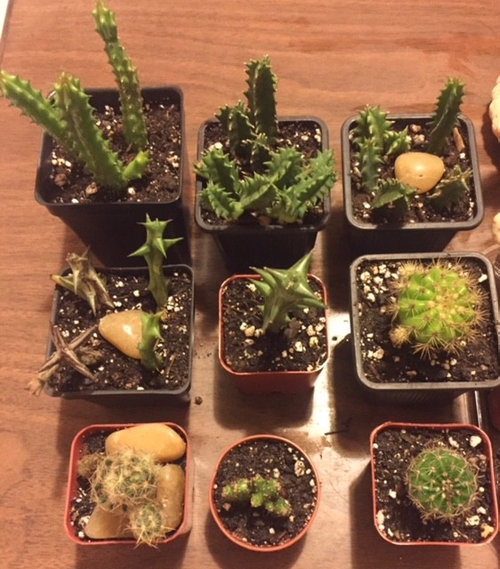
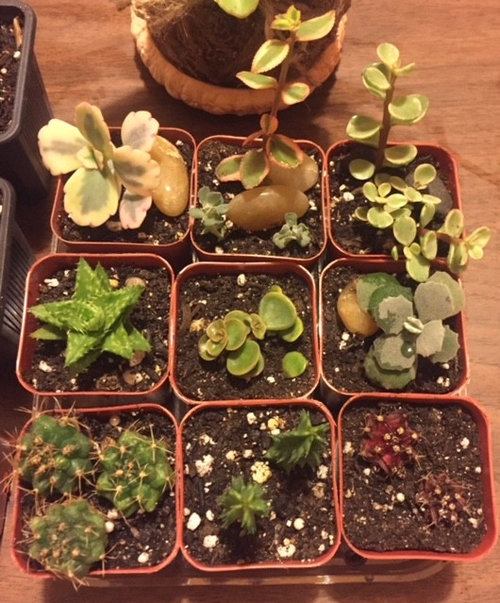
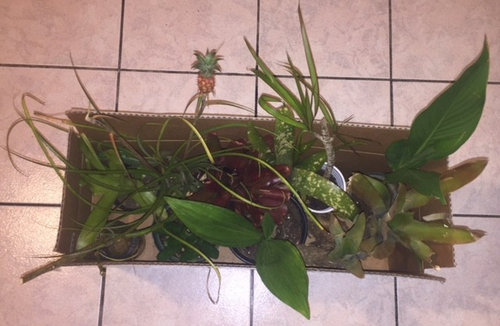
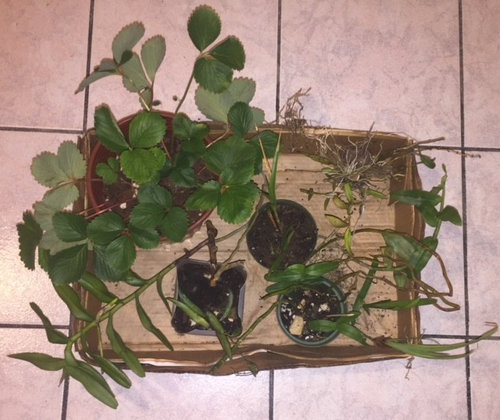
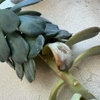
I swapped for some beautiful C&S and other garden plants, mainly bromeliads and orchids (6 varieties of each).


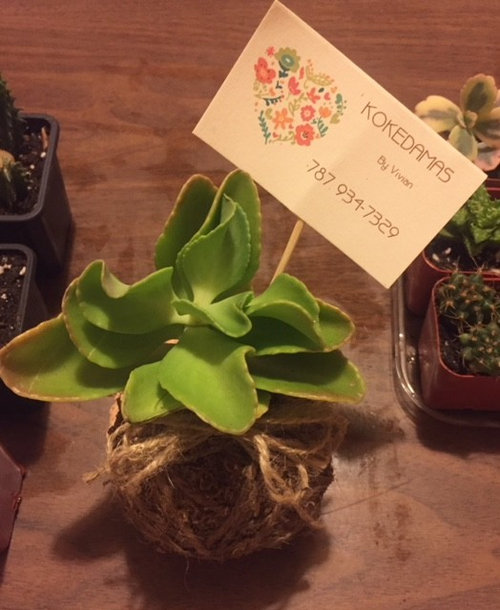
I even got a large strawberry plant, mulberry cuttings, a Dyckia (Pinita), Canna Lily, Hoya, and a "Kokedamas" artesanal gift ... Vivian makes self contained, pot-free bases out of orchid bark and twine. These make great wedding favors.


I haven't had a chance to pot everything up yet because it's been raining all day.


Not pictured are anise and citronella cuttings that smell heavenly and melocactus & several other seeds.


Comments (18)

  • 8 years ago

    LOL ... Yeah. I took 10 yearling pink single adeniums and some C&S, orchids, and cuttings of my white plumeria pudica. I left with 3 boxes and came back with 3. Thank God! Last time I came back with double. I conducted all my exchanges beforehand online and deliberately overlooked what people had, especially the C&S tables. I want one of everything with spines that blooms! It's a sickness! I am about to plant cactus seeds: 3 different melocactus, parodia, gymnocalycium, lobivia, and mammilaria. Having fun.

  • 8 years ago

    Well, no support group here. Plenty of enablers, though. We could have worse addictions.

    Maria Elena (Caribbean - USDA Zone 13a) thanked SoCal Stewart (San Diego, Ca Zone 10A/10B)
  • 8 years ago

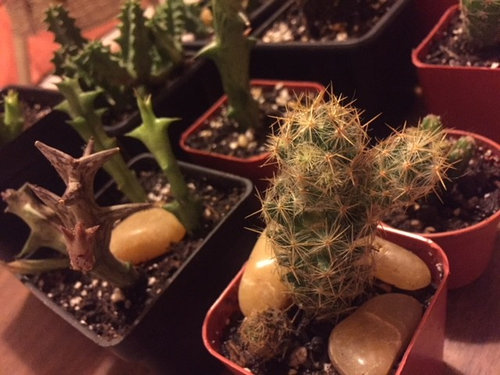
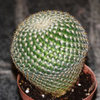
    The worse is no one puts an ID on anything. That drives me nuts. I know there's a huernia ceropegia red dragon at top left, a huernia zebrina somewhere at the top row, huernia or stapelia orbitea variegata in that 2nd row. The two red balls in the next picture are gymnocalicium, the light green one and the three in the lower left corner may be mammilarias. I'll repost some better pictures and ask for ID help.

  • 8 years ago

    Huernia ceropegia red dragon is a weird mashup of names. The correct name, based on what I can glean, is Huernia scheideriana.

    Maria Elena (Caribbean - USDA Zone 13a) thanked Paul MI
  • 8 years ago
    last modified: 8 years ago

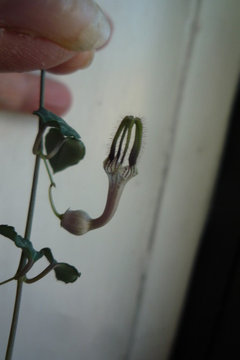
    Thanks, Paul. I have this Huernia schneideriana for over 30 years:

    The new one I just received is "Red Dragon" or the completely red flower. I am aware they are both schneideriana, but how does one differentiate one from another? The person who gave it to me told me it was ceropegia ... Is she wrong? "Red Dragon" is the common name.

    https://garden.org/plants/view/116789/Huernia-Ceropegia-Red-Dragon-Flower/

  • 8 years ago
    last modified: 8 years ago

    my dear friend, I hate inform you: You have the CHAD.

    it is incurable; it is contagious. It will haunt you for the rest of your life. Symptoms can afflict you without warning, including loss of breath, a skipping heartbeat, sweating of the palms, sometimes deliriousness and lack of sleep.

    never fear, you have many friends here. we just procure another 'specimen" and carry on.

    some of us meet monthly, or more often, to swap ... stories and plants.


    and sometimes a plant will show up on your doorstep ....

    CHAD => Compulsive Horticultural Acquisition Disorder

    Maria Elena (Caribbean - USDA Zone 13a) thanked bragu_DSM 5
  • 8 years ago

    So glad this was cross-posted to the Bromeliad Forum, too! What new broms did you receive?

  • 8 years ago

    I concur w bragu. Definitely CHAD (Love it! Not heard that one).

    I find myself in this predicament also. Now I tell myself, “If you take on a new acquisition then, you must get rid of something else”. Sometimes I listen, but most times I do not play it through.

    Rick


  • 8 years ago

    Hi again ME,

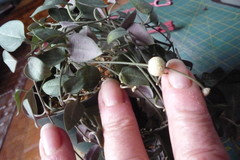
    To echo Paul, Huernia & Ceropegias are 2 different tho' related plants. Ceropegias have a rather different bloom than Huernias (yours looks so nice).

    The only Ceropegia I've been able to bloom (indoors): Variation of C. woodii.

    Completely different looking leaves too, w/ one of its tubers.

  • 8 years ago
    last modified: 8 years ago

    Karen ... Thanks for the followup. I think Paul established they are both schneideriana. My question still is how does one differentiate between the two blooms: one red, the other flesh tone? Are there two names to differentiate these two?

    Bragu ... Spank, spank! You actually frightened me for a second there. I thought you were describing a succulent disease before I realized you were joking. Go ahead and laugh ... I did!

    I'm really not that bad. My C&S collection is contained to one baker's rack and one small table on the front porch ... really! That's a relatively small footprint for a collector. I give a plant 2-3 years, decide whether I like what it's doing, then move on if not. I also share / give a lot of stuff away because I like keeping things proportionate to the space I have. Right now, I'm very limited.

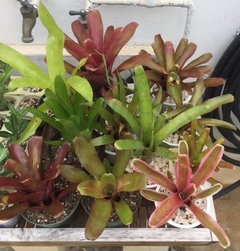
    Love ... Bromeliads: I currently have about 16, all mini or medium sized. I basically keep them all in one place, like this:

    One day, they will look beautiful in a multi-level rock garden, along with my C&S. See Bragu, there's a method to my madness!

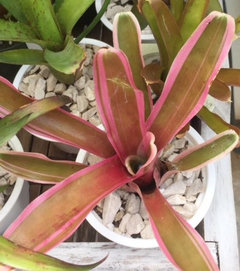
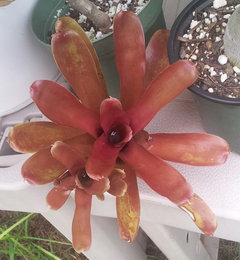
    Back to bromelias ... I've had the Neoregelia "Red Fireball" for some time. Does anyone know whether 'schultsiana' is the correct name for this one? Here, they grow on trees and are considered a 'plague.' I also have Billbergia nutans and a couple of small saw-toothed dyckia-like ones.

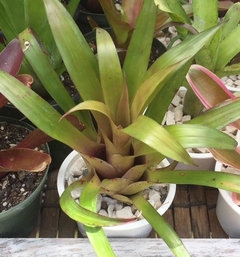
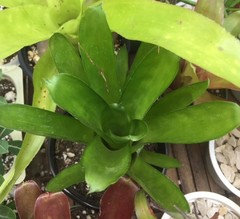
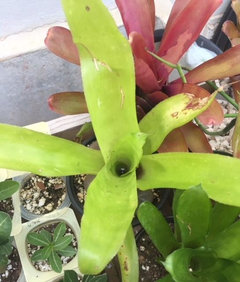
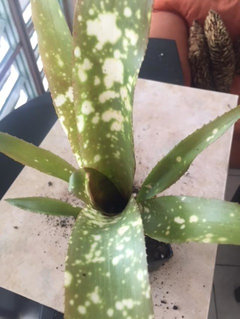
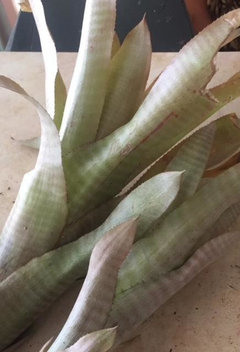
    These are the newly acquired bromeliads, one of which is a "Red Torch" ... I also recall the classification 'guzmania' but don't know what's what. I think the spotted green/white one is Billbergia "Fantasia" ...

    I will very likely be giving away this last one because it may be big and invasive. The pup is attached by a very thick and hard whatchamacallit.

    Maria Elena

  • 8 years ago

    "The new one I just received is "Red Dragon" or the completely red flower. I am aware they are both schneideriana, but how does one differentiate one from another? The person who gave it to me told me it was ceropegia ... Is she wrong? "Red Dragon" is the common name."

    The ceropegia name is completely wrong to the best of my knowledge.

    That light colored one of yours is odd .... never seen one that color before. Makes me wonder if it is actually a hybrid as opposed to a natural variant (the deep red is the normal color).

    Sometimes a markedly different cultivar of a species will be given an additional name beyond the species name. Usually the addition is preceded by "cv" for "cultivar". Can't recall if it's "legal" to give such a variant a name set off by single quotes.

    Maria Elena (Caribbean - USDA Zone 13a) thanked Paul MI
  • 8 years ago

    Hi again,

    Your Broms look lovely now, as is, nice assortment. I just received a reddish one, no ID (am guessing maybe Neoregalia, sorry no pix). Can you suggest care tips pls. as to light? I know to water into the cup, have it in office at window that gets pretty shaded light. Are you keeping your Broms is shade or sun pls? TIA

    Maria Elena (Caribbean - USDA Zone 13a) thanked Karen S. (7b, NYC)
  • 8 years ago

    Karen,

    I am no expert on the topic ... Just doing what works for me. I have everything outside and in full tropical sun. I wish you well with your bromeliads. I think you may want to consider giving them as much fresh air and sun as possible during the short NYC summer. Bring them in around mid fall. You still have 2 months of good weather there. That way, they will store up energy for the winter months. They have all miserable winter to sit inside. They do fine in dappled shade, as well, but are mainly fresh air, sun loving plants.

    I originally had just a bunch of the Fireballs attached by their roots to twigs on a fence. The one pictured above is just sitting inside a hole in one of the tables I have my adeniums on. I never took care of them and they eventually dried out after three years of little nutrition and underwatering. I now keep them potted up, cups clean and filled, and foliar feed them earthworm tea occasionally.

    Maria Elena

  • 8 years ago

    Thanks ME, sadly I have no outdoors to give my Brom, but maybe will bring it home to allow it a seat at a west window w/ my Hoyas & Aloes which get a lot of sun there. Thx for the tips; foliar feed earthworm tea is interesting, tho' I may pass on that indoor.

    This is my 1st Brom, basically given to me. It looks to be in somewhat of a fine particled soil. Do you use any bark w/ yours? Am considering changing its mix, thx.

    Maria Elena (Caribbean - USDA Zone 13a) thanked Karen S. (7b, NYC)
  • 8 years ago

    I've never grown bromeliads indoors, let alone indoors in NYC. I hope someone more knowledgeable from your region comes along to impart their wisdom. I'm now curious to know how standing water in the bromeliad cup indoors will fare in terms of the associated winter fungus / mold and summer gnats so prevalent to NYC windowsill growing. I do know you'd have to change the water every other week.

    I love plants in the office and hope someone comes along to say it'll be just fine right where you have it! Florescent lights found in so many offices are pretty high lumen; maybe if you put the bromeliad right under one ...

    For the bromeliads, I use the same substrate I use for my adeniums, plumeria, C&S ... basically cactus soil mixed with 50% perlite or pumice, a little pine bark and course river (construction) sand. The mix is light, loose, airy, fast draining and quick drying ... in my climate. I would use less quantity of this mix per pot for your climate. Remember, the less substrate, the faster drying it will be.

    In nature, bromeliads use their roots just to latch on to tree bark and feed from tree runoff through their leaves. However, when bromeliads are potted in soil, their roots take on a different role. Potted bromeliads do feed through their roots. So make sure you water in some nutrients into the soil, as well as its cup (very diluted), monthly during the growing season. Of course, you know wet soil is terrible during NY winters. At that point, I would only fill its cup.

    All the very best to you.

    Maria Elena

  • 8 years ago

    Hi everyone - Regarding Neoregelia Fireball, much confusion still surrounds this plant and it's still undecided definitely whether its a species or a hybrid.

    To confuse the issue even further, it has appeared as an all red plant as well as a variegated specimen.

    There are pictures of different forms as well as four pages of written information which you can read on the Bromeliad Cultivar Register at:

    http://registry.bsi.org/index.php?fields=&id=4351&search=fireball

    All the best, Nev.

    Maria Elena (Caribbean - USDA Zone 13a) thanked splinter1804
  • 8 years ago

    Hi, Nev! I love the Fireball for is small size, beautiful red coloration, and hardiness. Plus, I can get it free off trees all over the mountain region of the island.