Software
Houzz Logo Print
kali_deere

How to loosen/aerate dense clay soil

8 years ago

Ok long story short = I need to loosen up soul in my perennial bed, because I was too busy to take the time to rototill when I made it and instead just dug really big holes for my plants. (I know, bad garderner! Lol but I honestly have been working 6 days a week 10-13 hours per day, so tilling was the last thing I wanted to do).
Now that my plants are in there, (roses, salvias, rose of Sharon's, day lilies and irises). What can I do, without destroying the plants, to loosen up the soil so the roots can spread better and so I can amend the soil?

Comments (15)

  • 8 years ago

    Did you add any amendments in your hole when you planted ? Clay soil has some advantages and you sound like an experienced gardener. How about a 4 prong fork (potato?) to gently lift up soil between your perennials...and add in compost or coarse river sand or.........?

  • 8 years ago
    last modified: 8 years ago

    Dig holes between the plants and add compost perhaps?

    Add as much organic matter to the surface as possible, especially easily broken down organic matter like chopped leaves.

    Eventally it will get incorporated, but the more you can add on the surface or in spaces, the better.

    I have learned through doing it different ways that is best for me and the garden in the long run to take the time to do soil prep for the whole garden bed at once, even if it means that the garden takes a year longer to look attractive. The soil feeds the plants, so the healthier the soil, the healthier the plants. If the soil texture varies from spot to spot, especially in clay, I may get bathtubs where in the loose soil areas water collects and drowns plants. One easy way to do soil improvement in an unplanted bed is to plant something like buckwheat oe winter wheat and just before it goes to seed, cut it down, and turn it in if you have the energy and time, or leave it as a surface mulch if you don’t. The roots will help break up the soil and add organic matter. I don’t think that will work in planted beds, however.

  • 8 years ago

    does your soil perk? ... drain ...

    https://duckduckgo.com/?q=garden+perk+test&t=ffcm&ia=web


    i would start with such.. and then decide where to go from there ...


    what if any signs are your plants showing.. that makes you think this is needed?? ... are you thinking about fixing something that really isnt a problem ???


    many professional growers.. prefer a clay soil.. for a variety of reasons ... they do not presume.. its a problem ... [i see upon rereading.. you dont mention clay ... the first reply does.... can you more clearly define the problem]


    ken

  • 8 years ago

    Be sure to keep a two to three inch layer of mulch on the surface of your soil.....wood chips, pine straw, chopped leaves, grass clippings, compost, etc. The myriad of micro- and macro-organisms will work tirelessly to decompose the bits and pieces and churn everything into the soil. The results of this activity, if you keep up your end of the deal, will be great soil with very little effort on your part.

    I have very hard red clay, it drains well but is impossible to dig. We tilled the veggie garden area once.....over ten years ago. Our annual mulch applications disappear into the clay over the months while the gardens thrive.

    I plant perennials, annuals, trees, and shrubs into unamended soil, but keep everything well mulched. Are you willing to do that much? ;-)


  • 8 years ago
    last modified: 8 years ago

    Ken, the title mentions clay - you got zapped by the info in the title again. ;>)

    I was picturing a planting along a foundation of a newer house, which often tend to be largely subsoil. Am I misremembering which previously posted photos are of Kali’s garden?

  • 8 years ago

    Thanks all!!

    Ken - no symptoms necessarily to speak of, just wanting to ward off any potential problems in the future.

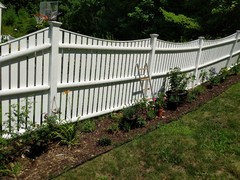
    Babs - this is a brand new garden bed that I put along my fence :) thanks for remembering my other garden though!

    All - it's well mulched at this point and I put down cardboard underneath to decompose over time and block weeds.

    (PS I know the garden looks rather narrow from this angle but it is wider in real life, plus we discovered the fence is actually too far into our property and our neighbor had accidentally pushed about 2-4 feet into our land. So sometime soon we'll be pushing the fence backwards to where it belongs which will make the garden bigger)

  • 8 years ago

    Ken is right....I love our clay soil.

  • 8 years ago

    IME, you really have to dig it up. Mulching does amazingly little, and rototilling isn't much better. A honking big rototiller may be able to get down 4 inches. You really need at least twice that.

    Kali C thanked mad_gallica (z5 Eastern NY)
  • 8 years ago
    last modified: 8 years ago

    Adding organic matter and gypsum helps if you have heavy clay like I have here in northern Virginia (heavy rains last week have filled holes left from removing invasive shrubs and the holes have not drained in three days which makes for mosquito heaven!). I use lasagne gardening for new beds and work in soil conditioners and compost to existing beds-well, not every bed every year, but I work my way around doing some every year. It helps. The non-draining spot will be worked on this week.

    Kali C thanked cyn427 (z. 7, N. VA)
  • 8 years ago

    "Mulching does amazingly little"

    Oh, beg to differ!

    I have clay and top-dress a lot- it decomposes rapidly and over time I have improved things to a remarkable degree. I use all the home grown compost I can generate, too. Initially I used commercial mulch but for the last two years I have been shredding my crap-ton of leaves every fall and using that.

    What convinced me was taking a walk in my wooded areas where we go to get extra soil when we need it to fill holes or whatever. Husband has been digging it out of one 'hole' for so long I can now see the layers formed by years of leaf litter decomposing on top of clay. It is good, soft, easy digging black dirt down for over two feet before you start seeing clay.

    I decided I wanted to duplicate that in my planted areas so we bought a leaf shredder and expanded our composting areas and it is absolutely working. I am finding shredded leaves to be my favorite mulch I have ever used. They are obviously the most natural looking, light, easy to spread and rake, easy to move aside to plant, easy to put back, easy on you hands- just preferable in every way. And the changes in my soil are truly happening.

    When we make a new bed (just did one a couple of months ago) we strip the grass with a straight shovel, then start bringing in wheelbarrow loads of compost. If it is particularly hard digging I may have husband chop around with a shovel to loosen it up enough for me to dig and plant, but generally we just lay down 2 or 3 inches of compost and call it done. Then I plant, then I mulch with shredded leaves I gather in the woods. Done.

    Never discount what regular top-dressing with organic matter can accomplish. This is how soil is made in nature- let that process work for you.

  • 8 years ago

    Mulching of course does help... though will take a long time to get deep into clay. But... if you don't having any immediate issues... ie... plants dying from being waterlogged... or your plants just drying out too fast.... you can just see what happens. I did the same same thing as you when I first moved into my home and wanted some garden space... so over the years in the spring I would pick a decent size section of perennial garden... lift all of my plants and then do the deep soil amendment... then put the plants back in. This way you don't have to do it all at one time.

    Kali C thanked Nevermore44 - 6a
  • 8 years ago

    From my experience on only amending beds by mulching:

    I started with pure fill clay dirt of a yard. For 4 years I adding wood mulch 1-2 times a year... and then for 9 years after I used 3-4" of shredded leaves applied twice a year. All this top dressing has amounted to a whopping 5+/- inches of good soil. Below that is still bad and looks the same as when I moved in.

    I have for the most part done the method noted earlier... of temporarily pulling plants out of a section... double digging in tons of compost .. and outright removing some of the worst gray clay. So most of my gardens are double dug... but for the ones that I haven't.... it's 5" of good stuff. Nature is too slow for me.


    Kali C thanked Nevermore44 - 6a
  • 8 years ago

    Well I have places where I've dumped more than 6 inches of leaves every fall for more than 10 years. Digging there now, I may have a couple of inches of decent, diggable soil. There have been threads in the Soil forum on this, and mulching as a general method of soil improvement is very much a YMMV sort of thing. It seems to work best on relatively loose soils in warmer areas. If you can use a shovel to dig new beds, that isn't the sort of soil we are talking about. Digging forks, pry bars, mattocks - those are effective against compacted, heavy soil.


  • 8 years ago

    ahh... It's fun to break out the mattock and spud bar sometimes!

Sponsored
Schlabach Woodworks
Average rating: 5 out of 5 stars21 Reviews
Franklin County's Reclaimed Wood Professionals