Software
Houzz Logo Print
salvado_albert

Conifer identification

8 years ago
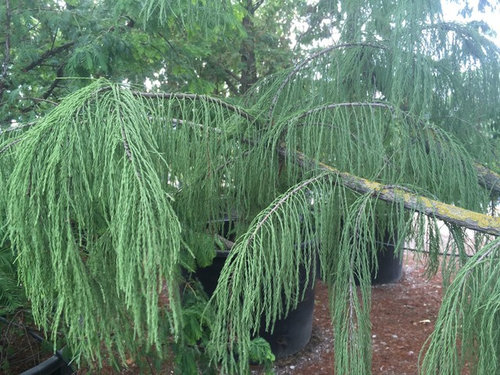
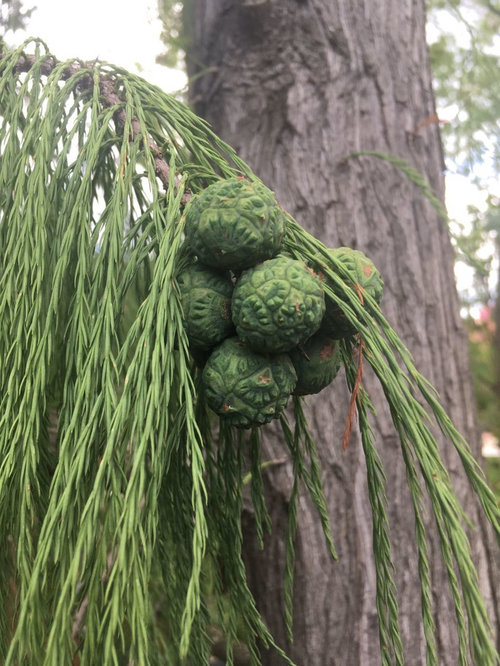
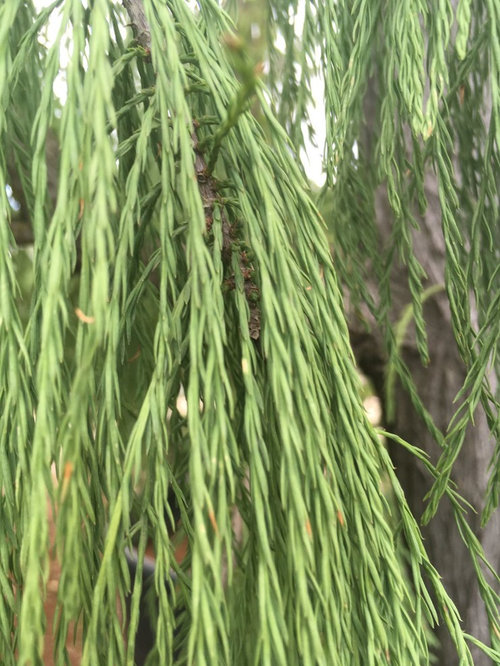
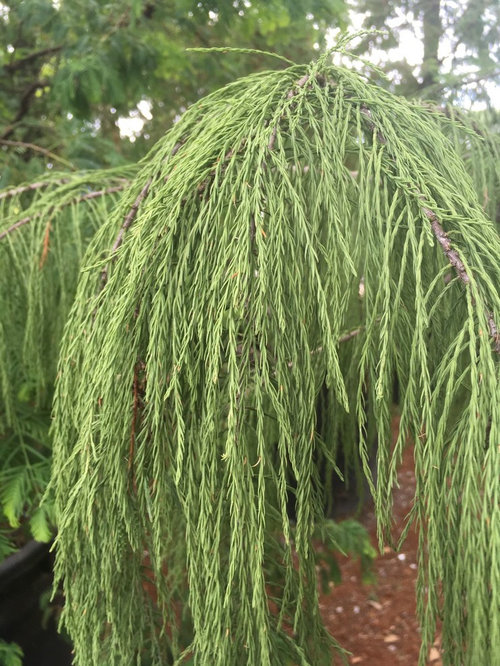
Hello! Does anyone know what type of conifer is it? the touch is soft. I guess is some kind of taxodium but if anyone knows better, would be great! Thanks!


Comments (7)

  • 8 years ago

    Sequoiadendron giganteum?

    tj

  • 8 years ago

    Cone is definitely that of Taxodium. Just one with very narrow, tight foliage. Since it is so pendulous, I'd guess T. distichum rather than T. ascendens.

  • 8 years ago
    last modified: 8 years ago

    In Flora of North America they're all one of three varieties of Taxodium distichum:

    The two varieties recognized in the flora are indistinguishable in reproductive characteristics and continuously intergrading in morphologic and phenologic characteristics, although pure populations of the extremes appear morphologically and ecologically distinct. Unlike the varieties in the flora, var. mexicanum is annually cladoptosic, with determinate short shoots abscising concomitantly with expansion of shoots of the following year. Specimens from juvenile individuals, stump sprouts, fertile branchlets, terminal vegetative branchlets, or late-season growth may not be determinable to variety.

    http://www.efloras.org/florataxon.aspx?flora_id=1&taxon_id=200005404

  • 8 years ago
    last modified: 8 years ago

    Taxodium is variously treated as one to three species but treated here as one polymorphic species with two varieties in the flora. A third taxon tentatively accorded varietal rank--- Taxodium distichum (Linnaeus) Richard var. mexicanum Gordon (= Taxodium mucronatum Tenore)---and recognized by some authors as occurring within our range, appears to differ only in minor phenological characters. Whether or not populations from farther south in Mexico and Guatemala differ sufficiently for formal taxonomic recognition at any rank has yet to be determined.

    http://www.efloras.org/florataxon.aspx?flora_id=1&taxon_id=132353

  • PRO
    8 years ago

    Ron, there are more studies out there supporting three species of Taxodium, including the Royal Horticultural Society, the accepted authority on conifer nomenclature.

  • 8 years ago
    last modified: 8 years ago

    Additional background and interpretation:

    The two species show only very minor differences in cuticle morphology, cone size and deciduous phenology. In accordance with the species concept as usually applied among conifers, they could be treated as subspecies or even varieties of a single species. However, since one species is the national tree of Mexico and the other has been a popular timber and ornamental tree for over 300 years, it would serve little purpose to attempt to combine the two taxa. T. distichum includes two varieties, which are also sometimes segregated as distinct species but which are sympatric throughout almost the entire range and which are based on several differences that are environmentally determined (Watson 1985); thus they are not really even defensible as subspecies, let alone distinct species. See Farjon (2005) for a detailed discussion of this issue. Further light was cast on the subject by a molecular study of nucleotide polymorphisms on individuals from the Mississippi River Valley and Gulf Coastal populations in Texas, Louisiana and Florida (Ikezaki et al. 2016). That analysis found consistent, although not large, genetic differences between the two varieties of T. distichum. A larger difference, however, distinguished the Florida from the Mississippi River Valley populations. The authors offer an late Miocene estimate for the age of differentiation into the two extant varieties.

    https://www.conifers.org/cu/Taxodium.php

    And here:

    As interest in issues such as seed source, provenance, genetic pollution, and threatened and endangered plant species grows, so does the need for an understanding of the relatedness and evolutionary history of plants. Appropriate taxonomy and nomenclature become much more important. Taxodium (L.) Rich. is a genus of landscape trees included in many plant materials courses across the country. It has been treated variously in the horticulture literature as having one, two, or three species. The most appropriate treatment is one species with three botanical varieties: baldcypress [Taxodium distichum (L.) Rich. var. distichum], pondcypress [T. distichumvar. imbricarium (Nutt.) Croom], and montezuma cypress [T. distichum var. mexicanumGordon].

    http://horttech.ashspublications.org/content/17/1/125.full

Sponsored
Wannemacher Interiors
Average rating: 5 out of 5 stars26 Reviews
Customized Award-Winning Interior Design Solutions in Franklin Cnty OH