Software
Houzz Logo Print
829maxx

I Don't want to block the view! Ideas for non-overhead range hood

8 years ago
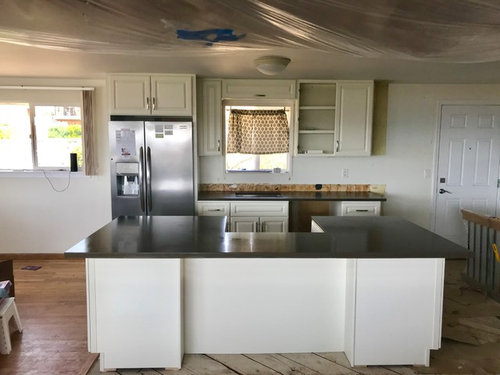
Hi All,


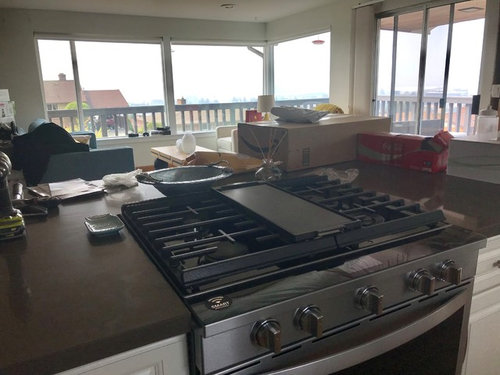
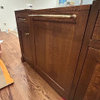
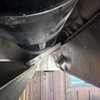
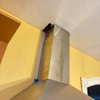
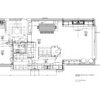
I am in the midst of remodeling my kitchen and we took out the wall between our kitchen and LR so that we can enjoy our view from the kitchen and have a more open floor plan. Unfortunately, we just found out that we won't be able to have a downdraft vent system for our range (which is placed in the island) and I really want to avoid having a ceiling mount range hood blocking our view that we just opened up! See pics attached (please excuse the mess).


I spoke to the permit office to find out my cities regulations and we do have to have a vent, however the requirement for installation is just per manufacturers requirements. The distance between the range and the ceiling is approx. 4.5 feet. I was hoping to find a vent of some kind that sits more or less flush with the ceiling that has a remote control, but I am struggling to find such a thing. I would like to keep this under $1k if possible. Any thoughts or other ideas??


Thank you in advance!

Max


Comments (35)

  • 8 years ago

    You would require significantly larger capture and higher CFM airflow with the gas range in the island and overhead venting. Absolutely no way you could keep that under $1000 - more likely several times that.

    Sophie is right - put the range against the wall and have a wall-mounted vent above it. Put the sink in the island.

  • 8 years ago
    Thank you both for your responses. Unfortunately, everything is installed at this point and to change it would require several thousand spent on changing cabinets and the quartz. Also, because of the size of our kitchen, the island is the bulk of the counter space so our prep will be taking place on the island more often than not. We would also be blocking the window if we moved the stove to that spot and had an overhead range.
  • 8 years ago
    last modified: 8 years ago

    Given the circumstances, then, search on user kaseki and understand the BTU output of your range, capture area as it relates to ceiling height, and be prepared for the cost to properly vent a gas range in an island. It will not be cheap and certainly not under $1000 to do properly. More likely just as costly as swapping the range and sink.

  • PRO
    8 years ago

    What's the reason why the downdraft is no longer an option?

  • 8 years ago
    There isn’t enough room to install the downdraft in the island so I’m told.
  • 8 years ago
    last modified: 8 years ago

    If you increase your budget by 50%, you can get a Faber ceiling mount.

    If you double it, you will have a few options for ceiling mount.

    I could not separate out the ceiling options on AJ Madison, but the options are Best, Faber, Futuro Futuro, Wolf, and Zephyr.

  • 8 years ago

    Also a conventional chimney style island hood is usually mounted high enough that you would not be blocking a view unless your eye level is 6 feet from the floor.

  • 8 years ago

    I think I’ve read here that Jenn-aire ranges with downdraft are configured differently than the others. Maybe take a look at their specs and see if one would work for your situation?


    https://jennair.com/appliances/ranges/downdraft-ranges?fullsite=true


    I would probably be pressing to figure out what went wrong here. Did you have a designer? Did the GC bid on that design? What went wrong? Because unless this was your mistake, it seems to me like someone else should be coming up with solutions and eating the cost.

  • 8 years ago
    I designed it and completely forgot about the venting situation. I can only be pissed at myself :(
  • 8 years ago

    If you swap out the gas range for induction or electric, do you need to vent with as much CFM airflow? Would that give you more options?--not a pro, so just wondering.

  • 8 years ago
    Down draft behind the stove or they do have powerful ceiling units
  • PRO
    8 years ago

    Mey Maxx,


    This is actually an easy fix if you're willing to spend more than $1000. Many brands make recessed hood vents, and they range in price from $400 to $3000. They're actually very effective from my experience with them. The one caveat is that the vent must be larger than the range it sits above, so if you have a 36" range, the vent needs to be about 42" to 48".


    Do some searching for 'recessed range hood vent' and see what you come up with. The cost of the unit itself is one thing, and then there's the installation cost. But if you can swing it financially, its a good option.


    As for the range being on the island, I have to disagree with some opinions here. I've put many ranges on the island and I love it. If you have seating at your island, you can almost run a service-style kitchen, and allow your seated guests to watch you work your magic!


    Best of luck with the remodel!

  • 8 years ago

    I have a Jenn-Air downdraft range. The fan unit fits under the oven where other ranges have a storage drawer so it takes up no extra space. Mine was installed 28yrs ago so a few years ago I started to search Craigs list, anticipating a need to replace it. I found a new dual fuel floor model at a Sears 80 miles away. It was 75% off, so worth the drive. If you don't have time to hunt for a bargain a new one would be close to $3,000 but you could trade or sell the one you just installed to recoup some of the expense.

  • 8 years ago
    Thank you Piper! Do you know of any off hand under $1k? My range is 30” so do you think a 36” is big enough?
  • PRO
    8 years ago
    last modified: 8 years ago

    Hey Maxx,

    I think that KitchenAid makes one that's under $1000. Keep in mind, the less expensive you go, the less sleek they are. I would locate the specific model that fits within your budget, and then look at the spec sheet for it. There is a small amount of calculation that goes into it, taking into account the width of your range, the height of the ceiling above the range, the BTU of the cooktop -- those sorts of things. I can't make any determination on the minimum size, but it shouldn't be too hard to figure out.

    If you're near a kitchen appliance store, utilize them! They're full of knowledge about their products and I'm sure are more than willing to help!

  • 8 years ago

    I have seen people mount cabinet inserts in the ceiling or in a shallow soffit in the ceiling, but the less expensive models will be less effective at capture because they are outside their recommended mounting height.

  • PRO
    8 years ago

    I'd install a downdraft here. It's gonna be a lot more than a thousand dollars, but it's goin' in, guaranteed.

  • 8 years ago
    last modified: 8 years ago

    829maxx: Trying to squeeze a balloon into another shape when 99% of it is surrounded by a rigid sphere is my image of how constrained you have made the problem space. Indeed, I have written a lot on performance requirements as well as on the impact of venting from the ceiling. As I recently pointed out in a different thread for the many dozenth time, you can, at best, have two out of three of performance (hood capture and containment), aesthetics (including clear lines of sight), and affordability. I didn't see any cooktop specs, and your images don't show up for me (must be some new improvement by houzz), so I can't provide explicit parameters, but here are a few generalities.

    The cooking plume rises in a conical shape at a velocity determined by its temperature. If only the pan is hot (induction) this temperature is that of the pan base or of steam, where applicable. If gas fired, the hot gas combustion products increase the flow speed. Plume speeds are in the range of 0.6 to 1.2 meters per second! When the flow gets to the hood filter or other hood parts, it will reflect due to conservation of momentum unless the flow into the hood from the blower is high enough to cause it to keep rising into the hood and past the filter. Hoods suitable for kitchens work by inducing the plume when it reaches the hood to be pulled in farther; kitchen hoods do not cause much pull velocity at the cooking surface.

    So, first, the hood entry aperture must extend past the cooking surface areas by at least 10 degrees from vertical, so the hood has to be larger than the cooktop. When the hood aperture is materially higher than 30 inches from the cooktop, or some other air source such as an airconditioner is causing a draft, the hood aperture has to be even larger. Ceiling mounts, registers, and perforated ceilings need to be very large or else they are just changing the kitchen air, not capturing the greasy particulates before they condense on something.

    Experience, which seems to be consistent with the aerodynamic nature of baffle filters, suggests that the air flow rate at the hood entry aperture should be around 90 ft/min. This is equivalent to 90 CFM per square foot of hood entry aperture. At a ceiling, this might be reduced due to plume cooling, but the large capture area needed up there will likely demand a larger blower anyway. Grease capture in a ceiling system either requires enough velocity for baffles to function, or some other approach is needed, such as UV disassociation of the grease.

    If this wasn't enough to drain the wallet, note that the actual flow rate, which is what we are interested in, will be less than the rated blower flow rate. Assume a factor of 1.5X is needed unless a HVAC analysis suggests otherwise. If this new value (90 times Area times 1.5) is over 400 CFM, then a deliberate make up air system will likely be required -- more $$$.

  • 8 years ago

    I'd get a big hood with a chimney and mount it a bit high. I hate cooking with bad lighting and I do love the lights on a hood.

    Don't be too hard on yourself, Maxx. It's gonna be great.

  • 8 years ago

    What Sophie says.

  • 8 years ago

    I've see folks put in a ceiling mounted vent that is flush with the ceiling, then put a 1-foot skirt around it matching the perimeter of the island. You can use wall board, frosted glass, plastic panels, stained glass or whatever. Put lights inside it to illuminate both the glass and counter top.

  • 8 years ago

    I would go with the in ceiling vent from Best, it has built in lights, very sleek! I love your layout and I always wash at sink and prep next to cooktop. That way you can keep an eye on everything and be part of the fun!

  • 8 years ago

    I'm also sure I would rather look at what you are cooking than what you need to clean up!

  • PRO
    8 years ago

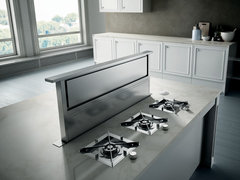
    There are telescoping hoods look into them , they are usually from Italy.

  • 5 years ago

    Love this layout! I’m currently doing the same thing, except doing no hood. My kitchen has great ventilation and our plan is to install an HVAC down the road. So really no need for any obstructions over my gas cooktop

  • 5 years ago
    last modified: 5 years ago

    Exactly how do you expect the cooking fumes, oil, steam, etc. to be removed with only random passive air movement (i.e. no hood or forced ventilation anywhere)? You will have a concentrated cloud in the cooktop area that will settle on all surrounding surfaces and combustion byproducts that will mix with the indoor air and degrade its quality.

  • 5 years ago

    That’s a bit dramatic. I know quite a few people that do not have hoods over their range/cooktop and it seems to be going fine. We have a small house with tons of windows and an ocean breeze, so no we don’t necessarily need a forced ventilation. Not to mention our ceiling fans that also force air movement

  • 5 years ago

    @829maxx I say put a ceiling fan (with light) in place of the light overhead

  • PRO
    5 years ago
    last modified: 5 years ago

    Some people like living in filthy grease covered homes. Some people never cook. Those are the no venting people. Everyone else prefers the cooking nasty leaves the house. It ruins the finishes on cabinets, and settles into the fibers of your soft furnishings.

  • 5 years ago

    When kitchens could be completely closed up and repainted as needed, one could get away with inadequate collection and containment of cooking plumes. With open living space plans, big gas cooktops, searing and wok cooking, the need for adequate kitchen ventilation becomes paramount for anyone with functioning odor sensing and general dislike for grease everywhere.

    The alternative is that of middle class Chinese homes, where the cooking was done in an attached but otherwise separate cooking building. See the Yin Yu Tang, a 200-year-old Chinese house that was brought to America and re-erected at the Peabody Essex Museum, Massachusetts, USA. https://www.youtube.com/watch?v=Kg2O-bdi2Ms

  • 5 years ago
    last modified: 5 years ago

    @Ashley P

    Here is an interesting article about range hoods that might help you understand how helpful they can be for homeowners. I am beyond grateful to have mine. I had to change my kitchen around a bit. Its too bad you couldn't switch your island range with your sink.

    Stove Hoods To Keep Pollution Out Of The Kitchen

    Hot summer days often mean air pollution warnings in big cities. But the air inside your kitchen can sometimes be just as harmful. Cooking fumes from your stove are supposed to be captured by a hood over the range — but even some expensive models aren't that effective.

    Jennifer Logue spends a lot of time thinking about what happens when she cooks. She's a research scientist at Lawrence Berkeley National Lab, where she studies indoor air pollution.

    "You spend 70 percent of your time in your home," says Logue. "And what you do in your home has a huge impact on what you're exposed to."

    Cooking on a gas stove releases some of the same pollutants that you find outdoors in smog. Logue looked at homes in Southern California that cook at least once a week, and found more than half of them were above the outdoor health limit for a pollutant called nitrogen dioxide.

    "If you exceeded the standards outdoors, it would be a really big deal," she says. "But if you exceed them in your house, nobody's paying attention."

    Homes with electric stoves aren't in the clear because cooking the food itself creates air pollution. Sauteing fats produces a lung irritant called acrolein. And cooking puts off fine particle pollution.

    Just like smog outdoors, these emissions increase your chances of developing long-term respiratory and heart problems. If all this sounds a little scary, Logue says there's a simple solution: a good range hood that vents outside.

    But, she says, "Not all hoods work the same and currently, unfortunately, there's no way for people to really know how effective their range hood is."

    Inside the test kitchen at the Lawrence Berkeley Lab, Woody Delp, a building systems engineer, and his team are trying to figure out exactly that.

    Some of the hoods he's tested are only 15 percent effective because their fans aren't as powerful. Delp says when you're buying a hood, that's labeled as air flow. But the shape of the hood also makes a big difference, like how far it reaches over the stove.

    Delp and his team are developing a standardized test to measure hood effectiveness. It's being reviewed by an international testing board, which would allow manufacturers to voluntarily label their hoods.

    "Unfortunately there's not really a state or federal agency that has comprehensive authority over indoor air pollution," says Peggy Jenkins, who manages the indoor air quality program at the California Air Resources Board. She says there are strict ventilation rules for other gas appliances in homes, like furnaces and water heaters. Stoves and range hoods have been largely overlooked.

    "In a sense it's low-hanging fruit, but it's not really simple," she says.

    Jenkins says there's growing interest in changing California's building codes around range hoods — but it would take a number of state agencies to do it.

    Meanwhile, for we home cooks, Logue has a few tips. She says use the highest fan setting on the range hood and put pots and pans on the back burners. That's where hoods capture the most pollutants. Simple changes, but effective ones, Logue says. The hard part is remembering them.

    Cooking Tips

    -- Always turn your fan on

    -- Cook on the back burners

    -- Use highest fan setting

    -- Clean grease traps periodically

    -- If you don't have a hood, open windows

    Tips For Buying A New Range Hood

    -- Look for one that covers the entire stovetop

    -- It should move 200 cubic feet of air per minute, certified by the Home Ventilating Institute

    -- Choose a noise rating of 3 sones or less for a quieter fan

    -- Choose a hood shape with a hollow space underneath for collecting fumes

    Source: Lawrence Berkeley Lab


    one idea

    RISE // The hood that stands out from its competitors · More Info


  • 5 years ago
    last modified: 5 years ago

    I'd comment, but I'm still speechless ... .

  • 5 years ago

    I'll say it. Ashley P....A ceiling fan over a range? Are you insane?

  • 5 years ago

    Just because you can't see the particles doesn't mean it's safe (obviously one can see greasy build up over time). PLEASE read this article Gas stoves can generate unsafe levels of indoor air pollution. From Vox.com


    Here is a bad cut and paste of some of that article. There's much more, including a chart of how much nitrogen dioxide was found measured in a kitchen using gas:


    “One reason the debate over cooking pollution is so murky and easily confused is that cooking of any kind produces some pollutants that are harmful if not properly handled. Applying heat to food produces particles — tiny particles (PM10, or particulate matter 10 micrometers in diameter), tinier particles (PM2.5, or 2.5 micrometers in diameter), and even tinier “ultrafine” particles (100 nanometers in diameter) — that can exacerbate respiratory problems….even in the absence of any food, gas combustion produces PM2.5 (one of the deadliest air pollutants) — research suggests gas cooking produces about twice as much PM2.5 as electric. It also produces nitrogen oxides (NOx), including nitrogen oxide (NO) and nitrogen dioxide (NO2), carbon monoxide (CO), and formaldehyde (CH2O or HCHO)....There is no EPA standard for indoor NO2, ... A 2013 study of indoor NO2 from stoves found that, among children with asthma, “every 5 ppb increase in NO2 exposure above a threshold of 6 ppb” led to a measurable increase in wheezing and asthma severity….More recent EPA research also linked long-term NO2 exposure to “cardiovascular effects, diabetes, poorer birth outcomes, premature mortality, and cancer.”...Finally, research has linked ongoing NO2 exposure to reduced cognitive performance, especially in children. This 2009 study concluded that “early-life exposure to air pollution from indoor gas appliances may be negatively associated with neuropsychological development through the first 4 years of life, particularly among genetically susceptible children.”..a meta-analysis looking at the association between gas stoves and childhood asthma found children in homes with gas stoves have a 42 percent increased risk of experiencing asthma symptoms (current asthma), a 24 percent increased risk of ever being diagnosed with asthma by a doctor (lifetime asthma), and an overall 32 percent increased risk of both current and lifetime asthma.”