Software
Houzz Logo Print
integraoligist27

Goodman ARUF, how to make this work?

7 years ago
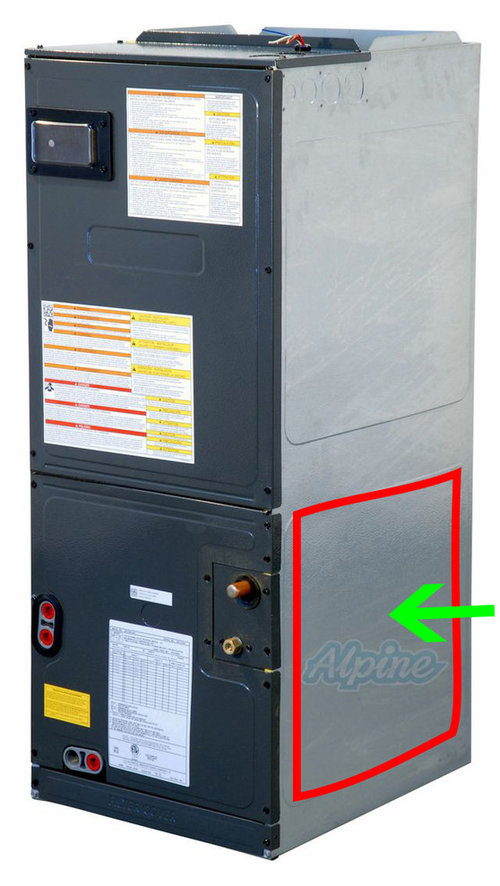
So I'm looking at a ARUF37C14 air handler to replace our 1985 Rheem unit and i'm trying to understand something...

I'm going Upflow but the return air is coming from the lower right side of the unit.


I've attached a couple of pics, the red box in #1 is where we'd need to cut the hole for the return air.


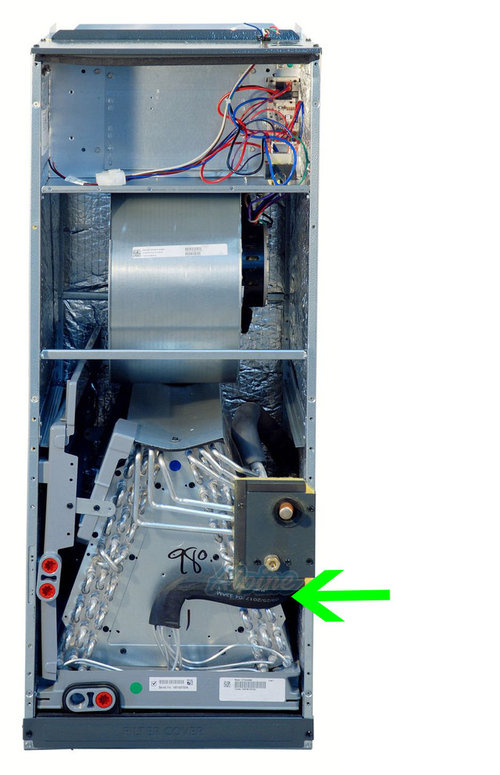
So looking at #2 as this is supposed to already be setup for Upflow anyway... instead of the current stack that is:


From top down

-Heat Strip

-Blower

-Coil


We'd re-arranged to:

-Coil

-Heat Strip

-Blower


Correct?

And in doing so, is there, or will there be an issue with that 15kW heat strip right below the Coil blasting up into it?


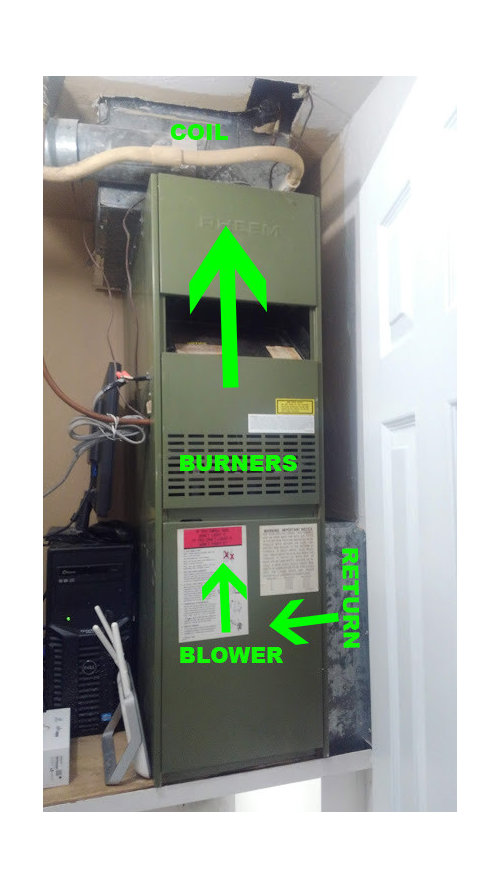
Also below: Current Furnace

As you can see the return is fed directly through the wall, standard 2x4 stud interior wall.


Thanks for the info all!


Comments (23)

  • 7 years ago
    last modified: 7 years ago

    Your second picture is a heat pump air handler while your third picture is a furnace and air conditioner coil. Which is it? I take it picture number 3 is your current setup, which looks like a furnace and air conditioner coil?

  • 7 years ago

    This Goodman air handler is supposed to be set up for an upflow configuration. But having the coil on the bottom seems strange.


    Perhaps a Goodman equipment expert can advise you on the optimal configuration.

  • 7 years ago
    you have to slide the coil out and turn it to the left...if you look at the left of the coil there is a 2nd drain pan that will be used once it is flipped. its designed to be able to use it for either aplication
  • 7 years ago
    wait I'm sorry some you can flip the coil but as I look at it again this is not the case. you could lay the whole unit on its side. you need a different unit.
  • 7 years ago

    Yes the original setup is the original gas furnace. This is getting ripped out and gas lines removed and new electrical put in to accommodate the heat pump air handler with heat strip system.


    This is located at the top of the stairwell from the basement which is in line with the first floor... since this full re-hab the 10x12 basement area is fully finished and the connected garage on the left side of the stairwell is now liveable space and fully finished.


    Essentially this stairwell is pretty much in the middle of the home, there are already free flowing vents open from the garage room into this stairwell... we're now thinking we would have the best return air flow if we do not duct it back into the wall.. instead just open the bottom of the platform and open the wall area that the current return is passing through so it's all wide open and we would now have a return from both locations of the home without ductwork... just let the return pull right in from under the platform that way it has maximum air flow and no ductwork bottlenecking anywhere.


    Yes, per picture 2, I talked to a few people about how this air handler/coil/heatstrip is setup, how it flows from the coil to the blower then to the heat strip and out. Apparently it's supposed to be like this for an upflow. I also had other people say it's wrong and for an upflow it should be the blower then heat strip then coil... but according to the folks that say that pic 2 is correct, they say the heat strip will damage the coil is setup like that.

  • 7 years ago
    last modified: 7 years ago

    "the coil to the blower then to the heat strip and out"

    This is correct for a heat pump air handler (per picture 2). The best way, if you have vertical room, is to have a return plenum made up to receive the return air at the side and feed up to the air handler (the air handler sits on top of the return plenum). I wouldn't go cutting into the side of the air handler and messing around trying to lay the coil on its side - that won't work.

    Oh, and for a 3 ton unit, you should have a 600sq in filter (about 25x25).

  • 7 years ago

    I came upon a similar thread with a similar username in another forum where only HVAC pros can respond. It came out that that poster was planning on buying equipment online without consultation with a licensed contractor sizing, types,configuration, etc.,etc., He was told to get expert advice and to avoid online sales, if for no other reason, they often result in no warranty coverage.


    But, to each his own. Some think they know more than everyone else, experts included.

  • 7 years ago
    last modified: 7 years ago

    Unfortunately, 90% of the HVAC "pros" out there are hacks. If you're lucky enough to find the 1 out of 10 that know what they are doing, great. Otherwise, its a total crapshoot. The industry brought this on themselves - they've only themselves to blame when someone with a modecum of mechanical knowledge chooses to go it alone.

    I'd gernerally avoid that other site as they offer little or no help except to tell you to pay someone to do it for you.

  • 7 years ago

    " I'd gernerally avoid that other site as they offer little or no help except to tell you to pay someone to do it for you. "


    I'd say with spec'ing, installing and maintaining HVAC equipment, "pay an expert to do it" is the best possible advice. Maybe 80% of the HVAC contractors in my area are experts but maybe 25% of them don't always have their customers' best interests in higher priority than their own. With eeny, meeny, miney, mo, you'll almost always pick someone who knows what they're doing. With most of them, they'll treat you fairly. With the right recommendations, you get someone who's awesome. The people I've had do work for me over the years have always been terrific and good value for money.


    If your experiences are different, then that's maybe the dumb luck of where you are vs where I am as far as this industry is concerned.

  • PRO
    7 years ago

    This Goodman air handler is supposed to be set up for an upflow configuration. But having the coil on the bottom seems strange.


    No Mike, They copied Trane's design. LOL


  • 7 years ago

    "This is getting ripped out and gas lines removed and new electrical put in to accommodate the heat pump air handler with heat strip system. "

    Why incur the expense of installing heat strips? You can install the heat pump and use the existing gas line with a furnace with a dual fuel system. It would be a lower installation cost and you will be set up to use which is more economical to heat your house.


    Ray it seems you are in agreement having the coil and the return at the bottom is not ideal. How would you arrange the pieces if you were installing this air handler?

  • PRO
    7 years ago

    Seems?


    I just showed you a picture of a Trane air handler witht the same design as the Goodman unit. You seem to make it all about brand when it comes to air handlers with coils the design is the same. Coil in bottom and heat strips on top and air flow out the top, or in the case of a side way installation the air flows out the opposite end from that of where the coil sits in the cabinet of the AH.


    For some reason it's always about brand especially when it comes to Goodman on this board. Brand doesn't matter if the install was done 'properly'. The definition of 'properly' is lost on most these days. (why doesn't brand matter? they all break and in many cases it can come from how the unit was installed... do it wrong and have the pleasure of having to start over.)


    Now why do you suppose 'all brands' would design an air handler with a coil this way?


  • 7 years ago

    Perhaps I misunderstood your comment about the Trane air handler. I have no experience with air handlers of any brand. The configuration seemed unusual compared to what I see in a furnace configuration. I actually thought the Goodman design was novel how the components can be slid out of the chassis and reconfigured.

    I am not sure why all brands would design the air handler with a coil this way, but I would like to learn.

  • 7 years ago

    Yes, for some reason, stardard layout (in the direction of air flow) for a heatpump air handler is coil, blower, heat strips; for a furnace/AC, its blower, burners, coil. I'm sure there's a reason why but I don't argue with the manufacturers!

  • PRO
    7 years ago
    last modified: 7 years ago

    The reason is simply this:

    Air handlers are 'designed' to be operated with a heat pump, while you can cut install costs and use only electric resistance heaters, the money you save quickly evaporates when you actually run the electric heat strips.

    Climate, also has to be considered. 'A fool and his money are soon parted.'

    Heating and Cooling equipment is designed for comfort. If you have a heat pump and you're running heating and the outdoor temp drops below 32F that heat pump is going to need to go into defrost sooner or later.

    Defrost in heat pump mode is also known as 'air conditioning' mode. Not a good thing when it's cold outside and you're trying to stay warm inside.

    If you have the coils down stream of the heat strips, the air coming out the vents will be chilly while the heat pump is in defrost. (Even with the heat strips on.)

    AKA, it's always about comfort. That's the only reason outside of pipes freezing that you have 'central' heating and cooling in a home to begin with. (What did people do in the 1940's? --- no one had air conditioning then and many didn't have it in the 70's -- how do you suppose I know this?)

  • 7 years ago

    Now I understand the configuration is to temper the cool air during the defrost mode. I suppose you could have the blower on the bottom, the coil in the middle, and the heat strips above the coil. That configuration would also work but it may make the air handler too tall and expensive and that is probably why it isn't done.

    So going back to the OP's original question, it seems to me having the return at the bottom side is not optimal for air flow, and that is why the air handler has the removable knock out in the middle next to the blower.

    I would still like to know the reason behind moving from a gas furnace to heat pump. Cost wise it makes no sense from what has been posted so far.

  • 7 years ago

    Thanks for all the info... the gas the original furnace uses is Propane, and aside from it being extra expensive around here, the propane companies work off the "we'll fill you when we can" motivation. Example, 3 years ago we called to get a fill when we had 25% of a tank left... well they didnt "get to us" until 5 weeks after we already ran out of gas. Luckily we have a wood burning fireplace and lots of space heaters. We then changed to a new supplier... same concept the following year... and the year after that.


    Regardless, switching to an all electric system is what we need to work with the solar panels and wind turbine we'll be installing in spring of next year. We need to install now to see the average amount of electricity we'll be using over the winter.


    Other benefits include no chance of CO in the home, and no more hole in the roof to vent the propane (as we'll be refinishing our roof the same time the solar is installed).

  • 7 years ago
    last modified: 7 years ago

    Hey integraoligist27:

    So let me be clear that I think that you want a pro to figure this out and install it. Yes, I know that Goodman is available online - but I don't think this will go well as a DIY job given the questions you are asking.

    The reason for the coil / blower / heat strip config is because there will be times when the resistance heat strips supplement the heat pump. Heat flows from hot to cold and the greater the temperature differential the greater the heat transfer. So, cool air needs to go past the lower temp coils first and pick up as much heat as they can transfer and then be boosted by the resistance heat strips which can get much hotter than the heat pump coil. If air is routed past the resistance heat first, the air would be too warm to pick up much, if any, heat from the coil.

    You see this same type of thing with condensing furnaces and condensing water heaters where the cool air flows over the secondary (lower temp) heat exchanger first, then the hotter primary.

    Look at the install instructions online. It's not designed to have return air entering the side - it's designed to enter the bottom (or it can be configured as down flow or left or right side install) but not with the return on the side where you have indicated.

    Electric resistance heat isn't a great match up with PV. But if your climate is such that you spend a significant amount of time on the heat pump, then it can be a good match up.

    Again, I think this is something that you really need to work with a pro to get right. I'm not against DIY but these questions indicate a lack of basic understanding. This isn't going to go well and it would be irresponsible of me not to say so.

  • PRO
    7 years ago
    last modified: 7 years ago

    It's not a bad idea to convert to a heat pump from propane. Outside the delivery problems propane is a danerous gas. Not dangerous when used properly, but mishandled and it can level a city block. (I don't think the OP is in the city, so I am using a metaphor when I say this.)

    A solar system will have to be quite large to handle the energy needs of ANY resistance type heating system (electrical strip heat in any comibination draws alot of power), then if you're off grid you will also need large battery banks of power to supplement those needs to run the heat when the sun isn't shining.

    Trying to do this DIY, is going to be a costly lesson in futility.

    A heat pump can reduce those demands placed on solar systems, BUT you will still need battery back up system of some kind OR grid tied system. The more power you burn, the more solar panels and batteries you will need.

    The cost of batteries never goes away. There's cost in maintaining them, if you set them up improperly meaning they are drained to far down or not down far enough this will effect the life of the batter... which leads to even more cost.

    If you undersize the solar system and battery system.... you're going to be cold. So while you think you have problems with a propane system now, there may come a day in which you wish you could just call someone to fill the propane tanks, deal with the inconvenience of having to wait it out... but not have to be continuously jacking with an 'off grid solar system' that no one will touch because you installed it.

    It's either that or you call a solar system company they come out and tell you the system is inadequate and want to install an entirely new system... which ultimately will put you in a bad position.

    Either way... whatever the OP decides to do... they are going to learn how to be extremely energy conscious in their daily lives. A little bit of advice: cut your engery needs. It's far cheaper to build a solar system with low energy needs than higher energy needs. Not only cheaper up front, but also in maintanance and ultimately replacement costs. (The solar system, nor anything else on this planet will last forever.)


    I think if it were me in this situation with a family (IE multiple people in the home) I would use a duel fuel combination of propane furnace and heat pump. Use the heat pump in mild weather and only use the propane furnace when weather dips below 32F for any significant amount of time. Given the advances in heat pump tech you might be able to run the heat pump as low as 20F using the heat of propane furnace during defrost.


    If the OP is living alone it's a toss up as your needs one day may include living with more people in the home.

  • 7 years ago

    The OP never said he was going off-grid. I'm going to assume grid tie unless he says differently.


    You are right that the least expensive KWH is the one that you don't use.


  • PRO
    7 years ago
    last modified: 7 years ago

    Yeah I am somewhat wildly assuming that given the solar and wind turbine comment, (I wouldn't have come to that with a solar panel only comment) plus propane furnaces are often installed in remote locations because natural gas is not available. So if you 'read between the lines' of what the OP said in the last posts he doesn't like being with out heat. You know waiting for the propane delivery guy to show up.

    So in a remote area you could exchange one problem for another, power goes out and because the area is remote, the service providers 'take their sweet time' to reestablish power.

    Certainly I could be jumping the gun a bit in how I felt where this conversation was going. I've probably had these conversations one too many times... in the past 23+ years. LOL.

  • 3 years ago

    Can some pleasplease shoshow me exactly where the filter goes. does it slide into those rails or does it just sit loosly sit below and get sucked up into position when the unit kicks on?

  • 3 years ago

    You've tagged on to a 4 year old post - better start your own thread if you want anyone to pay attention to it. In any event, need pictures of YOUR setup to answer the question.