

Mont Blanc "quartzite" from Italy
I have Mont Blanc slabs from Italy on hold waiting for a fabrication/installation quote. There were two Mont Blanc lots at the stoneyard - one from Brazil and the other from Italy. Does anyone have experience to offer regarding any differences between these two sources?
The Stone yard has only been working with the Italy slabs for a year and really didn't know if there is a difference between the two regarding staining/scratching/etching. He also stated that with any quartzite, one area of the slab may not scratch/etch/stain but another area on the same slab may. There are no promises of no scratching/etching/staining. I do not have the option to test for scratching/etching/staining. (I'm not sure how any of you have been able to do that without actually purchasing the stone. The Rep said obviously we can not allow testing on a slab we are trying to sell.)
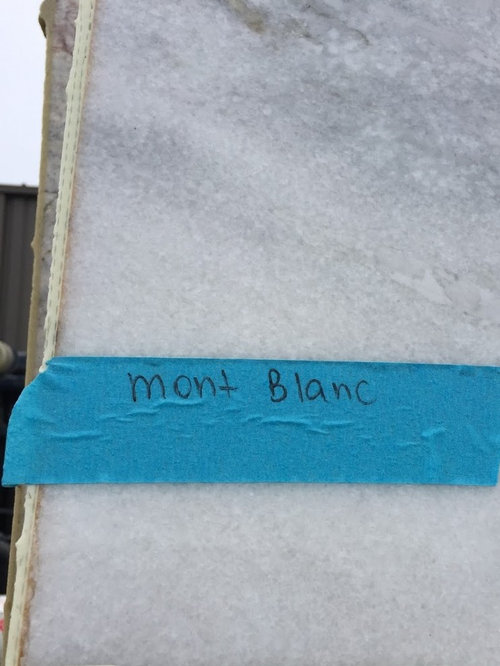
I have seen a Mont Blanc piece at the fabricators that was in the process of delivery and broke. (Don't know the country source) The crumbled pieces laid next to the stone and the tiny "crystals/stones" that make up the stone seem so fragile. You can see the "crystals" in this close up photo
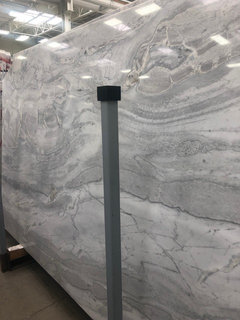
Here's a pic of a Mont Blanc Italy slab from the lot that is on hold for me:
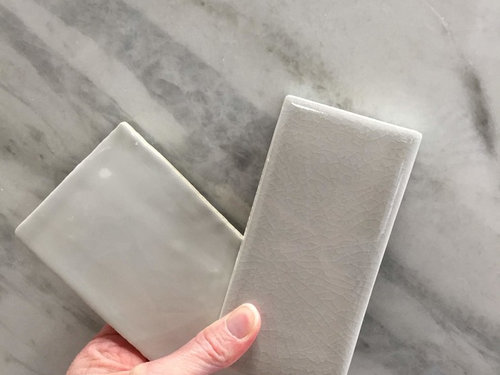
The tiny "crystals" do not seem as obvious.
I realize quartzite is by nature formed by small crushed crystals/stone forced together by heat/pressure but perhaps the appearance of these crystals is a clue to its properties?
The broken Mont Blanc as well as the post by mjammjam's ordeal with staining/sealing issues with Zermatt (which she noted was the same as Mont Blanc) gives me concern. Mjammjam's stained counter was removed, replaced with the same material and sealed properly. Her post gave me hope that Mont Blanc might work for me but at the same time gives me concern for proper sealing etc
I can not live with a counter that requires constant monitoring but absolutely can not find a quartz that I like. I am looking for a grey/white combo. Thought I liked Quartet by LG but the actual slab had an pale green tone with more "blobs" than the sample.
Comments (25)
 PRO7 years ago
That appears to be a marble, not a quartzite. The words being used to qualify it and set expectations say marble as well.
A visit with a lemon wedge in a baggie and a glass baby food jar in your purse would confirm. The ragged edge of the slab that would be cut off should not be an issue to apply the lemon to. Any damage would be cut off. Similarly, if it does not cut the glass, you have your answer. And that is completely non invasive to the slab.nehome thanked Usernehome
Original Author7 years agoDon't think I can sneak in a test since the rep always accompanies me in the warehouse!
Related Professionals
Laredo Interior Designers & Decorators · Palm Bay Architects & Building Designers · Rolla Architects & Building Designers · Kingman Architects & Building Designers · Gillette Architects & Building Designers · Cookeville Kitchen & Bathroom Designers · Syracuse Kitchen & Bathroom Designers · Hudson Kitchen & Bathroom Designers · Ashland Kitchen & Bathroom Designers · Nashville Kitchen & Bathroom Designers · Kissimmee Kitchen Remodelers · Palm Desert Kitchen Remodelers · Sacramento Kitchen Remodelers · Vancouver Kitchen Remodelers · Yakima Custom Countertops- 7 years ago
First - Is there another stone yard you can buy from? You need options if you are going to give the stone yard an ultimatum!
Second - Ask to speak to a manager/owner at stone yard. Tell them you will buy today, if they let you do some tests. Explain the tests. Tell them you will buy elsewhere if they aren't willing to help a customer. If they let you test, and it passes, be prepared to pull out your credit card and pay in full.
- 7 years ago
Take the testing materials and explain to the salesman you procedures. He shouldn't object. If he does ask to speak to a manager to get approval. I wouldn't buy any slab labeled quartzite without testing it. Your cost is too high to risk it.
 7 years ago
Test, but I suspect you need to find a better quartzite. Have you considered maccabus? You get gray and white with a quartzite that seems less problematic.
 7 years ago
I agree that you should test before you buy, but share your puzzlement over exactly how this takes place? The lemon wedge in a baggy sounds pretty easy, but what exactly are your doing with the glass? Any more tips on exactly how to *test* the actual slab (vs samples from who knows what long-ago lot) would be much appreciated. We are looking at White Macaubus quartzite for the grey/white veining, but it does have more lines than your top photo.
 PRO7 years ago
Italy imports stone from all over the world for processing. Just because a stone is from Italy doesn't mean it's from Italy.
 7 years ago
Great questions and excellent answers, too. Well done!
You can test the slab without damaging it, and this is something salespeople should encourage, not discourage.
It's hard to use glass on a full slab, so I don't recommend that. The easier way is to bring an awl or a pocketknife and try scratching the slab. Do this near the edges of the slab, but if the stone has different colors or textures, then try to test different areas.
When you do the scratch test, you basically need to find out if the tip of a pocketknife leaves a distinct scratch in the stone, or not. If the stone is marble, a knife blade will make an obvious, 'feelable' scratch. On quartzite, a knife blade will sort of draw on it. It might leave a mark, but not much of a scratch.
Good luck!nehome
Original Author7 years agoKarin_mt - Thanks so much for the link to those articles. I had already read the first but not the second which was very helpful!
So what I have learned is - less visible grains and cross bedding is a good indication that the slab has low porosity. I think that answers the question in my post that the visibility of the "crystals" between the two slabs does give a clue to a difference in properties. The top photo, where the grains are more obvious, may be an indication that this slab has some level of porosity. I'd need to revisit and take a closer look at the Mont Blanc from Italy but I don't recall, and the close-up photo does not show, grain visibility.
Now for cross bedding - this is a larger photo of the mont blanc from Italy (the second slab in the photos above.) Is the horizontal grey striping considered cross bedding or is this "regular layering" referred to in your article?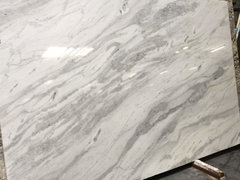
To All - Thank you for your responses. I do recognize the need to test the actual slab to be purchased. Unfortunately this is the only available Mont Blanc I have seen at the yards I have visited and it seems from the Rep's response that it is not their practice at all to allow testing. I might be the only Houzz reader in the area that is even aware of the need. The purchase will be made through the KD. I know I have over educated myself in all other aspects of this renovation and in that regard I am not the typical consumer.
I'll review this further with the KD but I may have to pass on this beautiful stone unless the fabricator can convince me that the right sealer will allow me, and my family, to live with this counter without stressing me out.
BTW - I used a screw driver to test samples of Super White and White Tulips that I was able to obtain from the fabricator - both scratched. A sample of Perla Venato did not so I definitely see the difference. Testing lemon juice an all 3 right now.- 7 years ago
Nehome, good for you to be learning as much as you can! Honestly, this helps everyone, including the salespeople. Educated consumers are a win-win.
Your slab does not have cross-bedding. You've got a nicely swirled texture that comes from metamorphism.
Cross bedding usually means more porosity, not less. So you need to be more careful if a slab has cross bedding. But yours doesn't so no worries.
As for visible grains, be careful not to mix up 'grains' and 'crystals.' Grains means sand grains and small pebbles. Crystals mean an irregular, crystalline, glassy pattern. But we're wading into subtle things that are hard to describe in words, and unreliable to diagnose with online photos.
If you can get a remnant to dip in water and play with, you'll be able to figure out the porosity.
My guess is that stone will need sealer either way. Keep testing and reading. Good luck!nehome thanked karin_mt  7 years agoWhat did you decide? I’m also deciding if I’ll go with Mont Blanc. It’s really the only stone I have loved but like you, I’m concerned about the staining, etching and scratching. The stone yard calls it a quartzite. I know from all my research (and wonderful fabricator) that it’s a hard marble. I’d love to hear from anyone that has Mont Blanc.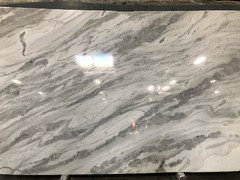
nehome
Original Author7 years agoAs of now, I've decided against the Mont Blanc but still have not come up with an alternative. I had a piece from a different slab and it did scratch - I was able to make a groove in the stone with a screw driver. It is such a beautiful stone that it is hard to choose a quartz over the Mont Blanc.
- 7 years agoI believe that you should get slabs from the same location/lot with consecutive cut numbers, meaning they are from the same physical location and were cut from the same granite.nehome thanked felizlady
- 7 years ago
Have a look at Viscont White - it's a gneiss (classified as granite) and the look is somewhat similar to Mont Blanc. The patterns vary depending on which direction it's cut. It's one of my favorites. It's very durable.
nehome thanked karin_mt  PRO7 years ago
1ST, I have never heard of any seller allowing someone to scratch or etch a slab. If there is a small piece or small remnant, they could test on that. 2nd, quartzite and marble are similar. Quartzite is a little harder, but it requires sealing just like marble and granite. It is also vulnerable to scratching and etching. Nothing can be done to prevent that except being super vigilant and careful. You have to weigh your priorities. I would recommend you use it in the bathrooms or laundry, not the kitchen. If you are that worried about the scratching and etching, you should move on and find another material that is less maintenance. @karin_mt suggested Viscont White....it is a durable stone and the great thing about granite is that scratches can be buffed out (for the most part) and any chips can be epoxy filled. It is durable. But, you still have to seal it. I would look for quartz in a similar patter to the Mont Blanc. Quartz is basically maintenance free...no sealing and you will probably ruin your knives before you scratch up your tops. I am pasting a link to Silestone Calacatta Gold. It is similar to Mont Blanc in veining. Not sure if it might be too white in background, but try their site to see more colors. Also, go to MSIStone.com for a lot of different options for veining and different creamier backgrounds. https://www.silestoneusa.com/color/eternal-calacatta-gold/
Best of luck to you!!nehome thanked Precision-Tops, LLCnehome
Original Author7 years agoJaime - I am leaning toward Ceasarstone London Grey, either honed or polished. It is the only marble look quartz I have found that does not have the translucent circles of color throughout the design. (BTW The Ceasarstone showroom told me those "circles" are intentional in the other designs.) I am a bit concerned the LG does not have enough movement and contrast to my white cabinets. Mont Blanc would have been perfect but would have created too much stress.
Thank you karin_mt for the Viscont White suggestion - I am going to check that out before making a final decision on the quartz.- 7 years ago
Precision Tops - I think you'd do well to learn a little more about quartzite. If it scratches and etches, then it's not actual quartzite - it's most likely mislabeled. Quartzite is a lot harder than marble. Many in the industry are inadvertently spreading incorrect info and it's better for everyone when we're all are on the right page.
This article covers the quartzite vs marble mislabeling problem, and how to tell them apart.http://usenaturalstone.com/definitive-guide-quartzite/
This one delves into porosity and the differences between sandstone and quartzite and different types of quartzite.http://usenaturalstone.org/properties-of-quartzite/
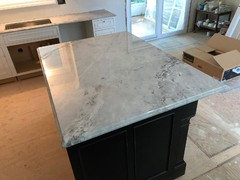
I wrote both of them. Hope you find them helpful! - 7 years ago@Karin_mt I am in the middle of the Mont Blanc quartzite/ marble issue. The stone warehouse has it labeled quartzite but my fabricator has it labeled hard marble. He showed me a slab that is Mont Blanc quartzite that looks a lot different than the one I saw at the warehouse. But I come on here and see slabs that look like what is “hard marble” (dolomite) and the users insisting it’s quartzite and passed the scratch test. Can a stone like the pic I posted below look like this and be quartzite? Hope this makes sense. Lol.
- 7 years agoWe actually decided against Mont Blanc from Brazil and went with wicked white quartzite. The one from Brazil looked more like a cream with tan vs white with greys. The stone we purchased was so flawless it almost looked fake. We had it sealed and the edges were “ogee.” They are amazing.
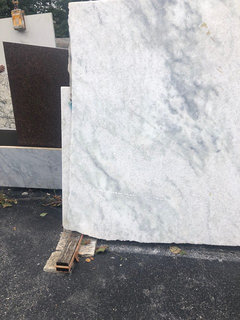
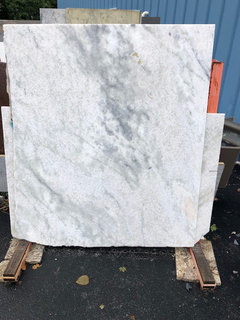
- 7 years agoThe first pic of the “mont blanc” also looks very similar to a quartzite we purchased from a stone yard that was relocating and selling their stones for super cheap. We bought this white macabus with hopes of using it on bathroom vanity. We paid $50 for it. It’s obvi damaged from being out in the rain. We changed our mind because the stone was looking worse and worse.
- 7 years ago
Hi Danielle,
The stone names are highly variable, unfortunately. What matters are the stone properties, regardless of its name. Looks can be deceiving too - even more so when looking at photos on the screen. The photo that you posted could be quartzite, and it could be marble. The only way to know is to test it. - 11 months ago
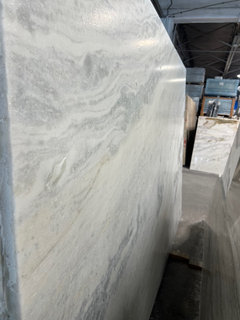
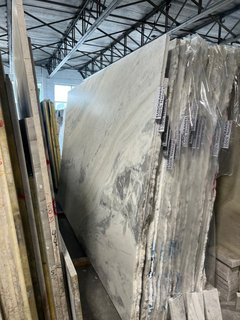
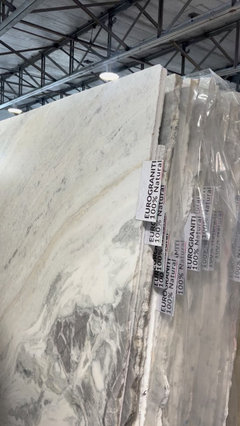
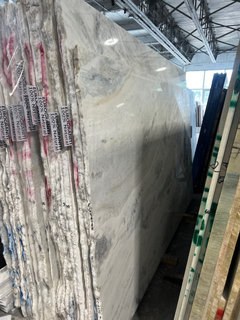
Hi I know this is an old post but hoping someone can share information. We finally decided on a stone we both like. The store stated it’s quartzite Mont Blanc. I’m not sure from where. She gave me samples to test at home. As far as the lemon test, wouldn’t they both etch? Meaning dolomite and quartzite. Also, someone mentioned submerge in water. This Mont Blanc doesn’t look like what other stores label as Mont Blanc. Cones in leathered or polished
 11 months ago
Unfortunately there is no standards for the call out name and any shop can call a stone whatever they want. Also it is a naturally occurring product so the appearance and pattern will vary, sometimes a lot different.



Joseph Corlett, LLC