Software
Houzz Logo Print
srw_

Wisteria trunk being eaten?

7 years ago
last modified: 7 years ago
Need some help.

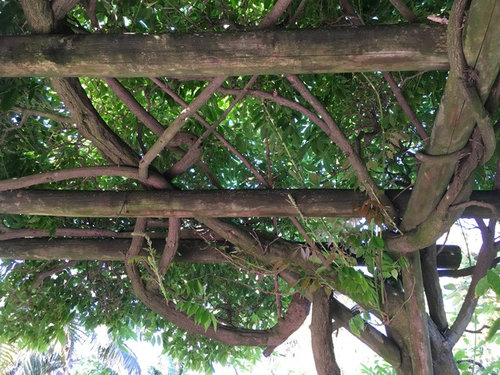
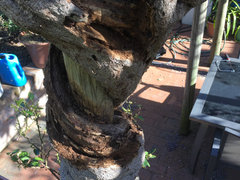
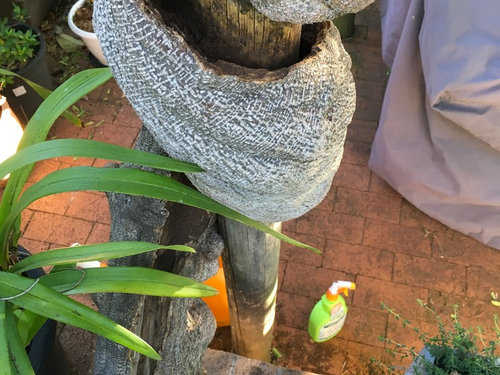
Have a 15-20 year old wisteria wound up the pole of a wooden framework. It’s pretty healthy, but the wood of the trunk has started dying off in an uninterrupted path vertically from the top down.

The wood inside is a powder, like it’s been pulverised. I scooped it out until I hit living wood, and living in the powder are what look like mealworms (plus a few actual worms). There are also black ants running up and down the trunk all the time - I pulled off a dead branch near the top of the trunk and ants came scurrying out of it.

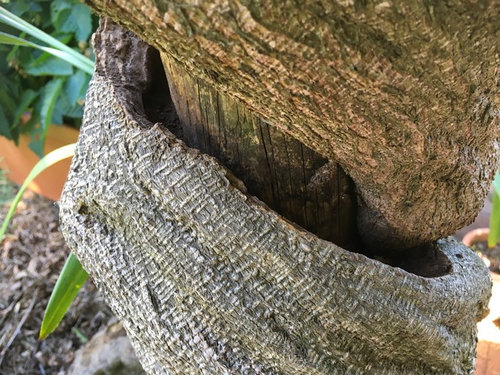
In the coil of the trunk, the die-off is on the top side, and hasn’reached through to the bottom side. Was thinking it could be rain getting trapped and rotting away from the top down, but not sure that it explains the base of the trunk, which has never had anything against it that would trap water...


Just in case it makes a difference - it’s in full sun, takes care of its own water needs. The soil is pretty sandy where I am. Every now and then I pull up a sucker across the lawn so I know it’s got a good root system.

Anybody have any ideas what would cause and how to stop it? Thanks!

Comments (12)

  • 7 years ago

    I don't know what the answer is re your wisteria problem - but is it possible the ants are carpenter ants? See this page Your 'worm' is probably the larval stage of something - is there a botanical garden, or a college/university nearby that would have an entomologist that could identify it for you?

    SW (Sydney, USDA 10b) thanked woodyoak zone 5 southern Ont., Canada
  • 7 years ago
    last modified: 7 years ago
    Hey. I guess they could be carpenter ants. They look like the regular black ants we’ve always had in the garden; they pop up on everything now and then - in pots, farming aphids, etc. But they are definitely inside the dead wood. I was thinking about putting down something like diatomaceous earth (never used it before, tips appreciated) to cut off their access anyway because whether or not they’re the cause, I don’t think they’re doing any good.

    I’ll try and get the grubs ID’d and update.

  • 7 years ago

    I have used diatomaceous earth before to deter soft-bodied insects. It works well - but needs reapplying after a rain. It would likely kill the 'worms' too - so it would be a good idea to either get them identified before using the 'earth' or take good pictures of them (e.g. put one or two on a white piece of paper, with a ruler or tape measure to give scale, and then take pictures....) or put a couple in a sealed bottle of alcohol to preserve them for taking to an entomologist. It'll be interesting to see what the ID is....!

    SW (Sydney, USDA 10b) thanked woodyoak zone 5 southern Ont., Canada
  • 7 years ago

    Carpenter ants eat wood that's already dead. I wouldn't go spreading poison on something that is part of natures plan by cleaning up dead wood.

    An older specimen of any plant can have portions that die for a number of reasons, or just because of age. I'd look into what is going on by asking someone that's familiar or knowledgeable with this type of vine before I would start killing ants.

    SW (Sydney, USDA 10b) thanked User
  • 7 years ago

  • 7 years ago

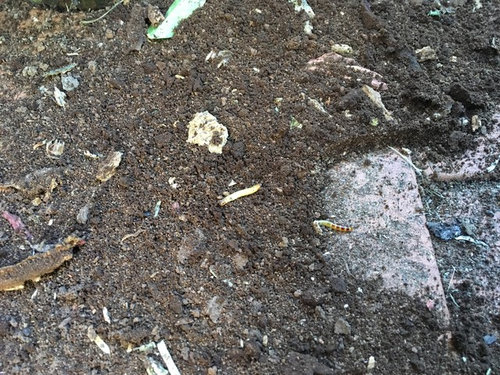
    Sent off a photo for ID and it’s been suggested that it’s a wireworm (Elateridae or Tenebrionidae). Measurement in the above photo is in centimetres.

    Looks like they feed on dead or rotting wood so... I guess it’s not them?

    I am not sure what to do for when it rains now that I’ve dug out all the dead stuff, but I’m guessing the water was getting trapped in their before now anyway so I’m going to just see how it goes. There is also wood death higher up in some of the scaffold branches (with ants inside), so unless they’re a consequence of the trunk damage, then surely it can’t be trapped water causing it?

    I’ve gotten rid of the ants for now. They can come back later if they’re not the problem, but I constantly battle with ants in our garden (colonising pots, aphid/pupae/mould farms) and I always take a soft approach; but this is a 20-year-old tree that basically forms our patio area so not messing around. I specifically suggested DE because it’s not poison (homeopaths are putting it in their food).

  • 7 years ago

    Interesting issue.... Based on the clockwise twining seen in your pictures, this appears to be a Japanese wisteria. Is is a named variety/grafted plant? Does it produce a lot of root suckers and, if so, do you allow them to remain and climb on the structure? You said in your original post that the vine is doing well - is any part of it visibly dead - i.e. no leaf or flower growth? Does the vine lose its leaves at some point in the year in your climate? (My two wisterias are just losing their leaves for the winter now....)

    If the vine loses its leaves at some point in your growing season, that's a good time to give it a close inspection. Since the support structure is also wood, it may well have rot too, so check it carefully (What kind of wood is the support structure?)

    Wisterias are pretty tough plants that can survive a lot of damage. If it is still producing healthy new growth from the stems that have split, I wouldn't worry too much about the vine. If there are areas where the vine is dead (i.e. no leaf or flower growth) I'd prune out the dead section and let nearby healthy growth fill the blank space. If there are suckers from above a graft union or if you normally let root sucker grow and they flower the same as the rest of the vine, you could use them to help fill in any dead sections too.

    If there is a nearby botanical garden or a commercial grower of the vines, you could ask them for further help in identifying the source of the problem and what to do. At this point, I wouldn't give up or the vine or assume it will die out. They are very tough plants and it would take a lot of damage to completely kill it!

    Do you have a picture of it in flower on the structure? If so, I'd love to see it....


  • 7 years ago

    I’m not sure what variety it is, sorry, woodyoak. I remember my father saying it was grafted, but that’s all.

    It does lose its leaves for the winter, and then flowers really well in spring. It’s never failed to flower since maturity (I have some photos somewhere, been trying to find one to upload).

    The trunk gets suckers coming through regularly all the way up from the base, and I typically pull them off. Per your advice, I’ve left one near the top, where one of the scaffold branches had died (which I’ve pruned away). There’s no other dead patches.

    The pole that it’s climbing up is some kind of treated wood that’s even older. It’s still hard, can’t see any kind of rot in it, though by now that corner of the structure is being held up by the wisteria (rather than the other way around).

    We had torrential rain earlier in the week and the spiral turned into a bit of a waterslide, with some of the worms turning up drowned at the bottom.

    Thanks so much for the kind help and reassurance. I won’t panic unless it starts to die back on top.

  • 7 years ago
    last modified: 7 years ago
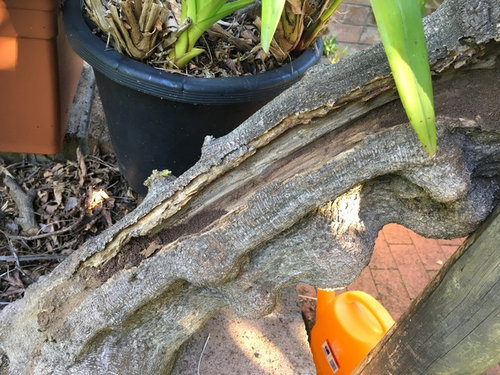
    These vines are known to live hundreds - and some are thought to be over a thousand - years old in Japan and China so, as long as it is putting out healthy new growth, I certainly wouldn’t give up on it too soon.... It might still be worthwhile trying to find a nearby grower or botanical garden or somewhere like that that might have extensive experience with growing wisteria in your area and could provide more useful guidance. In your situation, I would keep a close eye on it, hoping that it continues to produce new growth that can replace any that dies. Perhaps, like a snake, it is going to generate new ‘skin’ to replace the split bark :-) It might well outlast the wooden structure (in my experience, the stems remain remarkably flexible even after they become quite large, so if the wooden frame rots, don’t count on the wood of the vine to be self-supporting.)

    If you find some pictures of it in flower, do post them please.

    SW (Sydney, USDA 10b) thanked woodyoak zone 5 southern Ont., Canada
  • 4 years ago

    I wanted to post an update on this, in case it helps others in the future.


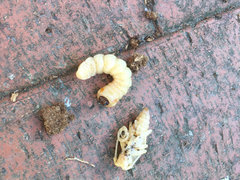
    I found the problem to be wood-boring larvae. Here is a photo of them, one in the stage of becoming an adult. Note the spiral antenna; maybe a longhorned beetle?


    I have so far pulled five of these out of the trunk and have no idea how many more there would be. The larvae I showed in previous photos may also be involved in the damage, or they could just be feeding on already-dead wood (I still have no idea what they are).


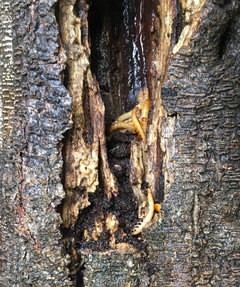
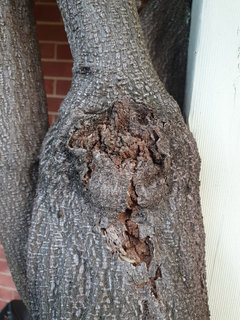
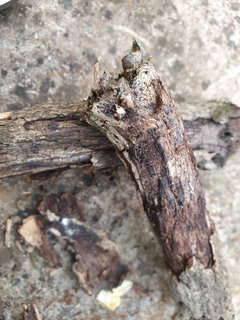
    This is the state of the trunk, two years on:


    Some of the gaps from the photo in the original post have filled in, but, slightly higher up, there are larger gaps of now dead and rotting wood.


    It’s currently in flower, prolifically as usual. But looking at the trunk, it looks like it’s going to die. I would like to save the tree if possible, so am considering cutting off all of the limbs to focus on regeneration.


    Any advice welcome.

  • 3 years ago

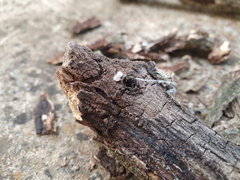
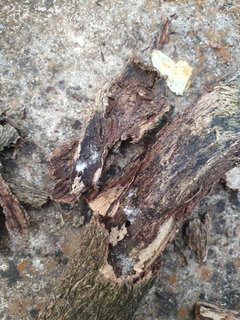
    Hey SW, how's the trunk going so far? I've got a similar issue but can't seem to find anything buy mealy bugs. I've had a few large branches died off and it's hitting a large one now. 


    I've broken up a dead branch and included photos of tiny larvae, a mealy and what looks like a shell of some sort. My wisteria is probably 20 years old. Thanks!

Sponsored
AIS Renovations
Average rating: 4.5 out of 5 stars15 Reviews
Custom Craftsmanship & Construction Solutions in Franklin County, Ohio