Software
Houzz Logo Print
henrietta_bancsov

Laundry Drain Pipe

Hello,


Our old house had a drain pipe from the washer that drained into the utility sink, and I'd have to change the lint catcher often.


Our new house has a washer that does not drain into the utility sink. Where does this water drain to? And is this situation something that needs to be maintained, i.e. with changing a lint catcher or anything?


Thank you!

Comments (12)

  • 7 years ago

    Find the drain hose on back of the machine and follow where it goes. Probably to an exposed standpipe behind the machine or concealed inside the wall. Either can handle the lint discharge vs. the smaller sink outlet that's more likely to clog. Putting a lint catcher on the hose runs the chance that it wouldn't fit into the standpipe or would come loose and get into the plumbing.


  • 7 years ago

    Related to the Majic 8-ball?

  • 7 years ago

    Shush,Austin wasn't using it and doesn't know it's missing.

  • PRO
    7 years ago

    Where all the other water goes in the house , down the drain. I have never had a lint problem in my drain pipes so can’t relate to that.

  • 7 years ago

    You sure don't want unfiltered wash water going into a septic tank and shortening the life span of your leach field. And you probably don't want it going into the drain if you have old cast iron drain lines.


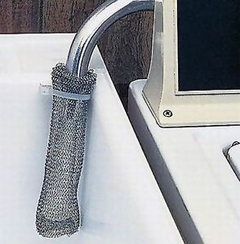
    Absent a laundry sink to drain into w/ the discharge hose fitted with a lint sock, you can install a filtering cannister---Filtrol is one brand. (Currently on sale from Filtrol's website at a significantly better price than Amazon.)

    Filtrol


    It drain's through the wall,down along the foundation 6'2" where it turn's 90 deg and flow's out onto the side yard.


    Klem, that is a good approximation of how the washer drained in the house that I grew up in. Dad plumbed it that way because he wanted to keep the water out of the septic tank. Between the septic laterals and the washing machine water, we had the lushest lawn in the neighborhood! Good old phosphates & lotsa' water. In that era, automatic washers had on board lint screens with the water being continually circulated thru the lint screen. And mostly biodegradable lint, too.

  • 7 years ago

    "ci_lantro: You sure don't want unfiltered wash water going into a septic tank and shortening the life span of your leach field."

    Depends on the design of the septic system. Mine is an aerobic system that has a pump that discharges through two standard pop-up sprinkler heads that spray on a back area of my yard. I don't have a filter on my washer's drain hose and haven't had any adverse effects thus far in 15 years. The installer/maintenance service that checks the system every 4 months (required by the county) has not yet advised that the tank needs pumping.

    Many washers back in the day had a self-cleaning filter that collected lint out of the load during wash and rinse agitation then backflushed the filter during drain.

  • 7 years ago

    ): Don't keep us in suspense. If "Many washers back in the day had a self-cleaning filter that collected lint out of the load during wash and rinse agitation then backflushed the filter during drain. ",how do modern washers handle lint different?

  • 7 years ago

    I think this is a very intelligent question from someone concerned about the function and maintenence of their appliance and home. This is how people learn.

  • 7 years ago

    My comment was in response to ...

    "Ci_Lantro: Good old phosphates & lotsa' water. In that era, automatic washers
    had on board lint screens with the water being continually circulated
    thru the lint screen. And mostly biodegradable lint, too.
    "

    ... on the assumption that the reference to on-board lint screens meant the type that was manual-clean (regards to avoiding washer lint getting into a septic system) ... such a GE FilterFlo or a WP/KM with a brush or cartridge filter that collected lint which was then dumped to the trash by the user. Maytag had a passive cartridge filter in the barrel of the agitator that many users didn't know or forgot it was there and never cleaned it.

    GE and Hotpoint went to the RimFlow design which had the filter as a ring attached around the upper rim of the basket (largely out of reach and sight of the user), and the water during spin-drain swirled up and flushed collected lint out the drain. WP/KM had the hidden circulating self-clean filter that operated by the pump forcing water through it in one direction during agitation, then the flow reversed during drain to flush the lint to the drain. Watching the drain hose, a blob of lint sometimes passed through at start of drain.

    WP and Maytag in the 1980s went to a passive filter screen attached to the underside of the basket. Water currents generated by the agitator flowed through it to catch some lint, which was supposed to flush away during spinning. They weren't much effective and WP's typically ended up clogged with stuck lint and mineral residue.

    Majority of manufacturers discontinued lint filters some years ago. Phosphate-free detergents had a hand in it since they don't handle hard water as well and filters got clogged with mineral residue.

    There are no "modern" washers with active (pumped/recirculating) lint filters nowadays, as far as I know. Speed Queen may have a passive screen mounted to the basket. Some toploaders claim to handle lint by agitation currents circulating the water outside the inner basket through slots under the agitator, where it (the lint) can't pass back through the basket perforations which are punched through from the inside leaving sharp tabs on the outside that "trap" the lint in the outer tub where it later drains away.

    Frontloaders have a pump filter/trap that many people mistakenly believe is a lint filter. Its function is to catch stray objects (coins, keys) and debris from jamming the pump ... not to filter lint during wash/rinse tumbling.

  • 7 years ago

    Dadoes, I remember two types of lint screens in washers that my Mom had--both Kenmore or Whirlpool. The older one (early 1960's) had a rectangular/ ovoid shaped wire mesh screen and a newer one (late 60's?) with the brush filter as you described. Located on the front right side of the washer. Wash water was pumped thru it/ continual circulation. The mesh filter slid into a housing on the horizontal axis and had a (pot?) metal tab that worked as a kind of lever/ one winged turn button to hold it in place...if I recall correctly. The brush filter on the other machine was on the vertical axis and was a friction fit...lift out to clean.


    We had only Kenmore/ Whirlpool washing machines so I'm not familiar with other brands.


    The third washer, the one after the one with the brush filter, I remember being touted to have a self cleaning lint filter. That machine might have been a backflush style as you described since it was marketed as 'self cleaning'.


    Was the backflush style the same as 'passive lint screen on the underside of the basket'?


  • 7 years ago

    "Ci-Lantro: Was the backflush style the same as 'passive lint screen on the underside of the basket'?"

    No. The backflush filter involved a filter housing mounted under the machine base. The pump actively pulled water from the tub, forced it through the filter and back into the tub ... essentially following the same flow route as the cartridge and brush filter except the return path was into the side or bottom of tub where it wasn't seen.** The flow direction reversed during drain to flush the lint out of the filter. There were three or four different housing styles through the years. One was a canister filled with plastic beads/pebbles that caught the lint. A faint rattling sound could sometimes be heard from it.

    **The introduction of the WP self-clean filter was on a Lady Kenmore model in the late 1950s or early 60s, and it *did* have a shower return like the cartridge filter as visual assurance to consumers accustomed to seeing the flow that filtering was happening. Numerous WP and KM models also had a neon light to indicate when filtering was active.

    The passive under-basket filter came into play on the direct-drive machine circa early 1980s (a few belt-drives may have had it toward the end of their production) and was also touted as self-cleaning. The pump was much more simple on DD machines and recirculation during agitation wasn't possible without involving a LOT more engineering.