Software
Houzz Logo Print
lauren_davis45

Not sure where to start

7 years ago
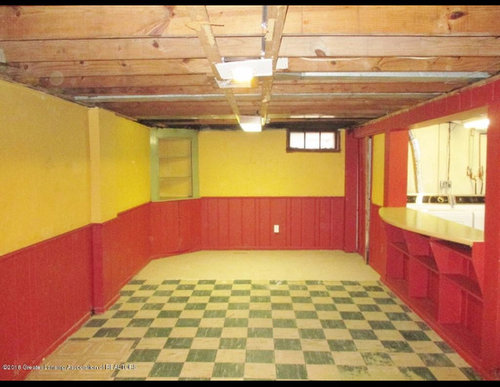
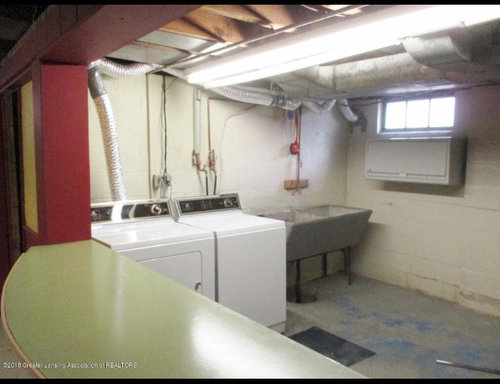
We just purchased our first home and would like to finish the basement. It already has some plumbing, as there is a washer/dryer and sink on one side. There are also lights and a couple outlets. I’m not sure where to start with the rest. Walls concrete with wood on the bottom and tons of wood built ins and storage closets. Floor is concrete.


Ideas? We’d like to add a half bath eventually on Side with the washer and dryer. That area extends further than you can see from the photo I have.

Otherwise we just like something simple we can use as a family room or Play area


Comments (14)

  • 7 years ago

    Is that paint or actual tiles on the concrete floor? Paint and a ceiling and carpet would turn it into a nice area for TV, games, study hall or fun. Is plumbing in place for the bathroom? That might be the tricky part, since you'll be dealing with local regulations.

  • 7 years ago

    Congratulations on your first house. The first step is to review your house inspection to see if anything stlll needs fixing, such as cleaning or replacing the exhaust ductwork for the dryer, and making sure the basement windows open for egress in case of fire. Second, write down your budget for this phase. Third, find the local regulations for bringing things such as electrical wiring and plumbing up to current code if you do any renovations (this varies a lot by location). Test for lead paint and asbestos before starting to sand painted walls or remove the flooring.


    A suspended ceiling can be installed by handy homeowners. You may need a couple coats of primer to cover the bright paint. Pick a new color palette once you decide on furniture. Check with local flooring shops to see what kind of flooring you can use in basements in your area. This is a good article on getting started: https://www.houzz.com/magazine/contractor-tips-finish-your-basement-the-right-way-stsetivw-vs~2612046


    Loft-Like Basement Renovation · More Info


  • 7 years ago

    Thanks for bringing that to my attention! Inspection is Friday. Is that type of flooring something that can simply be covered over or will it need to come out?

  • 7 years ago
    last modified: 7 years ago

    Congrats on the new house! Finishing the basement was one of the first things we did when we moved into our new home two years ago and it was the best decison. We put drywall over the existing wood paneling, covered the asbestos tile with a Berber carpet, and put in recessed lighting. It’s now a great playroom and extra TV room. Here is my take on next steps: fix the exhaust for the dryer. Then, consider all the plumbing, electrical work, and other HVAC work That may Need be done to make the space useable AND that should be fixed/replaced while you have open ceiling access. All that should be done first, before fun stuff like paint colors and flooring. I also strongly recommend that you only Finish the part of the basement that is painted and partialled framed out already (as far as I can tell from the picture.) Having your laundry and other mechanicals in a finished space makes no sense IMO. Stuff leaks, breaks, etc, and in my home plumbing and electrical for most of the first floor is concentrated in the ceiling back in the unfinished part of the basement so it pays to keep it open to access that stuff in the future. And yes, that stuff will need to be accessed at some point :)

  • 7 years ago
    last modified: 7 years ago

    You’re getting excellent advice above. I’ll just add my two cents..covering the tile is the safest way to eliminate asbesto. First cover it with floor leveler or some sort of permanent heavy sealer and then the flooring you choose.

    Second, after you do the guts of the Reno as has been suggested, checking electrical, plumbing etc. I would prime over all of those bright colors as it has to be done any ways and this will give you a clean light palette to choose your color scheme.

    Oh, and when doing your ceiling, you may want to consider pot lights as they are very functional and give the ceiling height.


    To keep track of the advice here, you may want to make a list of each of the suggestions and then repost the ones you are going with and ask more questions as needed, like what order to do certain things etc..

    congrats on you first home. The folks here will be of great help to you!

  • 7 years ago

    Also agree with Sandra’s comment about covering up the tile-- it is safe to stay covered up, when you start ripping it out and getting asbestos in the air that is when the problem starts.

  • 7 years ago

    This may not be a consideration at all where you are located, but making very, very, sure that the basement does not leak in any way would be a safe step. We are on top of a hill; it took a year until we realized that even on top of a hill, we are on rock and while the walls of our basement don't leak, when the whole water table rises...Its like a lake just rises up out of the floor. We now have a sump. And neighbors have a half finished basement, and a sump on the other side. So it can work. Good luck!

  • 7 years ago

    Our contractor sealed our tile with a cement leveler that was just like cement. Our tile will never see the light of day again. We did not test for asbestos, we just made the assump because of the age of the house. The rest of our house was tested, and was asbestos free thank goodness, but we will always disclose everything we did as we know what it’s like to find surprises after the sale..so slow be aware.

  • 7 years ago

    Almost certainly asbestos tile--Armstrong, 1950s-1960s.

    Frame and Insulate the walls properly to prevent mould growth. Which doesn't mean fibreglass batts against the walls following by framing and drywall.

  • 7 years ago

    Perhaps, since you haven't closed yet, you could negotiate having the asbestos tile removed?

  • 7 years ago
    last modified: 7 years ago

    Personally, if you haven't closed, I would ask for some kind of credit rather than asking the sellers to remove the asbestos tiles. If you ask them to deal with the tiles, they might remove the tile in the cheapest and fastest way possible, which would not be in your best interest. It could create much bigger problems (removing the tile improperly and without precautions could mean asbestos dust throughout the house). Honestly, I would rather deal with the floors myself, because then I would know they were handled properly with work done by contractors I choose. From what I have learned about asbestos, I would lean toward covering them up (as suggested above), rather than ripping out. Sometimes the tiles are very easy to remove, though (sometimes they are practically just floating, and they can be safely removed without any breaking/chipping/sanding). The cement leveler followed by floating floor or carpet would be ideal IMO. Great advice to tackle the not-so-fun stuff first, get everything where it needs to be while everything is accessible. Definitely replace the dryer vent. Getting those not-so-fun but necessary tasks first will also keep you motivated by giving you fun things to look forward to (once all the other stuff is done), like new flooring, paint and finishes. Congrats on your new home!

    Lauren Davis thanked CLC
  • 7 years ago

    If the tile measures 9" x9" it's almost certain to contain asbestos. Asbestos wasn't just in tile, it was also used in the black mastic used to adhere the tiles to the cement.


    You could ask for a credit, but I wouldn't think that's reasonable. Lots of building materials used in buildings of a certain vintage may have asbestos containing materials including plaster, popcorn ceiling finishes, drywall compounds, caulks, adhesives, fireproofing materials, and HVAC duct sealants. Where do you draw the line for a credit? All homes built before 1978 most likely are full of lead paint. Do you ask for a lead abatement credit as well?


    It never hurts to ask, I'm just trying to put things into perspective.


    If the tiles are firmly adhered, as others have said, leave them be. Asbestos is only an issue if it's friable, becomes airborne and is inhaled.


    Lauren Davis thanked missenigma
  • 7 years ago
    last modified: 7 years ago

    Regarding the bathroom . . . . it will be expensive. Based on your laundry sink, I'm guessing that you wouldn't need an ejector pump to pump waste to the sewer or septic.

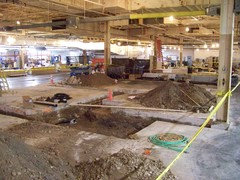
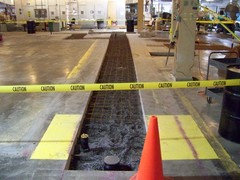
    However, you would need to trench into the floor (and here is where disturbing asbestos could cause headaches) to connect to the existing sewer lateral. These pictures are from an industrial project I managed a few years back. These trenches are on a much grander scale than anything you would need - it's just to give you an idea of what I'm talking about.

    Here's the initial sewer pipe being laid . . .


    Trench ready to be filled in with concrete . . .


    Lauren Davis thanked missenigma