Software
Houzz Logo Print
robinbohbot

Need Vent Advice - Ceiling mount recessed vent... pros and cons?

7 years ago

We are considering using a ceiling mount recessed kitchen vent (something similar to https://zephyronline.com/product/lux-island-range-hood/). We'll be using it over a 30" induction cook top. Has anyone ever used something similar to this? Any recommendation as far as which brand to use? Pros and cons? I don't like the look of the hood vents.

Comments (25)

  • 7 years ago

    I think it would be fantastic if you don't ever cook on your cooktop. There is a reason most hoods are located where they are. Functionality must reign in a kitchen, unless you don't cook. ever.

  • PRO
    7 years ago

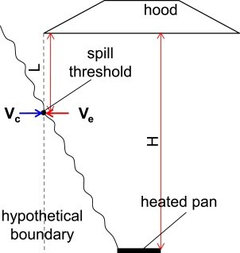
    It’s not a useful concept if you cook. Cooking vapors spread out as they rise. A ceiling mounted vent would need to be much larger than that n order to be marginally effective.


    robinbohbot thanked User
  • 7 years ago

    There is also the cleaning issue. Every hood needs to have its filters cleaned - mesh filters more often than baffle filters. To clean a ceiling-mount recessed hood filter, you will have to climb a ladder, take out the filter, and when cleaned, climb back up the ladder to put it back. I recall someone on this forum saying they procrastinated doing this (understandably), and the filter got so clogged with grease after a time, it started dripping grease globules onto the cooktop, and onto the cook’s head.

    robinbohbot thanked M Miller
  • 7 years ago

    Please search this forum on this topic. The idea of such hoods obviously hasn't yet been totally beaten to death since you asked, but their efficacy depends on a very wide capture area and a very high flow blower. Their cleaning convenience is inversely proportional to their height.

    Such hoods over wall oven stacks may provide some benefit, but unless similarly large and powerful, won't handle any broiling effluent spilled by opening the oven door.

    Such schemes as are used tend to perform at the limit of using the whole ceiling. Instead of baffles, other techniques such as UV are used to keep grease from coating the ducts.

    http://www.kitchen-ventilation.co.uk/heydal


    robinbohbot thanked kaseki
  • 4 years ago

    @robinbohbot - Did you end up going choosing a recessed ceiling vent over your 30" induction cooktop? I'm curious about your experience and outcome. Thanks

  • 4 years ago

    @dananaya no we ended up moving the cooktop to a wall and using a regular down vent. Sorry I can't help you!

  • 4 years ago

    @robinbohbot I appreciate your prompt response. Nice that you found an alternative route. I'm working around obstructing a window with a standard vent. Are you happy with your induction cooktop?


  • 4 years ago

    @dananaya Yes we're very happy with the induction cooktop. It always looks new and clean (which my old gas cooktop never did after the first use lol). Have you considered a pop up hood or just skipping the hood? We so rarely use ours and we have a few friends who just don't have one. Though it might be a problem for resell, I'm not sure. Beautiful kitchen and view you have!

  • 4 years ago

    @robinbohbot Thank you for the compliments - we've been designing the house for toooo long and look forward to beginning the build. :)


    What brand/model induction stove did you choose? I'm looking forward to cooking on induction (we have gas now). We did consider a pop-up vent, but it pushes the counter depth too far into the kitchen for acceptable space tolerances into the adjacent room. I only use our current hood to vent out the gas (I'm sensitive to it), as we don't cook meat. After reading @kaseki's heady data-driven posts about capturing all the effluent plume and particulate it would seem sacrilegious to go completely without ventilation. :) I suspect the recessed vent will work just fine. I mean, after all, with a window that near the stove I will be cleaning that after every use, so there's some give and take when it comes to form and function and keeping the views open.

  • 4 years ago
    last modified: 4 years ago

    No vent at all achieves a more unusual trade-off solution within: Performance, aesthetics, affordability, pick two. Perfect aesthetics and affordability at the complete sacrifice of performance. Also MUA becomes unnecessary.

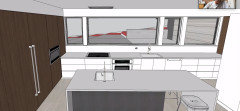
    The best way to keep a window view is bite the bullet and get a commercial-sized aperture hood, if the ceiling height will accommodate it. You can set the hood base at 7 ft above the floor. It should not interfere with sight lines at that height unless double height windows are used to view the sky. Someone on this forum reported avoiding the greasy window problem by setting the range out from the window by enough that the rising and expanding effluent plumes were entrained into the hood aperture without interacting with the windows. Obviously this solution requires a large enough kitchen in plan and elevation that increased counter depth and higher hood are practicable, and suggests that ventilation planning best occur before the house architecture is firm.

  • 4 years ago

    we had a ceiling vent for about 4 years. I could tell it worked a little because there was oily residue in the filter, but it was barely effective. we never deep fry, but we do saute on a regular basis. I would find greasy film on stuff that was pretty far away, like the floor on the opposite side of our peninsula (our barstools would slide around like crazy after "stir fry" days). when searing meats, we'd have to open windows and flap a towel at the smoke detector.

  • 4 years ago

    Well, I’m late to the discussion, but we have had an induction cooktop for 11 years and had a ceiling-mounted recessed vent put in at the same time. It operates with the flick of a switch on an under cabinet wall next to the cooktop and vents to the outside. We love it because it’s not obtrusive. (I hate the massive presence of traditional hoods.)

    Having said that, we now realize that our contractor cheated us. I now know that the vent should have been much, much larger than what he put in and the one he put in is extremely noisy. I now realize that he put in the cheapest fan possible and pocketed the difference, so I’m looking for a bigger, quieter ceiling-mounted recessed fan.

    If you haven’t already made your decision, I would say go for it. Induction cooktops are the future and so are ceiling-mounted recessed vents.

  • 3 years ago

    @dananaya did you decide to go with the ceiling mounted vent, if so which one? We are in a similar boat with a window wall were trying to avoid obstructing and are leaning towards the ceiling vent over the downdraft

  • 3 years ago

    @shoemacl we haven’t built yet. Be sure to check code in your area, our builder was concerned that mounting in a higher ceiling would pose a problem for passing inspection. If you can make your countertop wider, I’d go with a vent that raises up behind the cooktop. Sorry I can’t offer more feedback about the ceiling mount specifically.

  • 3 years ago

    building inspector here, there is nothing in the IRC residential code that states hood range has to be a certain height. IRC regulates CFMs, Ducting, and make up air. But they can force you do adhere to manufactures recommendations. Some recessed range hoods have a manufacture recommended maximum height, Should you follow them, you should not have a problem passing inspection.

  • 3 years ago

    Cindy, did you go with a ceiling vent? Everything I've seen here says how ineffective they are.

  • 3 years ago

    From the glass half full/glass half empty point of view, it might be better to think of the ceiling vents as partially effective, likely to capture/miss capturing a significant part of the rising cooking plumes. It may over time capture some portion of the odor/grease particulates that it initially misses by removal of room air. This is not the preferred approach to good plume capture and containment, but is better than no ventilation, and I expect better than pop-up and downdraft schemes for any energetic cooking.

    Every effort should be made at establishing a configuration that uses an effective canopy hood.

  • 3 years ago

    Thanks, HU. I think I agree with you.


    And thanks, Kaseki, I agree as well. I'm so glad I came here.


    I'm annoyed with the contractor for not knowing or caring about any of this. Just designers so far, and suddenly a schedule, and I'm supposed to have a conventional hood available right away, but I can't because it will take Modern-Aire six weeks to produce it.


    Now we have to change the lights, because I don't think pendants will look good in the small space we have available right next to a chimney, though I'm, wondering if PS-18 wouldn't have less of a profile than PMI-16.


    http://modernaire.com/island-hoods/


    I just can't figure out if anyone is going to advise on MUA. I fear not.


    Downdraft was never going to be an option.

  • 3 years ago

    Fantech sells an MUA system; and might provide some advice along with it.

  • 3 years ago
    last modified: 3 years ago

    ^^Spamola

    Edited to add: I was not talking about @kaseki's Fantech. The spam comment I was pointing to has been removed by Houzz moderators.

  • 3 years ago
    last modified: 3 years ago

    Also potentially Accurex. See https://bamasotan.us/range-exhaust-hood-faq/.

    Comment mistaking target of "spamola" comment removed.

  • 3 years ago
    last modified: 3 years ago

    My apology. I retract my comment. It would be helpful if Houzz left some indication that a comment had been removed. Since there is nothing for my comment to reference, I have removed it.

  • 3 years ago

    I have a ceiling mount hood Victory Sunset that works very well. I am very happy with my decision to put the hood in the ceiling. Now I have an open view and no smoke in the kitchen.

  • 3 years ago

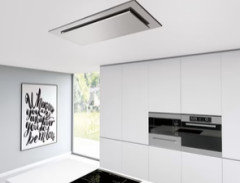
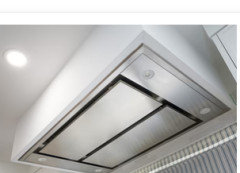
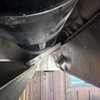
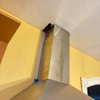
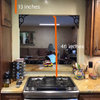
    How about grease on the ceiling? In the first image below from Victory's website, the size of the single device is smaller than the plume size at the ceiling. Even though the slots can pull from across the ceiling, impinging plume effluent will deposit moisture and grease. In the second image, the larger area and lower height will be more effective, but a more conventional hood will be better for the same area, else commercial kitchens would use a different design.

    Also, note that the higher the aperture, the more the plume can be deviated by relatively mild drafts, and the greater the plume disruption due to people moving about.

    Obviously, the trades among affordability, performance, and aesthetics are up to the home owner, and to each his own. As one who weights performance within the limitations of the architecture most highly, my choice would be different.