Software
Houzz Logo Print
amy_wickett

need a good fertilizer for peppers and root veggies! help!

7 years ago

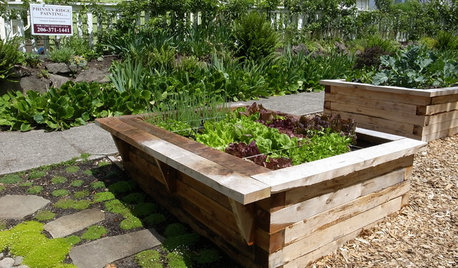
Will be growing the peppers in raised beds and/or containers. From what the research I've done tells me, you should use a fertilizer that has a ratio of 5-10-10 for peppers. Most of the fertilizers I've found are very high in nitrogen, which is what I DO NOT WANT because I'm growing peppers, and you're supposed to avoid fertilizers high in nitrogen. I have found 5-10-10 fertilizers, but most of them aren't slow release fertilizers, that feed continuously, which is what I'm looking for.


Two questions


1.For the raised beds, do I need to use a fertilizer that releases slowly and continuously (i.e. osmocote). If so how many cups of the slow-release fertilizer should I use for a 4' x 8' bed?


2.Again this is regarding raised beds. Most raised beds mixes I've found call for compost. Compost does feed the plants, but do I need to add fertilizer in addition to it (directly mixed into the raised bed soil mix). I know compost feeds the plants, but the NPK content of it seems to be small.


Comments (13)

  • 7 years ago

    1. No. In fact, you'll have more control using non-time released ferts.

    2. Compost feeds the soil and its micro herd not necessarily the plants so you'll still need ferts.


    tj

  • 7 years ago
    last modified: 7 years ago

    That's correct. Compost is not a fertilizer, or at least a poor one. Not only does it have rather little in nutrients, but those nutrients are released over a long time scale. A real fertilizer is a NOW nutrient. Now, compost is good for plants because it improves soil structure. But somehow "improvement" is often interpreted as meaning "nutrient". Compost is a SORTA_EVENTUALLY nutrient. Go figure.

  • 7 years ago
    last modified: 7 years ago

    One thing to keep in mind about compost, is that although the NPK of it is pretty tiny, we do always use a lot of the stuff. But it still takes time for those nutrients to appear. Now, if your season is short, compost may end up supplying a lot of the necessary nutrients. But compost applied at the beginning of a nine month season won't suffice in the long run. I've seen it happen. For me, with hot summers, which accelerate decomposition, it's pretty much gone by August.

    I guess you can define fertilizer in many ways. Shovels are really good for growing plants, so they must be fertilizer, right? But yes, they aren't nutrients. People like to claim that eggshells are wonderful fertilizer for plants, because they supply calcium. Yep, they contain a load of calcium. But they don't supply it to plants for a long long time. They are eventual nutrients, not right now nutrients. Hey, we could get all our necessary minerals by just swallowing rocks, right? Eventual nutrients. That's true that most organic fertilizers are eventual nutrients, which does make nutrient management a little tricky. If you have a problem, you may not be able to fix it very fast.

    That's correct about 3-1-2, and also correct that you shouldn't get too particular about NPK mixes for peppers. Give them some N, P, and K, and they'll do fine.

  • 7 years ago

    Amend your soil heavily with compost and other organic material on at least an annual basis. If you need additional fertilizer, quit over thinking it. A handful of a simple organic low and slow fertilizer like Espoma Plant Tone will do just fine.

  • 7 years ago

    Almost any granular fertilizer will work, follow instructions on package. Just stay away from liquids or water soluble stuff.

  • 7 years ago

    There is nothing wrong with liquids or water soluble ferts. They work in exactly the same manner as granular ferts. And they are easy to apply. However most tend to use them as a foliar spray when they would be of most benefit applied directly to the soil at the root zone = fertigation.

  • 7 years ago
    last modified: 7 years ago

    Bell peppers aren't any more difficult to grow than smaller chilies. the difference is, Bells have different requirement: SPACE.

    while you can grow Bells in a 5 gal. container, I would not plant them in anything less than a 10 gallon pot. BIG fruit = BIGGER container. yield and size would not be worth growing Bells in a 5 gal. pot. Bell plants need to get fairly huge to produce large peppers and to continue producing. a 5 gal pot can only hold so much water, nutrients, soil and is difficult to sustain a bell pepper plant over a long period of time to be productive.

    you should be using a fertilizer that is formulated for fruiting plants.. they're generally much lower in nitrogen and higher in phosphorus/potassium, which is what they need.

    water less. peppers don't need a lot of water. they like fairly dry soil.

    be consistent. growing in containers successfully require you to be consistent (watering/feeding/etc)..

    lay off any mixes (5-1-1, etc)... all they do is complicate more than they help, especially if you're new to gardening. all you need is lots of compost (preferable compost made from food scraps) and a balanced fruiting fertilizer.

  • 7 years ago
    last modified: 7 years ago

    "lay off any mixes (5-1-1, etc)... all they do is complicate more than they help, especially if you're new to gardening"

    I'm sorry but if one is growing in containers, this couldn't be further from the truth.

    And at the risk of beating a dead horse, you do not need a fertilizer formulated for "fruiting" plants. All flowering plants 'fruit' in some form or another....it's called setting seed!! And they do it quite well without the benefit of a high P fert.

    ETA: a "balanced" fertilizer is one with the NPK carryng the same numbers - eg. 5-5-5 or 10-10-10. Not sure what a "balanced fruiting fertilizer" might be :-)

  • 7 years ago

    I think the argument against water soluble fertilizers was that the OP wanted slow release. Water soluble fertilizers get leached out fast.

  • 7 years ago
    last modified: 7 years ago

    > I'm sorry but if one is growing in containers, this couldn't be further from the truth.

    I have been growing peppers for over 10 years, including in containers and never used any "special" mixes for peppers.. what did people use decades ago before someone decided to try reinventing the wheel? surely container gardening isn't new. just don't over water or let your pots sit in pouring rain..

    also, 5-1-1 mixes (or any peat based media for that matter) do not work well with organic fertilizer at all. just something the OP should be aware of if using them in the future..

    >ETA: a "balanced" fertilizer is one with the NPK carryng the same numbers - eg. 5-5-5 or 10-10-10. Not sure what a "balanced fruiting fertilizer" might be :-)

    by "balanced" i mean the ratios between N and PK.. i did not mean balanced as in equal.. peppers need VERY little nitrogen.

  • 7 years ago

    "" I think the argument against water soluble fertilizers was that the OP wanted slow release. Water soluble fertilizers get leached out fast. ""


    Yes.

  • 7 years ago
    last modified: 7 years ago

    Well, there is difference in N,P,K uptake. Plants get too much of N as it is readily availabe. But for example they cannot uptake too much P.

    In addition to NPK, there are also trace elements that can make big differene, like Mg, Ca, S , Fe.

    Pepper plant might get more benefit from Mg, S than say tomato.

    A soil test can reveal why one gets good harvest of bell peppers, while others do not get so lucky .