Software
Houzz Logo Print
cniss20

Circuit Breaker Keeps Blowing. Why??

7 years ago

Hello,

We have a new build and one circuit just keeps blowing (breaking?). The circuit is only for the ceiling lights in a couple of rooms. So it doesn't happen when any appliance or anything is plugged in. It happens randomly. Sometimes it happens several times a day. Sometimes it happens once every couple of days. The circuit breaker was already replaced once and it didn't help. Why does this keep happening??


All advice welcome! Thank you!

Comments (37)

  • PRO
    7 years ago

    Might be wiring heating up? Might be voltage surge in your area? Hard to say for sure. If a new breaker box was installed, I would really be concerned. Could be a fire hazard of some type with a "wiring" problem. More inspections/investigating is in order by a licensed electrician. In a new build, if the sub that installed the lighting/wiring was being pushed to finish, work might have gotten sloppy and might have created short somewhere. Just going to be hard to track down. A good electrician has tools that can help diagnose where the problem is, so find someone good, or make your builder find someone better than whomever installed the original work.

  • PRO
    7 years ago

    Another problem might be that when the sheetrock went in, a worker nicked a wire and you are getting some type of short happening. Going to be a challenge to find that! But not impossible. Might have to rerun that one circuit.

  • 7 years ago

    Speculating about what is causing a circuit overload is pointless. Leave the breaker off and get the electrician back to fix it before it causes a fire.

  • 7 years ago

    A new build likely has arc fault breakers in place on most circuits. You could actually have something arcing (could be something as benign as a defective switch or it could be some guy put a nail through one of the cables and the AFCI is doing exactly what it was intended to do).

  • 7 years ago

    Whatever the cause, it foolish to keep resetting a tripped breaker.

  • 7 years ago

    I agree, especially after the replacement indicates it's surely not the breaker (it rarely is). In fact, if it was the builder who just replaced the breaker thinking that would help SHAME ON HIS NEGLIGENT SOUL. Get an electrician with a clue in there before someone gets hurt or the place burns.


  • PRO
    7 years ago

    Does the circuit fail when the lights in one or both rooms are on? Off?


    Good advice above: get an experienced electrician out ASAP!

  • 7 years ago
    last modified: 7 years ago

    Thanks everyone! We're definitely getting an electrician in there but I was curious about what could cause this. I like to be aware of all the horrible possibilities lol.


    Virgil - it happens completely randomly. Sometimes when one light is on, sometimes both. Sometimes with no lights on (which is the most concerning).

  • PRO
    7 years ago

    Get the electrician out, ASAP!

  • PRO
    7 years ago

    Could be any of those or possibly a 3 way switch leg with a problem, bad dimmer or switch. The builder should have sent the electrician.

  • 7 years ago

    Make sure the wire is tight in the breaker. I usually go back after a while and retighten all wires in a breaker after wiring it up

  • 7 years ago

    Did I miss something? Did the OP wire the house?

    I hope the OP has stopped reading and called an electrician.

  • 7 years ago
    last modified: 7 years ago

    RES this is the OP and I definitely did not wire the house. I'm just a layperson. This is new build by a contractor and he sent the electrician out once (the electrician is the one who replaced the breaker). It still continued to trip so the contractor suggested we switch to the old style breakers which don't trip as much. I flat out refused because my gut told me this is a bad idea. Everyones posts are only confirming that and we're going to have the electrician come back soon.

  • 7 years ago

    For those who know, are Arc Fault breakers now the code for lighting circuits?

  • 7 years ago
    last modified: 7 years ago

    In the US, unless amended for your jurisdiction, the NEC requires them for lighting except in non-habitable spaces like attics, basements and garages.

    I have read that some things that can cause repeated breaker tripping are reversing of neutral and ground wires, shared neutral wiring on single-pole circuits, and ground wires touching neutral wires.

  • 7 years ago

    Yes, in the few code versions before that they were only requirement in 15 and 20 120V amp circuits serving outlets (which counts both receptacles, lighting, and anything else) in BEDROOMS. As RES says, the 2014 code and later requires them in just about any living area other than bathrooms. Now that dual function AFCI/GFCIs are hitting the market (in fact, the type BF DF device seems now to be going for the same prices as the GFCI only device and the latter is getting harder to find), expect the bathroom exemption to go away.

    Not that this requirement is different from the GFCI rules that only require RECEPTACLES to be protected. The AFCI rule requires circuits that support any outlet or device to be covered.

  • PRO
    7 years ago

    cniss20


    The circuit should work per code unless there is a flaw that needs to be repaired. Stick to your guns.


    Changes you make that are outside code become your liability when you sell.


    It is costly to stay on top of electrical code, but it is not optional for contractors & electricians.


  • 7 years ago

    Once you learn the code, it's not all that hard to stay up on it. There's lots of people who write up instructional information on the changes. If you purchase the "handbook" version which I do every three years, then you also have the nice highlighted (and often some explanatory text) indication of the changes.

    I've never run into a GC who had much of a clue as to the code. There have been alas a few electricians and even some architect's engineers who are woefully deficient. I submitted about a page and a half of items on the plans for my house that were blatant code violations and some rather harsh words for the engineer who designed it. Fortunately, even with the plans as they were, I doubt that most of these would have escaped a working electrician's scrutiny. It's his license and livelihood that gets screwed when there are code violations.

  • 7 years ago

    Arcing - that’s probably your house’s circuit break saving you from death (or potential death) with arc fault protection. So glad they’ve moved to standard with that except for jurisdictions that are still on the pre-2015 IBC for core enforcement. Off the top of my head some counties in Illinois and Indiana don’t require them because they’re using the 2012 IBC, but it is essentially standard code minimum otherwise.


    Definitely bring out the electrician and accept no tripping of the breaker as normal. For just ceiling lights in a few rooms that aren’t above the capacity for that circuit in terms of draw?

  • 7 years ago

    You mean the NEC. The IBC doesn't give a hoot about AFCIs or anything much electrical except for things like emergency exit lighting.

  • 7 years ago
    last modified: 7 years ago

    Its the IRC not the IBC that applies to single-family dwellings. Chapters 34 thru 43 of the 2015 IRC is provided by the NFPA and taken from the 2014 NEC. These chapters are often amended to substitute a state's electrical code which is usually the latest version of the NEC.

    It is the intent of the current IRC to contain all a builder needs to know to build a house and therefore the book has gotten larger than the IBC.

    The IBC has a chapter on Emergency and Stand-by Power and references NFPA 70 (the NEC) for other electrical regulations.

  • 7 years ago

    Our overhead kitchen lights in our last house (McMansion circa 2005) would sometimes stop working. I replaced all the switches and checked the wiring in the switch boxes, but the problem persisted. Then I thought about an odd junction box that was hidden (!) behind ceiling drywall (odd local code requirement) in the unfinished basement.

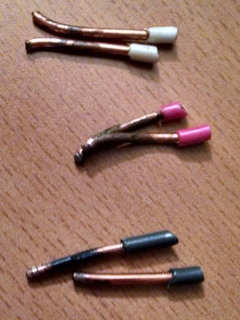
    The box looked to be something that fixed an error on the part of the original electrician in wiring a 3-way switch for the kitchen lights. In connecting the wires, he didn't twist his connections, but rather just relied on wire nuts to make the connection. That was another mistake—it arced and charred.

    If the house were a few years newer, the breaker would have been an AFCI, and likely would have tripped repeatedly. Something like this could be your problem as well.

    Here's the burnt ends I removed—


    cniss20 thanked Joe T.
  • 7 years ago

    Yes, the answer I gave was oversimplified by my spouse - the code years adopted by each municipality for plan I’ve and inspection are corollary, and my spouse only deals with the civil/structural side. You’re correct that the NEC is the applicable electrical code, but you’re not getting a county who uses an old IBC or IRC but a newer iteration of the NEC, generally speaking. Good point of clarification, though :)


    We don’t do residential except on our own dwelling, but you’re correct Res, about the IRC having the callouts. His explanation to me glossed over that and I didn’t ask clarification!

  • 7 years ago

    Understand Joe T that TWISTING is neither required nor does it much help. Twisting is not the airtight connection required to avoid heating and arcing. That's why the wire nut is there (it's not just there to insulate the bare ends, the threads on the wire bite into the wire to make the actual guaranteed connection).

    And yes RES if you meant to reference the IRC, you should have freaking said the IRC, but you said the IBC. But my comments are still correct, the IRC doesn't discuss ARC FAULTS other than the implicit reference that the code is based on the 2014 NEC.

  • 7 years ago

    "TWISTING is neither required nor does it much help."

    I agree with the first part of that sentence, but not the second half. Wire nuts alone were obviously insufficient in the photo I posted. And this wasn't the first time I've seen this.

    I always twist my connections before securing with a wire nut. Then again, I'm a displaced Chicagoan, so I'm used to over-doing when it comes to electrical. ;)

  • 7 years ago

    The wire nuts were obviously not used properly if they allowed those arc burns. Properly installed wirenuts are all that's necessary. People can half-a$$ anything and it doesn't mean that the materials are the fault.

    Pre-twisting is just like wearing a belt and suspenders.

  • 7 years ago

    "... like wearing a belt and suspenders."

    That's the dress code in my house. ;)

  • 7 years ago

    Twisting helps keep the wires aligned while the nuts go on, but they do NOTHING for assuring a functioning connection. At best, they give you a false sense of security. If you've ever seen a melted connection from twisted wires, you'd know.


  • 7 years ago

    So, if the electrician whose work I posted above had twisted his wires prior to the wire nuts, do you think his connection still would have failed?

  • 7 years ago

    If the electrician had half-heartedly twisted the wires and then half-heartedly placed wirenuts on the connection, then the connection would have failed.

    If he had put any effort into doing the connection properly, then it would have worked whether he pre-twisted or not.


    The problem is his competence. Not his methodology.


  • 7 years ago
    last modified: 7 years ago

    Twist, solder and tape preceded the invention and use of wirenuts. When I see two wires loosely connected by wire nuts, I know an amateur has been at work. Much like backwiring receptacles. (At least, in our jurisdiction.)

    Ah, for the good old days when a penny could solve so many problems!

    (ps. not a recommendation)

    As a builder, I've been given the brushoff by electrical contractors from time to time. Until I call in the hydro inspectors, who will immediately cut-off the contractor's future applications if he doesn't fix the problem pronto.

  • 7 years ago
    last modified: 7 years ago

    I am coming from a layman's perspective. When we were replacing a few breakers in our detached garage apartment during the purchase of our home, our electrician brought a couple of old breakers to our attention. As a point of information, he said that originally the arcfault type breakers were overly sensitive and tended to cause issues. After a couple of years, the manufacturers had started to produce a much better product.

    Turn off the circuit at the breaker and get the electrician out asap. If he gives you a song and dance about a second breaker going bad, get another electrician out. I wouldn't sleep in the house with a live circuit under these circumstances.

  • 7 years ago

    Solder (when done properly) can do a gas-tight collection as well. Again, it's not the twisting that's doing anything there but holding the wires in close enough proximity for the solder to do its thing.

  • 7 years ago

    I remember when GFCI breakers were first required in houses in 1971. I overheard an electrician in an electrical supply house saying he had put them in his kitchen just before Christmas and they tripped so frequently he spent most of Christmas day putting the old ones back.

  • 7 years ago

    "Solder (when done properly) can do a gas-tight collection as well."

    I doubt the OP has solder + asphalt tape in a new house, but if he did, I doubt he'd have the problems he's having now. But man, I'd hate to go back to doing that stuff.

  • 7 years ago

    remember when GFCI breakers were first required in houses in 1971.

    That was before my time in the industry, but I was certainly around for the introduction of AFCI. The first half of my house was built in the "bedrooms only" era and the original (GE) AFCI breakers I had were prone to nuisance trips. I bought a couple of more later GE breakers and replaced two of them and the nuisance tripping went away, so there was definitely some early issues.

    I suspect by now things have pretty much settled down for most maufacturers. I've not had either the GE or the Type BRs (now on the other side of the house on almost all the circuits) false trip.