Software
Houzz Logo Print
sophr77

New Monstera problems :-(

7 years ago

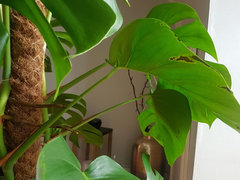
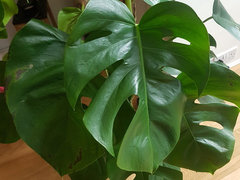
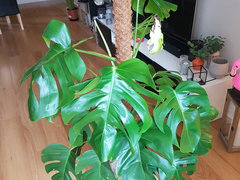
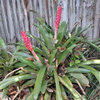
I bought this Monstera online a few weeks ago & I'm worried it's dying. New leaves have brown spots and so do most of the leaves, including yellow halos.
There are white spots under a few of the lower leaves - I think that could have been from me misting it when I first got it? I fed the plant with some fertiliser about a week ago & have left it since. The pot has drain holes & is sitting in a tray. It was in a fairly dark area of the room but I have just moved it to take the picture.
Should I repot it? The soil doesn't feel wet but I suppose I don't know what is going on down the bottom.
Please help! I love my plants but always manage to kill them :-(
Thank you in advance!!!

Comments (17)

  • 7 years ago

    Take a picture and show us the condition of the monstera

  • 7 years ago

    Sounds like too dry or too wet. They are not plants for dark areas . For there you should stick to Pothos,Dwarf Schefflera,Spathiphyllum or Syngoniums.

  • 7 years ago

    Thank you!


    I took the plant out of its pot & gently broke all the soil up & repotted. It was pretty compact but not too wet. Hoping the roots are more able to breathe.


    Am I supposed to water it from the top or bottom?


    I've tried to add photos so many times but for some reason I can't! I'll try again...


  • 7 years ago

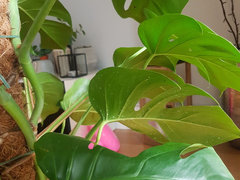
    Oh it's worked! Here are some more...

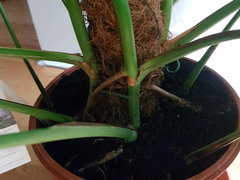
    This shows the white spots & also the some brown patches elsewhere. Most worried about the new leaves :-( and these look a bit droopy rather than

  • 7 years ago


  • 7 years ago


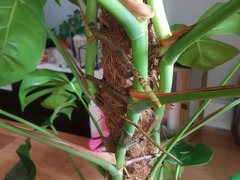
    I think I found some very faint white webbing at the base of the plant, almost like super fine cotton wool... does this mean I have a pest?

  • 7 years ago

    I have an update -


    I wiped all the leaves with alcohol, I checked the roots/soil in the pot & they were dry (but not completely) so it isn't holding too much water. t the soil was tightly packed, likely for transportation, so I loosened it up slightly.


    However, now the new leaves are completely black & the brown patches are getting larger on the older leaves. I do not see any nodes or signs of new leaves forming.


    The roots are also now exposed at the top of the soil.


    Should I repot? I have it some baby bio about a month ago, maybe longer, perhaps fertilization? It generally looks a bit sorry for itself & there is no shine to the leaves at all. Despite what the photo appears to show!


    I don't water it with tap water that I leave to sit for an hour or more, no more than once a week or 10 days but there is always some mould on the top layer of soil which I always wipe away. (Even if the soil is dry?)


    Any ideas please?


  • 7 years ago

    " Should I repot? I have it some baby bio about a month ago, maybe longer, perhaps fertilization?"

    Sophie, my advice is to not fertilize again; in fact, I think even that first dose you gave was detrimental. A plant in a dark spot doesn't need much fertilizer; and now that it's also stressed it needs none at all.

    The leaf damage also suggests improper watering, either before of after you acquired it, as the effects aren't seen right away.

    I believe the best thing you could do for it is give it bright indirect light and re-pot it, since there's also a suspicion of pests. Re-potting would also give you the opportunity to inspect the roots, and get a better idea of whether too much or too little water is the culprit.

  • 7 years ago

    Thank You! It sounds silly but when repotting, should I gently take away all the old soil & place it in a bigger pot with new soil? Or just plonk the whole thing into a bigger pot with additional soil?

  • 7 years ago

    I meant re-potting in all new soil, not potting in a bigger pot. The pot isn't shown in the pics you provided; however, unless the plant is root-bound, giving it a bigger pot may lead to even more problems, particularly if the soil is slow draining.

  • 7 years ago

    To add on, it sounds like the soil you’re using is too water retentive if you have mold growing on the surface, when repotting you should put in a fast draining mix. One that is highly regarded here is Al’s bark based 5-1-1 (search the forum for the recipe). If that sounds too daunting, many have success mixing equal parts Cactus and Succulent commercial mix and perlite. This will help the soil drain well and ensure the roots have access to air. Overly wet/soggy soils (think Miraclegro) suffocate the roots and promote rot.

  • 7 years ago

    The roots are showing at the top, if that's what you mean? I have wiped away all the mould...


  • 7 years ago

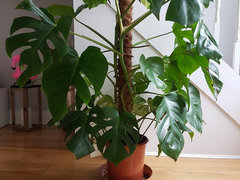
    Here is a full-size with pot

    It doesn't look too bad feom this picture but it really doesn't look healthy in real life.


    I will get the recommenrecommended mix from the garden centre tomorrow & repot asap! Do you think it needs a bigger pot?


    It's in the same one I received it in from Decorum around 2 months ago, also in mostly the same soil other than a bit of organic multipurpose soil I added (sounds like the wrong stuff!)


    Thank you everyone for your help. I really appreciate it! :-)

  • 7 years ago

    Sophie, root-bound means that the roots have reached and are pushing against the sides of the pot, and there's little to no soil left between them and the pot; you can assess that once you pull the plant out of the pot. Search for images of root-bound plants, to get a better idea.

  • 7 years ago

    AhAh, yes they are root bound.


    Off to buy a bigger pot & mix of the soil mentioned above. ThanThanks once

  • 7 years ago

    Hi, Sophie. You can consider your plant to be rootbound when the root/soil mass can be lifted from the pot intact. At the point in time where root congestion has progressed to that point, stress caused by root congestion is already taking a toll on growth rate, vitality (health), and likely appearance. A very large fraction of hobby growers do not realize that how you maintain the plant's root system is very often the deciding factor in how long a plant lives. Almost all houseplants are perennials (trees are perennials, too), capable of living very happily in a pot for periods measured in decades, rather than weeks/months/years. When you consider the life expectancy of most houseplants is much less than 5 years, and a bonsai can live in a small pot for centuries (longer than it could where it naturally occurs), and the reason for a bonsai's longevity is the artist's attention to the plant's root system, it adds a frame to the idea a healthy plant is only a dream unless the root system is happy/healthy.

    The grower's choice of media is likely the most significant consideration determining the facility with which a root system can be easily maintained in a high state of vitality. Few 'off-the-shelf' media make it easy on the grower. Whether most (hobby) growers realize it or not, they are constantly battling their choice of media for control over their plant's vitality. W/o a second thought, we know that can't be good. Water-retentive media rob roots of the oxygen roots need to function normally, which means poor media rob your plants of a considerable degree of potential.

    Nearly all growers run into a brick wall that stays their forward momentum insofar as increasing proficiency is concerned; and many growers that frequent these forums realize there are many benefits to be had by using a soil that doesn't make plant's pay a tax in the form of lost potential every time you water correctly - to beyond the point of saturation, so the soil is being flushed of accumulating salts from tapwater and fertilizer solutions when you water. A "good" soil also makes fertilizing efficaciously monkey easy - anyone can taught how to fertilize correctly within a 10 minute span if they're using a good soil. To me - "good" means you can water correctly without worrying your plants will be punished by long periods of soil saturation immediately subsequent to watering. When you say "Please help! I love my plants but always manage to kill them :-(" it makes me wonder if you're not up against the wall I mentioned above.

    I have no idea how interested you are in moving beyond that wall; if you are, this overview would be a good starting point.

    Now, there are very efficient ways to reduce the amount of excess water a medium can hold without changing the soil. They don't improve aeration beyond what removing excess water provides, but it can make a day/night difference in how well a planting fares in a medium that would normally be considered overly water-retentive. If you have thoughts/questions, I'll wait to hear them.

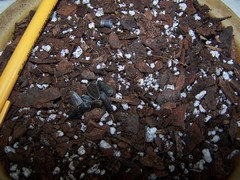
    One of the media I make/use:

    Objects are for size perspective.
    Al

Sponsored
Peabody Landscape Group
Average rating: 3.5 out of 5 stars8 Reviews
Columbus' Reliable Landscape Design & Contracting