Software
Houzz Logo Print
jcorn1

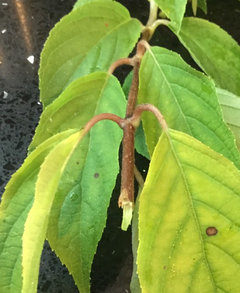
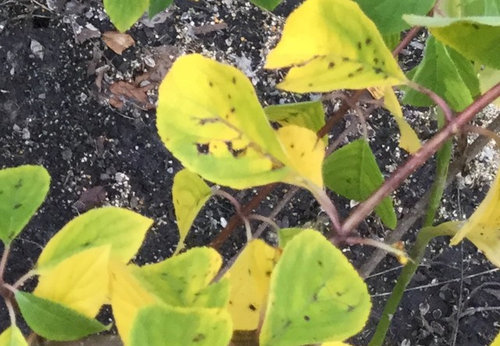
Help! This hydrangea was doing great only a few days ago!

7 years ago
last modified: 7 years ago
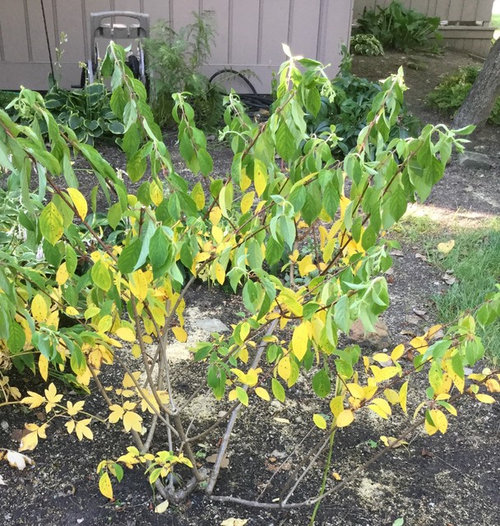
On the plus side, my Annabelle hydrangeas are dong wonderfully.

This poor plant, however, was doing well until a few days ago. Is it even a hydrangea? It was gifted to me last year, just before winter,, a freebie because it grew “too big“ for it's orevious owners garden. She thought it was a hydrangea, not sure.

When it came to me, it seemed dormant, no leaves but some green inside the bark so I planted it.

It survived a harsh winter and sprang to life. Only 2 things have changed lately:

1. It’s been extremely hot. The plant looked a wee bit droopy but I watered it well. It’s still droopy. We have soft water ( water softener) . The soft water doesn’t affect my other plants.

2. The garden bed was weeded and the weeder put down Preen.

I hired someone to weed. I love gardening but currently have a frozen shoulder. The person I hired put Preen on the ground after weeding. I never used it, It hasn't affected my Hostas, Toad lilies, ferns, etc.....so is it a coincidence that the Hydrangea turned yellow or could it be the Preen or...? Is it a disease?

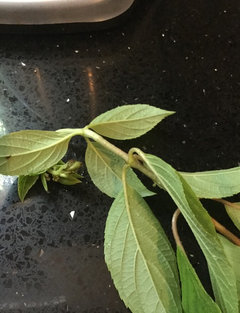
See photos.


.

Comments (20)

  • 7 years ago
    last modified: 7 years ago
    Hydrangeas normally only do not like pesticides used around them. It affects their foliage in many ways as the chemicals get transferred via the wind. Annabelle is also sensitive to not enough moisture when temperatures skyrocket so, make sure that you have increased the amount of water per watering up from whatever you used in the Spring. Lack of mulch allows the soil to loose moisture easily so, also try adding 2-4" of mulch year around up or beyond the drip line. Anna prefers morning sun only with shade in the afternoons and evenings. This paniculata should be the most sun tolerant but it needs water. Herbicides (or any other) with "Extended Control" may be particularly damaging to the leaves if they have the ingredients imazapyr or imazapic.

    J Corn thanked luis_pr
  • 7 years ago
    last modified: 7 years ago

    This isn't an Annabelle but I mentioned my Annabelle just to prove I don’t kill all my hydrangeas. I’m usually a decent gardener. So...with this particular hydrangea ...the one with yellow leaves...is it possible, even likely, it will survive? I can mulch but I can’t remove the Preen because too much has soaked in, and I’m afraid to water beyond what’s necessary because the Preen seems to be worsening things. I have raked and pushed back what Preen is still visible, as far as possible from my hydrangea One good rainfall would help, I think, because natural water ( rain) always helps my plants flourish better than hose water does..

    p.s. wondering what hydrangea this is and whether it needs to be pruned differently than my Annabelles...which seem to need minimal pruning and shaping. When my son was youn and trying to help me garden, he “surprised” me by severely trimming my Annabelles and they were fine the next year. I do trim off dead branches , dead flowers, etc,

  • 7 years ago

    Preen is a pre-emergent and will have no effect on any established plants. It only disrupts seed germination. And that bears no resemblance to any herbicide damage anyway. The plant's appearance and the application of the Preen is only coincidental.

    The droopy appearance is consistent with heat or water stress (too much or not enough). Only you can determine if water/poor drainage is a factor but it looks like it is in a pretty exposed location.....have you tried shading it during the heat of the day?

    J Corn thanked gardengal48 (PNW Z8/9)
  • 7 years ago

    It looks lke your plant is going through some pretty bad heat stress. Provide a very good watering immediately. It will need several gallons, so it’s easiest to water with a hose. Do not let the soil dry out.

    J Corn thanked guyground
  • 7 years ago
    last modified: 7 years ago

    It’s actually in my shade garde, or almost,on the outer edge , northwestern side of house, where it gets some full sun but only in early morning and never at noon or close to noon. Other plants that thrive there are trillium and dead nettle ( lamium):

  • 7 years ago
    last modified: 7 years ago

    Make sure that you have increased the amount of water per watering up from whatever you used in the Spring and add 2-4" of mulch year'round up to reduce soil moisture loss.

    To make sure you are watering when you need to, insert a finger into the soil to a depth of 4" in order to see if the soil feels dry, moist or wet. If it feels dry or almost dry then water it enough to get down to about 8" deep or so.

    J Corn thanked luis_pr
  • 7 years ago
    last modified: 7 years ago

    I’m feeling sad now because my husband said she used a weed killer in addition to Preen and I had no idea. I have a sinking feeling it may have killed the hydrangea, severely damaged or killed my hostas and maybe my bleeding hearts and coleus. i hope not. But nothing to be done about it now. Unless anyone has any suggestions.

  • 7 years ago
    last modified: 7 years ago

    They can be tough shrubs when the problem is not lack of water so monitor it and keep the TLC going. Same for the hostas. Even if a leafless plant that was affected does not leaf out before winter, I would wait until late Spring 2020 to confirm the status.

    J Corn thanked luis_pr
  • 7 years ago

    Check your soil moisture first as gardengal suggested. Either too wet or needs water and only you can determine that.


    Fire your landscape person if they don't know the difference between a garden plant and a weed or at least call them out to show them the damage they caused to your other perennials/annuals. I had to do that with our lawn care last year to be careful on applying weed spray around our planting beds.


    PS - if it is a hydrangea it is probably a paniculata which needs more sun, not less and any new shrubs should be kept watered weekly for the first year or two to get them established.


    J Corn thanked hc mcdole
  • 7 years ago

    I think it gets the right amount of sun because it was doing very well until recently and even about to bloom. This plant was so tiny before winter, truly tiny, and I only planted it because it was gifted to me and I didn’t want to toss it without at least taking a chance.

    It was doing so well. Our temperatures will be 90 or above for the next 14 days , with only a couple of days with rain. I’m thinking it needs a daily watering, although I’ll sink a finger in the soil first and check for moisture, at least 3 -4 inches down. . If the weed killer is a factor, I’ll be washing that away. I think I got most of it moved away yesterday,

  • 7 years ago

    I didn’t need to water it weekly in June because we got record rainfall. I can’t remember a wetter June, barely a day without steady, often heavy , rainfall. It flourished that month. I think I didn’t take that into account because, as I recall, it soaked up all that water and not a leaf turned brown.

  • 7 years ago
    last modified: 7 years ago

    I’m so grateful for the advice and if no one wants to spend more time on my issue I totally understand. Lots of people here., many with questions.

    For what it’s worth, 2 more photos and 2 things I didn’t see before:

    1. The part of some stems which have buds have not only been drooping but dropping off, even though the stems are green inside ( see photos)

    2. I saw a grasshopper chewing on a leaf but saw no other grasshoppers and believe me I searched. I can’t believe this is caused by grasshoppers but I know nothing about particulate Hydrangeas so I’m putting the info out there.

    I have assumed I should remove the yellow leaves . If that’s wrong, someone could chime in.


  • 7 years ago

    P.s. I also mulched it and my bleeding heart and some of my hostas ( till the mulch ran out) but absolutely not with any mulch that has fertilizer

  • 7 years ago

    If it is raining then yeah, no need to water (unless it is not enough). The other thing to worry about is root rot from not drying out.


    Still hard to determine if it is a hydrangea or something else at this point.


    The weed killer should not be a problem if it wasn't sprayed directly on the leaves. If it is a weed killer that will kill the roots (no contact spray in other words) then you have a big problem. Ask your landscaper what they used. Don't do like my daughter and use salt to kill slugs that will also kill plants. (Whoops)


    Removing yellow leaves is not a problem - they will fall off anyway if you don't do it for them. There are usually too many leaves to remove anyway - more a cosmetic thing if you were to show it off to friends and family or take photos for posting.


    Did you pull the stem off the bush on #1? I agree that a grasshopper shouldn't do that kind of damage. Possibly a borer? But I would think the canes have to be larger for borers. Rabbits often cut my young hydrangea stems off with a clean cut from their teeth.


    http://www.walterreeves.com/gardening-q-and-a/hydrangea-cane-borer/


  • 7 years ago
    last modified: 7 years ago

    I usually let Mother Nature remove the leaves. If the plant has some fungal infection then I proactively remove the leaves when they brown out. If they yellow out, I wait until they are brown and remove them later.... mid to late Fall since my growing season is so long.

    No problems with insects like a grasshopper. They do not cause dire issues. Hee, hee, hee. Until they jump into your drink and everyone starts yelling .... oh, I digress from an incident several eons ago. Ha!

    First picture, leaf in the bottom right corner:

    That is what iron chlorosis is supposed to look like. The leaves turn light green, maybe yellowish aaand the veins in the leaves remain dark green.

    Basically it is a mineral deficiency, common in alkaline soils. If it is a handful of leaves, I would monitor this only but if there are many, I would then amend the soil. Amending the soil will allow the plant to uptake the amount of iron that it needs. I amend using aluminum sulfate or garden sulfur per label directions. You can also use iron-chelated liquid compounds sold at plant nurseries.

    J Corn thanked luis_pr
  • 7 years ago

    He mcdole# no, I didn’t pull off the stem. The bud was black but the inside of the stem is green. The stem just fell off after drooping. The fertilizer was granulated and I’ve done my best to remove it. However, some soaked in before my husband said he saw the weeder adding weed killer.

  • 7 years ago

    Luis-Pr thanks for the info on amending the soil.

  • 7 years ago

    Contact your landscape company/person to see what they applied and their suggestions going forward. It could be just the change in weather that caused the sudden wilting. Hopefully the shrub will recover in good shape.


    The fertilizer should be good for it but not knowing what kind of weed killer they used and how they applied it could have some adverse effects. There are warnings on all chemical applications and should be followed for people and pet safety, and for best results for your yard and landscape. Some applications require you to water in within 24 hours to avoid burning, etc. Others require no water for a day or more.


    Since you now have a branch off the shrub, you should try propagating it. Hydrangeas are fairly easy to start from a cutting.


    J Corn thanked hc mcdole
  • 7 years ago

    J Corn, I don't have any advice to give you but can offer my wishes for a speedy recovery from the frozen shoulder. I went through nine months of physical therapy on both sides. At times it was an incredible amount of pain. Even pulling a tiny little weed could have me withering.


    Hope you are getting better (and able to sleep finally).

    J Corn thanked Aurora Tee (Zone 6a)