Software
Houzz Logo Print
hzdeleted_47763459

Spray foam insulation problems

7 years ago

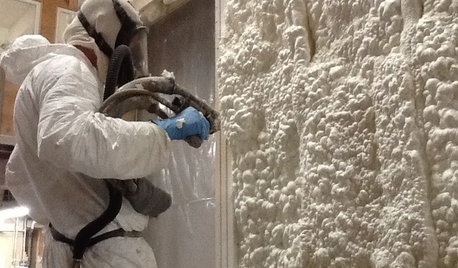
The subcontractor who did our insulation during a new build missed some crucial areas that are now allowing hot air into the third floor. This is causing condensation on the HVAC ducts and a leaky cracked second floor ceiling. We now live in the house, and the GC wants the sub to come back and spray where the foam is missing. Obviously the walls are all sealed up and we have furniture. I’m also pregnant and don’t want that nasty stuff applied right now. We have had nothing but problems with this builder and I don’t trust the GC or the subs so I won’t be comfortable with the answer if I ask them this question: Is it an option to have the spots filled in with good old fashioned fiberglass insulation or something similar? HELP. This is one of about a dozen significant issues that I’m trying to deal with.

Comments (23)

  • 7 years ago

    Have it sprayed. It’s not a big deal.

    User thanked User
  • 7 years ago

    If you can wait until September, it will be a lot easier to vent the area.

    User thanked David Cary
  • 7 years ago
    last modified: 7 years ago

    Is it high or low density foam? Where are the areas that were missed? Are the ducts in an unconditioned attic? Where is the HVAC equipment? Are the ducts insulated? Its not clear if the problem is from air leaks or too little insulation or both. How is the roof/attic ventilated? Are you sure the warm moist air is not coming from outside?

    User thanked User
  • 7 years ago

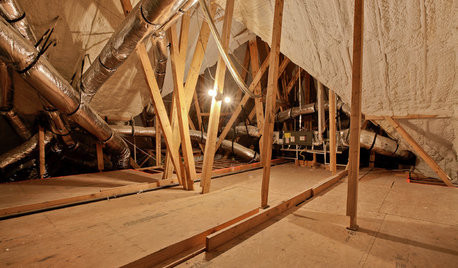
    The air handler is up on the third floor in a closet. The third floor is finished living space, except for that closet which has insulation and no drywall. It’s 90 degrees or hotter at this time of year, with high humidity. The areas that were missed are next to the HVAC closet behind the wall in the third floor bedroom. Moisture issues are causing the wall in that bedroom to bubble. The HVAC has its own set of problems and isn’t blowing enough to circulate air on the third floor.

  • 7 years ago

    Who designed the system?

  • 7 years ago
    last modified: 7 years ago

    Is the question about who designed where the HVAC closet and ducts would go? If so, that was an architect. It’s not uncommon for the mechanical closet to be in the third floor where I live. Thank you for your responses.

  • PRO
    7 years ago

    Replacing the missing insulation is important to preclude mold/mildew growth on the drywall, but it seems you have issues with the 3rd floor HVAC system as well.

    It's typical for hot, humid air (which is more buoyant than dry air) to find it's way to the highest level in a home. The design of your third floor HVAC system needs to consider this. You may find that you need a ducted dehumidifier integrated into your HVAC system for humidity control.

    User thanked Charles Ross Homes
  • PRO
    7 years ago

    L none:


    You are a builder that's gotten a call from a pregnant lady that her insulation is insufficient. You call the sub to come out to fix it, he agrees, but the lady won't let him in while she's pregnant.


    What would you do if you were him, please?

  • 7 years ago
    last modified: 7 years ago

    Hi Joseph- this is a 7 figure project that‘s been going on for 16 months and has been fraught with problems. Yes, at a certain point I had to move on with my life. I didn’t say we wouldn‘t let anyone in, I asked about the safety of the product and alternatives.

  • 7 years ago

    Thanks Charles Ross for the feedback on the dehumidifier. I’ll look into that. I’ve been told it’s a balancing issue but multiple attempts haven’t fixed it...

  • 7 years ago

    The third floor is finished living space, except for that closet which has insulation and no drywall.

    You should not have exposed insulation in a finished space. Tell the builder to install drywall wherever it is missing.

    Moisture issues are causing the wall in that bedroom to bubble.

    It is seems unlikely that moisture from humidity would cause the paint to bubble on the bedroom wall in such a short period of time. I would suspect there is a roof leak. How would the spray foam insulation be installed in the bedroom walls?

    Have you measured the moisture level in the house? If not buy some inexpensive temperature and humidity gauges on Amazon and put one on each level. You want the humidity level below 50%.

    User thanked mike_home
  • 7 years ago

    Thanks Mike. The GC had problems with the roofing contractor so that might be. I’ll put that on my list.

  • PRO
    7 years ago

    If you've got a roof leak, the damage to drywall will typically be localized and easy to troubleshoot. Look for tell-tale stains originating where drips hit the drywall. Shame on your contractor and insulator if they can't diagnose that.


    Bubbling of paint is symptomatic of moisture problems on the back side of a painted material. The missing insulation is most likely causing condensation on the (relatively cooler) back side of the drywalled surface when hot, humid air contacts it. Moisture then diffuses through the drywall and causes problems with the paint. And the problem didn't begin the day you moved in. It began the first day the indoor temperature was lower than the dewpoint of the outdoor air.

  • 7 years ago

    Is there no vapor retarder in the walls? What is the climate?

  • 7 years ago

    How can a bedroom wall have no insulation? Where there no inspections done during construction?

  • PRO
    7 years ago

    Depending on an inspector's daily workload and the code official's expectations, a given inspection could be a pretty comprehensive one or just a sampling. If there is a reasonable level of building going on in a community, I'd bet on the latter. Things get missed because of time constraints. In the case of the missing insulation there are at least three parties who missed it: the insulator, the builder and/or builder's job superintendent and the code compliance inspector.

  • 7 years ago

    IMO its important to solve the moisture problem before filling any cavities with foam. We still don't know enough about this issue to solve it.

    User thanked User
  • PRO
    7 years ago

    Unless you've got an issue with bulk water in stud cavities due to a plumbing or roof leak (which is fairly easy to diagnose) you will be better served by installing the missing insulation and eliminating that variable from any subsequent troubleshooting efforts.

  • PRO
    7 years ago

    "I’m also pregnant and don’t want that nasty stuff applied right now."


    " I didn’t say we wouldn‘t let anyone in..."

  • 7 years ago

    In a project this big and with such a significant issue, I’d demand they pull the drywall down where the bubbling is to verify no leak and allow proper insulation installation.

    User thanked User
  • PRO
    7 years ago

    There are a variety of diagnostic tools available which are both minimally invasive and not too expensive. An infrared (IR) camera will tell you a lot without the need to perform much, if any, "surgery." Any insulator worth his salt has an IR camera.

  • 7 years ago

    Oh good to know. We DID get heat mapping to determine where the gaps were. The whole house was mapped and the issues showed up on the third floor in the mechanical room and in the adjacent bedroom.