

Electric heat pump in SF?
We are embarking on a house remodel in San francisco and interested in eliminating the use of gas in the house. The house, 1200 sq ft, has a pretty inefficient forced air gas furnace that is about 10 yrs old (and little to no insulation). The remodel will finish about an additional 600 sq ft, and replace windows and add insulation. We like the idea of a heat pump because on the few days that it is very hot (more each year it seems), the house does not cool down at night and it would provide cooling. We would anticipate using the existing ductwork, and are interested in installing solar to go with it. We are having a very hard time finding anyone experienced with this type of system in SF. We have found people in the east bay who are not willing to come into the City. After re-doing the windows and insulation, we don't expect to have to run the heat that much (we used to live in new construction in SF where we rarely used the heat), and the cooling function is likely also to be only a few days per year, so after installation, we don't expect the operation costs to be very high (high per kwh because PG&E/CleanPowerSF, but overall not much use). Has anyone installed this type of system in SF? What was your experience and do you have a knowledgable contractor you can recommend? Other thoughts, concerns?
Comments (34)
 6 years ago
Sorry I don't live in SF so I can't recommend a contractor. But I will say that in Seattle (with similar-ish weather), our heat pump + existing ductwork has been awesome. It's a Mitsibushi Hyper Heat. It is super efficient, and it does not need any kind of backup "emergency" heat source. we've had it for two years and love it. Our home energy audit guy called it "the Tesla of heat pumps" LOL.
a couple of things to consider:
1. we did have to get a new air exchange for it, couldn't use the existing one - so I think that made it more expensive than a ductless system.
2. floor ductwork is designed for heat, so it makes the AC situation uneven. I've experimented with closing vents to balance it, but I keep getting contradictory advice on whether or not that's hard on the system. (I don't think it is, but I worry a little.)
it can get complicated. we have a somewhat sprawling split level with a basement, so our setup might be really different from yours. if you have a multi story home, a ductless split system might work better for you, esp since you mainly want this for AC. you could probably get away with turning on just the upstairs unit when it's hot.
Alissa Castro thanked User 6 years agoAlissa Castro thanked decoenthusiaste
Related Professionals
Hopkinsville General Contractors · Morgan City General Contractors · Murfreesboro General Contractors · Cambridge Bathroom Remodelers · Cookeville Bathroom Remodelers · Wenatchee Bathroom Remodelers · Ottawa Bathroom Remodelers · Madison Kitchen & Bathroom Designers · Topeka Kitchen & Bathroom Designers · Detroit Kitchen & Bathroom Designers · Muskogee Bathroom Remodelers · Webster Kitchen Remodelers · San Bernardino Kitchen Remodelers · North Adams Interior Designers & Decorators · Jonesboro Kitchen & Bathroom Designers 6 years ago
You have two things in Seattle that OP doesn't have in San Francisco -
Colder weather and cheaper electricity. Even though NorCal gas rates are relatively high too, it remains the cheapest way to heat. If there's a desire to eliminate gas from the equation as OP wishes to do (and as several municipalities have mandated, mostly for new residential construction) then the decision isn't an economic one.
The difficulty in finding someone in the City to do the work speaks to the rarity of these units there, as well as elsewhere in the area. That will change in the coming years, I don't doubt.
Alissa Castro thanked Elmer J Fudd 6 years ago
I don't think I know anyone in SF who has full HVAC and I only rented for ~10 years many decades ago. I would ask neighbors for references or warnings. We now live in both a hotter and much colder environment and have both regular heat and cool downstairs and a heat pump upstairs. The heat pump works fine although you will realize that it will need to be on for longer periods than regular heat or cooling. I would think a heat pump would be a perfect solution in such a mild climate and am surprised that it isn't common if cooling is now expected in addition to heat.
Alissa Castro thanked chas045Alissa Castro
Original Author6 years agoYes, I've lived here for 25 years and don't know anyone with a/c. I guess I don't think of this as a regular a/c system. But, it does go below 55 in the winter and it's been above 100 more days than we'd like in recent years.
- 6 years ago
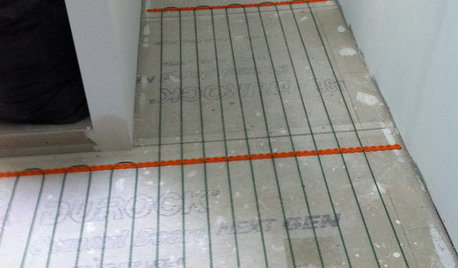
We have radiant floor heating in San Francisco, which is absolutely awesome. But it obviously falls short, when there are sudden temperature drops. And that's not uncommon in San Francisco. A 20-30°F drop in less than an hour is certainly not unheard of. Radiant heat can't keep up with that.
So, we added heat pumps as a supplemental heat system. Works beautifully. And of course, it also works for cooling -- after all, that was the reason for getting this system in the first place; radiant doesn't do anything for cooling.
We worked with Schmitt Heating and have been really happy with them. Would absolutely recommend them, if you can get on their schedule.
I do recommend though that you get a mini split system instead of reusing the existing ducts. Our house originally had an AC that used the same ducts for both heating and cooling. Heating generally worked fine, but cooling was a bad joke. By the time the air made it through the ducts, it was already too warm. These 40 year old ducts were never intended for cooling and simply aren't sealed and insulated properly. On the other hand, mini-split systems are extremely efficient for both heating and cooling.
You only need a single outdoor unit for up to 3 (or is it 4, these days?) interior units. The interior units aren't super cheap, but really not all that expensive compared to what it would cost you to make your old ducts work. And for a moderately-sized house, you probably only need two or at most three units, if you place them strategically.
If you do consider installing radiant heating as well, then I recommend talking to Adrian Duggan in Daly City. We really like what he installed for us. We have a gas boiler for both domestic hot water and radiant heating. I don't know if they make heat pumps for this application just yet. Alternatively, I have always wondered whether you could use solar panels to directly heat domestic water and then use this heat source to power radiant floor heating.
Alissa Castro thanked M  PRO6 years ago
I like Schmitt heating as well. I worked with them years ago but they were really great. I've never put a mini-split system in a house in SF, but I think it would be fine. The only issue is where to put the condenser outside, typically space is so limited. If it were me doing it, I would first get a GC on board, then have him bring his HVAC sub along. Everyone is so busy, the chances of getting a sub to come to you as a homeowner is pretty slim. I'm an architect and I couldn't even get someone out without have my GC make a few calls on our house in the city.
Alissa Castro thanked Kirley Architects- 6 years ago
One of my Mitsubishi systems is running 4 heads. System age is ca. 5 years. I believe newer models can operate with some heads cooling and some heating at the same time.
I would also note that refrigerants have a region of applicability and to provide efficient (high COP) cooling at 100F and heating (high COP) at 30F is pretty difficult. I would expect a fall-off of efficiency when the outside temperature gets to 40F. So in SF, you should be all set.
I don't recall what the COP is vs. temp, but a Hayward swimming pool heater does 4 at 50F, so the electric cost per watt/BTUh/whatever needs to be divided by 4 to compare to direct heating by gas, assuming total extraction of the combustion heat.
- 6 years ago
I lived in the Richmond for several years in the late 70's and nobody I knew in SF had AC. Perhaps it would be best to make the other upgrades before deciding whether to install AC. Casement windows (which can catch the wind) with high SGHC on the upper floors, insulation, and some ceiling fans might be all you need. Remember that you'd need some outside space for a noisy AC compressor.
I'm in DC now and have a rooftop packaged heat pump with which I've never been very happy and electricity is priced considerably less here than in SF.
- 6 years ago
A bit more info; the temperature of the "air" produced (hot / cold air coming out of the vent) by a heat pump is not the same as that produced by electric or gas. Example; gas heat produces a vent temp of approx. 110 degrees F. vs 90 degrees F for a heat pump. Therefore, it takes longer to "bring up" (or down) the interior to the desired temp. It takes time to become accustomed to this aspect.
- 6 years ago
Many people consider the lower heat output temperature to be an advantage in that it eliminates the "blast of heat" effect which can be uncomfortable.
Alissa Castro
Original Author6 years agowdccruise, we have a 1- story house (well, split level in the back), so no upper stories to speak of. Maybe I'm misunderstanding something, but I have to make a decision about how to heat the house and can't wait until after putting in windows and insulation to decide about a heating system. Deciding on a heat pump would provide the heating with a side benefit of cooling, and would get us out of fossil fuels (along with an induction stove, electric water heater and dryer). We would also put in ceiling fans an have a skylight that would open to let out heat. Is a heat pump really just A/C? I haven't been thinking of it that way.
- 6 years ago
"Is a heat pump really just A/C?"
No, a heat pump provides both heat and air conditioning.
"Deciding on a heat pump would provide the heating with a side benefit of cooling, and would get us out of fossil fuels..."
According to PG&E's electric tariff spreadsheet, SF's electricity rates can reach a whopping 50 cents/Kwh. Have you checked your PG&E bill for your rate schedule? Are you sure you want to increase your electricity consumption by installing a heat pump and other electric appliances? Do the economics work out?
Alissa Castro
Original Author6 years agoRight, I didn't think it was A/C, but people keep responding by saying "in sf I never saw anyone with A/C". I don't expect to run the cooling often. I started off by saying we want to get rid of fossil fuels so I will repeat that I am looking to eliminate natural gas, and increasing our electricity usage is the result, although again, we are a small house with not many people, we rarely use the dryer anyway. I am perfectly aware of the PG&E rate schedule, as I have time-of-use metering for an EV. I am asking for info and tips about installing heat pumps in SF. If there was another non-gas option that was efficient, I would consider that but I haven't heard of any. Radiant heat seems to be much more expensive to install, and then heats and cools off too slowly.
 6 years agolast modified: 6 years ago
The cooling factor is essentially a freebie with a heat pump bought primarily for heating. Modern heat pumps have higher temperature differentials than in the old days. And modern high efficiency furnaces have lower temperature differentials than in the old days (and higher airflows). So there's not much difference in comfort any more.
Do check those electric rates though!
- 6 years ago
Technically ... a heat pump moves (pumps) heat from one location to another.
Cool-only units, traditionally called "air conditioners," pump heat in only one direction ... from inside the house to outside.
Units that heat, traditionally called "heat pump," typically can operate to both heat the house (pump heat from outside to inside) and cool it (pump heat from inside to outside).
Refrigerators and freezers are also heat pumps ... moving heat from inside the food storage compartment(s) to outside of it.
:-)
- 6 years ago
Alissa points out that she knows the electric rate structure and I certainly don't, being long gone from SF. However, for everyone else not from there, SF actually produces its own electricity from hydro power in Yosemite. Unfortunately, it doesn't own the transmission line from there to SF nor the SF distribution service. But the electric owner savings did make SF rates lower than those in the rest of northern California. Being a liberal city, I can imagine it may have created an electric tiered structure increasing rates during high load periods. Seems like a good idea to me, and Alissa probably agrees.
Obviously, any AC would come from electricity. Mark Twain not withstanding, even SF is getting warmer and AC could be useful on occasion. I believe that a heat pump is more efficient in both heat and cool modes and it seems like a no brainer to use one instead of just a furnace because you gain AC for nothing at more efficiency to boot. You do lose the blast effects of regular heating or cooling BUT YES, A HEAT PUMP IS BOTH A HEATER AND AN AC UNIT COMBINED. But the heating bothers some or many people. Your body temp is 98°F and the heat may blow in at the mid 80s. If your vent blows from near your shower where you dry off, you will notice! Mine does; doesn't really bother me; but I'm aware of it even after 15 years of use.
- 6 years agolast modified: 6 years ago
Note that these days, many people are switching to electric because it's the greener choice -- due to solar, wind & hydro. Hopefully this continues to trend up.
Alissa - did you mention what kind of structure you have? Solatube has a "whole house fan" that vents hot air out of the upper floor (or attic) and circulates the cooler air from the lowest areas. it's possible that's all you may need, and it's solar operated.
"These 40 year old ducts were never intended for cooling and simply aren't sealed and insulated properly." -- in our case, our ductwork was recently sealed and insulated, and my mitsibushi produces very cold air, which you can feel even in the farthest reaches. so the heat pump is really effective as an air conditioner. the problem in my house is the location of the ducts. floor vents are just not going to cool a big room very well.
- 6 years ago
Whether you're helping or hurting the environment by using a gas powered furnace is a really tricky question.
If the majority of your electric energy comes from fossil fuel, then quite possibly electric heating is going to hurt the environment. Heat pumps can be up to 400% efficient. But conversion losses for generating electricity from burning fuel are very high. And so are transmission losses. It wouldn't be unusual to lose 80% of the energy stored in fossil fuel by the time it gets to your home in the form of electricity.
In that case, even a good heat pump has a hard time recouping all the losses.
On the other hand, a modern furnace can be almost 100% efficient when burning gas close to the point of use.
And even if your electric power is produced from renewable sources, the situation isn't clear cut, as this energy could be used by others if you didn't use it for heating.
This situation only really changes if (almost) all electric generation uses renewable resources. For now, that's not the case. But we're getting there.
So, for the time being, a gas furnace isn't as bad as you mind think at first sight. But going forward, yes, it should be replaced with a high-efficiency heat pump and local renewable electricity generation
- 6 years ago
It's hard to imagine a worse place to voluntarily become entirely dependent on electricity than San Francisco. CA politicians interfere with the selection of generation fuel mix, PG&E's electricity prices may rise dramatically due to the wildfires, the closure of Diablo Canyon is expected in 2025, and, now, the San Francisco government is threatening to buy PG&E's distribution plant. Ugh. In contrast, natural gas prices -- including PG&E's -- are falling.
I'd consider a whole-house fan or a whole-house air conditioner long before I considered a heat pump, let alone an electric stove and water heater which would make my exposure to high and volatile electricity prices even worse.
- 6 years ago
San Francisco is in an ideal location for photovoltaic electricity generation. In fact, all new construction includes solar power these days. Solar panels and backup batteries are continuously dropping in price. Also, you might still be able to get subsidies. It's not unusual for houses to be energy negative
- PRO6 years ago
IMO heat pumps are noisy and in SF where homes are quite close together it might be an issue. I know the one up the hill behind our property is pretty noisy when I have my bedroom window open.
- 6 years ago
My Mitsubishi exterior compressor units are very quiet. Note, when heating inside and cooling outside on sub-freezing days, exterior air humidity can condense and freeze on the heat exchanger fins. The unit has a heat cycle for that, but I can imagine some case where a certain amount of noise could occur if the frost build up were extensive.
Alissa Castro thanked kaseki - 6 years ago
"a Hayward swimming pool heater does 4 at 50F, so the electric cost per watt/BTUh/whatever needs to be divided by 4 to compare to direct heating by gas,"
No, no, no.
The word "efficiency" when describing heat pumps or other electrical sources is NOT comparable to the word "efficiency" used for gas appliances.
For electrical units, 100% efficiency is the baseline that refers to the amount of heat produced by electrical resistance. Yes, your toaster, hair dryer, or electric baseboard resistance heaters. The amount is 3400 BTUs per kilowatt (kw). Because heat pumps use electricity for pumping and not for heat by resistance, they can produce more per unit. 400% efficiency means it will produce 13000+ BTUs from 1 kw.
Gas appliance efficiency means what percentage of the heat content of the gas is captured for use. 1 Therm is approximately 100 cubic feet of gas and 100,000 BTUs. A furnace that's 80% efficienct will supply 80,000 BTUs of heat and use 100,000 BTUs to do so. 95% efficient means 100K BTUs of input will produce 95K BTUs of output.
From a search I just did, gas fired power plants are at best 60% efficient and often less.
- 6 years ago
San Francisco is in an ideal location for photovoltaic electricity generation."
You think so? Did you forget to consider the fog and how many places (like the Outer Sunset and down toward Daly City) that can go for days on end without sunshine?
- 6 years agolast modified: 6 years ago
Photovoltaics are irrelevant to this discussion as this is a retrofit.
The relative "efficiency" of electric vs gas appliances is not relevant. What is relevant are the initial purchase prices and operating costs of alternatives. If one is lucky enough to own a house plumbed for natural gas service, it only makes sense to consider the costs of space heating, water heating, and cooking with natural gas vs the same products powered with electricity.
- 6 years ago
Keep looking for an installer. Call every company on the peninsula. Heat pumps are VERY common in Northern California so I'm not sure why you're having difficulty finding someone to do the installation(?!) Have you tried Airflow Pros in the Castro district - they install Trane heatpumps primarily but they offer other options..
Alissa Castro thanked sktn77a - 6 years ago
"But can we just help her with her HVAC questions and not get derailed on gas vs electricity prices?"
No, that would be dumb.
- 6 years ago
On sunny days, you produce plenty of electricity. And those are the days when you run the AC. Or if it's a clear winter day, those are the small number of days you need to heat during the winter. On the other hand, on overcast days, you produce less energy but you also need less. Even when it's overcast, you often still make 50% of normal output. The shorter days in winter actually have a bigger impact. On a short rainy, I'm down to about 25% of normal.
Plenty of people retrofit solar on their houses. Many of these systems can amortize in at small number of years, if you size them correctly.
Battery backup is a harder sell. They don't amortize as obviously, as PG&E puts restrictions on how you have to use them. But they do help a lot with the power outages that we have been having.
- 6 years ago
"on some days you still need get your power from the grid. on sunny days, the surplus electricity is sold back to the grid."
I believe this is how it is in PG+E land, but I wouldn't describe the "make more than use" periods as "sold". I think how it works is that a tally is kept through the year - net metering - and at the end of each period, usage more than production is billed and production more than usage gets a "Thanks for helping out" or a nominal payment at less than retail charges. If that's incorrect, I'll be happy to be corrected. So the key is to install panels that will come close to but not exceed usage because the overage isn't beneficial to have.
I live in a sunnier part of the Bay Area than SF (haha, almost anywhere is sunnier than SF). I got a quote and the payback period was something like 15 years. If I were 35 years old and expected to stay in my house for 15 years, I'd do it. I'm not and I don't so it doesn't make sense for me. Our grid is increasingly renewable sourced and that's enough for me.
- 6 years agolast modified: 6 years ago
Elmer J Fudd wrote:
" 'a Hayward swimming pool heater does 4 at 50F, so the electric cost per watt/BTUh/whatever needs to be divided by 4 to compare to direct heating by gas,'
"No, no, no.
"The word "efficiency" when describing heat pumps or other electrical sources is NOT comparable to the word "efficiency" used for gas appliances.
.
.
.
From a search I just did, gas fired power plants are at best 60% efficient and often less."
What I actually wrote, in part, was: "... a Hayward swimming pool heater does [COP =] 4 at 50F, so the electric cost per watt/BTUh/whatever needs to be divided by 4 to compare to direct heating by gas, assuming total extraction of the combustion heat." [referring to the gas] I didn't use the word efficiency. I was referring to a household heater with relatively cool exhaust gas, and not a power plant, when comparing costs per BTU generated or moved. The customer directly pays for electricity or propane or natural gas. If we want to compare environmental impact then a lot of diverse costs need to be considered and that would be beyond the intended scope of my comment.
- 6 years ago
In NH, when I looked into solar power metering, the solar power generated was either expended by the homeowner, or pushed back into the power lines, in effect running the meter backwards. As a result, the electricity bill was reduced at the combined sourced kWh cost plus prorated per-kWh infrastructure cost. How fair this is to the power company may be argued.
 4 years ago
Any updates on this? Alissa- how is your heat pump working out and are you happy with your install? i am looking into upgrading a 30 yr old furnace in SF and am curious if anyone has experience with a concealed duct split heat pump? this seems like a neat idea on paper. id love to hear if anyone has real world experience with it.

User