Software
Houzz Logo Print
swampwiz

Need advice on what tool to get

6 years ago

The 2 jobs I need to get done are removing mildew from vinyl siding (which is not flat but has some small surface profile) and to grind down foam/plaster. I could also use it to derust or buff stainless steel, or grind down wood, although these are not a priority.


I was considering getting an orbital sander with some type of scour pad to clean the mildew, but it doesn't seem like such a tool has scour pads made for it.

Comments (8)

  • 6 years ago

    I see a bunch on Amazon. Might use a orbital polisher (like for a car too) rather than a sander.

    https://www.amazon.com/s?k=orbital+scrub&ref=nb_sb_noss_2

    but might want to watch some of these first..

    https://www.youtube.com/results?search_query=removing+mildew+vinyl+siding

  • 6 years ago
    last modified: 6 years ago

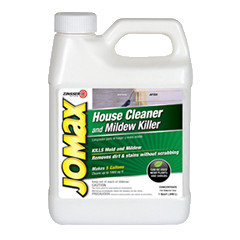
    These two jobs—washing and grinding—are pretty dissimilar, so you might actually be looking at two separate tools (well, three). Lucky for you, though, you probably already have the tools necessary for the siding job: a scrub brush and a garden sprayer. The thing with siding is, you have to be gentle. And if you use the right cleaning solution for the job (Jomax for example), the solution will be doing most of the work.

    ABOUT JOMAX® HOUSE CLEANER AND MILDEW KILLER

    Restore curb appeal—and eliminate mold & mildew—with Zinsser® JOMAX® House Cleaner and Mildew Killer. This powerful formula removes tough dirt and stains. Just mix with bleach and water, apply, wait five minutes and rinse. Great for spring cleaning or painting prep.

    • Kills mold & mildew fast!
    • Cleans off dirt and stains
    • Easy to use - No scrubbing necessary!
    • Economical – one gallon makes 20 gallons of cleaning solution
    • Can be used near plants or shrubs

    FOR BEST RESULTS

    Apply with a garden sprayer. Textured surfaces may require light scrubbing

  • 6 years ago

    It's an old house, and it doesn't have sheetrock in the kitchen, but rather plaster, with some gouges. After filling in the gouges, I might want to sand it down to get it level. As for the foam, the garage is an add-on from the house via a corrugated metal roof, and there is a gap of about an inch or two between the side sections at the top (i.e., one of the side sections is a sheet of wood on the house while the other is a beam from which rafters for the roof descend). I have a small leak whenever there is rain and a strong wind blowing the water from the garage roof that falls from the house roof and gets in through the corrugation holes. The only solution I see is to go up on the garage roof and put foam into all the corrugation holes; however, I don't want to get up there, so I am going to do the next best thing and spray foam (e.g., "Great Stuff") to fill up those gaps from the inside of the garage. This foam looks quite ugly with a bulbous surface when it cures, and so the grinder would grind that down to flat surface (it wouldn't be very flat, as there are small bubbles in the foam, but it would be a lot better).

  • 6 years ago

    I've cut down extra great stuff with a saw: everything from a little saw on my Leatherman to a toolbox saw. I haven't tried to smooth it but a block of wood with coarse floor sanding sandpaper should do it. Maybe even a pole sander used for drywall. I might even use that pole sander on the plaster - depends how hard it is. I don't think you'll like doing either one with a power tool.

  • 6 years ago

    I'm having a tough time picturing your garage problem, but my experience has been that trying to close off water leaks from inside rarely works well. Pictures of the problem will help, but probably you'd need to get up on the roof for that. This job might be better entrusted to a pro.

    In most cases, you can fix gouges in plaster with spackling compound. It sands very easily, so you don't really need a power sander,. In fact that might work too fast. I usually use a rubber a sanding block with 150 or 220 grit sandpaper for spackling compound.

  • 6 years ago

    A power washer would be the way to go with the siding. The alternative is some kind of house cleaner, scrub brush, and a hose.

    Power sanding plaster without good dust collection is going to make an absolute mess. Typically gouges are filled with joint compound or spackle and then hand sanded smooth with the surrounding surface.

    For removing rust, typically a right angle grinder is used. If it’s a smaller project, then a Dremel.

  • 6 years ago

    The space is on the outside of the main house (i.e., with an asphalt roof), but on the inside of the garage, which has a corrugated roof that comes off of the main house roof. The leak only happens when there is a heavy rainstorm an the wind pushes the water along the corrugation wave pattern. Yes, the ideal solution would be to go up on the garage roof and put foam sealant in the corrugation waves, but I don't want to risk my neck, and I the handyman I current use (a really good one I had used had died) charges a whole lot. A combination of foam sprayed in from the inside will stop a lot of it (although not perfectly), and I am going to use this new product I have found at Home Depot, Flex Seal "Liquid Rubber in a Can!", that I can spray on the interior of that foam that should stop the leaks. There still might be some water getting in, but it would be in a small region, causing perhaps some rot that would be happening anyway if I didn't do anything.

Sponsored
Carl Williamson Designs, LLC
Average rating: 4.6 out of 5 stars10 Reviews
Nationally Acclaimed Interior Designer | 2x Best of Houzz