Software
Houzz Logo Print
westes

How to Remediate Peat + Sand Mixture to Drain

6 years ago
last modified: 6 years ago
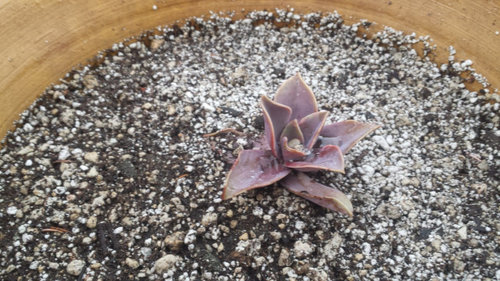
I have a bit of a disaster going on. I have been trying out a soil named Top Pot that is Peat + Sand + Perlite that has been working very well for succulents with direct sun exposure. Okay, I understand all the arguments against using sand in a succulent mix. Just amuse me on this for a second. I was carefully mixing gritty mix, then watering only once every few weeks, and I was killing succulents right and left. They simply demanded more water, and I did not have time to do the watering or set up the automatic watering on many of the pots. I experimented with Top Pot and - just for these sun-exposed succulents - it worked great. It drained rapidly, and the succulents just thrived in it. The extra retained moisture did not appear to stop the growth of the plants and during the dry periods was appreciated by the plants.

Roll forward to today: I decided to start a major replanting of very large pots, removing gritty mix and using Top Pot. Unfortunately, it looks like they changed ingredients in the soil, because the soil's ability to drain water has completely changed. Now instead of draining rapidly and leaving a very moist soil with lots of air for roots to breath, the soil is becoming a bog marsh: liquid mud with no air spaces. The pots fill like lakes and take 30 minutes to even have the water break the surface. I tested the drain hole a dozen ways. The problem is the soil not the drain hole.

Obviously I contacted the manufacturer, but that will take time to work out. In the meantime, is there anything I can do to remediate the soil to force it to drain well? I could add stone, lava, pumice, or turface. Unfortunately, that will maybe drain the pot faster, but the soil between those particles will probably retain this poor water-retention characteristic.

See the two attached photos. The photo with the perlite on the surface is what the older fast-draining version of this soil looked like immediately after watering. I do not know how they did it, but this original version of the soil drained quickly and felt very "airy" almost immediately after watering, if you inserted your finger deep into the soil. The second photo shows the caked layer of mud-like peat on the surface of the new soil that is taking 30+ minutes to drain. This soil feels like mud all the way down when you insert your finger after watering, and it would be a death sentence to many types of roots. I am wondering if they substituted a new type of peat with poor characteristics, or maybe there is some organic (clay?) contamination. It definitely looks wrong. If some of you with good soil experience have theories on how they changed/contaminated the new soil, I would appreciate hearing your ideas. It will help me have conversations with the manufacturer.

Overall, this is very frustrating. I have wrecked about six large planters so far and need to figure out a way to redo them.


Comments (20)

  • 6 years ago
    last modified: 6 years ago
    Check the ingredients on the bag for a wetting agent. I found a bag of potting medium with some and even when I mixed it in with 80% perlite it still ponded like that which is just crazy. If there's a wetting agent listed, just throw it out.

    westes Zone 9b California SF Bay thanked Nil13 usda:10a sunset:21 LA,CA (Mount Wash.)
  • 6 years ago

    @Nil13 usda:10a sunset:21 LA,CA (Mount Wash.) What are some typical "wetting agents" that are added into soil? I need chemical names to search for on the ingredient list. The manufacturer of this soil subcontracts out the mixing to another company. Is it possible the mixer would start to add a wetting agent in secret, without disclosing it? Maybe I need to send the soil to the manufacturer for them to test for that.

    What would be the reasons that a wetting agent would be added?

  • 6 years ago

    If it were me and iI had soils without the wetting agent, iI would add perlite or pumice to the mix 50-70%. You might also try adding gritty mix to the peat.

    westes Zone 9b California SF Bay thanked Rob Blomquist
  • 6 years ago
    last modified: 6 years ago

    I only skimmed the above post, but from other similar ones of yours on this topic, It seems to me you're making mixes wayyyyyy too complicated. It doesn't need to be so difficult. I'd throw it all out (all your existing mix), get some C&S mix & Perlite or Pumice. No peat & no sand.

    Also that seems a very small Ech for such a large pot & too much soil. They do better potted small, just slightly larger pots than the plants themselves.

    I have few succulent losses in this type of mix, tho' sometimes I lose some Sans. due to UNDER watering.

    westes Zone 9b California SF Bay thanked Karen S. (7b, NYC)
  • 6 years ago
    last modified: 6 years ago

    Yes to what Karen said about the sand and the overpotting.

    Sand shouldn't be used, period. OTOH.....some, maybe more up to and including 1.8% but you would really want to watch out when it's in pots. Sand for succulents is best in the ground, where it's mixed with something else, or else it's carefully filtered and used for seeds.

    I have used peat-based soil mixes, but it's sieved so that it's pretty fine. To that I add Turface and #1 or #2 grit (poultry grit).

    That being said, almost any medium can be used for C&S plants - they're that adaptable and resilient, as long as a few simple rules are followed - they don't want wet feet for an extended period, and the materials used to achieve that ideal porosity can be a lot of things. Some folks take it to extended lengths and make soil mixes based on the soil types the plants have in habitat.

    Pumice is nearly the best soil additive one can find for C&S. With the right percentage of it and soil, you can grow anything; just adjust the ratio of the two ingredients and the watering schedule.

    westes Zone 9b California SF Bay thanked cactusmcharris, interior BC Z4/5
  • 6 years ago

    Let's not worry about the plant that was overpotted. I am saving a dying plant and the arrangement does not matter. I simply want to test how it does in that soil, and it almost immediately responded in the positive

  • 6 years ago
    last modified: 6 years ago

    I understand that sand is universally despised as a container soil, and I understand the technical reasons why it holds too much water between the particles. That said, all my best plants were grown in soils with sand. When I had aloe vera in garden soil with about 30% sand mixed in, they grew like weeds. When I "got smart" and planted them in gritty mix they all showed signs of extreme stress and only the ones in shade are starting to look healthy again. So my brain keeps telling me sand is bad, and my eyes keep saying that there must be something I do not understand because the plants in sand-based soil thrive.

    It might be something specific to my climate, location of the plants, and my poor watering habits.

    That said, there are succulents that I would never grow in normal soil. Almost all Euphorbias have proven to be very tough customers. My heart broke when I grew a wonderful fire sticks rapidly in gritty mix (on automatic watering), only to have it completely wiped out during Winter in <40F and continuous rain. I do much better with Euphorbias in pure pumice. They do not grow as rapidly, but at least they do have a better chance of surviving water plus cold.

  • 6 years ago

    Okay, so I have more data here. The old version of "Top Pot" soil that drained rapidly has a wet but airy and gritty feel when you put your finger down into the soil. The new version of "Top Pot" that looks like a muddy texture after watering feels like a slightly oily slime on the top and first few inches down.

    What would a slimy / oily texture hint at? This is pretty surprising because I read online that peat moss is used to clean up oil spills, not itself normally contaminated with oils. Would the oil be an additive (gone very wrong) of some kind, or is it possible the peat they purchased had been contaminated by oil somehow? Peat does grow in Canada where they extract oil sands. So I wonder if someone was doing an oil sand mining operation and tried to salvage peat for resale from that.

  • 6 years ago
    last modified: 6 years ago

    do you pre wet your media before potting ...

    i found ... over the years.. with all kinds of media ... that when stuff floats to the top ... it is because you are trying to water a bone dry media ... and you have to flood it so much to wet it all.. that this is what happens ...

    i usually start a week ahead of time ... i start wetting the mix.. and fluffing it by hand.. until it is holding moisture.. and then i pot ... and then after.. you need to add just enough water.. to settle the plant into it .. rather than flooding it ...

    also .. in this manner.. you are setting up a good soil structure .... so water can flow thru it ...

    we all know ... that over watered sand is is just muck ... especially after all the structure.. perlite.. has floated to the top ...

    depending on amount.. i have used a old fashioned dish pan from the dollar store.. to a wheelbarrow.. to a kiddy pool when i needed a lot ...

    ken

    westes Zone 9b California SF Bay thanked ken_adrian Adrian MI cold Z5
  • 6 years ago

    The reclaimed tools / household thingies one uses for the making of soil - that deserves its own post.


    westes Zone 9b California SF Bay thanked cactusmcharris, interior BC Z4/5
  • 6 years ago
    last modified: 6 years ago

    have you gotten another new bag of the top pot? I would to see if they changed something or if the bag you got was just a bad bag. Do the old and new top pot soils look the same to you when you compare dry? The mud-ness might be from very tiny particles, peat doesn't get MUDdy. Even sand wouldn't get muddy, the particles making mud are much smaller. Maybe you can wash the new top pot in a strainer and see if that helps.

    I also said bye-bye to the the gritty mix and switched to a peat-pumice-sand mixture. :)

    westes Zone 9b California SF Bay thanked Gabby C (FL 9A)
  • 6 years ago
    last modified: 6 years ago

    Slimy sounds like a wetting agent. I can't get too specific because manufacturers are trying all sorts of different stuff and the names are all over the place. I have seen aloe vera based wetting agent, there are different starch based ones, and polyacrylamide definitely feels slimy.

    westes Zone 9b California SF Bay thanked Nil13 usda:10a sunset:21 LA,CA (Mount Wash.)
  • 6 years ago

    @ken_adrian I usually wash down the soil in advance to compact it. But the difference between the old and new versions of this soil are like night and day. Pre-watering is not what is accounting for the problem with the new version of the soil. Pots are holding water and look like a lake on top for 12+ HOURS. And it is not a drain hole problem. Something is wrong with the soil.

  • 6 years ago
    last modified: 6 years ago

    @gabby I purchased eight+ bags of the new soil. It looks like all the new bags are affected.

    There could be some organic matter like clay in the soil, but it feels more like an oily substance is coating everything and it does not release water

  • 6 years ago
    last modified: 6 years ago

    So throw it all out already. Why keep wasting time & energy on it? Yours or ours, clearly it's beyond working with.

    westes Zone 9b California SF Bay thanked Karen S. (7b, NYC)
  • 6 years ago

    @Karen S. (7b, NYC) I spent more than $100 on the soil, so I am not going to toss it out. I want to identify the exact problem so that the manufacturer can fix it. I don't want to keep mixing my own soils for large pots, and the old version of this soil worked perfectly. If I could just go buy the old version of this soil obviously I would do that. But it was special order for me and I got what I got. So I want to fix it.

  • 6 years ago

    Have you considered a large addition of conifer bark fines? Not nuggets, but fines.

    I am guessing that a mucky source for their sedge peat was used. Sedge peat can be and often is mucky. I hate it.

    By the way, the term organic matter always refers to a carbon based product, or something that was once alive. Peat, bark, coir, compost, etc. are all your organic ingredients. Clay, sand, perlite, vermiculite, etc. are the mineral components.

    My favorite nursery mix is predominantly bark fines with ground sphagnum peat and perlite as secondary ingredients. In my personal experience, conifer (pine) bark fines can fix most potting mix failures.

    westes Zone 9b California SF Bay thanked rhizo_1 (North AL) zone 7
  • 6 years ago
    last modified: 6 years ago

    Once again we come full circle to the idea you cannot amend mucky soils by adding coarse materials because the coarse materials would need to represent the lion's share of the mixture. If you start with a quart of Westes's mix and need to add a gallon of pine bark to it in order to ensure there is no longer enough of his soupy mix to fill all the air spaces between the chunky material, you're not adding bark to his mix any more than you're adding coffee to your morning milk or French fries to your salt. As long as you're using a mixture that utilizes predominantly fine material (peat, sand, topsoil, compost, coir, .....) with some coarse material mixed in with it, the part of the soil that actually gets colonized by roots will offer roughly the aeration provided by the fine material if was used exclusively.

    If Westes mixed an equal measures of coarse perlite and the soupy mix, o/a aeration actually decreases and continues to decrease up to the threshold ratio that occurs at the point where there is no longer enough soupy mix to fill all the air spaces between the perlite particles. From that point on, o/a air porosity increases dramatically as the % or coarse ingredients increases. Perlite's primary advantage lies in the fact that it displaces soil that might otherwise be saturated with water. Perlite is a closed-cell material, meaning it's internal porosity does not come into play any more than adding ping pong balls to a bucket of sand increases the sand's porosity. Essentially, it works as a ballast when it is located within the soil column that supports perched water. When it's used above any portion of the soil column that supports perched water, it's ineffective and acts only to reduce the volume of soil available for root colonization. Ballast is far more effective at ridding soil of excess (perched) water. 1 - 3x4x8" brick in the bottom of a pot reduces water retention by the amount of water held in 96 cu in of soil that's 100% saturated.

    BTW - wetting agents REDUCE how much water a medium can hold. Wetting agents or surfactants (surface-active agents) make water wetter. IOW, they reduce water's cohesiveness (tendency of water molecules to stick to each other), and they reduce water's adhesive tendencies as well as its surface tension. If you have a container at at container capacity (the state of water retention in a container at the moment it stops draining after being 100% saturated and allowed to drain naturally) and add a few drops of a wetting agent to the top of the soil, you'll very quickly notice a considerable amount of additional water exit the drain hole.

    Al


    westes Zone 9b California SF Bay thanked tapla (mid-Michigan, USDA z5b-6a)
  • 6 years ago
    last modified: 6 years ago

    @tapla (mid-Michigan, USDA z5b-6a), well you are certainly right that the only way to get this affected soil to drain was to amend it with so much coarse material that the mix now becomes about the coarse material. It takes about 50% to 60% pumice amendment to correct this soil, at which point I have a pumice soil, lightly amended by the original soil.

    It is an interesting question what went wrong with the original soil, because it does not behave the way it used to behave. It was approximately 30% peat, 35% pumice/perlite and 35% sand. I realize that this sounds more like a soil for a golf course green than for a succulent, but the original soil did drain rapidly, although I am sure it also had a significant perched water table. The new soil does not drain at all. I mean 10+ hours with a lake of water is not draining.... And once it drains you have the muddy oily mess at the top.

    My guess is the peat was contaminated, and I guess for the reasons you mention amending it is pointless.