Software
Houzz Logo Print
whaas_5a

Northern Catalpa vs Hackberry

6 years ago
last modified: 6 years ago

These are two of the few species in my area that I have not grown yet.

I have observed quite a few plantings of both noting that Catalpa can either have a stately form or at least toe an unattractive irregular form.


Hackberry tends to have a muted yellow fall color otherwise it just blends in with the surroundings.


I need to diversify a bit more from Maple and Oak and I have a very dry and alkaline soil in which I need a large shade tree.


Which one would you roll with and why?


If neither hit me up with another alternative for a very dry and alkaline soil (7.9 PH).


It’s full sun and it needs to get at least 30 feet wide so no size limitations.


Considering Scholartree as well

Comments (27)

  • 6 years ago

    Catalpa hands down. It is one of the most underrated flowering trees that grow in the non desert parts of the US. It has small whitish pink fragrant flowers in the spring.


    In the spring when in bloom your yard will have a pleasant smell of the flowers. As far as it leaves and seeds they can be easily handled with a rotary mower.


    whaas_5a thanked krnuttle
  • 6 years ago

    I have always loved catalpas and it seems like they are making a comeback in municipal plantings. One downside in my very windy backyard is it is prone to tatter so, depending on the year and the storms, it can look a little ragged in late summer. One caution, I bought mine at Menards (I know, I know) and it turned out to be Catalpa bigninoides. Leaves typically freeze green and fall off quickly. Slow to leaf out.


    My neighbors, hackberry is suffering from some witch's broom problem. NOt sure how common it is. Good tree for the birds. If you are lucky with a seed grown tree, they can have a very nice clear butter yellow fall color. Intersting bark.

    whaas_5a thanked pennlake
  • 6 years ago

    I like catalpas, but have never seen a hackberry to my knowledge, so cannot compare.

    Have you looked at Gymnocladus dioicus,/Kentucky coffee tree? There are a bunch growing in a park near my sister’s house in Madison in full sun.

    Are black walnuts/Juglans nigra something you would consider? Not sure if they are hardy where you are.

    whaas_5a thanked NHBabs z4b-5a NH
  • 6 years ago

    I see alot of Catalpas on old farmsteads as well as older subdivisions but don't see newer plantings. I thought it may be disease related but maybe its the tree litter.


    Hackberry seems to be more common now that Ash has been completely destroyed.


    Another consideration is surface roots - I'd want a plant that would have deeper roots on a sandy loam to avoid errosion of the slope its on. Even grass isn't that vigorous here due to how dry it is.


    Black Walnut would have been an optin but Picea abies would be its neighbor. I believe they are sensative to black walnut - even though it would take a long time for this take place.


    Kentucky Coffeetree would have been my top choice but I have two of them and looking to mix it up.


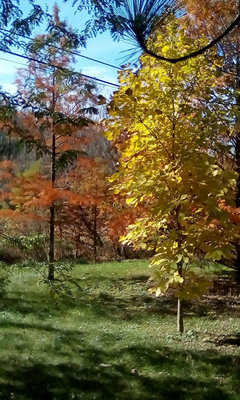
    A sugar Maple and bald cypress along with the Picea abies are in the visual vicinity.

  • 6 years ago


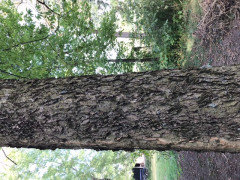
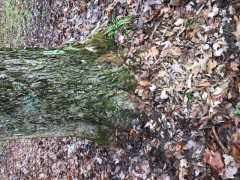
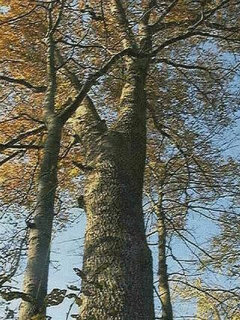
    Bark of my large hackberry. I love the bark, agree that the fall leaf color is underwhelming.

    whaas_5a thanked indianagardengirl
  • 6 years ago

    How is the form and health of the canopy? Notice any surface roots?

    Agree the bark is very nice and underrated. You rarely see this tree listed in the best ornamental bark trees.


    It sounds like I could go eitherway but it boils down to how either tree roots behave in a dry sandy loam.

  • 6 years ago

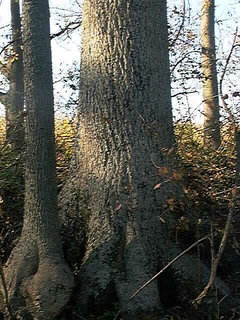
    No sign of surface roots on this tree for me, and a reasonably nice root flair, making it handsome from the ground level. Canopy is high and in an area where it had much competition from the ash trees. Of course those are gone now, so I’m hoping the canopy will spread some. Health of canopy? Better than the nearby slippery elm but again it’s pretty far up there. As I recall it looks good for a while but gets ragged by fall. If I could only plant one tree, this would not be it, but if you have room for variety it’s worth considering IMHO.

    whaas_5a thanked indianagardengirl
  • 6 years ago
    last modified: 6 years ago

    All thanks for sharing your personal experience

    After Indiana garden girl posted her picture it reminded me that Hackberry tolerates some shade so I’m just gonna stick a Hackberry in the tree line where ash, cherry and red elm are dying and then put the catalpa out on the slope

    The other reason for diversifying is that there are extremely high populations of Japanese beetles so I have to cut back on quite a few species that I enjoy but as the trees age I will not be able to contend with the beetles.

    I have quite a few Basswood approaching 40 feet wide 70 feet in height and literally half the canopy can be eaten by Japanese beetles that’s how many are around here

    So if you have any favorite trees that aren’t favored by Japanese beetles let me know about those as well - they’re quite a few list online and then I have my own observations.

    One interesting example is that red oak is listed as a favorite by some sources and some sources listed it as resistant. On my own a lot I have seen some on the REd oaks but they definitely don’t favor though comparatively speaking.

    They love Musclewood which just breaks my heart as I was going to use this as my native understory I may need to change the red bud

    It’s also disappointing that I can only find Shagbark and Pignut Hickory in a very small seedling format (6”). I need like 50 of them and it’s too tough to babysit such a slow growing tree at first. I’ve been waiting three years with a few nurseries and they either don’t produce enough when we sell them too quickly before I get to them. One of the nurseries ended up planting them out before offering 1 and 5 for sale - now selling balled and burlap for an arm and a leg

  • 6 years ago
    last modified: 6 years ago

    Catalpa will certainly make a more bold & emphatic statement, view-wise.


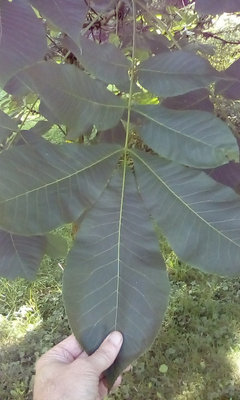
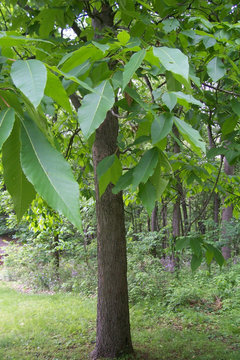
    Edit: Pignut, bitternut & shellbark are a fair bit faster than shagbark. Shellbark below at only 10 yrs (and had been re-transplanted once) and much taller than that now at 14 yrs:

    Shellbark leaf from above tree:

    whaas_5a thanked bengz6westmd
  • 6 years ago
    last modified: 6 years ago

    I’m a big fan of all hickories . I was looking at Shelbark at one point as well but I believe they are somewhat intolerant of alkaline soils and drought.


    What type of soil is your tree growing in?

  • 6 years ago
    last modified: 6 years ago

    Hi Dave looks like it’s on a slope so it should have some drought tolerance - can you estimate the soil pH where it’s located?

  • 6 years ago
    last modified: 6 years ago

    Yes, the site is unirrigated with a slight south facing slope so it gets pretty dry. Never had the soil tested, but because the red maples in this neighborhood are chlorotic I assume the pH is fairly high.

    whaas_5a thanked arbordave (SE MI)
  • 6 years ago


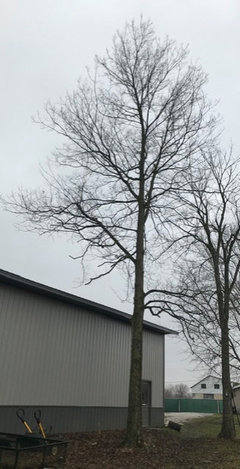
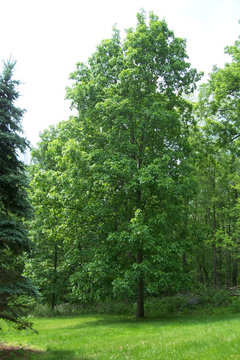
    Hackberry next to the barn


    Root flair

    whaas_5a thanked indianagardengirl
  • 6 years ago

    Bur Oak is tough tree. Alkaline soil adaptable. Drought tolerant. Great shade tree.

    whaas_5a thanked scotjute Z8
  • 6 years ago
    last modified: 6 years ago

    I like catalpa more than hackberry. I do not have any catalpa in my town (don't know if no one tried one or they can't grow here) but there are some hackberry here and it's like the most generic tree I can think of. Just not remarkable in any way. Both catalpa and hackberry seem to leaf out late. Catalpa has giant leaves, beautiful flowers, very interesting seed pods, and a striking winter silhouette. I wish I could have a catalpa here, and the only experience is me observing them in CO, where I spend a lot of time visiting my in laws. Catalpa is just a cool tree

    whaas_5a thanked L Clark (zone 4 WY)
  • 6 years ago
    last modified: 6 years ago

    whaas, that shellbark is in silty floodplain soil, so it isn't dealing w/dry and/or alkaline soil. Bitternut hickory can deal w/those conditions, tho.


    Lane, I agree that hackberry does look unremarkable when young, but it can eventually develop character as it gets a distinctive shape/crown (sometimes elm-like). Indianagardengirl's hackberry above is handsome. Catalpa is surprisingly tough & might grow in your region if irrigated at first to get established.

    whaas_5a thanked bengz6westmd
  • 6 years ago

    I'll likely just try Pignut, Shellbark, Bitternut and then Shagbark. Amazing you don't find these in larger landscapes more often.


    Thanks for all the pics!


    Burr is probably the best Oak for my immediate area. Oak blight is becoming a problem though which prompted me to pull back on planting too many Oaks.

  • 6 years ago

    whaas, wild mockernut hickory on my brother's lot in nearby PA. Turns golden yellow in fall:


    whaas_5a thanked bengz6westmd
  • 6 years ago

    Another good one! Looks like it tolerates dry sites but would need to stick to the lowest ph section of my lot which is 7.3. Half my lot is 7.8.


    https://www.mortonarb.org/trees-plants/tree-plant-descriptions/mockernut-hickory


  • 6 years ago

    I think catalpa is much more interesting than hackberry. But sadly, they are borderline hardy where I live. My parents have pretty high pH soil and a chunk of woods filled with elm, green ash, bur oak, bitternut hickory, and box elder.


    I'd try bitternut if you can find them. Beautiful, tough trees. Always turn a vibrant yellow while surrounding ash and elms do an often ruddy, drab yellow. I'm surprised arbordave was able to find some 2" caliper. Nobody seems to be growing them over this way. I knew of a landscaper looking for shagbark a few years back for a client. I don't think they ever found any.

    whaas_5a thanked mntreegrower
  • 6 years ago
    last modified: 6 years ago

    Big bitternut in MD:

    whaas_5a thanked bengz6westmd
  • 6 years ago
    last modified: 6 years ago

    So bitternut hickory is able to tolerate alkaline soil somewhat?

  • 6 years ago
    last modified: 6 years ago

    Lane, yes, it likes the limestone areas here (and no problem in the acidic areas either). But can it tolerate your WY alkaline soil (and the cold)? I dunno....

  • 6 years ago

    That’s quite a lovely tree, Beng.

    whaas_5a thanked indianagardengirl
  • 6 years ago
    last modified: 6 years ago

    I'm trying to like some comments, but the website is not letting me... Anyway, yeah, it's worth a try, why not. YOLO! I'm intrigued so I'll probably try to grow a bitternut hickory from seed. I'm used to failure so what's another? It'll be inexpensive and a fun experiment to try to grow one from seed.


    I'm bored at work so I'll ramble on and whoever is interested can read my dealings with trees:


    After about five years of growing, things I've succeeded with (so far):


    Betula pendula

    northern red oak (my favorite)

    bur oak

    Oregon Green austrian pine

    Tannenbaum mugo pine

    Algonquin pillar swiss stone pine

    accolade elm

    honeycrisp apple

    ohio buckeye ( from seed)

    Butternut (from seed - we'll see if it lives through my winters)

    spring snow crab

    Prairie fire crab

    weeping norway spruce

    bigtooth maple


    Things that have failed:


    Sienna Glen maple -this was an abject failure. Died back hard two years in a row


    northern pin oak - Did splendidly for two years then died back to the ground and resprouted. This one made me sad.


    Oak leaf mountain ash - was growing great then the bottom by the root flare turned a different

    color over the period of a few months and died. this was weird


    Sycamore - didn't even try to resort after one winter lol


    emerald green arborvitae - fried to a crisp. It must not like wind


    horsechestnut - sprouted from seed, but did not survive its first winter


    Austrian pine - this one is hit and miss for me. A couple are doing great and a couple have bitten

    the dust.


    Gamble oak - this one confused me. I've seen some in my town that thrive. I'll try again.


    Bigtooth maple - again. Hit and miss. Some thrive for me and some not


    I'm sure there's more that can be added to successes and failures.


    So do you think a butternut hickory would stand a chance? lol

    whaas_5a thanked L Clark (zone 4 WY)
  • 6 years ago
    last modified: 6 years ago

    'Whiteshield' (male) osage orange is another tough tree to try & tolerates alkaline soil.

    whaas_5a thanked bengz6westmd