Software
Houzz Logo Print
eljowers

Starting a Garden

5 years ago
last modified: 5 years ago

We are moving into our first house this summer and I am very excited to be able to plant my first real garden. I grew up with rather extensive gardens. My parents love gardening. I also love gardening, and like to think I'm fairly knowledgeable, but I've never planted my own garden besides some small community plots and herbs.


I'm looking for any advice or resources you guys have found useful on how to start a garden. I would also happily accept any specific plant recommendations. We'll be in hardiness zone 6a (bordering 5b), but I don't really know what to do with that information. I'm feeling a bit overwhelmed trying to figure out where to put which plants based on sun and water exposure, blooming season, etc. while keeping in mind the aesthetics. I am open to hiring a landscape architect, but I would like to see what I can do on my own.


I'm hoping to plant a more organic, wild-feeling garden with lots of colorful flowers and grasses and then some raised fruit and vegetable beds. I feel very inspired by Asian and prairie gardens. Given the style of our house and the neighborhood, I will lean more prairie, with some Asian influences. Any advice is greatly appreciated.

Comments (22)

  • 5 years ago
    last modified: 5 years ago

    FIND PROFESSIONALS at top of page might be of use, note that you don't have to pay landscape architecture rates to get a plan for a residential plot. Also if you are in the US your nearest USDA Cooperative Extension Service branch office may have information of interest, including pointers about variety selection and cultivation methods. Otherwise there is the getting of ideas from local public and private gardens, the latter becoming accessible via organized garden openings often undertaken as fundraisers. Ones where multiple properties are featured on coordinated routes, with tour maps or leaflets often being available to help find them and choose which ones may be of particular attraction.

    Emily Jowers thanked Embothrium
  • 5 years ago

    Loving to garden and planning a new garden when you have never had one before are two very distinct and separate activities. One requires nothing more than enthusiasm while the other requires a rather specific skill set or at the very least, prior experience doing so.

    I would second finding a professional to work with on the planning aspect. It does not need to be a landscape architect - an experienced garden or landscape designer will be more than adequate (and LA's are often not involved in smaller, individual residential projects anyway). Once past the planning and layout stage (and it sounds like some help with plant selection), you can be free to indulge your gardening passion as you like.

    In addition to the excellent suggestion of visiting public gardens or participating in open garden tours, I'd consider joining a local garden club. It's a great way to gain knowledge from those much more experienced, network and exchange plants and perhaps even find a mentor to guide you along your new garden path.

    Emily Jowers thanked gardengal48 (PNW Z8/9)
  • 5 years ago

    Go to the library. They have books on Asian gardens, prairie gardens, organic gardens, garden design, books with plant lists by zone and regions. The more you know and can describe what you want, the better a landscape designer will be able to help you. Garden tours are fun and a great many cooperative extension master gardener programs have them on a regular basis.

    Emily Jowers thanked Christopher CNC
  • PRO
    5 years ago
    last modified: 5 years ago

    If you do the planning yourself, you still need to use the same process that professional designers use. It starts with site inventory and analysis, recorded on a base plan. Based on the information collected, schemes are developed using a program (your goals and parameters). Scheme(s) are narrowed down, developed and fine tuned into a workable concept, which is further fine-tuned into a practical plan, which you could implement over the course of time, or all at once, depending on your budget and interests.

    One common problem that novices can have is in developing impractical ideas. Without a some good experience, in the planning stage, it is kind of easy to get wrapped in developing innumerable details for a plan that has one or more basic flaws. (Commonly, these would have to do with layout geometry.) I would suggest that any novice working on their own plan, submit their work here and get feedback. Then there is the problem of sorting through feedback, as there is lots of advice that comes from novices here. Having a proclivity for the work, which it sounds like you have, and some basic good taste, helps in being able to sort through the advice.

    Emily Jowers thanked Yardvaark
  • 5 years ago

    Here are some steps you can take right now. 1. Make a very simple drawing of your garden. Note the directions - NSEW this is very important to what eventually will be planted. Note large trees or bushes. This will show shade vs full sun. 2. Take photos of what is growing successfully. Posting here will help identify weeds vs valuable plants and trees to help you keep the good stuff. 3. What big city are you located or nearest big city? Growing zones do not tell the whole story and location will determine what will grow successfully. Google Growing Zone and learn what it tells you and what is does not. 4. If there is a garden section to your local newspapers, make it a habit to read it - if you read on-line - start a folder of these articles. 5. Seed and plant catalogs are a wonderful and free source of garden information. Read them - not just looking at the beautiful pictures! lol Once you know your zone, google seed companies near your location and start with those. Local seed companies will carry seeds that will be successful in your area and will be helpful with your selections. A visit to a local seed or plant nursery will be as educational as a short botany course. Plant people love to talk plants and neighbors and garden stores will help with your new garden. You said that your parents are gardeners - talk to them and listen to their experiences and don't be afraid to ask for suggestions.

    6. Don't make big changes for at least one year. Give your new garden a chance to show you what it already has growing. Many plants are dormant now and if you get too vigorous you may pull a precious and beautiful and perhaps tasty plant that is now sleeping.

    Browse used book stores for books written on local gardens or how-to's. Libraries are also a great source, but since I make notes in my books, I have to own my books.


    Gardening is hard work so be wary of 'quick fixes' or the 'perfect and only answer' to problems. Good luck and don't be in a hurry!!! Gardening takes time and patience!!


    Emily Jowers thanked ophoenix
  • 5 years ago
    last modified: 5 years ago

    Thank you so much for the advice! I am a little overexcited, but I've been excited to have my own garden ever since I moved away from my parents 8 years ago. The library sounds like a great place to start and when we move, I will look for local gardening clubs. I do have a list of plants that I know I want to use, but having a group of people who know that local flora would be so helpful for the plethora of plants I don't know. And it sounds fun as well.


    I do plan to do this slowly, starting with the vegetable garden since I have the most experience with that. I don't intend to plant anything until the following spring. We'll move too late to plant most things anyways. Eventually we will be hiring a landscape architect (or designer) to design some hardscaping pieces, so I will have them help me with the garden design. I'm sure they'll be very useful for some of the more ambitious pieces as well, like planting mature trees.


    I did forget to mention that this is a new build, so it is a complete blank slate. The grass won't even have grown in yet. But I will definitely look at what is growing in the area before planting anything. We are also moving from zone 10 to 6, so everything in my current location is very different.


    ophoenix - Love the suggestion to shop local seeds. That makes complete sense. I had planned to get seeds and plants from nurseries anyways. I know some of the plants I love grow very well in the area, but others are not native (mostly from Japan), so I'm not sure how they will grow despite being the correct zone. I assume that is something local nurseries may have some idea about?

  • 5 years ago

    Don't forget there are many forums right here for suggestions. Clean slate sound really exciting! Even in a new build, some natives and weeds will pop up. Hopefully lots of them to show the fertility of the soil. If they don't you will have a different project to tackle. A good professional soil analysis might be in order. A call to a Master Gardeners Help line would be a good place to start for a soil analysis. Did you mention the city that you were in or near?

    Emily Jowers thanked ophoenix
  • 5 years ago

    I moved from a zone 11, the island of Maui, to a zone 6a/5b 12 years ago. As someone who likes to garden and has a pathological need to be outside, I am recommending you add books on winter interest and winter gardens to your reading list, particularly if this is an east coast predominantly deciduous forest habitat. The barren time lasts a good five months here, far too long to be without a garden. December is the only month of the year when something is not blooming in my current garden.

    Find the best independent nurseries/garden centers close to you and start visiting them in the spring just to chat, window shop and read plant tags.

    Emily Jowers thanked Christopher CNC
  • 5 years ago

    I will be just north of Indianapolis, IN.


    ophoenix - A soil analysis is a great idea! I'm very worried about the soil actually. I've heard some people have trouble getting their grass to grow in the soil the builders put down. I may have to replace the top layer. :(


    Christopher - I also have a need to be outside. I would love to hear about what you have planted in your garden that blooms during the frost period. I know very little about off-season plants. Someday, I would love to build a greenhouse, but that is definitely above my current skill level.

  • 5 years ago

    May Dreams Gardens in Indianapolis would be a nice garden blog for you to explore on cold winter days.

    Emily Jowers thanked Christopher CNC
  • 5 years ago

    Just an FYI, but unless the soil is heavily contaminated with heavy metals or persistent chemicals, you never need to replace.......only amend :-)

    Emily Jowers thanked gardengal48 (PNW Z8/9)
  • 5 years ago

    gardengal - That is a relief :) Hopefully it won't take too much work.

  • 5 years ago

    ' I would love to hear about what you have planted in your garden that blooms during the frost period. I know very little about off-season plants.'

    Emily, don't confuse winter interest and winter gardens with blooms. Although there are some things which bloom in midwinter flowers are not the be all and end all of a garden. Much more fundamental is getting good 'bones', that is shape and form achieved through hard scape and permanent features like trees. These things should look good all year round. Over that you add your planting for outline, foliage texture and colour, bark and branch pattern. Finally come your flowers, fruits, seed heads etc. They're just the seasonal decoration. Starting with ideas for flowers is like choosing the light fittings before you've built your house. By all means research and note but don't start with the flowers. Start with the bones.

    Emily Jowers thanked floral_uk z.8/9 SW UK
  • 5 years ago

    Don't expect it all in the first year! Gardens take lots of time and lots of work to establish. Garden Answer on YT is a fun educational gardener to learn things from.

    Emily Jowers thanked Ashley Smith zone 5a
  • 5 years ago

    Thank you Ashley! I will try my best to be patient.


    floral - I used the word bloom because Christopher did. I certainly don't expect a bunch of flowers in the winter. I am intrigued by the idea, though. I've never considered winter flowers outside of zone 10. There are a lot of plants (not just flowers) that I am hoping to plant, but the layering as you were describing is where I think I will need the most help. We already have a general idea for hardscaping and trees that we'll be able to finalize after living in the house a while. After that, figuring out how to layer the plantings in a way that is interested with and without blooms is more tricky. I like how you wrote it; gives me a good idea of how to start the planning. Thanks!

  • 5 years ago

    Hi Emily. How exciting to finally have your first garden! I've been gardening forever and I've made a lot of mistakes, particularly in those early years. Here are some things I wish I knew much earlier in my gardening adventures:


    The most important thing to understand is that SOIL is the critical element for garden health. You can spend a fortune on lovely plants but they will never thrive in poor soil. Since you have a blank slate it's a perfect opportunity to amend the soil before you put anything in the ground. A quality soil amendment is not sexy but you will never regret investing in it.


    Next is "right plant, right place". If you can stand it, take a year to observe the sun and shadows on all four sides of your house. Where does the sun shine all day, mornings only, etc. How about shade? How is the drainage? Does water pool anywhere? Is it always dry under the house eves? Do critters (deer, etc.) visit your yard? Only after you've figured these things out can you select plants that will thrive in any given corner of your garden.


    Start with a plan, but implement it over time. Many full service nurseries offer landscape design services for a very reasonable fee. They often offer discounts on plants and supplies if you hire them. Resist putting random plants in random places because you'll eventually have to move or remove them.


    Trees first, shrubs second, flowers last. Trees take a long time to mature so get them in the ground as soon as you have a good plan.


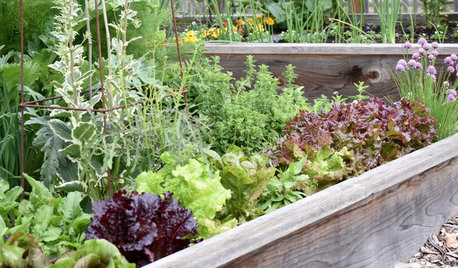
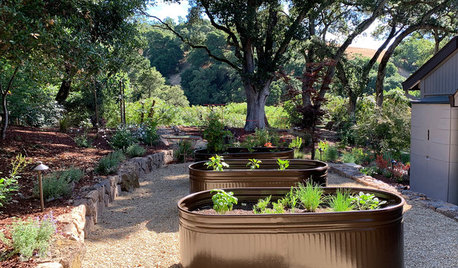
    Vegetable gardens can be a lot of work, so start small. A couple of raised beds can get you going and you can expand as your time and expertise allows.


    Your local Master Gardeners and Extension Service can provide you with a lot of free information and advice specific to your region so track them down and bookmark their websites.


    Good luck! Enjoy! I hope your gardening adventures bring you as much pleasure as mine have.


  • 5 years ago

    A BIG yes to what floral-uk said. You got to have good bone structure, maybe a touch more focused for a strong winter garden, even if it scares some people.


    Emily Jowers thanked Christopher CNC
  • 5 years ago

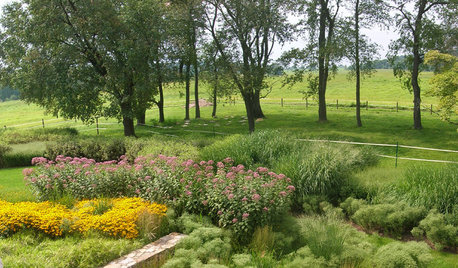
    That's beautiful! Definitely bigger than our yard will be. I see what you are saying about structure.

  • 5 years ago

    Emily, I was in much the same situation as you 3 years ago with a new build home and a blank slate “garden”. My advice is to take your time - you will probably be sorting out the inside of the house initially and you need to learn what conditions exist in your garden. You need to know what areas are permanently shady versus full sun, need more drainage, where the BBQ and hang out areas should be, etc. Make yourself a 3 to 5 year plan (and don’t worry if it isn’t all done in the 3/5 years). Year 1 might be fence if necessary, seed or sod grass all over, plant a tree or two and determine where you will need hardscape. Breaking it down into smaller projects will make it much more manageable and allow you to fine tune your plans as you learn more about your garden. Good luck and enjoy the process!

  • 5 years ago

    Check with your local nursery - they may have someone that can help you plan and suggest plants for a reasonable price

  • 5 years ago

    I like garden shows on youtube like "Garden Answer" and "The Impatient Gardener." I take notes, especially when I see a scheme of plants that look great next to each other. The first task, right off the bat, is to draw the areas out where you want to plant and take note (literally write it down) whether they are in sun or shade at hourly intervals of the day. Before I did this, I would be just certain that *this* was a good, sunny spot for some shrub or tree, only to realize after the fact, that the spot actually was in shade for several hours of the day. It will save you a lot of moving things around....even though gardeners are ALWAYS moving things around!! Happy gardening!