Software
Houzz Logo Print
rasbeh

Unruly Elm Tree

6 years ago
last modified: 6 years ago
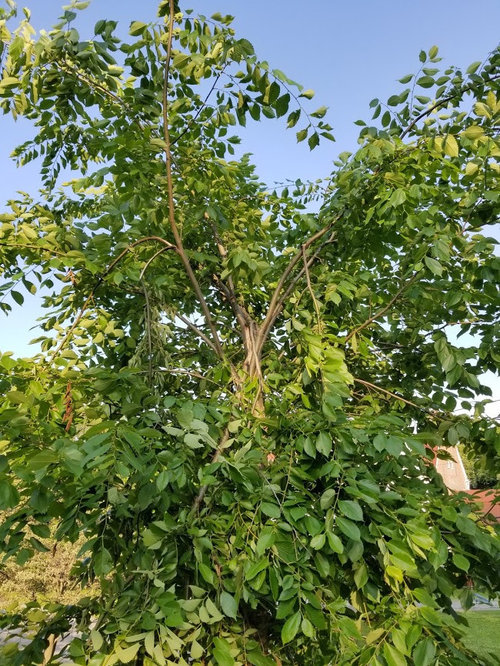
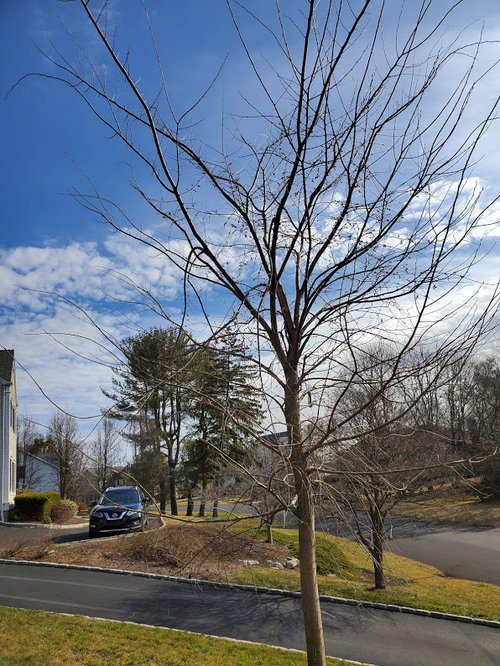
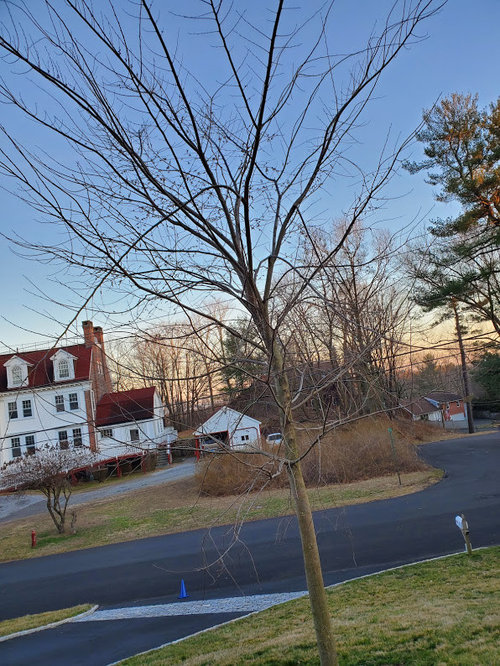
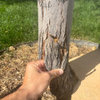
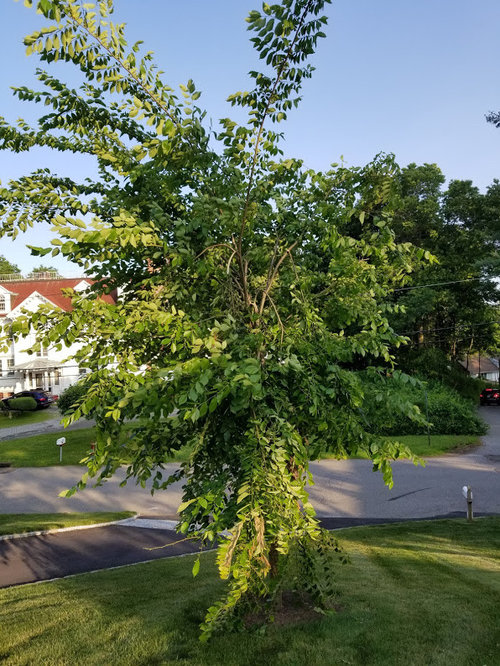
A contractor planted this Elm tree for me in the spring of 2018 (Ulmus americana Princeton or New Harmony -- never got the exact confirmation). The tree was the replacement for another tree which did not survive the winter, and in my opinion, it had some structural issues from the beginning, including no clear leader.

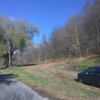
This tree got a bit out of control this past summer. The branches became very lanky and some of them broke in relatively moderate wind. I've attached pictures from the summer and some recent photos with no leaves. I have two questions: 1) I frankly don't want to spend a significant amount of money to hire an arborist (They demand high prices in southern CT). Can you give me some practical pruning guidance that I could pass along to my "tree guy" (he's good but has not attended a professional school)? 2) This tree is not that far from my water main. I was listening to NPR a few months back, and there was a program about how trees could sense water mains under the ground and finally damage them? Could that be an issue for me in CT with good precipitation? Appreciate the help.


Comments (12)

  • 6 years ago

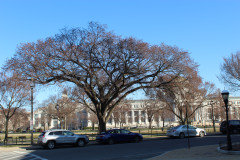
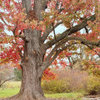
    You've got a beautiful elm tree, take a breath and relax. It will sort itself out and one day look like the one in this pic.

    Now for the NPR citation about tree roots damaging water mains, tell us more about that, give us a link, I've never heard of that.


  • 6 years ago

    water mains


    ==>>> i would define mains.. as high pressure pipes under the street ... to which your lower pressure pipes bright water to the house ... if they leak.. it doesnt take long for the city to know .... same with the house ... but with the lower pressure it might take longer in your lawn ...


    i highly doubt trees could impact them ... anything is possible ... odds are extreme ...


    the usual issue is older septic/sewer lines ... that are packed with oakum ... where roots are able to wriggle there way in .. over decades ...


    https://duckduckgo.com/?q=tree+roots+septic%2Fsewer+lines&t=ffcm&iar=images&iax=images&ia=images


    modern sealed septic lines ... should not be an issue.. as they are sealed ... how old is you house and the septic lines ...


    ken

    rasbeh thanked ken_adrian Adrian MI cold Z5
  • 6 years ago
    last modified: 6 years ago
    A good tree guy would know what to do. The professionals are bonded, licensed and fully insured - all this costs money, hence their rates.

    Anyway it looks like there are a few, small bent down branches that could be removed. Otherwise if it were mine I would also look at some pruning manuals - I have a couple good ones here, both bought at local shops* - for pointers specific to pruning and training elms. With the latter being what you are trying to do - you are trying to guide your tree into having a desirable permanent structure.

    *If you don't want to buy one just for this project try local libraries or searching on line for directions on how to handle the development of this kind of tree

    rasbeh thanked Embothrium
  • 6 years ago

    sam -- Wash DC area for that elm?

    rasbeh thanked bengz6westmd
  • 6 years ago

    Thank you for your responses and comments. I managed to find the NPR link (Radiolab to be more exact). Click on the "Transcript" tab.


    https://www.wnycstudios.org/podcasts/radiolab/articles/smarty-plants


    From your responses, it appears that there are two camps: 1) leave it alone, and 2) prune the tree. Not sure which approach to take... Any additional thoughts?

  • 6 years ago

    If it were me, I would cut the lower branches that are drooping. I would then cut off all sucker branches in the inside of the tree, and take out the weakest of the intertwined branches.


    While the tree behind it tends to disguise the tree's true shape it looks like it is small enough that most offending branches can be cut from the ground.


    Take your time and make the cut the third time you look out the window at a branch and it looks wrong. I have a small cherry tree that I have been pruning for about two years now. In a couple of more years, it will be perfect tree.

    rasbeh thanked krnuttle
  • 6 years ago

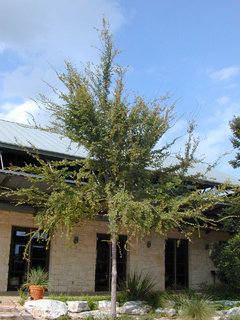
    After writing the above I looked out the window at the Winged Elm in out yard. If your Elm is a Winged elm it will always have a slight disarray look to it. Its branches will always have a slight droop to them. Mine are about 13 inches diameter at the base and I am continually cutting up the lower branches so I can mow under them.


    Other than its personal habits it is a nice tree. It has leaves are a little smaller that most trees, so when they fall they quickly break down in the yard. They have small flowers in the spring.

    https://www.wildflower.org/plants/result.php?id_plant=ulal


    Their main distinguishing feature is the rib that appears on the new branches and younger trees.


    Example Not my tree.


  • 6 years ago

    The branch structure makes it more likely to be New Harmony than Princeton.


    I'd prune it. Try to find yourself a good pruning manual with some nice illustrations like Embothrium suggests. Without some pruning at a young age, many elms can easily get out of control. Any possible structural defects not corrected now will be much harder to deal with later. Or become storm damage. The main issues I often see with young elms are weak branch angles/joints with included bark and cross-branching growing back into the tree. Hard to tell from your pics if you have that, but that is what I'd look for.

    rasbeh thanked mntreegrower
  • 6 years ago

    I think the consensus was prune a little. Sometimes, especially when I have a new tool, I do too much. Go out and limit yourself to 10 small cuts. Pick crosswise branches and those pointing down.

    If I come over and keep you from killing it with love as Ken says will you come help me leave my redbuds mostly alone :)

  • 6 years ago

    I have a Zelkova of similar size. My goal is to try to prune to a central leader with lowest permanent branch at around 15 ft. above grade.

    The problem with elms and zelkovas is that young branches are very whippy. So a branch which starts out vertical will eventually start arching probably in the direction of the prevailing wind direction.

    I've settled on letting the upper branches do their thing until their bottom halves become inflexible (probably around 1" diameter) and then picking the leader, scaffold limbs, and temporary branches. Then start reducing the scaffold limbs and temporary branches judiciously with reduction cuts. When you make your first reduction cuts, the leader and other limbs will probably all be the same thickness. Your goal is to make judicious reduction cuts in the non-leader branches until the leader overtakes them in thickness to at least twice as thick. Then you can think about removing the non-leader if it is a temporary branch.

    Reducing branches is important to keep the thickness of the branch smaller compared to the leader. Otherwise they remain codominant with the leader.

    Leave all the upper smaller branches (at the top of tree) in place, especially for the leader and a few surrounding branches, because, as I said, they're all whippy and you don't know yet which one will be the eventual leader.

    So basically, every year you pick out a leader from the hardened branches of your old leader. Picking the leader is complicated because the thickest branch is not always the most vertical.

    If a central leader is not your goal and you're ok with codominant trunks just make sure they are spaced apart and don't all start at the same point on the trunk.

    rasbeh thanked ofdm (South Bay Area CA zone 9b)
  • 6 years ago

    trees could sense water mains under the ground and finally damage them. I asked OP for the citation. The link provided reminds me of an Abbot & Costello routine.

    Can anyone provide a credible citation that trees are able to damage the water main that provides water? I am not asking about septic.