Software
Houzz Logo Print
cf_carter

Should I cut the vine off my tree?

6 years ago
last modified: 6 years ago
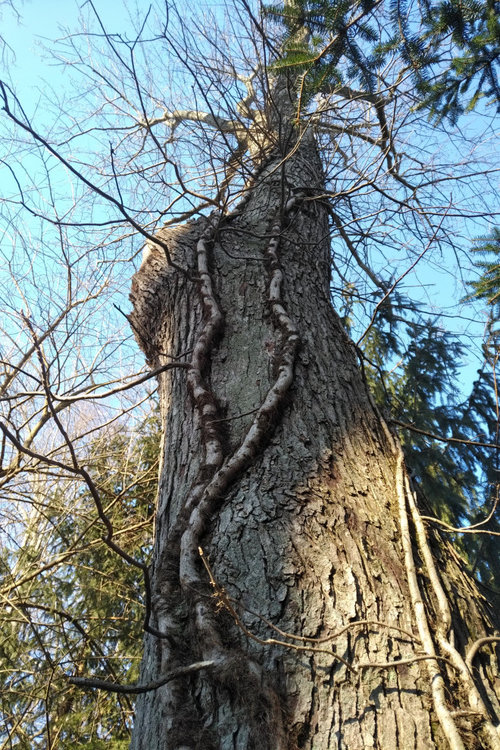
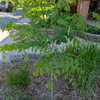
I was just walking through the backyard and noticed a thick vine growing up one of our trees. It looks to be merged with the trunk pretty well so I'm not sure if its safe to cut it without harming the tree? Photo below. Thanks!


Comments (19)

  • 6 years ago

    totally agree with the above ...


    you can very carefully cut it at the ground.. and apply a root killer and just leave the vine there ... no real need to harm the tree by trying to pull it out ...


    i had babes on the property way back when ... i also cut it about 6 foot up ... just to get it out of the way ..


    when it leafs out.. do confirm is it PI ...


    welcome to the forums .....


    ken

    CF Carter thanked ken_adrian Adrian MI cold Z5
  • 6 years ago

    Hi, It's bad news but doesn't really surprise me. I spotted some smaller poison ivy near our fence in the same yard back in the fall. I have a curious dog that likes to eat twigs, nuts, and generally anything he can find, so I want to make sure I get it all out. What do you suggest for root killer? I don't think you can buy the good stuff in stores here anymore in Ontario but I could be wrong. Is there any chance the root killer would harm the tree, like maybe their roots are fused together or something and they share some of the same vascular system? Really would hate to lose this huge tree. Thanks to you both for helping!

  • 6 years ago

    https://www.canada.ca/en/health-canada/services/home-garden-safety/poison-ivy.html


    im not happy they refer to it as a pesticide.. which kills bugs ... its actually a herbicide ... eh??? .. they seem to use the terms interchangeably.. like words dont mean things .. whats that all about ....


    i would wear long sleeves... tape gloves at the wrist to the shirt ... heavy boots and jeans ... and all but the boots go in the washer to remove any oils you might have got on the clothes ... i think i used dawn ... since the irritant is oil based ...


    now that we have given you the leads.. you are going to have to do your own research and make good decisions for you ...


    and of course.. you start by properly IDing it ...


    ken

  • 6 years ago
    last modified: 6 years ago

    Ken, FYI, the word "pesticide" is a generic one that includes all the "cides".

    "What Is a Pesticide?

    According to the Environmental Protection Agency (EPA), the government body that regulates pesticides in the U.S., a pesticide is any substance or mixture
    of substances intended for preventing, destroying, repelling or mitigating
    any pest. Though often misunderstood to refer only to insecticides, the
    term pesticide also applies to herbicides, fungicides, and various other
    substances used to control pests. Pesticides also include plant regulators,
    defoliants and desiccants."

    EPA Description

  • 6 years ago

    shax is correct. 'Pesticide' is a catch-all term used to describe any kind of product used to kill or control or discourage plants, animals or other living organisms that can harm plants (or animals - many pet care products are pesticides).

    From Wikipedia: A pest is any species, strain or biotype of plant, animal, or pathogenic agent injurious to plants or plant products. Pesticides are substances that are meant to control pests, including weeds. The term pesticide includes all of the following: herbicide, insecticide (which may include insect growth regulators and termiticides), nematicide, molluscicide, piscicide, miticide, avicide, rodenticide, bacericide, fungicide, antimicrobial. insect repellent and animal repellent. Most pesticides are intended to serve as plant protection products (also known as crop protection products), which in general, protect plants from weeds, fungi, or insects.

  • 6 years ago

    It doesn't look hairy enough to be poison to me. But if it its, I also would point out that a large percentage of the population is not allergic to poison ivy. If you are an adult who has never gotten it, I'd assume you're in the lucky minority. My husband is 68 and has NEVER gotten it, yet avoids it like the plague, leaving ME, who has had terrible reactions, to do the dirty work. Over the years my reactions have been milder and milder so that I no longer take all the precautions given above. I just wash vigorously. BTW, what is the timing for applying herbicide to cut vines? I was waiting for growth to begin. Is that right?

    CF Carter thanked kitasei
  • 6 years ago
    last modified: 6 years ago

    TRUST ME, this is Toxicodendron radicans!

    I think triclopyr is still permitted after the pseudo-scientific hysteria about glyphosate (roundup) led to bans in places like Canada. It would probably work any time after growth starts, but I would wait until it is fully leafed out in early summer, then apply undiluted during a period when no rain is predicted for a while. Apply it at sundown to minimize evaporation. I'd say 100-200 ml of at least an 8% solution, applied to the lower 3 feet of the vines, will kill them. An industrial syringe is the most precise way, you might add a couple drops of dish detergent to help it spread, I've found the aerial rootlets to be rather hydrophobic. I've killed a slew of them that way. Once you get rid of the huge seed mommas in an area, you will have FAR fewer seedlings in the garden.

    "Three way" also works, but is nasty to work with.

    CF Carter thanked UpperBayGardener (zone 7)
  • 6 years ago

    If you choose to remove it, remember that the irritating oils can stay in the plant for up to 5 years after the plant is killed. If it isn't an eyesore, I would say cut it at the base, and just leave it be. Then clean your cutting tool like you were trying to get dried engine oil off of it.

    CF Carter thanked HU-229296088
  • 6 years ago

    when i sprayed leaves .... underground roots ... it took 3 to 5 sprayings... before it died ... repeatedly releafing ... etc ..


    and... NEVER BURN IT ... it can get in your lungs ...


    ken

  • 6 years ago
    last modified: 6 years ago

    Tryclopyr will harm the tree if you get it on the bark, so work carefully with it if thats the route you choose. I have cut like a 4ft section out of a vine that size with long handled bypass pruners, used the pruners to move the vine, then carefully dug out the roots. 2 layers of long sleaves, rubber gloves under leather gloves, long pants, hooded sweatshirt, hat, chainsaw face mask, all that good stuff. Overkill, but I didnt want to get a horrible rash. Made sure my wrists, neck, belt line, and face were covered. Be aware the soil may contain the urushiol oils that cause the rash too. Now is a good time to do that work, when the soil is soft, and it isnt leafed out dangling in your face.

    CF Carter thanked Skip1909
  • 6 years ago

    Herbicides can potential diffuse through the trunk, but I have done it on over 5 large trees at this point, and if you are careful (why I said to use the industrial syringe) no problem.

  • 6 years ago
    last modified: 6 years ago

    You mentioned a dog. While the main way to get poison ivy is by touching it, there are other ways. The most covert is the family dog. While he is out he gets the poison ivy oil on his fur. You call him he comes running, you put your arm around him pet him, and say good dog. This is exactly the way I got a bad case of poison ivy on the inside of my arm and side.

    Don't burn poison ivy. The warm air from the fire can carry the oil to the people surround the fire. Been there done that.

    Don't assume that because you no longer have the plant in the shovel, rake, wheelbarrow, or box the danger is gone. I have gotten poison ivy from these secondary sources. Probably the dumbest one on my part was when I used a large box to carry the poison ivy from the yard. After it was empty I found it easier to carry the box above my head. I went to the doctor with that one.

    As for the large vine, If you have an axe, use it. You can cut it and not get close to it. Yes there will be a cut in the bark, but the tree will not be harmed.

    One other comment on the large vine. If it is hairy it is probably poison ivy. If it is not it could be grape vine, Virginia creeper, and several other harmless native (US) plants.

    If it is poison ivy and is in an out of the way place, leave it. Birds love the berries and in the fall it has pretty red leaves.

    CF Carter thanked krnuttle
  • 6 years ago

    In light of how nasty this stuff sounds, I don't want to dig it out or make a big mess in the area because my dog WILL get into it. So what I've decided to do is duct tape a clear plastic bag around the tree trunk with a old saw inside it, about 4 feet up from the ground (where the dog can never reach). Then I'll saw through the vine with everything including the saw inside the clear bag so nothing can escape. Then I'll leave it for a few days to make sure the vine doesn't drip poison or something, and when the coast is clear I'll carefully remove and throw out the bag AND the saw together. Then I'll use some roundup on it when I see some leaves in the spring.

    I AM susceptible to poison ivy, I got it at camp once as a kid when I rubbed it all over my face to impress my friends like an idiot. Thanks again for all the help everyone, you saved me a nasty rash for sure because I didn't even know it was poison ivy and never imagined it could grow so big!

  • 6 years ago

    After you are finished messing with it wash with soap. Wash rinse and soap up again. This is the best preventive for poison Ivy.


    Personally I don't rub my body with the saw blade so as with my axe and hatchet (which I use for smaller vines) I have never washed them. If you want wash them in soap and water after you have washed.

  • 6 years ago

    Wash with Dawn dishwashing liquid, a grease and oil cutter. Poison ivy has an oil called urishol which is very hard to remove with plain soap. Usually, plain soap will just spread the urishol around, with disastrous results.

  • 6 years ago

    When you cut the vine, dig/gouge a small hole in the center of the cut and fill it with Round up for woody plants. Should work the first time around. Very easy, and I do it all the time with both PI and wild grape vines.

  • 6 years ago
    last modified: 6 years ago

    HERE is one solution to PI "You're gonna need an ocean of calomine lotion" LOL

    Did anyone ever wonder why a plant that evolved in the absence of primates produces urishiol which only effects primates?????

    This from Smithsonian Insider: Your dog & cat don't get it, nor do birds, deer, squirrels, snakes & insects.

  • 6 years ago

    What I have done to kill False Virginia Creeper which was much smaller is to put roundup in a rubber glove and put the long cut off stub into the glove and tape it in place. The plant will take it all in, the OP's vine would need to be cut high enough to be able to bend it over, done deal.