Software
Houzz Logo Print
shead

Best waterproof membrane for basement walls?

6 years ago

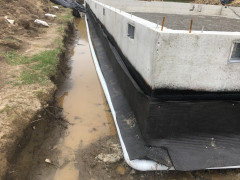
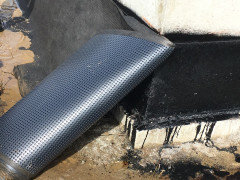
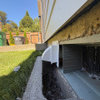
Our basement walls were poured yesterday and in addition to the standard waterproofing method our builder includes, DH and I want to add a dimpled waterproof membrane similar to this:


https://www.homedepot.com/p/DMX-AG-65-6-ft-x-6-6-ft-DMX-AG-Foundation-Wrap-Kit-198-20-AG-Kit/310516641


We are not familiar with the wrap system really at all but our brief research makes it seem like a no- brainer to add it. However, there are several different types out there and we weren't sure which one works best and is easiest to install. Any suggestions and/or advice?

Comments (13)

  • 6 years ago
    last modified: 6 years ago

    We used an identical but very heavy duty commercial product for the entire 420’ perimeter. My builder used a concrete nail gun to adhere them to concrete. Prior to that I had the builder cover the exterior with bitumen based paint. having said all that, it was the entire drainage system that was responsible for the extreme dry crawl space 4-5’ tall


    shead thanked Pinebaron
  • 6 years ago

    @Pinebaron, do you know what brand your commercial product was?

  • 6 years ago
    last modified: 6 years ago

    No sorry; my builder obtained the material, I only approved the quality. You may be able to search for it online.


  • PRO
    6 years ago

    Your architect/designer should specify the particular waterproofing system. If applied per the manufacturer's instructions, it should come with the manufacturer's guarantee.

  • 6 years ago
    last modified: 6 years ago

    @Charles Ross Homes, we live in the rural rolling hills of southern Kentucky with nary a designer or architect within 2 hours. Our builder doesn’t use this system as he’s unfamiliar with it. He will install according to manufacturer’s instructions if we provide him the material.

    Do you have any brand recommendations?

  • PRO
    6 years ago

    Foundation waterproofing is not a single component, but a multi-component system designed to 1.) protect the foundation wall, 2.) provide a means of relieving hydrostatic pressure and 3.) to drain water away at the footing level (preferably to daylight.) All three are important to achieve the objective of a "waterproof" foundation wall.


    When foundation waterproofing is required, we hire a specialty contractor to install the components so we get the particular manufacturer's guarantee. We perform the backfilling using a gravel that's self-compacting in 12" lifts and allows water to easily drain to a perimeter foundation drainage pipe.

  • 6 years ago

    Our contractor uses drains and gravel fill along with painting with the black type waterproofing paint (not sure exact name) but that’s standard practice in this area. We just want to add the membrane on top of that for extra security against moisture or dampness. We aren’t using a single component.

  • PRO
    6 years ago

    If your builder is installing one component of a multi-component system, you'll be best served to install the other system components from the same manufacturer and get their warranty.

  • 6 years ago

    It appears you have confused a vertical wall drainage/protection membrane with a waterproofing material so it's difficult to answer your question.

    I prefer cold spray applied modified bitumen (rubberized asphalt) for waterproofing. there are too many drainage/protection materials to shake a stick at but I prefer grooved styrofoam or rigid fiberglass depending on the site and soil conditions.

  • 6 years ago
    last modified: 6 years ago

    The "standard waterproofing" the OP's builder is including is almost certainly nothing more than dampproofing that will fail as soon as the concrete invariably cracks and the typically inadequate backfilling settles down around the foundation. If the builder were knowledgeable about other methods, s/he would likely have offered them as "upgrades."

  • 6 years ago

    Well, geez. Who said anything about inadequate backfilling?


    In our last new build (15 years ago), our builder thoroughly coated the blocked basement walls with "black tar" (I know that's not what it was but for lack of proper terminology right now, let's call it that). He also backfilled with gravel with two layers of of corrugated drain lines (one near the bottom of the walls and one about halfway up that was properly). The gravel went to about 2 ft below grade and then was dirt on top of that. We spent a FORTUNE on gravel on that house. We lived in an area hit heavily by the 2010 floods of Tennessee and Southern Kentucky. If any basement was going to leak, it would've certainly leaked then. Ours didn't AT ALL. My friend's basement filled all the way up to the main level of her house. It was a disaster.


    These walls are poured concrete this time and the backfilling will be the same as before with the same exterior coating applied. DH's friend (a contractor in the Nashville area) had suggested adding this additional membrane layer as just another layer of protection. I'm simply doing research as to which membrane is most often used and recommended.


    "It appears you have confused a vertical wall drainage/protection membrane with a waterproofing material so it's difficult to answer your question."


    And that's quite possible that I did confuse the two but I was hoping the link to the product in the OP would've helped clear up the confusion as to what specific type product I was looking at :)


  • 6 years ago
    last modified: 6 years ago

    same exterior coating

    A builder who has taken the effort to not simply push back the excavated soil for backfill may actually be waterproofing with rubber elastomeric coating, not simply dampproofing. Which is good!


    Still, considering the cost of re-excavating in case of a leak, some custom builders I know will use two waterproofing methods--typically a blue spray rubber membrane followed by a dimpled membrane. (All homebuilders in Ontario must be enrolled in TARION, whose warranty protects homebuyers from water penetration in new builds for two years.)