Software
Houzz Logo Print
webuser_417834477

Landscape plan advice


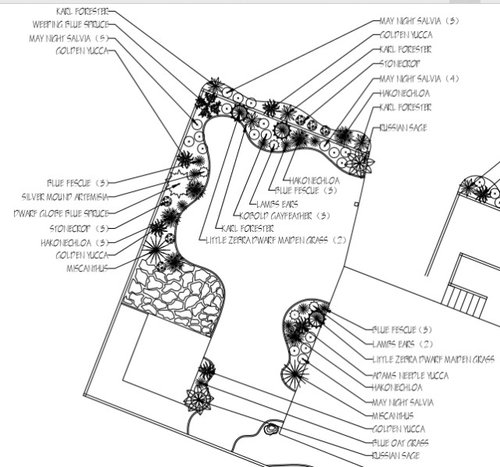
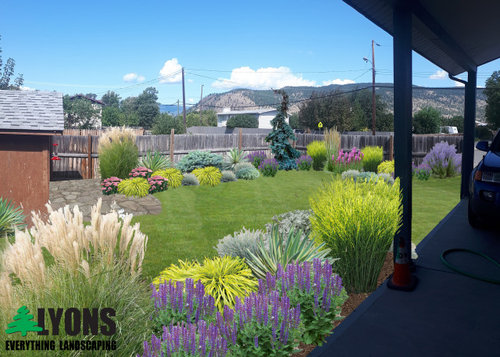
I've had a landscape plan done for my side yard with drought resistant plants. It's a picture of my yard with plants superimposed onto it. I love it but would like to change it a bit and add in some small trees (2-3) and would like some suggestions as to where and what kind. I love birds and want to provide a bit more shelter for them and have a place to hang birdfeeders/houses. I don't know how much shelter these perennials will offer in the winter.... Some suggestions for trees are Crimson Point Flowering Plum, Fruit trees (plum, cherry or fruit cocktail) Crabapple, Lilac, Katsura and barberry bushes.

It is very windy here also to note.


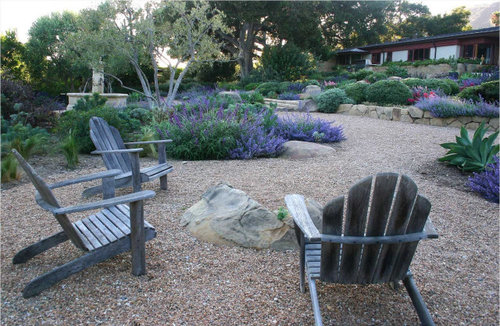
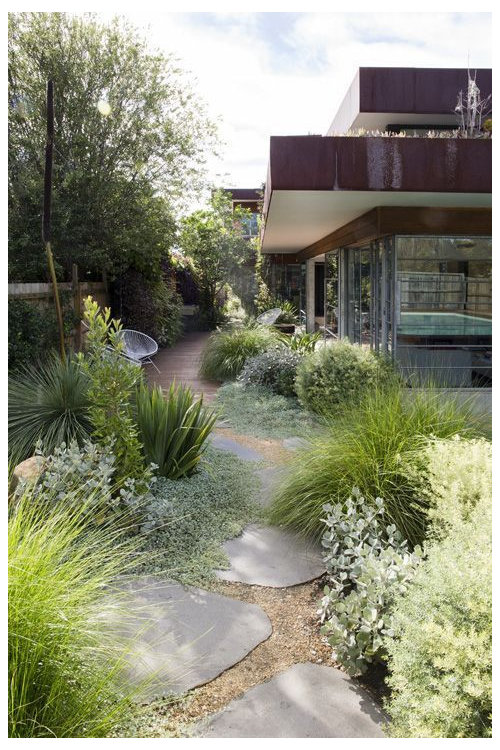
Sorry about the container planter photo that was an accident and I don't know how to delete it. I want to make a pathway along the carport (maybe tying into the shade patio area in front of the shed ?? which I am raising and re-siding). The plan calls for flagstone which I can't afford so I was thinking of just using a fine crush for now but would like other suggestions if possible. I was thinking I could do the same type of crush pathway with natural looking pavers or more affordable stone similar to flagstone. Any suggestions for those? I've attached a couple of pictures of what I'm hoping for.


Thank you in advance for your advice! :)


Comments (30)

  • 6 years ago

    A critical point you left out is where you are located geographically.

    Deborah Petrovitch thanked Embothrium
  • 6 years ago

    Oh yes, I'm located in Merritt BC, Canada. I think we're considered Zone 4-5. Thanks for pointing that out.


  • 6 years ago

    Also my house faces North so the camera is pointing North - NW right now. The yard gets quite a bit of sun except where I want to put the path alongside the carport as it's shaded in the morning from the house.

  • 6 years ago

    For everyone, think semi arid rolling grassland with Ponderosa pine and Douglas fir in the dry areas.

    Deborah Petrovitch thanked wayne
  • 6 years ago

    I would love to have a ponderosa pine but they become gigantic. I have a very small yard so I'm looking for smaller trees.


  • 6 years ago

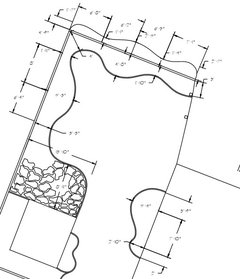
    I read Yardvaark’s comment and thought ‘wow, that’s kind of harsh.’ Then I scrolled down to his plan, and back up to the original post, and I have to say I think he’s right. Personally I find the softer curves very pleasing, and agree about maintenance being easier.

  • 6 years ago

    LOL!! Nothing harsh about it. That is a major failing with the existing plan. Always gradual, gentle curves - no loopy ins and outs!!

  • 6 years ago

    There are lots of ways to convey that message. Since you can’t read tone, language is important. Regardless of that I agree with his rendering.

  • 6 years ago

    I think you are reading more into Yard's comments than is necessary or was intended. I find them to be a pretty accurate description of the shortcomings of the existing plan. Landscape designers tend to call a spade a spade :-) If you want to mess around with fluffy or PC euphemisms, ask your neighbor!

  • 6 years ago

    Oh I see what Wayne meant now, thank you and sorry about that. And I will totally take that great advice about the bed lines, the redo looks great to me. :) I very much like a spade being called a spade so no worries!


  • 6 years ago

    Before I saw YV’s suggestions the first thing that came to mind is to address the curves. Glad to see you’re taking the feedback. There is a balance though - creating a natural interweave of plants can be difficult to translate within large geometric shapes. Although formal mass plantings do translate. So it depends on the site and your overall goal.


    I like YV’s suggestions for speciman trees but would add one to the back left corner.


    I‘d like these three to be Picea omorika Bruns Or Silberblue. But depends on the space as there is no indication of scale.


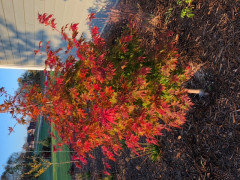
    Next choice would be Korean maple - many hybrids exist. Northwind is my favorite for form and the fact it’s foliage emerges burgundy.


    If you have to have flowers Sargent Cherry would be the next choice. Spring Wonder and Pink Flair are two common cultivars. Nice blooms and fall color but both are somewhat short lived but bark is somewhat ornamental in winter.


    Deborah Petrovitch thanked whaas_5a
  • 6 years ago

    Hakonechloa has done well for me under a kousa dogwood, but the rest may suffer in the shade of the trees. Site the trees and adjust, perhaps choosing hosta with leaf colors to compliment.

    Deborah Petrovitch thanked TBL from CT
  • 6 years ago

    Thank you for the suggestions, this is very helpful. I appreciate it.


  • PRO
    6 years ago

    "I read Yardvaark’s comment and thought ‘wow, that’s kind of harsh.’ Nothing at all I said was intended harshly. It's pure matter of fact. One cannot make progress in design by hiding from any true facts.

    Whaas, I would have put a tree at the back left corner except OP has weeping blue spruce there. I moved it forward so it has more room.

    Deborah Petrovitch thanked Yardvaark
  • 6 years ago

    I have a katsura and it's a large tree.

    Deborah Petrovitch thanked seely
  • 6 years ago

    Whaas... do you mean I should pick 3 of the same specimen of tree to put in that back corner? Also I was thinking it would be nice to have an angled arbour leading into the yard by the top right corner off the driveway... so perhaps I could have a small tree there too?

  • 6 years ago
    last modified: 6 years ago

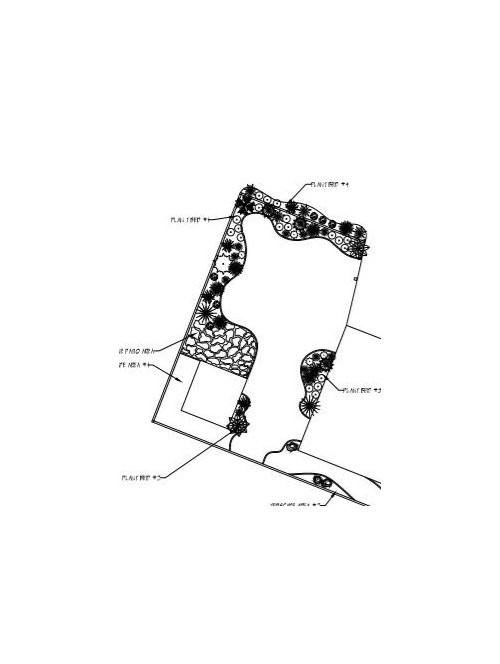
    Does this help for scale? It's a small yard...


  • 6 years ago

    I like the plan except for the shape as has already been discussed. I would want a Plum tree, a Cherry tree and a Western Redbud.

    Deborah Petrovitch thanked emmarene9
  • 6 years ago

    The Western Redbud is beautiful! Thanks :)

  • 6 years ago

    Western redbud is not a very adaptable species and rarely does well outside its native range. Even struggles here in the PNW.

    Would also add that the majority of spring flowering trees have minimal appeal outside of their bloom season. Something that really shines at another time of year would be a nice inclusion.....the Korean maple is a good choice. Or a very close to being native vine maple, Acer circinatum.

  • 6 years ago

    Thanks gardengal :)

    Any suggestions on stone for the path and patio that is more affordable than flagstone? I'm open to any options.

  • 6 years ago

    Flagstone just describes a sedimentary rock that naturally splits into sheets or layers. Or a rock that is specifically quarried or cut in that manner. So you can have all different types of flagstone, some a lot more expensive than others. Generally, locally sourced stone of any kind will be less expensive than something imported from across the country.....like Pennsylvania bluestone :-)

    A very different look but concrete pavers will always be less expensive, both to purchase and install, than natural stone.

    Deborah Petrovitch thanked gardengal48 (PNW Z8/9)
  • 6 years ago
    last modified: 6 years ago

    The path at least could be entirely crushed rock which would be more practical to walk on because unlike with individual stones you don't have to watch where you are stepping.

    Since it sounds like you are in a pretty cold area east of the Cascade Mountains where summers are likely to be arid and hot be sure to check all suggested trees for their ability to survive your climate throughout the year. Not just the lowest winter temperatures but also the desert like circumstances during the summer. This latter occurrence can be pretty limiting, with otherwise cold tolerant species burning up during the growing season. For instance when I was a student at WSU located in the Palouse wheat country of SE WA the only example of Cornus florida - seen everywhere west of the Cascades - known by me to be present was planted on a small island in the center of a pool that was itself enclosed by one of the campus buildings (but open to the sky, of course). I took it to mean that it was thought this kind of tree needed the humidity and shelter of this planting situation to succeed in that geographical location.

    Similarly the one place on campus they had saucer magnolias - otherwise another cold climate favorite, commonly seen in moister climates - was in the shadow of a building.

    Deborah Petrovitch thanked Embothrium
  • 6 years ago

    Great advice, thank you. :)

  • 6 years ago

    What are the suggestions for the edging on the beds? I would like something that is easy to mow around/against but most of all, I like the natural look. I don't really want a stone edge or anything that takes away from the plants.

  • PRO
    6 years ago

    Let the lowest plants be their own edge.

  • 6 years ago

    Agree - the mulch or the border plants are the edging. I always get a kick out of those that spend so much time and money on the edging. Same for those that rake their leaves from their lawns!


    Personally I would chose three of the same tree with 1 or 2 long lasting wow factor features - including great looking foilage throughout the year. I don't think you have the space but I'd chose yellowwoods so then I'd be looking at Triflorum Maple, Korean Maple or Paperbark/Hybrid Paperbark Maple for medium scale.


    Otherwise I would chose three different ones that have a similar scale and texture.


    For example

    Hybrid Paperpark maple = Fall Color + Bark

    Sargent Cherry = Spring Blooms + Fall Color + Bark

    Amur maackia = Summer Blooms + Bark

    Deborah Petrovitch thanked whaas_5a
  • 6 years ago

    I'm so glad to hear this. For some reason I thought edging was a mandatory thing :) Thanks.

  • 5 years ago

    its just great thank u

Sponsored
Hope Restoration & General Contracting
Average rating: 4.7 out of 5 stars35 Reviews
Columbus Design-Build, Kitchen & Bath Remodeling, Historic Renovations