Software
Houzz Logo Print
katlynn_v

Opinions on Using Fertilizers

6 years ago

Hi everyone, I've seen a lot of talk about fertilizers for cacti/succs on YouTube and other social media lately and was wondering what, if any, fertilizers you use for your plants? The one many have been recommending is the growmore 0-50-30, does anyone here use this or have experience with it? Are fertilizers necessary for all species?
Thanks in advance for any answers! Always appreciate the feedback I get here :)

Comments (24)

  • 6 years ago

    From what I read: ..."Great for flowers or perennials..."

    Obviously, there are other statements, but if I read this one, I wouldn't be buying it for succulents. JMO, but more balanced fert is better. But - I very seldom use fert on succulents, usually if I have any leftover from the veggie garden (quite seldom). I use 24-8-16 for all. Do not care for "specilized" ferts, promoting 'big blooms' etc. But, JMO of course and I could be wrong...

    Katlynn NY (5a) thanked rina_Ontario,Canada 5a
  • 6 years ago

    I mostly just throw some Osmocote on mine once a year or so.

    Katlynn NY (5a) thanked stupidlazydog CT zone 5b/6a
  • 6 years ago

    I use long release granules like osmocote when I repot or add some to the top of an existing pot to water in each time it gets watered. When I used to fertilise, I tried to get the 3 numbers similar for a fertiliser. You don't want high nitrogen fertilisers.

    Katlynn NY (5a) thanked s g
  • 6 years ago

    Thank you for your responses!

    I was mostly worried about not providing my plants enough nutrients, but knowing the beautiful blooms you get from your plants Rina, it makes me feel a lot better knowing you hardly use them either.

    sld and sg I hadn't heard of osmocote before, but it sounds much easier than mixing my own fertilizer concoction - if I do decide to use some that will likely be my choice so thank you!


  • 6 years ago

    I am not suggesting NOT using ferts at all, just do not over do it. I just posted what I do.

    Many knowledgeable ppl suggest using 1/2 or even less of recomended dose if using with every watering. Over-fertilizing will probably spur growth, but too much of good think could be not so good...plant could be growing too fast, be more of magnet to bugs to feed on and so on.

    Osmocote (or any other slow-release fert) lasts for some time (about 4mo) and is easy to use. It is not a soluble fert (those are quick-release, that supply nutrient immediately), best to use it is to mix it thoroughly with the potting mix. Or sprinkle some on soil and incorporate it, either by mixing or watering in.

    It isn't easy to make proper fert at home. Many thing may work, but home-made fert may be very much lacking what ready-made ferts supply. Even more important is proper ratio of different nutrients and minerals.


    Katlynn NY (5a) thanked rina_Ontario,Canada 5a
  • 6 years ago

    If you really overdo the fertilizer, you can also get leaf burn and stunted root growth (from too much nitrogen).

    I like osmocote, because... #1) it's easy #2) when plants are outside for the summer, we sometimes get enough rain that it can be hard to find a time when they've dried out enough to water in fertilizer. I just sprinkle the top with Osmocote in the spring, and every time they're watered (or rained on) they get a bit of food. I generally do this once a year, because most of my plants are more or less dormant through the winter.

    It's better to err on the side of too little fertilizer than too much.

    Katlynn NY (5a) thanked stupidlazydog CT zone 5b/6a
  • 6 years ago

    I've also, at times, used a dilute solution of Dyna Gro Foliage Pro or Dyna Gro Grow. Small seedlings get this instead of Osmocote. Also plants that are growing through the winter may get this every now and then. This is a liquid that you mix with water.

    Katlynn NY (5a) thanked stupidlazydog CT zone 5b/6a
  • 6 years ago

    Rina, thank you for the clarification!

    Now some of my plants aren't in need of repotting and have a topdressing on their soil. Would I be able to sprinkle osmocote on their topdressing and have the same benefits?

  • 6 years ago

    I sprinkle time release fertilizer for my indoor trees because I'm lazy with those in particular. Sprinkling on top is probably not nearly as effective. With succulents, liquid fertilizer is my go-to.

    Katlynn NY (5a) thanked ewwmayo
  • 6 years ago

    I sprinkle it on top and scratch it in a bit. Seems to work fine.


    Katlynn NY (5a) thanked stupidlazydog CT zone 5b/6a
  • 6 years ago

    SLD - It definitely works! My trees had signs of nutrient deficiency and shortly after adding the fertilizer on top everything improved. With time-release fertilizer in inorganic mixes, I found it lasts maybe 4-6 months.

    Katlynn NY (5a) thanked ewwmayo
  • 6 years ago

    Yep, I've always used a bit less than the recommended amount. Thanks for the kind words, Kara. Coming from you, it means a lot! I have killed a good number of plants over the years, though. I figure that's part of learning how to grow them.

  • 6 years ago

    Hoping this reply finally goes through - I've learned using gardenweb instead of the houzz site is generally easier on mobile.

    Thank you all for the tips!

    Kara, thanks for sharing the pics, makes it much easier to see what a difference using fertilizers can make in terms of plant growth!

    You've all convinced me to get my hands on some slow release fertilizer, and I'm sure my plants will appreciate it. Thank you again and I hope you're all doing well!😊

  • 6 years ago
    last modified: 6 years ago

    The one many have been recommending is the Growmore 0-50-30, does anyone here use this or have experience with it? I don't use it, but there is no need to use it in order to understand there are inherent 'issues' if using it for containerized plants. No need to be the bus driver to know what makes the wheels go 'round and 'round. The average plant uses 6X more nitrogen (N) than P(hosphorous). and about 3/5 as much K (potassium) as N. Given the amount of P in the 0-50-30, the appropriate % of N, by weight, would be about 130%. IOW, if not impossible, it would be extremely challenging to justify use of 0-50-30 for ANY container planting. I would also consider it wholly inappropriate for use on plants in the landscape unless a soil test indicates a strong need for P, a lesser need for K, and no need for N. Since N is commonly the nutrient most often needing supplementation, that's not very likely to ever be the case. In a discussion I had with Dave Neal, owner of Dyna-Gro Nutrition Solutions, he confirmed my assertion that the only reason "bloom booster" (high P) fertilizers even exist is because the industry has created a demand for a product the consumer doesn't need and in almost all cases, shouldn't use.

    "You are correct. We market a high P (Liquid Bloom) because people "believe" they need this. As you have noted, our Foliage-Pro does a great job start to finish. However, it is simpler to give the market what they think they need than to try to reeducate it. There is some evidence to believe that low N helps to "convince" a plant to stop its vegetative growth and move into its reproductive phase (flowering), but environmental factors are probably more important. P is typically 5th or 6th in order of importance of the six macronutrients. There is little scientific justification for higher P formulas, but marketing does come into play for the vast majority of users who lack any real understanding of plant nutritional requirements. Therefore, the market is flooded with a plethora of snake oil products that provide little benefit and can actually do harm. For example, one exhibitor at a hydroponic trade show had a calcium supplement with 2% calcium derived from calcium chloride. Can you guess what continued application of 2% chloride would do to plants?'
    I hope this answers your question and am sorry for Zina's inaccurate response."
    Cordially,
    Dave Neal, CEO
    Dyna-Gro Nutrition Solutions
    2775 Giant Rd.
    Richmond, CA 94806
    800-Dyna-Gro, Fax: 510-233-0198
    grodave@aol.com
    www.dyna-gro.com

    Are fertilizers necessary for all species? I think the best way to answer the question is to qualify the answer as I go. For plants in the ground, nutritional supplementation might or might not be necessary. In most cases, soil tests would reveal a single to several nutrients are in short supply or out of balance with other nutrients present. Not only is it important that all essential nutrients are present in the soil, they need to be available and in balance with other nutrients. By in balance, I mean there is a favorable ratio of each nutrient to the other. If that ratio isn't properly balanced, an excess of one nutrient can cause what's referred to as an antagonistic deficiency of another. Using a 0-50-30 fertilizer will supply so much phosphorous, it's almost certain to limit uptake of iron, calcium, and potassium to levels that will cause symptoms. The most conspicuous symptom would be chlorosis (yellowing of foliage), so the normal conclusion is, more fertilizer is needed, and the issue quickly becomes out of control.

    For plants in containers, I think the best and safest answer about the essential nature of fertilizer for containerized plants is yes, it is a necessity from the plant's perspective. Plants need all of the essential nutrients to grow normally. If you don't fertilize, plants are forced to depend on soil life's cleaving of the hydrocarbon chains that make up soil particles. Since containers are largely hostile environments to these organisms, availability of nutrients is erratic and unreliable. If you focus on the soil's structure (which determines the ratio of water to air it holds) and its structural stability while shouldering the responsibility of nutritional supplementation, you'll be doing your plants a favor. A good medium makes the growers job far easier than media you need to fight for control of your plants' vitality.

    CRFs (controlled release fertilizers) like Osmocote have their place, but they are different from slow release fertilizers (what you typically spread on your lawn or garden). The main issue a grower faces is the relinquishment of control over what, how much, and when the plant finds nutrients available. Temperature is the driving force behind almost all CRFs release rates. I grow many woody plants which enter a consequential dormancy during summer's dog days. During this time, I do not want them dealing with the highest fertility level of the growth cycle, but CRFs do not allow me to shut off delivery of nutrients. Soluble synthetic fertilizers give me complete control, which is why I favor them over any other types of fertilizers. YMMV

    Al

    Katlynn NY (5a) thanked tapla (mid-Michigan, USDA z5b-6a)
  • 6 years ago

    Al,

    Thank you for such a thorough response! I really appreciate your explanation of the problem with fertilizers with high P and lower N. While I was ready to just accept the words of more experienced gardeners, I do enjoy knowing why something is ineffective/problematic.

    Also, I do see your point about the lack of control tied to using CRFs, but I'm hesitant to try my hand at any of the fertilizers that require me to mix them into the plants water in fear of messing up monumentally.

  • 6 years ago
    last modified: 6 years ago

    You're welcome Katlynn. I have a reputation for being long-winded, but three things feed the longer than normal responses. I think it's important to understand WHY someone offers advice, and explaining why offers reassurance I'm not just repeating someone else's opinion or furthering another horticultural myth that might better have died out as opposed to being perpetuated. Second, when I respond to a poster, I try to provide information that will benefit others who might read an offering years from now. I get many 'likes' in my mail each day for posts I contributed many years ago, so I know writing today, for tomorrow, is a valid reason to provide details and explanations. Finally, being able to explain everything I say contributes to my credibility, which is very important if someone really wants to be helpful.

    I started learning about plants before there was an internet, so it was a laborious process (books). Today, you can chase a thought string here there everywhere and not lose your place in the window where you started - very conducive to learning. My efforts at growing become increasingly rewarding as the plane on which I interact with plants is elevated. I enjoy helping others attain a greater measure of personal satisfaction by sharing what I've learned and validated by way of my own personal applications - it's a natural extension of my own growing experience.

    I use one soluble synthetic fertilizer for everything I grow in containers. I don't fertilize when mean temperatures are below 60* (no one really should because it sets the stage for ammonium toxicity if the fertilizer contains urea or organic sources of N), above 80* (dissolved solids (fertilizer salts) in the soil makes water uptake more difficult for plants). I fertilize weekly in the summer and every time I water (at a low fertilizer concentration) in the winter. My overview of using a soluble synthetic fertilizer is, it's far less likely you'll screw up monumentally, especially if you use a soil that allows you to water correctly - so you're flushing the soil as you water.

    ****************************************************************************

    Trying to keep track of what plant needs fertilizing by the calendar is not a good way to approach nutritional supplementation. If you fertilize monthly, there might be one watering between each fertilization in winter, and more than 6 in the summer, so the amount of fertilizer applied would be upside down. Instead, you can drop a marble in the pot of every plant when you water. When you're about to add the 3rd or 4th marble, use a fertilizer solution instead of plain water and remove all the marbles from the pot and start another cycle. You can efficiently keep track and on schedule, as many plants as you own with that simple strategy. I highly recommend Foliage-Pro 9-3-6 as your 'go to' fertilizer for containerized plants.

    ****************************************************************************

    I add a little extra potassium for tomatoes and hibiscus, but for everything else I grow, I simply dilute that single product and apply it. I do admit to using ProTeKt 0-0-3, a product that supplies a small amount of potassium + opalescent silicon that helps plants resist heat/cold, insects, disease, and wet/dry conditions. IOW, it makes plants more stress resistant as a result of the silicon deposited in cell walls. Equisetum hyemale (commonly scour rush, horsetail, snake grass) has large amounts of silicon deposited in cells and came by the name 'scour rush' because it was used by pioneers to scour utensils after use.

    Al

    Katlynn NY (5a) thanked tapla (mid-Michigan, USDA z5b-6a)
  • 6 years ago

    Al, I'm so glad you brought up the silica supplement. I've been meaning to get the ProTeKt 0-0-3 silica product. How much of that should I use?

    , assuming I don't mind spending the money for heavy use

  • 6 years ago

    For container media, use at 1:1500 to 1:3000 ( 1/2 to 1/4 tsp/gallon). Keep in mind that silicon is similar to Ca in that it is not mobile in the plant. Once it's deposited in cell walls, that's where it stays; therefore, to get the most benefit from its use, it must be in the nutrient stream continually. IOW, it's not something you're going to notice a significant advantage associated with sporadic use. It needs to be a consistent part of your supplementation program.

    There is lots of good information re its usage at the Dyna-Gro Solutions website.

    Al

  • 6 years ago

    Hi Al, can you clarify the statement.

    "I don't fertilize when mean temperatures are below 60* (no one really should because it sets the stage for ammonium toxicity if the fertilizer contains urea or organic sources of N), above 80* (dissolved solids (fertilizer salts) in the soil makes water uptake more difficult for plants)."

    is the reason you fertilize weekly in summer due to high respiration rate? If this is the case the how about diluting the concentration in the same way during winter?


  • 6 years ago

    Fertilizers normally provide nitrogen (N) from nitrate, ammonium or urea sources. Absorbed N is first deposited cells before use by the plant. When nutrients are not immediately used, they can start accumulating in cells. N in nitrate can safely be stored at high levels in plant cells, but accumulation of ammoniacal forms of N can damage cells.

    Ammonium toxicity (AT) is not typically an issue in a well-aerated medium when the medium is warm (>60*F); this, because naturally occurring nitrifying bacteria in soils acts to convert ammonium to nitrate. During cool periods when soil temps are below 55-60*F, bacteria activity slows significantly. Consequently, so does conversion of ammoniacal N to nitrate, so the ammoniacal form accumulates in tissues. Further, an intermediate form of nitrogen (nitrite/ NO2), also toxic, accumulates in media whenever the conversion process is limited by cultural conditions. At any time and in addition to cool temps, ammonium toxicity can become a problem in saturated or compacted media - anything that reduces gas exchange and oxygen availability would be a synergist. Though AT is almost never correctly diagnosed by hobby growers, MANY 'spoiled foliage' images provided on these fora suggest symptoms of AT due to over-watering or soil compaction.

    Symptoms of AT usually occur first as general or interveinal chlorosis in new growth. As it advances, necrotic areas form and a greater % of the plant's mass is affected. Unseen is the slowed root growth and necrosis of root tips that accompany the conspicuous symptoms.

    Tomatoes, peppers, and eggplant are particularly susceptible to AT. Waiting until soil temps are above 60*F is advisable, and withhold fertilizers (especially those with ammoniacal forms of N) until soil temperatures warm.

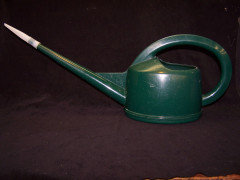
    "..... is the reason you fertilize weekly in summer due to high respiration rate? If this is the case the how about diluting the concentration in the same way during winter?" No. I keep about 100 tropical/ subtropical plants indoors under lights. The nature of my set-up dictates that I water by hand with a watering can that allows me to reach plants in the middle of my 4'x8' growing tables.

    The only extra time it takes to fertigate as opposed to irrigate is the time it takes me to add a tsp of fertilizer to a 5 gallon water butt, from which I fill the watering can. In the summer, those hundred plants go outdoors to accompany another 100-150 temperate plants. It takes about 3 hours to fertigate all those plants. That's a big time outlay for a guy who's always busy, so I choose to fertigate weekly.

    Indoors, I operate on a 3/6 day SCHEDULE. All my tiny plants get watered every 3 days (maybe 20 - 25 of those). The rest get watered every 6 days. If you give that some thought, the outdoor plants get fertilized once per week except when it's hot or cold, and while the tender plants are indoors, they get fertilized every 6 days, which happens to be every time I water.

    As mentioned upthread, I do think it best to tie your fertilization schedule to the number of times you've watered, as opposed to the calendar. Read about it again and use the marble trick. I'll go back and edit the post (upthread) so that info is in bold/ italics.

    Al


  • 6 years ago

    To go along with Al's helpful tips on fertilizing, I have a spreadsheet/cheatsheet with the amount of liquid fertilizer required for my regular watering containers. I have a graduated dispensing syringe (no sharp needle) which I just fill up and squirt into the watering container before adding water.

    Dispensing syringes can be usually be obtained free from your local pharmacy or big box store. Just say you need a dispensing syringe with no needle to measure your child's medicine. Personally I have bought many from ebay online, but lately due to COVID-19 shipping issues sourcing locally is likely much easier.

    Katlynn NY (5a) thanked ewwmayo
  • 6 years ago

    *

    *tapla

    last month

    For container media, use at 1:1500 to 1:3000 ( 1/2 to 1/4 tsp/gallon). Keep in mind that silicon is similar to Ca in that it is not mobile in the plant. Once it's deposited in cell walls, that's where it stays; therefore, to get the most benefit from its use, it must be in the nutrient stream continually. IOW, it's not something you're going to notice a significant advantage associated with sporadic use. It needs to be a consistent part of your supplementation program.*


    According to the instructions, I can't mix it with fertilizer, because it precipitates, So I can see only using the silica at every other watering, alternating with DynaGro FoliagePro

  • 6 years ago

    That's true. I try to mention it whenever I talk about it, but it slipped my mind - sorry.

    Al