Software
Houzz Logo Print
destiny_c

Cleveland Select Pear tree - Bad idea?

6 years ago
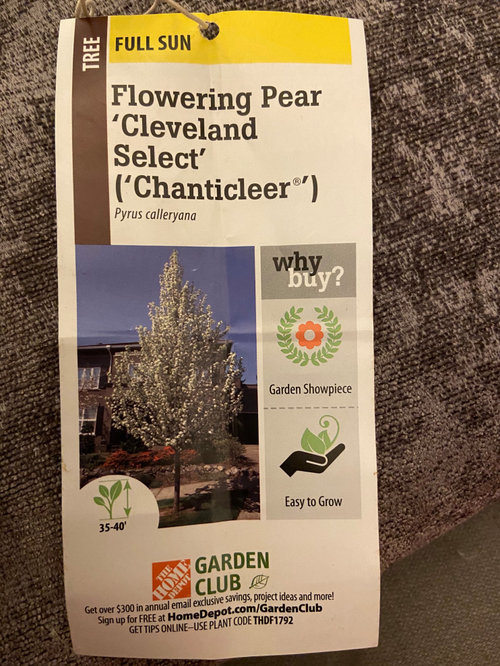
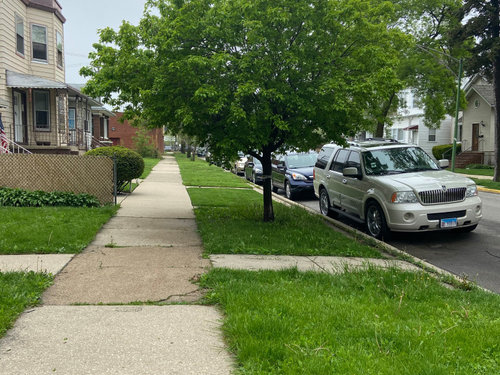
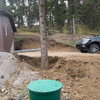
So hubby and I just planted this tree in our front yard, and now I read on houzz that its scent can smell bad (though it seems a matter of perspective I think?) I literally also read On our city’s arboretum website that in my area, the city may be considering a future ban on planting this tree because it’s an invasive species.


I’m feeling so melancholy now. I wanted a small tree for my yard, and it seems Home Depot‘s selection of flowering trees are finicky types or not long lived.


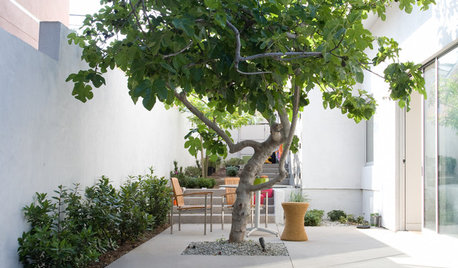
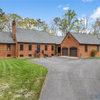
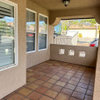
Do I/should I take this tree out? Any suggestions for a compact tree with long life span in my suburb outside of Chicago? I just really want to have a tree in my yard. I like the tree in my second photo but I have no idea what kind it is.


Comments (19)

  • 6 years ago

    I wanted a small tree for my yard


    ==>> it is not a small.. nor compact tree ... as you are dreaming about ;..


    get us closer pix of the trees you like.. including some leaves with a scale.. like your hand ... and perhaps the bark on the trunk.. and we can probably ID it for you ..


    ken

  • PRO
    6 years ago

    Don't forget redbud.

  • 6 years ago
    last modified: 6 years ago

    You have sooooo many other choices the aren't invasive, don't fall apart in a few years, don't stink, don't inflame allergies, actually provide wildlife habitat, feed the pollinators, look beautiful, start positive conversations, and you can feel good about planting.

    I see a handful of people here defending these pears and their various cultivars, and I just don't get it. In my opinion they (the "trees") are the equivalent of the cheapest frozen dinner in the clearance section when you have a gift certificate for the 5-star restaurant next door.

    Bradford pears pears really are as bad as some say. I like next door to Great Smoky Mountains National Park, one of the finest forests on earth, and these trees are popping up everywhere in and around the park, They displace the native plants that wildlife and pollinators depend on.

    OK, maybe my caffeine is too strong this morning, but I really hate these things, and anyone else who knows about the natural world beyond grass and petunias does too.

    Here's an article. https://www.usatoday.com/story/news/nation/2019/03/08/bradford-pear-trees-curse-what-to-know/3102509002/

  • 6 years ago

    I live about 24 miles east of Raleigh NC. A Bradford pear is not a small oriental tree. When we moved into this house about 9 years ago there was one near our driveway. At that time it was about 12' tall. Today it is about 30' and 15' in diameter. It is about 70% of the height of the Winged Elm (probably about 40 years old) on the other side of the yard, and the same height of a Nutttal oak that is about the same age.


    As for smell, unless I am mowing around it when it is in bloom, I don't notice any strong smell. I can not smell it on the porch about 30' away.


    Invasiveness in my opinion is over rated. Yes when I drive around the area in the spring when the Bradfords are in bloom there are a lot of trees with white blossom in the woods and roads sides. HOWEVER most are not pear trees, but the many native trees with white blooms.


    In looking at the second street scene, a Bradford would probably do well in the space between the street and the curb. Again with a caveat. tree like people are individuals and do as they please. On the other side of the my drive, there is another Bradford. It is about 10' from a mature pine tree. It was the same size as the Bradford mentioned above when we moved in, and is currently only about a quarter the height of the other tree.

  • 6 years ago

    "Invasiveness in my opinion is over rated. Yes when I drive around the area in the spring when the Bradfords are in bloom there are a lot of trees with white blossom in the woods and roads sides. HOWEVER most are not pear trees, but the many native trees with white blooms."

    That opinion is not shared by the NC extension service, the NC Invasive Species Council and just about any other local authority one can name. The issue of invasiveness is undeniable and those white flowering trees one sees in the woods or uncultivated natural places in early spring are indeed mostly escaped Pyrus calleryana........among others.

    There is simply no justifiable reason to plant them when there are SO many other, better choices available.

  • PRO
    6 years ago

    Encircling the issue of invasiveness is also a political movement for which organizations with words in their title like -- Invasive Species Council -- pop up ad nauseum., with their goal being to smother the issue with legitimacy, making it look like it is an argument between reasonable people ... and deniers. Fantastically named groups that spring up to sway thinking should be regarded with a high degree of suspicion. The "invasive' movement has gone overboard, IMO, and is literally a xenophobic (for the plant world) type movement. It would make much more sense to categorize plants according to their utilitarian value as opposed to their source of origin or the fear some have of it. In the Bradford's case, they are more of a poor excuse for a tree than they are a pest.

  • 6 years ago

    The above is just an opinion...and one that is based on very little fact. There is nothing political about invasive species!! Every single state in the union has an invasive species council or advisory board that is unaffiliated with any governmental entity other than perhaps a local department of natural resources. Invasive species are a real concern and just like global warming (and yes, I know many think that this is a big hoax as well, although apparently those that do are unable to read or just don't believe scientific evidence), it is a topic to ignore at our peril. Invasive species are documented to invade or naturalize in uncultivated areas to the detriment of many of our own native species. And native species provide a lot valuable wildlife habitat that many invasives cannot and do not, so hit with a double whammy - you lose the native plant species and you lose the pollinators, insects, birds or other wildlife the natives support.

    Source of origin has really little to do with the topic as even some native species can be considered invasive when they proliferate widely outside of their natural range or habitat so references to xenophobia are grossly misplaced.

    Opinions like that stated previously show a rather profound lack of understanding of the situation and are frankly rather shocking coming from someone that is supposedly a trained horticulturist and who makes his living advising others about plants! Shameful, really.

  • 6 years ago

    " The issue of invasiveness is undeniable and those white flowering trees one sees in the woods or uncultivated natural places in early spring are indeed mostly escaped Pyrus calleryana.... "


    Have you taken a walk through those areas?


    There are several trees on this page with white blooms.

    https://www.coastalstudiesinstitute.org/facilities/sustainable-landscaping/native-trees/

  • 6 years ago

    Take it out. We had 3 that were planted 12 years ago. Thanksgiving week, 2018, I was in the kitchen and heard a loud bang, kind of like a gunshot. Found the one closest to the house, about 15 feet away split in all different directions due to ice accumulation. It hit the house, thankfully no damage because the upper parts of the branches were still able to bend. I had the other two cut down the same day that my landscaper took a chain saw to the one that split. They are not a small tree and while I never smelled the flowers, you can see them all over the side of the highways and hillsides. Very invasive here in the North East. The expense to clean up not to mention any potential future property damage will be far greater than what you spent on it now. For flowering trees and multi season interest, I like our native dogwoods, serviceberry or a Kousa Dogwood for late season blooms and interesting bark. They are all readily available at HD or any other box store.

  • PRO
    6 years ago

    "There is nothing political about invasive species!!" Literally true, but unimportant. However, there is a great deal of politics behind the movement to designate so-called "invasives."

    You can always tell when there's a political movement behind anything because when you speak against the opposing viewpoint, the opposition if they are the authoritarian type, will always attack you in whatever way they can ... personally, professionally, etc. They'll resort to saying that you're incapable of heeding facts (their facts, of course!!!) and they'll describe you as a sorry excuse and basically, less than human. The glory of Gardengal's day is when she can take a big spike and sledgehammer it right into your side.

  • 6 years ago
    last modified: 6 years ago


    The people saying they aren't all that invasive are wrong.


    I'm a huge native plant nerd who's worked many years as a ranger naturalist in the wonderfully diverse eastern forests. I did time out west too. I can distinguish between dogwood, yellowwood, serviceberry, locust, sourwood, etc from a distance. Not to mention most non-flowering trees too. It's about branching patterns, subtle colors, and more. Naturalized Bradford pears are everywhere. They're incredibly invasive. I realize some people love the trees in their yard, and maybe they planted some before they knew how bad they are. They're feeling a bit defensive over all this criticism. But now you have facts. If your trees are still small, replace them now. And for god's sake, don't plant any more with so many vastly superior alternatives!

  • 6 years ago
    last modified: 6 years ago

    I can't believe I'm getting pulled back into one of these threads...

    first of all there are some finer distinctions perhaps lost in the conversation so far

    I would say the "natives are always superior" movement IS political, and it's bollocks...see this essay I've posted before. http://arnoldia.arboretum.harvard.edu/pdf/articles/483.pdf

    And in fact, even the "every invasive is something that must be stamped out at all costs" movement is almost as political, and sometimes just as misguided. But I don't really have time to go into those topics more fully. (It depends on how invasive it is and what niches it is invading and why it's invading them.)

    However, the alarm over CERTAIN species is entirely justified, AND THIS IS DEFINITELY ONE OF THEM. If we had a Congress that wasn't paralyzed with utter stupidity and venality on "both sides of the aisle", the nationwide sale of these weeds would have long ago been banned. (Well maybe they are ok in the dry western states, but then, even there there are so many better and more water wise trees)


    You should not only tear it out, you should demand Home Depot give you a refund. But they won't.

  • 6 years ago

    Some folks, despite their professional standing, are just unenlightened or uneducated. The information they dispense under the guise of "professionalism" is often incorrect or ill-informed. Which is unfortunate on an online forum as many readers don't know and can't tell when they are being fed an bunch of opinionated, unsubstantiated crap. "Unsubstantiated" is key, as they will not - more likely cannot - provide scientific sources to support these opinions. And they hate to be confronted with their errors or criticized in any way and will always try and squeeze in the last word. And often in a demeaning, personally affronting manner.

    Once again, there is NO political movement behind the categorization of invasive species. Unless conservation has now become a hot political topic.

  • 6 years ago

    Just a note on "small" trees. We have a redbud that is now at least 20 feet tall. Well, except that it is dead now and we haven't removed it yet. Leaving it stand since it won't hit anything precious if it falls (unless I or the pup happen to be under it at that moment-ha).

  • 6 years ago

    I just thought I would that in the Chicago area the Redbud is not really a long-lived tree. The Morton Arboretum gives it 20 to 25 years. It's not unusual to see partially dead ones around the neighborhood. It seems to be especially subject to verticillium wilt around here. After admiring them for years, I had one planted in my backyard. And sadly, a year-and-a-half later it died of verticillium wilt. I'm not saying that yours necessarily will, but just know that you might only get 20 years out of it at best.

  • 6 years ago

    There are a number of deciduous magnolias that remain quite small and /or fastigiate.

  • 6 years ago

    For the record the involved species is Callery pear, with 'Bradford', 'Cleveland Select' etc. being specific horticultural selections with their own characteristics.

  • 6 years ago

    Can you get your hands on a Korean Maple, Paperbark maple or Pekin Lilac?


    Any tree that can spread via birds and choke out other vegetation is a an invasive to avoid. Callery Pear can be found doing so in IL.


    Put that tree back in the pot and return. But take a razor knife and score around the trunk 360 degrees before doing so.