Software
Houzz Logo Print
gregg_h2

Pruning Leggy Southern Magnolia

6 years ago
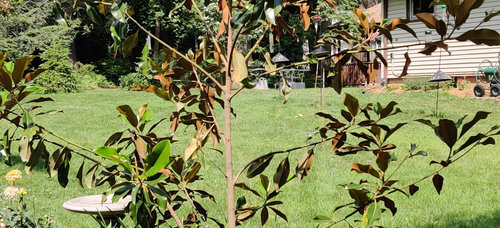
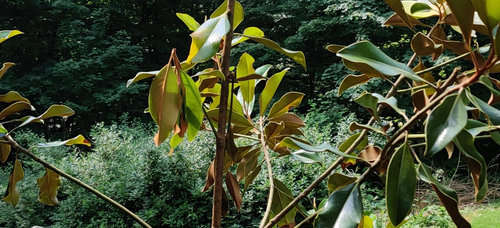
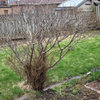
I planted a Bracken's Brown Beauty Magnolia Grandiflora/Southern Magnolia last spring. It was probably 5' tall when planted and probably put on 12" of growth last year and seems to be flushing out healthily this year. Even have 2 flowers! Zone 6a CT, 7+hours sun, pretty moist downslope soil, but not wet feet.


The problem is that it seems so leggy. I know part of this is the darn squirrel around here like to play and bounce on it's thin limbs, and they break off a lot of the new little branches. This spring even the leader growth was broken, so I have a crown of 4 new branches at the top but no leader.

I'm wondering if I could do any pruning to help it not only get bushier, but maybe end up with more stout branches rather than long skinny whips. I can't see cutting the ends off any branches because that's where the growth is, but would love to hear any advice.


Comments (13)

  • 6 years ago

    you have a lot of expectations on a large transplant one year after planting ...


    its going to take another year before its established... if not a third year .... and until then ... every leaf is a energy making machine.. leave them all there ...


    lets look at again next year ...


    tree time is counted in decades ... and its simply going to take time to grow to your expectation ... and it is beyond me.. peeps who want to cut parts off to speed said process ...


    just be patient ...


    ken


  • 6 years ago
    last modified: 6 years ago

    Yeah, I would say once the tree gets established -- has a really good root system --- then you can start to think about cutting back limbs. This may be next season. So when you're ready, maybe just cut a few limbs back at a time. Make sure the limb gets sun, and it will shoot out from latent buds.

    Yeah, it's gonna look gawky for a while. It's going to take 2 to 3 years before you can get all the longest limbs cut back.

    Magnolias in cooler climates tend to grow more leggy.

  • 6 years ago

    OK, yeah I'm not really in a major rush about anything, just want to do what's best for the tree. It really put on so much length last year and is so skinny with large 2' spans of trunk without a limb I thought it might be better for it to stay a little more compact as it acclimates. But your point about ever leave counting really makes sense especially in it's state, I'll just give it some time and yell at the squirrels whenever I see them playing on it.

  • 6 years ago

    yeah I'm not really in a major rush about anything, just want to do what's best for the tree.


    ==>> well.. good.. but try not to love it to death in the meantime ...


    where are you in new england.. and how far north do southern mags thrive???


    big city name would help...


    ken

  • 6 years ago

    Basic issue is that leaves are timing out and dropping prematurely. So the thing to do is figure out the cause of this and correct it. Rather than whacking the plant back, only to have the same original problem continue. Now in addition to the whacking back.

  • 6 years ago

    It's squirrels breaking of the new growth. It doesn't drop that many leaves on it's . But its growth pattern is pretty leggy even before the squirrels do their damage.

  • 6 years ago

    I'm near Hartford in zone 6a.

  • 6 years ago
    last modified: 6 years ago

    I can see in your picture that leaves are dropping too soon. One possible cause for this is foliage mildew, otherwise maybe it is a watering or soil minerals problem.

  • 6 years ago
    last modified: 6 years ago

    A southern magnolia in zone 6a is never going to look like a southern magnolia in Alabama. They grow leggy here. Do not prune. It won't encourage a more compact tree. Fewer leaves will diminish its ability to generate fuel for growth. Give it TLC and hope for a look you can live with after two more years.

    from plants.usda.gov:

    Southern magnolia primarily grows in the southeastern US and the Atlantic and Gulf Coastal Plain in USDA Hardiness Zone 6–10 (Dirr, 1998). Southern magnolia is native from Maryland south to Florida and west to Texas. Cold-hardy cultivars can be grown as far north as southern Ohio, northern New Jersey, and Long Island.

    Missouri Botanical Garden, a very reliable source for all things plant, has it listed as zone 7-9 here: http://www.missouribotanicalgarden.org/PlantFinder/PlantFinderDetails.aspx?kempercode=c117. I think that's more honest. I choose plants and trees that list zone 5 even though I'm supposedly living in 6a.

    Gregg z6a-CT thanked liquidfeet Z6 Boston
  • 6 years ago
    • @liquidfeet Z6 Boston Yes, I know I was spoiled seeing them all down south like giant masses of shiny green. I do have the Bracken's Brown Beauty variety, that the Missouri site mentions in the text as being 5b, but I'm sure your point about being more leggy still holds true.
  • 6 years ago
    last modified: 6 years ago

    @ken_adrian Adrian MI cold Z5 you asked upthread

    how far north do southern mags thrive???

    The most northern southern magnolias in New England are in Ravenswood Park in Gloucester, MA. You'd never recognize these thin, leggy, shrub-like plants as southern magnolias. They are protected from the deer by chain-link fences because of their rarity. When I am on the trails in this part of the park, the Magnolia Swamp, I always stop to look for the magnolias, trying to identify them in the undergrowth. They are hard to find. I've never been there when they bloom, so all I have to go on is knowing they are there and their long dark leaves.

    You can read the history of these trees here in this link:

    http://gloucester.harborwalk.org/wp-content/uploads/10Magnolia_sweet-bay.pdf

  • 6 years ago

    liquidfeet, thanks for linking the article from Arnoldia. That article is of course about the Sweetbay Magnolia, not Southern Magnolia. For comparison here is a pic of flowering southern magnolia blooming today in Maryland.

  • 6 years ago

    @sam_md, whoops. Right. Here's a comparison of sweetbay vs southern magnolia.

    https://bplant.org/compare/137-279