Software
Houzz Logo Print
webuser_872373939

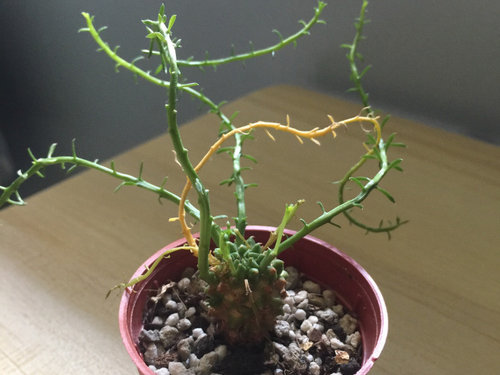
Why my succulent is dying

6 years ago
last modified: 6 years ago
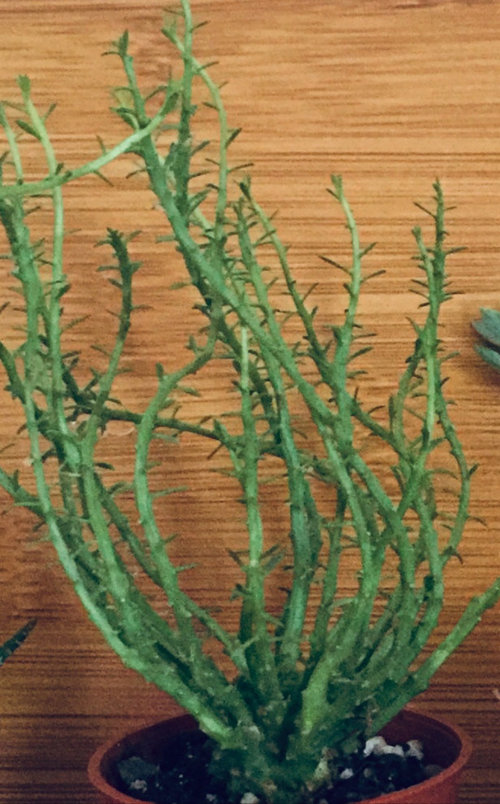
Before my plant is really healthy.. I kept it indoor with moderate sunlight and watered it once a week.


But after a few months it started to die..


Really love this plant. But I don’t know how to save it.

Comments (26)

  • 6 years ago

    how long have you had it? watering once a week might be too much water for indoors. I live in the desert and I water my outdoor Cacti/succulents once a week and water my indoors once every two weeks.

  • 6 years ago

    Is that a medusoid Euphorbia? I think it is. I think your moderate sunlight might be insufficient but if you increase the sunlight then do it gradually. The "snakes" should be more compact. Did the plant come with a name?

  • 6 years ago

    I bought it 7 months ago.. I don’t know the name.. But it seems like medusa head like you said.. I’ll try to decrease the watering and put it in the sunlight area. Thanks for the suggestions.

  • 6 years ago

    What kind of soil mix is this planted in?

  • 6 years ago

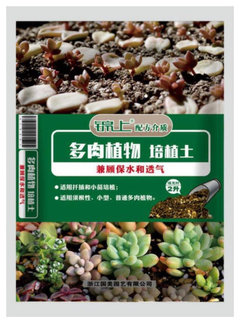
    Since i bought it, i don’t know the original soil that the seller used. However, i added a succulent soil that i bought online 3 months ago because the pot once fell.

  • 6 years ago

    I cannot read Japanese but I am going to trust that soil is decent because it appears to have plenty of inorganic components. If you can summarize the formula of what is in the soil and what percentages of each substrate, that might help.

    Now the million-dollar question: did your plant start to drop off after you replanted to this soil? I wonder if the soil could have some contaminant in it.

    I also wonder if the plant needs some weak fertilizer applied once a week, assuming that soil now has no organic components like compost that would provide minerals. I think it would be best to first define what is in your soil.

  • 6 years ago

    What do you mean by "moderate sunlight"? It needs to be in a spot where it gets a few hours of direct sunlight every morning.

  • 6 years ago

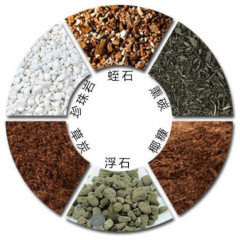
    The soil contain Vermiculite, Pumice, Perlite Peat, Charcoal, and Smoked Coconut mix. Based on my observation, yes it started to drop off after i added the soil. I didn’t put any fertilizer on it.. i just water it once a week

    I place the pot near window in my room because i thought it can’t get direct sunlight.

  • 6 years ago

    How did you do the repotting of this plant into the new soil? Did you bare root the plant and remove all traces of the original soil?

  • 6 years ago

    No I didn’t remove the original soil. I just add the soil on top of the original soil.

  • 6 years ago
    last modified: 6 years ago
    @Shira Mizi That is your problem. Your plant is drowning in what is probably very bad nursery soil, probably loaded with peat or compost. It is far too moisture retentive. Putting the new soil on top of the old soil serves no real purpose. Water just drains through the fast-draining new soil and then saturates in the layer where the plant's roots live.

    Others can chime in, but if it were my plant I would take it out of the pot. I would bare root it and completely strip out all of the original soil from the plant's roots. Inspect for possible root rot and if there are doubts about that show photos of the roots here.

    Once the plant looks okay, I would repot in the new soil and just throw the original soil away. We want to get the plant's roots fully immersed in the new soil. You might want to wait a few days to let the roots heal before watering.

    Once the plant is settled in, you are going to need to inquire in container gardening about a fertilizer schedule for the plant, because the new soil that is fast draining does not contain nutrients. The nutrients will need to come from synthetic fertilizer (not organic).

  • 6 years ago

    @Shira Mizi I would edit your original post and make sure to additionally put this post into the container gardening forum. They can help guide you on the soil and the repot.

  • 6 years ago

    Thanks for the advice. I’ll try to repot it. But do i need to leave it bare for few days before repotting with new soil? Or directly repot it. And can i use any soil or it must be the succulent soil?

  • 6 years ago

    @Shira Mizi One of the bad things about putting fast-draining soil on top of the original soil is that doing a finger test for dryness in the new soil actually tells you nothing about the state of the soil where the roots live. So it is possible that deep old soil layer was completely saturated and you took the dryness of the new soil at the top as a false signal to water more.

  • 6 years ago
    last modified: 6 years ago

    Also pls note: Vermiculite is bad for succulents, it helps retain water & breaks down fast; both of which would be bad for succulents.

    "Perlite Peat" is misleading as they are 2 VERY different things. Perlite helps DRAIN water, Peat helps RETAIN water (retain= hold water in, if your original language is Japanese).

    Fertilizer is not the issue here, pls ignore that.

    I see lots of organic material in that mix, suggesting it's more for houseplants like Tropicals, or African Violets, not Succulents.

    Agreeing w/ Westes about how you repotted, sorry. All the mix needs to be changed, try to get ALL of the old soil off the roots, as it's likely the source of your problems.

    If you haven't already, pls cut off those yellow snakes as they look dead, sorry.

  • 6 years ago

    @User Fertilizer will become one issue after the plant recovers in fast-draining soil. Without any nutrition, the plant is unlikely to mount strong growth.

    Without quantifying the amounts of peat and coconut in the new soil, it is hard to say if it is horrible soil or not. @Shira Mizi if you were to amend that soil with 50% pumice, you would probably correct many of the defects, until you have studied soil mixes in more detail and are ready to choose the final mix.

  • 6 years ago
    last modified: 6 years ago

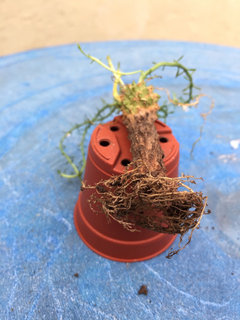
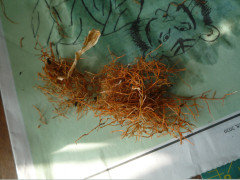
    This is the current state of the root. I don’t know if it’s rotting or still healthy


  • 6 years ago

    @Shira Mizi I am not familiar with that type, but that does not look too good. I want others to suggest how you can test further, but there is some chance it has already rotted all the way up to the base. If that is the case, you will need to cut until you find unrotted tissue and let it re-root.

  • 6 years ago
    last modified: 6 years ago

    I don't know that plant, but those roots don't look dead to me. Dead roots tend to be dark, dry, brittle & crunchy. Those look lighter in color & like they may still be a bit pliable or flexible.

    I don't know abt the trunk of the plant, if that's corking (which could be a normal thing, depending on the plant) or rot.

    Westes, w/ the organics in the mix she listed it'd be OK for a while. It may be an issue in future, but I think that's putting cart before the horse. Stabilize the mix & the plant; one can always add fertilizer in future.

    Let's not let her get hung up on that now (fertilizer) when she's already in over her head (abt no-ID plant & soils).

    Shira: I'm sorry we don't have more clear & specific answers for you, good luck.

  • 6 years ago

    @Shira Mizi Is the lower brownish stem soft to the touch in any location?

    Are any of the roots soft or mushy? If you cut off a few of the roots, does the color inside the cut area look white, brown, or black? I associate healthy roots with white color. When my jade plants rot, the roots become a dry brittle brown color that looks lifeless when you cut into them.

  • 6 years ago

    westes Zone 9a California SF Bay the root looks white and soft. I assume it still healthy. For the time being, I repot it with new soil and leave it for few weeks to revive. Hopefuly it can regrow back healthily. Thank you for the advices.


    KarenS, NYC its okay. Your suggestions and explainations help me a lot. Thank you very much. I gain a lot of new knowledge here.

  • 6 years ago

    You're so welcome Shira, I'm glad it helped you & wasn't too confusing. I think you made a good decision & I wish best luck w/ plant's recovery.

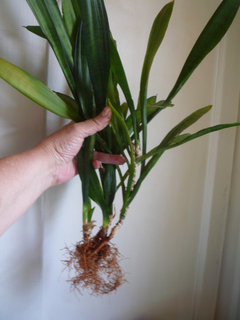
    I hope you don't mind several Snake plant pix so I can make a point abt roots.

    Westes,

    Just to show you that color isn't the main factor in assessing root health, perhaps texture is.

    This is a Sans plant, hydro grown for 10 yrs. Sans roots are often bright orange.

    I took it apart yesterday & here are the roots I cut off, super healthy, but hydro grown.

    Hoyas (which I also collect) when rooted in water grow white roots.

  • 6 years ago

    I was not concerned about the brown roots. I was concerned that the entire stem had grown brown. But this was under the soil and I am not familiar with that variety.

  • 6 years ago

    westes Zone 9a California SF Bay Ya the stem looks brown but I don't know whether it's fine with that color or otherwise. However, when I press it, the stem feels hard.

  • 6 years ago

    @Shira Mizi So no obvious rot, and I think your plan is fine.