Software
Houzz Logo Print
mytemporaryacct

double dig weed filled top soil & burying

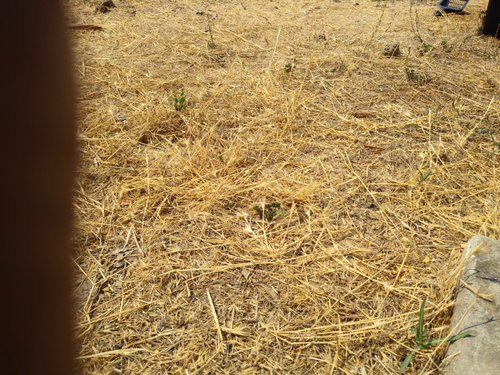
Below is a picture of my weed filled backyard, which i am slowly restoring to use as vegetable garden in couple of years or so. I am starting to use the double-dig method (a technique i learnt by watching several youtube videos on this topic), and bury my kitchen waste and at the same time bury the top layer of weed by turning the soil upside down. (Those familiar with double-dig method will know this works). The only concern i have is that i do not know all the types of weed grass that grew in my backyard. So, i am planning to cover the entire vegetable garden area (25' x 15') with a layer of weed block fabric from HD for about a year. During this year, i would continue to double-dig sections of this area, and keep burying my kitchen waste to create compost under top 1.5 foot of soil. After a year or so, i would put woodchip mulch to cover all areas that have not been turned into a raised bed, by that time.

  1. Please comment on potential pitfalls of this method. Currently all the weed has turned brown, from the heat and lack of water. I have not applied any chemical to kill the weeds that you see.
  2. Would a 2 inch layer of mulch be enough to prevent weeds from showing up again ? Many on youtube have commented that a 3" to 4" layer of woodchip mulch maybe needed to stop the weed growth. I know that 1" will not be enough because weeds are showing up through that 1 inch, around a pepper plant i have planted, by clearing a small section of this garden as a test.


Comments (19)

  • 6 years ago
    last modified: 6 years ago

    The weeds in your pic are not necessarily killed. The roots are most likely alive, and the seeds are not giving up easily, either.

    I understand you want to apply the weed blocking fabric for a year after double digging and amending the soil with organic materials, like kitchen waste (you could add other organic stuff, too). I would apply the fabric first though, before double digging. The bad roots and the seeds are close to the surface now, and they may be killed more easily under the fabric by drought and heat now than if they were buried deeper in the soil.

    I think a year should be long enough to kill the weeds. After that, after double digging and amending the soil, a 2" layer of wood chips mulch should prevent from sprouting any weeds that will still attempt to. Remember however that no garden is ever free of weeds, no matter what you do. You will always have weeds to pull.

    I like your approach. I also try to make my soil deep and rich in nutrients. I don't use synthetic fertilizers or any other chemicals, just soil amendments and mulches and my vegetables do great in a pure organic garden.

    What kind of soil do you have?

    sam (SF bay, 10a / Sunset 16) thanked windberry zone5a BCCanada
  • 6 years ago

    The soil is about 80% clay for about 1 foot, and after about 1.5 foot, it is hard clay that can not be easily dug into. Even the top layer is tough to break into, due to negligence for 2 decades.


    I was hoping that i can directly bury under the area which is going to turn into a garden in a year or two, just moving around every month, for the burial process. What if i cover the entire 25' x 15' with weed cover fabric, and remove the fabric, only to dig the trench for the burial process. The kitchen scraps will take many months to become compost, and they will be under a foot of soil. So, there is no easy chance for the weed roots to access that depth. Would they still spout up (despite the lack of sunlight and water) ??


    I am not sure, but i may have seen such a process on youtube. I have seen so many now, that i can not recollect them all.

  • 6 years ago
    last modified: 6 years ago

    Looks like you have difficult soil to deal with. Humus (organic amendments) can make clay soil more porous and more workable, and of course, more fertile. If your soil is acidic you could, very judiciously, add lime. Lime granulates the particles of clayey soil and makes it more friable and crumbly, too.

    It is important that the clay soil is properly drained, since it is very moisture retentive. Raised beds are a good idea on the clay soils. Prolonged saturation is very detrimental to the health of most garden plants.

    If you have access to other organic materials like grass clippings, straw, fallen leaves, add them, too. I would not bury the amendments deep in the soil, rather mix them thoroughly with it after double digging. Yes, uncover the plastic when you have some organic stuff to mix with the soil and cover back after. The wood chips on the soil surface later on will also slowly decompose and improve your soil further.

    Here is some good info about soil biology . . . and another

    sam (SF bay, 10a / Sunset 16) thanked windberry zone5a BCCanada
  • 6 years ago

    I think you are a bit too obsessed by the idea that you are going to kill off weeds for good, but I admit I know nothing about a vegetable garden in your area. You want to kill perennial grass, or rooted perennial weeds, beyond that just work on improving the soil. Weeds that sprout can become part of the compost. Eventually weeds are going to find your watered garden, no matter what. Work on adding organic material. Eventually you dig up or pull out weeds.


    There are many ways of doing things. Double digging has worked for many, while others claim you are ruining the natural structure of the soil that will have to be rebuilt. Probably somewhere in the middle is easiest.

  • 6 years ago

    Just to bring this thread with updated information that i have found. By searching youtube with keywords "weed control in garden", i came across some videos that showed the negative effects of using a weed fabric to cover the soil. So, it will have to be woodchips and/or compost and/or horse manure that covers to a depth of atleast 3 inches. Most indicate that the woodchips will make the removal of future weeds easier, if there a good height of woodchip mulch to cover the soil.

  • 6 years ago

    I am far from recommending using weed block fabric as a permanent fixture. To use it on soil surface for short time (like a year) to kill the weeds is entirely different story.

    sam (SF bay, 10a / Sunset 16) thanked windberry zone5a BCCanada
  • 6 years ago

    No mulch especially organic mulch gets rid of weeds completely - really only pavement does (and even then...).

    Mulch does make it easier to pull them out though, and some won't grow/germinate under a thick enough layer. Some new weed seeds will arrive by natural means too, of course - but easy to pull out.

    Obviously some are tougher or more prolific than others, or particularly deep and tough roots - I still have to dig out dandelion roots (fewer though). Tree roots from nearby trees are their own separate challenge (some might argue about which of these are weeds, but those people clearly haven't met the norwegian maple).

    There's no magic bullet, but I reckon most find it easier to manage weeds with mulch.

  • 6 years ago

    I’ve heard 6 inches of mulch recommended for weeds. Plus the depth decreases with time as it settles, packs, decomposes...

  • 6 years ago
    last modified: 6 years ago

    Got tired of keeping kitchen waste that was piling up. So i dug small trench in the area shown in picture. The roots had gone only about an inch, because there was no water, and the clay was hard. I could dig only using a digging bar, since shovel could not penetrate more than an inch. Buried the kitchen scraps at 5 to 6 inch deep, and put back the top soil (weeds and all).


    ( I think parts of my garden maybe hitting hard clay within 1 foot, since the garden is sloped for water drainage during winter rains. So, the higher land gets no water for much of the year. )


    Liberally watered the trench. Planning to cover with weed fabric, as recommended here, until i can get a good load of wood chips in late fall or next year. Since i am not planning to do anything in this area for a year or two, soil preparation is my focus for this time, as i learn more about gardening using my raised bed and grow pots.

  • 6 years ago

    Yes - thanks for that tip about watering before digging. At high ground, where there was no rain water the clay had turned into brick almost. Beyond 2 inches i could not get my shovel in, and had to use a digger to get upto 4 to 6 inches. Watering the area, and waiting for about 10 minutes made it lot easier to get my digger deeper. Kept watering and shoveling out the loosened soil, and i could reach down to 8 inches, where i stopped for the double dig aeration below. Somewhere else i had read before NOT TO DIG when clay soil is wet, and that was on my mind. Perhaps that was mentioned in a different context.


    I am taking a risk not bothering about weed roots and seeds that maybe there. I clear out whatever is on top, before digging and dump that into trash. But there is weeds all around still. So, i do not know if how this is going to turn out next year (after being buried under 4 inch of wood chips, sometime soon ). I have decided that i will deal with that problem next year, if there is too much weed growth again. Mostly they pop up during the rain season here (December to March).

  • 6 years ago

    @socalgal -- 6 inches of wood chips would substantially raise my sloping backyard soil. On youtube, i saw This Old House show recommending just 3 inches. I have also seen other opinions calling for 6 inches or more. The weed roots that i saw while digging in my garden did not go below top 2 inches of soil. (Perhaps because the soil was hard clay). So, my guess is that at 4 inches, it would be lot easier to pull out the weed roots, as they begin to germinate and come up.


    I have about 1000 square foot to cover with wood chips. Have to call around and figure out how much a free truck load would cover. Is there any preference in this discussion forum as to what kind of tree/chips i should be asking for ( beyond being a disease free tree) ??

  • 6 years ago

    I'd worry less about having exactly the right depth. Find a good source that can periodically get you some. You don't have to do it all at once. It will also be less frustrating work wise.

    If my calcs are right 1000 Sq ft to 4 inches is about 12 cubic yards. It will settle more than you think so it would require some effort to overdo it. Won't make much difference if you do it in batches over several months.

    Don't know much about watering clay but kept damp under a layer of mulch will be easier to dig. It's not just the water, there will be some mixing with organic materials. And from your description above, the weeds are mostly not deep rooted and it'll be easily to pull out by hand.

  • 6 years ago

    As you have observed your soil gets worse the deeper you go, with a significantly different layer being fully encountered by about an 1 8 in. depth. This is typical because fine particles wash downward. And why double digging is a mistake - the fine particle filled subsoil is brought up and mixed with the topsoil, thereby reducing the quality of the topsoil.

  • 6 years ago

    Thank you Embothrium. What you say about depth was observed last year by me, when i
    tried digging for my raised bed base layer. Even with a digging bar, i could only reach about 18 inches or so. It was pretty hard beyond that depth. Hence i buried my kitchen waste and dry leaves to compost at that depth last year. All this was in a different area of garden.


    Fortunately, this year i didn't have patience to dig that deep since i was digging a high ground area, which was dry and became hard within few inches down. So, i decided to bury the kitchen waste for the rest of my backyard at about 6 inches. The double digging would possibly loosen up a layer of about 4 inches below that. So, i am not going beyond was is easy enough for double dig with a spading fork (when soil is wet and soaking). Earthworms will take care of the few inches below my burial level.

  • 6 years ago

    @embothrium, do you have a source for this info? First I've heard this point about fine particles specifically being a problem or indicative of poor soil. And intuitively I think those fine clayish particles when mixed with organic composting materials would start to agglomerate into larger particles to give better tilth.

    Not that I disagree on the overall point, no sense or need to dig down deeper. Most plants won't need to, those that do need deeper root systems can do their own work (and are usually capable of it). And I agree deeper soil (e.g. subsoil) is going to be poorer soil, even if - to my knowledge - the difference is mostly due to a lack of organic matter and humus (which can be corrected with time).

    For the purposes of the original question, better to focus on building up and improving the soil with organic matter than getting down deeper. I guess I'm saying that subsoil soil could likely be corrected but extra work, materials and time, and mostly no significant benefit.

  • 6 years ago

    OK - final question related to this topic (because i couldn't wade through the ton of threads about wood chips).......


    What kind of wood chips should i be looking for ? (Besides disease free, fresh cut tree). I found one company that will take requests. I know pine trees are best, but what other trees in my area (SF bay area) are acceptable as garden mulch ? I have heard that some trees will take very long time to break down, and hence not desirable.


  • 6 years ago

    I always thought that deciduous trees made better wood chips than pine. In any case the more green leafs or needles in the chips the better. And lots of chipped smaller branches are better than all chips from the center of large trunks. You don't want chips from trees like Black Walnut.

    That said the worst chips are better than no chips. Free chips are great. My last load was about 5 cu yards of dead and dying pine trees from two lots north of here.

    Deciduous trees grow a larger variety of mushrooms than pine.

  • 6 years ago

    I agree, take whatever you can get in volume. If you get more than you want to spread to start with, just pile them up, it'll be fine to let them start the composting process there (a bit of water to help). Apart from how it looks (composted first will get a bit darker), I don't find much difference in composting in a big pile or spreading right away.

    I know opinions on this differ but I wouldn't worry about black walnut or similar - the concern is that they have a chemical that prevents growth/germination in some plants. But that chemical (jugulone?) breaks down in time too, and actually fairly quickly. Might be a concern if you wanted to plant tomatoes there right away (for example), but since you want to do this later, not an issue. (My understanding is that the area around walnut trees is worse because the root system of the tree exudes this chemical, and also of course there's just a lot more of it constantly being added).

    Similarly, I wouldn't get overly concerned about chips from 'diseased' trees. Those diseases are usually specific to trees and the bacteria/fungus will mostly get broken down or eaten by composting organisms anyway. There's a more serious reason not to get chips from diseased plants, which is spreading the disease around in transport or to your yard where you have trees, and less about introducing a pathogen to your future vegetable garden. (Note, still think it's good to not get chips from diseased trees and hence get them from a trusted source, just saying that once you get the chips delivered, it's pointless to go through and look for problems).

    If you are concerned about such things, piling the chips up to compost for a couple months or even longer is good. But you can spread your chips right away too (I do this all the time, although mine is almost all sourced direct from our treed yard).

    sam (SF bay, 10a / Sunset 16) thanked armoured
Sponsored
Buckeye Basements, Inc.
Average rating: 5 out of 5 stars40 Reviews
Central Ohio's Basement Finishing ExpertsBest Of Houzz '13-'21